Written and updated by Ruqin
Last updated: May 24, 2026
Welcome to my Luoyang Travel Guide—a journey into one of China’s most ancient and enchanting cities. If you’re curious about imperial history, vibrant traditions, and soul-warming local food, you’re in the right place.
From the moment I arrived, Luoyang felt like a living museum. The stories carved into the Longmen Grottoes, the quiet reverence of White Horse Temple, and the bursts of color in peony season—every moment surprised me. Ready to wander through time with me? Let’s begin.
1. When to Visit Luoyang: A City for Every Season
One thing I quickly learned while writing this Luoyang Travel Guide—this city changes completely with the seasons. It’s like a living museum that swaps its costume every few months. Each season brings its own rhythm, color, and charm.
Spring, from March to May, felt like Luoyang at its most romantic. The air turned soft, though the occasional northern breeze still whispered through. But the real star? The peonies. By late April, the city blooms into a dream during the Peony Festival. Streets, parks, even temples glow with vibrant pinks and purples. If you’re a flower lover, this is paradise.
Summer, from June to August, came in strong and bold. July was the hottest. Temperatures hovered around 27°C but sometimes spiked near 40°C. Afternoons often brought sudden rainstorms—short, dramatic, and oddly refreshing. I carried sunscreen, a hat, and a tiny umbrella everywhere. You should too!
Then came autumn—my personal favorite and, honestly, the best time to visit Luoyang. From September to November, the skies turned a deep, endless blue. The air was crisp, the light golden. Temperatures sat comfortably between 15°C and 25°C. Whether I wandered along the Yi River near Longmen Grottoes or climbed for panoramic views, everything felt just right. Fewer crowds, perfect photos—what more could you ask for?
Winter brought peace. From December to February, Luoyang slowed down. In January, the air bit a little, sometimes with snow. But the silence of White Horse Temple under frost? Absolutely magical. Cold, yes—but soul-stirring in its stillness.
So when’s the best time to come? No doubt—autumn. But if you’re chasing peonies, spring won’t disappoint. Whenever you choose, Luoyang will be ready to greet you.
2. Where to Stay in Luoyang
When I first arrived in Luoyang, one of the first things I realized, though, is that this city isn’t just one story—it’s a mosaic of districts, each with its own vibe.

And in this Luoyang Travel Guide, I want to help you find your perfect base. After all, where to stay in Luoyang can shape your entire travel experience.
1) Laocheng District (老城区) – Time Travel in Stone and Smoke
This is where I started my journey. Walking into Laocheng District ( literally old town area ) (老城区) in Luoyang felt like crossing a threshold into the Ming and Qing dynasties. Stone-paved alleys twisted between wooden shopfronts and red lanterns. The scent of grilled lamb skewers mixed with the soft clang of a street musician’s cymbals.
Luoyi Ancient City (洛邑古) was just five minutes from my cozy loft-style inn. I wore Hanfu here, took way too many photos, and joined locals sipping tea in quiet courtyards. Later, I wandered to Lijing Gate (丽景门)—you’ll hear people say, “You haven’t really been to Luoyang unless you pass through this gate.”

Nights here were noisy but charming. Luoyang Old Street (洛阳老街) came alive with glowing signs and sizzling snacks. I stayed in a beautiful courtyard hotel once, surrounded by bamboo and silence. Another night, I checked into an industrial-meets-heritage guesthouse just steps from Lijing Gate—absolutely Instagram-worthy.
Pro tip? This area is a must for first-timers, history lovers, and foodies. Just know that during peak seasons, it can get busy—really busy. Traffic slows, and finding peace requires a little extra effort.
2) Xigong District (西工区)– The Pulse of Modern Luoyang
Next, I moved to Xigong District (西工区). If Laocheng District (老城区) is the city’s memory, Xigong is its present. Wide avenues, shiny malls, glass towers—it felt like a whole different city.
This area was perfect when I wanted convenience. I needed to catch a regular train, so staying near Luoyang Station (洛阳站 ) was a no-brainer. There are plenty of taxis, buses, and local eats.

In the afternoons, I relaxed in Wangcheng Park (王城公园), one of the best places to see peonies in bloom. If you love museums, don’t miss the Zhou Dynasty Chariot Museum (周王城天子驾六博物馆)—I stood in awe before ancient bronze chariots, imagining the kings who once rode them.
My hotel? A four-star business spot with plush beds and lightning-fast Wi-Fi. Not the most romantic place, but super practical. This district is great for business travelers or anyone needing reliable transport and shopping options.
3) Chanhe Hui District (瀍河回族区) – Quiet Streets and Local Life
Tired from the buzz of city life, I then slipped into Chanhe Hui District (), Luoyang’s only ethnic minority area. I didn’t expect much here—and that’s what made it special.
There were no big-ticket sights, but everything felt local. Shopkeepers greeted me with warm smiles. The food was authentic. I strolled along the Chan River (瀍河), watching kids play and elderly couples feed the ducks.

I stayed in a hidden riverside guesthouse just outside the Old Town line. It was peaceful, affordable, and still close enough to walk to Luoyi Ancient City. If you’re looking to dodge tourist crowds and experience a more everyday side of Luoyang, this area is a quiet gem.
4) Jianxi District (涧西区)– Industrial Nostalgia Meets Daily Life
Afterward, I spent a couple of days in Jianxi District (涧西区). It’s not a typical tourist stop, but it has its own rough-edged charm. Here, I saw traces of China’s first wave of heavy industry—red brick factories, wide avenues, and signs from the Soviet era still standing.

One afternoon, I wandered the streets around China YTO Group (中国一拖集团), once home to the iconic “Dongfanghong” tractor. Later, I shopped for retro clothes and local snacks on Guangzhou Market Pedestrian Street (广州市场步行街), where old meets new in the best way.
Accommodation here was more traditional. I noticed many visitors actually preferred staying in the nearby Luolong District (洛龙区), where more modern hotels await.
This area is a good pick if you’re into industrial history or want to see a different side of the city. Just be cautious with budget eateries—some spots may offer tempting prices, but stick to well-reviewed restaurants to avoid any unpleasant surprises.
5. Luolong District (洛龙区)– Sleek, Scenic, and Seamlessly Connected
Finally, I landed in Luolong District (洛龙区), Luoyang’s face to the future. This area is clean, green, and well-planned. It felt like a fresh breath after the chaos of Old Town.
Luoyang Longmen Railway Station (洛龙区), the city’s main high-speed rail hub, is here. So are some of the city’s best cultural landmarks: the jaw-dropping Longmen Grottoes, the modern Luoyang Museum, and the tranquil Sui-Tang Botanical Garden (隋唐城遗址植物园).

I stayed near the train station in a modern hotel that even offered a free shuttle. Everything was shiny and new. Another night, I booked a room right by the grottoes for an early-morning visit—worth every yuan.
This area is ideal for high-speed rail travelers, digital nomads, or anyone wanting clean, modern comfort with easy access to key attractions.
Final Thoughts: Where to Stay in Luoyang?
Here’s how I’d sum it up:
- For history buffs and foodies: Stay in Laocheng District (Old Town). You’ll love every minute.
- For convenience and shopping: Go for Xigong District.
- For peace and authenticity on a budget: Try Chanhe Hui District.
- For a taste of local life and industrial charm: Explore Jianxi District.
- For modern comfort and high-speed rail access: Book in Luolong District.
So now, the question isn’t if you should come—it’s where to stay in Luoyang to make the most of your journey. Once you pick your base, the rest of the city unfolds like a beautiful, ancient scroll.
3. How to Get to Luoyang
One of the things I love most about writing this Luoyang Travel Guide is how incredibly easy it is to reach this ancient city. No matter where I’ve started in China—whether it’s Beijing, Xi’an, or Chengdu—getting to Luoyang has always felt seamless. Let me walk you through the options, just as I experienced them.
1) Flying In: Luoyang Beijiao Airport
The first time I visited Luoyang, I flew in. The flight was short, smooth, and surprisingly scenic. Luoyang Beijiao Airport (洛阳北郊机场) isn’t huge, but it’s well-connected. I’ve taken direct flights here from Beijing, Shanghai, Guangzhou, Shenzhen, Chengdu, and even Chongqing.

Located in Mengjin District (孟津区), the airport is about 10 km north of the city center. It took me 30 minutes by taxi to get to my hotel in Old Town.
Here’s how you can get from the airport to the city:
- Airport Shuttle Bus: Honestly, it’s the most cost-effective and convenient option. The route connects major city stops like Luoyang Station. Plus, schedules often adjust to flight arrivals.
- Taxi or Ride-hailing Apps: Easy to grab outside the terminal. I paid about 40 yuan for a direct ride downtown. Fast and stress-free.
- Public Buses: For budget backpackers with light luggage, local buses work too. Just be ready for a slower ride.
2) High-Speed Heaven: Luoyang Longmen Station
On my second trip, I came by high-speed rail—and I was hooked. This is, hands down, the fastest and most scenic way to reach Luoyang. Especially if you’re coming from Zhengzhou, Xi’an, or Beijing.

The sleek Luoyang Longmen Railway Station (洛阳龙门火车站) sits in the city’s south, right in modern Luolong District. From here:
- Zhengzhou is just 30–40 minutes away.
- Xi’an takes about 1.5 hours.
- Beijing? Around 3.5–4 hours. That’s faster than crossing Beijing in rush hour.
Getting to the city from the station is easy:
- Metro Line 2 connects directly to downtown. I took it straight to Jiefang Road, then transferred to Line 1 toward Laocheng District (Old Town). It’s fast, clean, and air-conditioned—what more could you ask for?
- Taxis and Ride Apps are also right outside. The ride to central areas takes 25–40 minutes, depending on traffic.
- Buses are plenty and cheap. If you’re heading to West Luoyang or Old Town, they’ll get you there.
3) Classic Rails: Luoyang Station (Regular Train)
Sometimes, I love taking it slow. For my third visit, I booked a regular train to Luoyang Railway Station—the city’s old-school railway hub. There’s something nostalgic about rattling along the tracks, sharing snacks with locals, and watching the countryside roll past.

The station is located in Xigong District, right in the city center. So when I stepped off the train, I was already surrounded by hotels, shops, and restaurants.
Getting around from here is a breeze:
- Bus Terminal: Right outside. Dozens of routes go all over the city.
- Metro Line 1 is a short walk from the station. I rode it easily to both the Old Town and Wangcheng Park.
- Taxis? Always available. And since you’re already in the city, fares are usually low.
If you’re traveling on a budget, or simply want that classic China train experience, this is your stop.
4) By Bus: Luoyang Coach Station
Not many people talk about long-distance buses anymore—but I found them incredibly useful when I explored nearby cities.
Luoyang Coach Station sits just across the street from Luoyang Station, making the whole area a massive transportation hub. Buses run to Shaolin Temple and more small towns in Henan Province, and even to nearby provinces like Shaanxi or Shandong.
I took a coach to Dengfeng once (to see the Shaolin Temple), and it was cheap, comfortable, and surprisingly fast.
Quick Tips for Travelers
- Coming from Zhengzhou? Skip the slow train—take the high-speed rail to Luoyang Longmen Station. You’ll get there in half an hour.
- From Xi’an? Same deal. The route is scenic, and the ride is smooth. I saw glimpses of Mount Hua along the way!
- Choosing between stations? If you want speed and sleekness, go with Luoyang Longmen. But if you prefer being dropped in the city center with quick hotel access, Luoyang Station is your best bet.
4. How to Get Around Luoyang
One of the things that surprised me most during my time here—something I have to include in this Luoyang Travel Guide—is just how easy it is to get around Luoyang. Really, once you’re here, moving between ancient landmarks and modern comforts is a breeze.
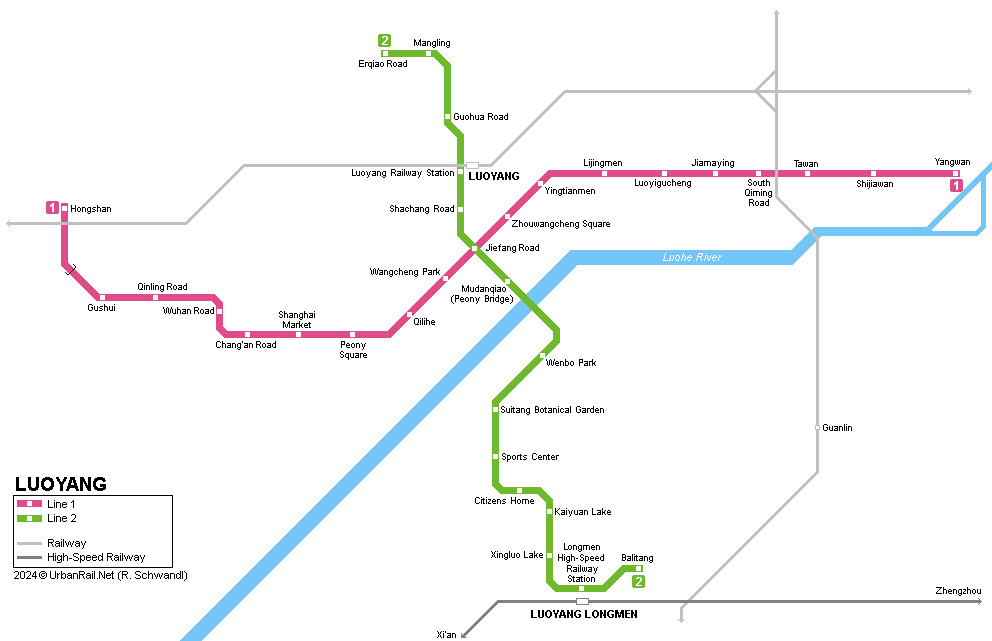
Whether I was heading to the train station, catching a glimpse of the Longmen Grottoes, or hopping between museums, the city’s compact but efficient transport system made every journey smooth and stress-free.
1) The Metro: Simple, Smart, and Tourist-Friendly
Luoyang’s metro network isn’t massive—but it doesn’t need to be. With just two lines forming a neat “X” across the city, it connects almost every major district, museum, and station you’ll want to visit.
Metro Line 1 – East to West, Right Through the Heart
This was the first line I tried, and I loved how it cuts straight through Xigong District and Longcheng District (Old Town). It’s your best friend if you’re staying downtown.
Top Stops I Used:
- Jiefang Road Station (解放路站): The main interchange station! From here, you can switch to Line 2, giving you access to high-speed rail, museums, and more.
- Wangcheng Park Station(王城公园站): I visited during peony season, and wow—this park was bursting with color.
- Yingtianmen Station (应天门站): Step out of the station and look up to admire the grand presence of Yingtian Gate, the main southern gate of the imperial city of Sui and Tang Luoyang. This is also a popular spot to enjoy the stunning light show at night.
- Lijingmen Station (丽景门站): This station takes you straight to Lijing Gate, an iconic landmark of Old Luoyang. Walk through it, and you’ll find yourself in the bustling Luoyang Old S
- Zhouwangcheng Square Station (周王城广场站): Ideal for visiting the Chariot Museum. If you’re into ancient history, this is a must.
Metro Line 2 – North to South, Linking Trains and Treasures
Next, I hopped on Line 2, which turned out to be a cultural goldmine. This line is perfect for connecting transportation hubs with major cultural sites.
Here’s where it took me:
- Luoyang Railway Station (洛阳火车站): Arriving by regular train? This is your gateway to the rest of the city.
- Jiefang Road Station (解放路站): Again, this central hub makes changing lines super easy.
- Wenbo Park (文博园): Museum lovers, listen up. This stop is close to Luoyang Museum
- Luoyang Longmen Station (洛阳龙门站): This was a game-changer. I got off the high-speed train, walked straight into the metro, and reached my hotel in no time. Total lifesaver after a long travel day.
Metro Tip: I used the “Luoyixing 洛易行” app to scan and ride—no paper tickets needed! Machines also support English, which helped me a lot when I first arrived.
2) The Bus Network: Going Where the Metro Doesn’t
When I wanted to visit places outside the metro range—like White Horse Temple or lesser-known grotto entrances—I turned to the local buses.

Buses here are frequent, cheap, and honestly a fun way to soak in the city’s rhythm. Fares are usually just 1–2 RMB, and you can pay with your phone using WeChat or Alipay. I used them to reach quieter corners and even to get to the farther entrance of the Longmen Grottoes.
3) Taxis & Ride-Hailing: For Convenience and Comfort
On days when I had luggage, was heading out late, or just felt a little tired, I turned to taxis or ride-hailing apps.

- Taxis in Luoyang are affordable. Just make sure to use an official taxi stand or hail from safe zones.
- Ride-hailing apps like DiDi worked beautifully. I liked seeing the price upfront and paying via my phone. Plus, it was a lifesaver after a night out exploring Old Town’s markets.
📌 My Local Tips for Getting Around Luoyang
Now that I’ve tested almost every way to explore the city, here are a few tips I’d pass along:
- For longer distances, especially between districts, use the metro. It’s reliable, air-conditioned, and easy to navigate—even if it’s your first time in China.
- For final legs of your journey—like from a metro stop to a temple entrance—grab a bus or DiDi.
- At night, don’t wait around. Just call a ride-share and head safely back to your hotel.
- Mix it up! I found the best adventures happened when I combined metro, bus, and a little walking.
And there you have it—the How to Get Around Luoyang chapter of this journey. With just a little planning, you’ll move through this city like a local. One minute you’re strolling through a buzzing market, the next you’re standing alone beneath a thousand-year-old stone Buddha. All within reach
5. Top Attractions in Luoyang: Where History Whispers Through Every Stone
Everywhere I turned in Luoyang, I felt like I was walking through the pages of a living history book. No wonder it’s often called the “City of a Thousand Dynasties.” From the ancient Xia to the mighty Tang, this city’s stories span over 3,000 years. And I could feel that legacy beneath my feet.
So in this chapter of my Luoyang Travel Guide, let me take you through the top attractions in Luoyang—each one a doorway into a different era.
1) Luoyang Museum – A Treasure Trove of Civilizations
The first place I visited? Luoyang Museum (洛阳博物馆)—and it completely blew me away. With nearly 20,000 artifacts, it’s a deep dive into the city’s identity as a 13-dynasty capital.

I stood mesmerized in the Tang Sancai Ceramics Hall, admiring the vibrant glazed figures. Then, in the Bronze Hall, I found myself face-to-face with a fearsome Western Zhou beast-face ritual vessel—it was hauntingly beautiful.
- 📍 Address: Nietai Road, Luolong District 洛阳市洛龙区聂泰路
- 🎟️ Ticket: Free (advance reservation required)
- 🚇 Metro: Line 2 to Wenbo Park Station 文博园站
2) Longmen Grottoes – Stone Statues, Silent Stories
If Luoyang had a crown jewel, this would be it. The Longmen Grottoes (龙门石窟) are a UNESCO World Heritage Site, and one of China’s Four Great Grottoes. With 2,345 caves and over 110,000 statues, it’s a massive feat of devotion and artistry.

I spent hours wandering cliffside paths, staring up at the majestic 17-meter-tall Vairocana Buddha in Fengxian Temple. I remember thinking, “How did they carve this into a mountain over 1,300 years ago?”
- Address: Longmen Town, Luolong District 洛阳市洛龙区龙门镇
- Ticket: ¥90 (peak season)
- Metro: Line 2 to Longmen Station, then take a shuttle bus
3) White Horse Temple – China’s First Buddhist Temple
As a lover of Buddhist history, visiting White Horse Temple (白马寺) felt sacred. Built in 68 AD, it was the first state-sponsored Buddhist temple in China. The current halls date back to the Ming and Qing dynasties, and the quiet courtyards echo with the footsteps of centuries past.
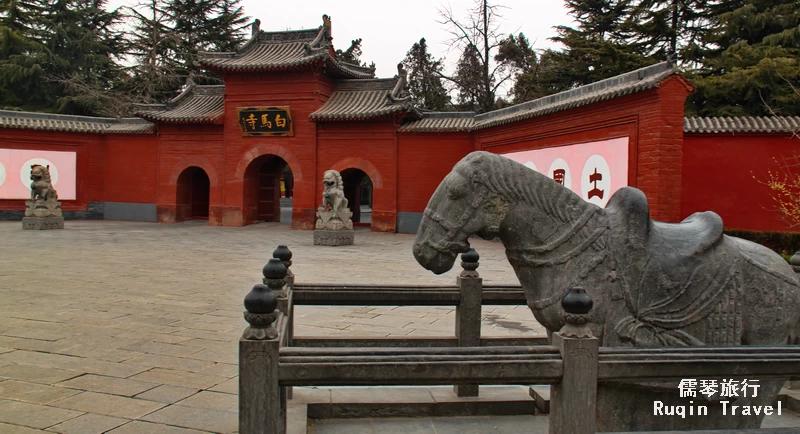
Inside, I paused before a Yuan Dynasty lacquered statue, perfectly preserved. It felt like the spirit of the temple was still alive.
- Address: Baima Town, Chanhe Hui District 洛阳市瀍河回族区白马寺镇
- Ticket: ¥35
- Bus: Line 56 or 58 to Baima Temple Station
4) Erlitou Xia Capital Site Museum – The Dawn of Chinese Civilization
Want to step back 3,500 years? Head to Erlitou (二里头夏都遗址博物馆), believed to be the earliest capital of China’s Xia Dynasty. This site is often called the “First Royal City of China.”

I was amazed by the artifacts here—jade dragon totems, ancient bronze vessels, and turquoise dragon-shaped carvings that proved early dynasties were anything but primitive.
- Address: No. 1 Zhenxun Avenue, Yanshi District 洛阳市偃师区斟鄩大道1号
- Ticket: Free (reservation required)
- Best by car or taxi (approx. 30 km from city center)
5) Luoyi Ancient City – Night Markets and Hanfu Dreams
When the sun set, I found myself pulled toward Luoyi Ancient City (洛邑古城), a vibrant recreation of a Tang-Song town. Lanterns lit up the night, and reflections danced across the canals.
Here, I rented a Hanfu outfit, had tea at a traditional teahouse, and watched a shadow puppet play—all within a few steps.

- Address: No. 171 Jiudu East Road, Laocheng District 老城区九都东路171号
- Ticket: Free (reservation recommended)
- Metro: Line 1 to Qingniangong Station
6) Sui-Tang Grand Canal Museum – Ancient Trade Comes Alive
This museum might be one of Luoyang’s hidden gems. It’s built right into the preserved Sui-Tang Grand Canal Museum (隋唐大运河博物馆), and it tells the story of the Grand Canal’s golden age.

I loved the immersive exhibits—some rooms smelled of grain, others echoed with boat sounds. It was like walking through a Tang Dynasty port.
- Address: Binhe North Road, Laocheng District 洛阳市老城区滨河北路
- Ticket: Free (reservation required)
- Bus: To Yunhe Museum Station
7) Yingtian Gate (Yingtianmen) – Gate to the Glorious Tang Dynasty
The south gate of Sui-Tang Luoyang Palace, Yingtianmen (应天门) has been beautifully rebuilt on its original site. I arrived just before dark and stayed for the “Tianmen Light Show”—a 3D projection performance that recreated imperial grandeur.

Standing beneath its massive wooden beams, I could imagine Tang emperors riding through.
- Address: No. 23 Dingding South Road, Laocheng District 洛阳市老城区定鼎南路23号
- Ticket: ¥60 (includes archaeological park)
- Metro: Line 1 to Yingtianmen Station
8) Shizi Street (Cross Street) – Where Food Meets Tradition
Every evening, I followed my nose—and it always led me to Shizi Street (十字街). This bustling market lane transforms into a red lantern-lit food corridor at night.

Skewers, dumplings, fried noodles, peony cakes… I lost count of how many dishes I tried. Street musicians played as I walked, chopsticks in one hand, camera in the other.
- Address: At the crossroads of West and East Streets, Loacheng District 老城区核心,西大街与东大街垂直交叉形成十字路口
- Ticket: Free
- Metro: Line 1 to Qingniangong Station
9) Luoyang Ancient Tomb Museum – Secrets Beneath the Soil
Luoyang Ancient Tomb Museum (古墓博物馆) is truly one-of-a-kind: the world’s first museum dedicated to ancient tombs. I wandered through 25 reconstructed tombs, from the Han to the Song dynasties. Each one was different—some painted, others sculpted.

The mural art exhibition was fascinating, tracing the evolution of Chinese burial traditions.
- Address: No. 6 Jichang Road, Laocheng District 洛阳市老城区机场路6号
- Ticket: Free (reservation required)
- Bus: Line 83 to Ancient Tomb Museum Station
10) Six-Horse Chariot Museum – Echoes of the Eastern Zhou
Built atop a real Eastern Zhou royal tomb (天子驾六博物馆), this museum showcases the famous “Tianzi Jia Liu”—the emperor’s six-horse chariot. The excavation site is open-air and jaw-dropping.

I stood above the pit of chariots and horse skeletons, stunned by how perfectly everything was preserved. It was both eerie and incredible.
- Address: No. 226 Zhongzhou Middle Road, Xigong District 洛阳市西工区中州中路226号周王城广场
- Ticket: ¥30
- Metro: Line 1 to Zhouwangcheng Square Station
11) National Peony Garden – Luoyang’s Blossoming Pride
Finally, I timed my visit just right to catch the International Peony Festival in April. The National Peony Garden (中国国花园) was bursting with over 1,200 varieties. I saw green, black, and even rainbow peonies—many I didn’t even know existed.

It was like walking through a floral fairytale.
- Address: No. 2 Longmen Avenue, Luolong District 洛阳市洛龙区龙门大道2号
- Ticket: ¥40 (during bloom season)
- Bus: Line 33 or 55 to Peony Garden Station
Tips for Exploring Luoyang’s Attractions
- Plan by Dynasty: Try theme days like “Summer-Zhou Journey” (Erlitou + Six-Horse Chariot) or “Tang Revival” (Yingtian Gate + Grand Canal Museum).
- Museum in the Morning: I liked visiting museums earlier in the day when it’s quiet and cooler.
- Night is for Strolling: Save your evenings for Luoyi Ancient City, Shizi Street, or the Yingtian Light Show.
- Reserve Ahead: Free sites often require booking 3 days in advance—especially during holidays or festival seasons.
6. Luoyang–Shaolin Temple–Dengfeng–Zhengzhou 2-Day Cultural Exploration
A Signature Journey in the Heart of China
As part of this Luoyang Travel Guide, I couldn’t miss sharing one of my favorite short trips—an unforgettable two-day journey that takes you from imperial Luoyang to the birthplace of Zen Buddhism and kung fu, and then onward to Zhengzhou, the heart of central China’s modern pulse.

It’s a perfect route for travelers who want to experience the soul of Chinese civilization in just 48 hours.
Day 1: Luoyang → Shaolin Temple → Dengfeng
Morning: Depart Luoyang
I left early, just as the city woke. The road to the Shaolin Temple winds through rolling mountains and morning mist.
Getting there:
- Bus from Luoyang Bus Station (about 1.5 hours, get off at Shaolin Temple stop)
- Car or ride-hailing (about 1 hour, more flexible)
Tip: Depart before 8 AM to beat tour crowds.
Explore Shaolin Temple
The moment I walked through the temple gate, the sound of monks chanting echoed among ancient ginkgo trees.
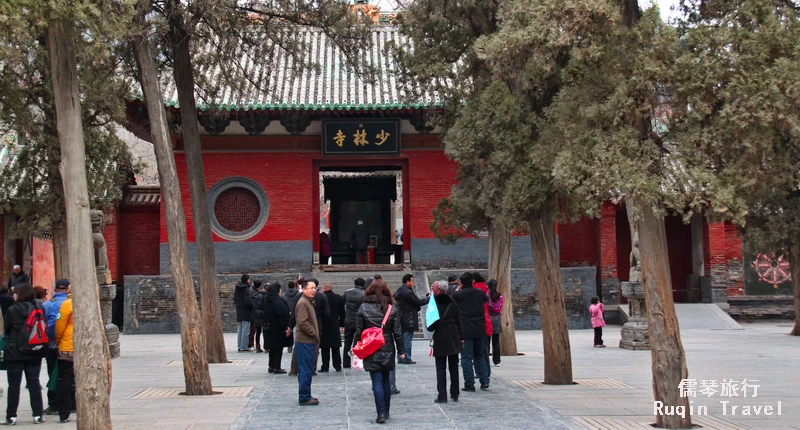
Highlights I experienced:
- Main Temple Complex: Stone courtyards, incense smoke, and ancient halls where Zen Buddhism took root.
- Pagoda Forest: Over 240 brick pagodas honoring generations of monks.
- Martial Arts Show: A must-see! I watched real Shaolin disciples kicking spears and breaking bricks with their fists.
- Optional: Cable car up to Sanhuang Village (三皇寨) or sweeping mountain views.
Lunch: I ate in the temple’s vegetarian hall—simple dishes, surprisingly flavorful.
Evening: Arrive in Dengfeng
A quick taxi ride brought me into Dengfeng city. I stayed near Zhongyue Avenue where hotels and food stalls lined the streets. Dinner was local comfort food—hot noodle soup and freshly baked flatbread.
Day 2: Dengfeng → Zhengzhou
Morning Cultural Route
Dengfeng is often called the “Center of Heaven and Earth.” I spent the morning exploring three historic gems:

- Zhongyue Temple 中岳庙 (2 hours): One of China’s oldest Taoist temples, older than many dynasties.
- Songyang Academy 嵩阳书院 (1.5 hours): A tranquil Confucian academy under a 4,500-year-old cypress tree.
- Optional: Observatory Platform 观星台, China’s oldest astronomical site.
Afternoon: Head to Zhengzhou
After lunch, I headed to Zhengzhou.
- Bus from Dengfeng Station: Every 30 minutes, 1.5 hours total
- Car or ride-hailing: Direct to Zhengzhou East High-Speed Rail Station
Travel Tips
- Best Seasons: April–May, September–October
- Budget (per person):
- Transport: ¥150–200
- Tickets: Shaolin Temple ¥80
- Food & lodging: ¥250–400 total
- Essentials: Comfortable shoes, sunscreen, camera, some cash
This route is short—but it’s powerful. In just two days, I moved through Buddhism, Confucianism, martial arts, imperial history, and modern China. It’s not just a trip—it’s a journey through the very core of Chinese civilization.
7. A Taste of Time — Food Adventures in Luoyang
If Luoyang’s streets could talk, they’d speak in steam, spice, and sizzling sounds. In every alley and market, in every bowl and bun, there’s history. That’s why I couldn’t write this Luoyang Travel Guide without devoting an entire chapter to one of the city’s greatest treasures: its food.
From imperial feasts to humble street snacks, Luoyang’s cuisine doesn’t just fill your stomach—it tells stories passed down through centuries. And I’m taking you on that journey, one bite at a time.
1) Peony Cakes — A Taste of Spring in Every Bite
I still remember the first time I tasted a peony cake (牡丹香糕). Soft, slightly sticky, with a gentle floral sweetness—it felt like spring melting on my tongue. These treats blend the elegance of Luoyang’s signature flower with old-school pastry technique.
There are new flavors too—matcha, chocolate, and purple sweet potato—but I recommend starting with the original.
- Where to find it: Head to the intersection at Bajiaolou (八角楼), right in Old Town’s Shizi Street. Look for the elderly man with a wooden cart—locals say his recipe hasn’t changed in decades.
2) Luoyang Shui Xi (Water Banquet) — The Flowing Feast of Emperors
This isn’t just a meal. It’s a 24-course performance, originally created for Empress Wu Zetian. Each dish arrives one after another, hot and soupy, like a river of flavors flowing from your bowl.
My favorite? Definitely the legendary Peony Swallow Dish (牡丹燕菜). Don’t be fooled—it’s not real bird’s nest, but finely shredded radish steamed to silky perfection, topped with a delicate egg blossom shaped like a peony.
- Where to try it:
- Guanji Water Banquet (管记水席) — Hidden in a small alley on Xianguo Market Street, affordable and authentic ((老城区仙果市街).
- Xinghuacun Restaurant (杏花村) — For a more atmospheric, old-world feel on West Street (老城区西大街).
3) Beef and Lamb Soup — The Soul of Luoyang Mornings
Every morning in Luoyang starts the same way: with steam rising from a bowl of rich, meaty broth. I joined locals in tiny shops just after dawn, slurping down what they call “first pot soup”—a daily ritual rooted deep in memory and tradition.
Sweet or salty? That’s your first decision. “Sweet” means the unseasoned original broth—mild and pure. Locals soak flatbread or baked buns into the bowl until it becomes the ultimate comfort food.
- Where to go:
- Tie Xie Lamb Soup (铁谢羊肉汤) — Out in Mengjin District (孟津区). A bit of a journey, but so worth it.
- Nanguan Small Bowl Beef Soup — A city favorite with several branches. The broth? Milky white and impossibly rich.
4) Pan Jinhe Roast Chicken — A Century of Flavor
Crispy, juicy, salty-sweet—Pan Jinhe’s chicken (潘金和烧鸡) isn’t just food. It’s heritage. This family-run shop has been around since the Qing Dynasty. Their secret? A century-old pot of master brine that gets richer with every batch.
I bought one to take on the train. The smell filled the cabin. Even strangers asked where I’d gotten it.
- Tip: Make sure to buy from the official shop. It’s perfect as a takeaway gift too.
5) Jiang Mian Tiao 浆面条 (Sour Fermented Noodles) — Sharp, Bold, Unforgettable
This is the taste of Luoyang’s gritty, soulful street life. These noodles are boiled in fermented mung bean soup, giving them a tangy, slightly funky kick. Locals say you have to try it three times: first out of curiosity, second to understand, and third because you’re addicted.
Add celery bits, chili oil, and crunchy soybeans, and you’ve got a flavor bomb.
- Go here:
- Old Street Jiang Mian Tiao 老街坊浆面条— Milder acidity, great for first-timers.
- Ma Ji Noodle Shop马记面条糊涂面 — Also try their “hutou noodles,” another local gem.
6) Huicai 烩菜 (Braised Stew Pot) — Comfort in a Clay Pot
This dish reminded me of home. A hot pot of meatballs, flat noodles, mushrooms, and greens, slow-cooked in broth until everything melts together. It’s humble. It’s hearty. And in chilly weather, it warms you from the inside out.
- Local pick:
- Xiao Qi Gui Huicai (小气鬼烩菜) — The name means “stingy ghost,” but don’t worry—the portions are anything but stingy.
7) Luoyang Guotie 洛阳锅贴 (Crispy Dumplings) — Golden Bites of Heaven
You’ll hear them before you see them—the sizzle of oil, the crunch of golden bottoms. Luoyang’s dumplings are legendary for their “ice flower” crust—thin and crispy like lace, contrasting with the tender filling inside.
I stood in line for 20 minutes at one shop—and yes, it was absolutely worth it.
- Where to queue:
- Xigong Xiaojie Dumplings 西工小街锅贴— A local legend. You’ll know it by the crowd.
My Foodie Game Plan:
- Morning: Start with beef or lamb soup—the earlier, the better.
- Lunch: Go full-on with a Water Banquet or a big pot of Huicai.
- Afternoon snack: Peony cake from a street cart.
- Evening: Head to Shizi Street (十字街) for dumplings, roasted chicken, and a bowl of fermented noodles under red lanterns.
- Late-night: One more bowl of soup—or maybe another dumpling. Who’s counting?
Luoyang taught me something I didn’t expect: that food can be a time machine. A simple bite here might carry the echo of a Tang Dynasty banquet or the memory of a family breakfast during the Ming. So take your time. Be curious. Try it all. Because in Luoyang, every meal is a story—and every flavor is part of the legend.
8. Souvenirs & Gifts from Luoyang – Take the Ancient Capital Home
Whenever I leave Luoyang, my suitcase is never the same as when I arrived. It’s heavier—not just with gifts and snacks—but with stories, symbolism, and pieces of history. In this part of the Luoyang Travel Guide, I want to show you what to take home so that your journey doesn’t end when you leave. These are not just souvenirs—they are cultural memories you can touch, taste, and share.
Edible Memories: Tastes That Speak of Luoyang
1) Luoyang “Eight Famous Pastries” (老八件)
The moment I opened the box, I felt like I had opened someone’s childhood. Each pastry—sesame crisp, double-flavor cake, sweet and savory rounds—tells a story of local life. The flavors are simple, gentle, and comforting.
- Best place to buy: Wanjingxiang Specialty Stores (万景祥·洛阳名特产” 连锁店), especially the branch at Kaiyuan Lake Metro Station (开元湖地铁站店) —open late for last-minute shoppers.
2) Peony Cakes (牡丹饼)
Biting into one is like tasting springtime in Luoyang. Soft, floral, slightly sweet—the kind of snack that makes you pause and smile.
- Tip: Look for “same-day made” labels for the freshest flavor.
3) Dukang Wine (杜康酒)
Mentioned by ancient warlords and poets, this is no ordinary liquor—it’s a symbol of Chinese heritage. I brought a bottle home and poured it for friends, telling them, “This is the wine that supposedly cured sorrow.”
- Buy wisely: Choose official retailers inside large supermarkets like Dennis or Dazhang (丹尼斯、大张).
4) Peony Flower Tea 牡丹花茶
Drop one dried blossom into hot water and watch it bloom again. The petals swirl as the tea turns golden. It’s like a poem unfolding in your cup.
- Tip: If your luggage is full, order directly from local brands online, such as Wu Huang Peony (武皇牡丹).
Cultural Treasures: Art You Can Hold
5) Peony Porcelain (牡丹瓷)
These delicate sculptures capture Luoyang’s most iconic flower in porcelain form—forever in bloom. I stood in the gallery, mesmerized. Each petal looked alive.
- Where to buy: Datang Li Zhiguo Peony Porcelain Art Museum (大唐李治国牡丹瓷艺术馆)– museum-quality authenticity guaranteed.
6) Luoyang Embroidery (洛绣)
Every stitch holds centuries of tradition. These works are called “paintings made of thread.” Whether framed or made into bags and accessories, they carry elegance and meaning.
- Best shopping area: Lijing Gate Old Street and Luoyi Ancient City craft shops.
7) Creative Cultural Gifts 创意文创产品
Luoyang has mastered the art of making tradition fashionable:
- Tang-style bronze mirrors turned into compact mirrors
- Mini Tang Sancai horse figurines
- Prayer bead bracelets infused with incense ash from White Horse Temple
I couldn’t resist collecting a few. They are light, meaningful, and full of charm.
As my journey comes to an end, one thing is certain—Luoyang is more than an ancient capital; it’s a living storybook. From hidden alleyways to grand stone Buddhas, from morning soup stalls to glowing night markets, every corner holds a memory waiting to be made.
I hope this Luoyang Travel Guide helps you wander deeper, taste braver, and connect more meaningfully with this timeless city. Whether you come for a weekend or stay much longer, Luoyang has a way of staying with you. So pack your curiosity—Luoyang is ready to welcome you with open arms and centuries of stories.
About the Author
Ruqin is the founder of Ruqintravel.com and has spent more than four decades working in China’s travel industry. Drawing on hands-on experience in cities like Beijing and Hangzhou, he personally researches and updates each guide to help international travelers navigate China with confidence.
Further Reading
Longmen Grottoes & Shaolin Temple Day Trip from Beijing by Bullet Train
Xi’an to Luoyang Day Trip: Longmen Grottoes & Shaolin Temple
The Best Luoyang Tour Itinerary
How to Book Luoyang Attraction Tickets: All You Need to Know
2 Day Beijing Luoyang Tour to Longmen Grottoes and Shaolin Temple