
The Long Drive North
Written and updated by Ruqin
Last updated: March 9, 2026
Two days ago I made a long solo drive from my hometown Hangzhou to Beijing, a city I often call my second hometown.
I once lived in Beijing for nearly thirty consecutive years. Even now, although I spend most of my time in Hangzhou, I still return to Beijing regularly. Each time I arrive, I feel a quiet familiarity, as if part of my life is still rooted here.
This time I decided to drive.
I left my home in Hangzhou at 5:00 in the morning and arrived at my residential neighborhood in Beijing a little after 9:00 in the evening. The distance is about 1,275 kilometers. It sounds like a daunting journey, but the drive turned out to be smoother than expected.
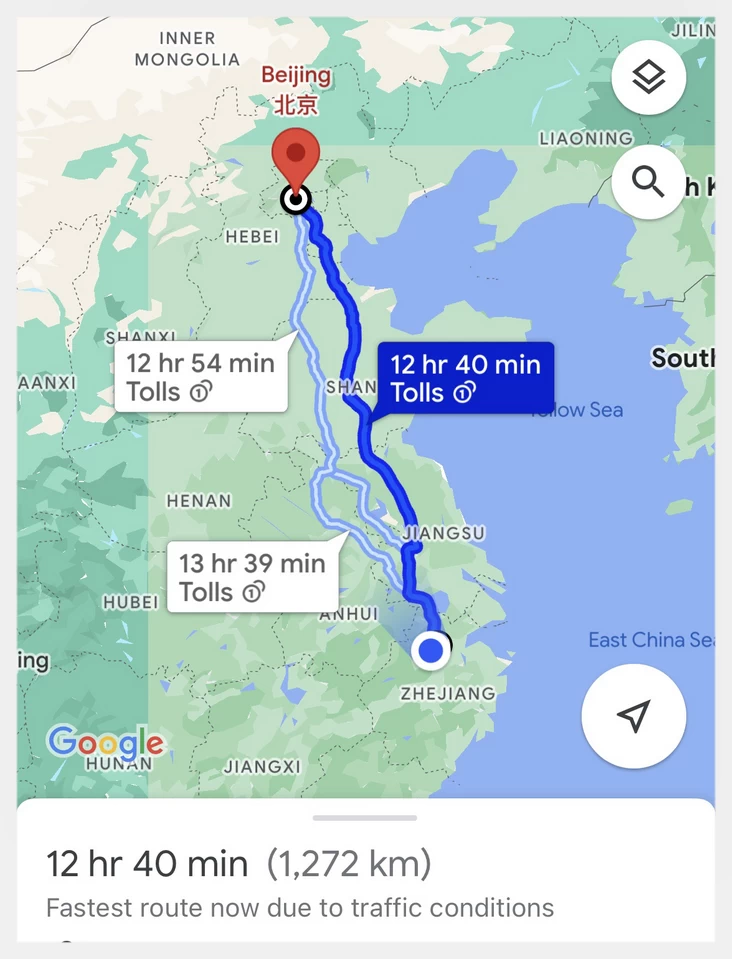
Driving from Hangzhou to Beijing (Google Map)
The weather stayed clear the entire way. I was fortunate. On previous drives I had encountered heavy autumn fog with extremely low visibility, which made long-distance driving much more exhausting.
Another reason the trip felt manageable was the expressway service areas along China’s highways. They are remarkably well equipped. Besides fuel stations and clean restrooms, you can find restaurants of all kinds—simple snack counters, buffet halls, and small à la carte eateries. There are hot-water stations for tea, small convenience shops, and even shower rooms in some larger service centers.
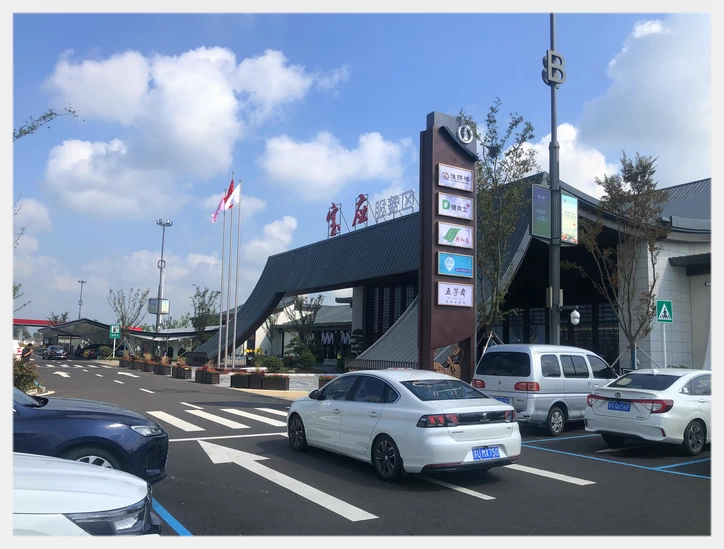
Baoying Service Stop in Jiangsu Province.
During my self-driving trips in the United States years ago—over ten thousand kilometers in total—the highway rest areas were usually much simpler. A restroom, some benches, and perhaps a small dog-walking area.
China’s highway service areas feel almost like small travel plazas.
But if I am honest, what helped me finish the long drive in one day was not just the road conditions. It was my eagerness to see Beijing again after the long interruption of the pandemic years. For almost three years I had not returned.
The moment I entered the city, I felt that familiar sense of coming back.
An Early Morning Walk by the City Moat
The next morning I woke up at five o’clock, as I usually do, wherever I happen to be living.
Morning exercise has been part of my daily routine for many years. Sometimes I jog, sometimes I take a long brisk walk.
In Beijing, one of my favorite places for a morning walk is the greenway along the old city moat, not far from where I stay.
The pathway follows the former moat that once protected the old city walls and now circles much of the Second Ring Road. Altogether the route stretches for about 35 kilometers, forming one of the most runner-friendly walking routes in the center of Beijing.
The greenway is generally divided into two sections: the North City Moat Bank Road and the South City Moat Road. That morning I walked along the southern section.
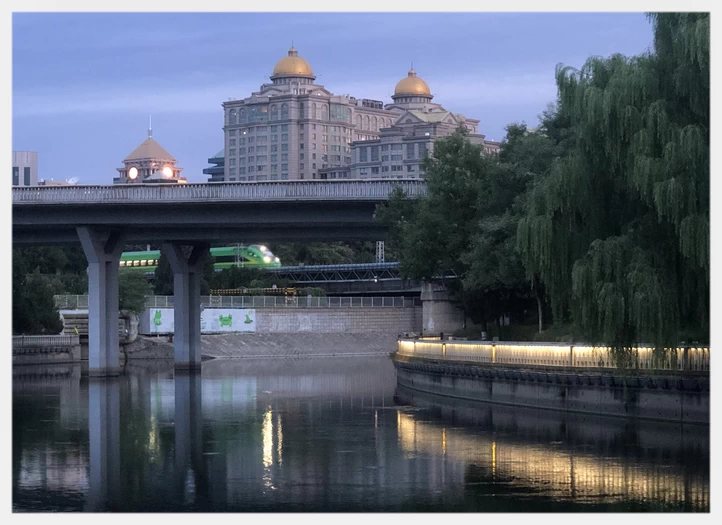
A Green-color Train is leaving Beijing
As I walked down toward the trail, I suddenly noticed a green passenger train leaving Beijing Railway Station in the distance. It crossed the Dongbianmen Railway Bridge above the moat and slowly disappeared toward the east. From where I stood I could not read the destination signs.
Watching a train move through the early morning city always stirs my imagination.
A departing train, a plane lifting into the sky, or even a car speeding along an open highway often gives me the same feeling—the quiet urge to travel somewhere new, to step away from familiar routines and discover something different.
The Rhythm of the Morning Trail
When I reached the walking path along the water, I saw that many early risers had already arrived.
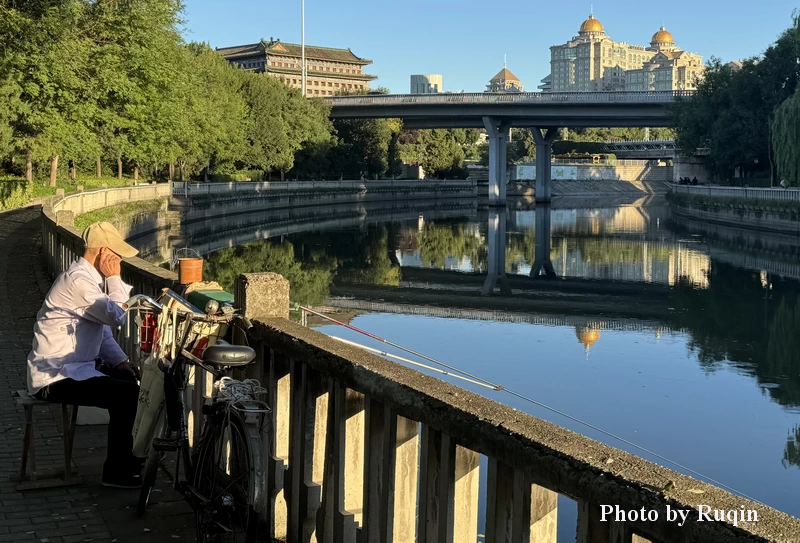
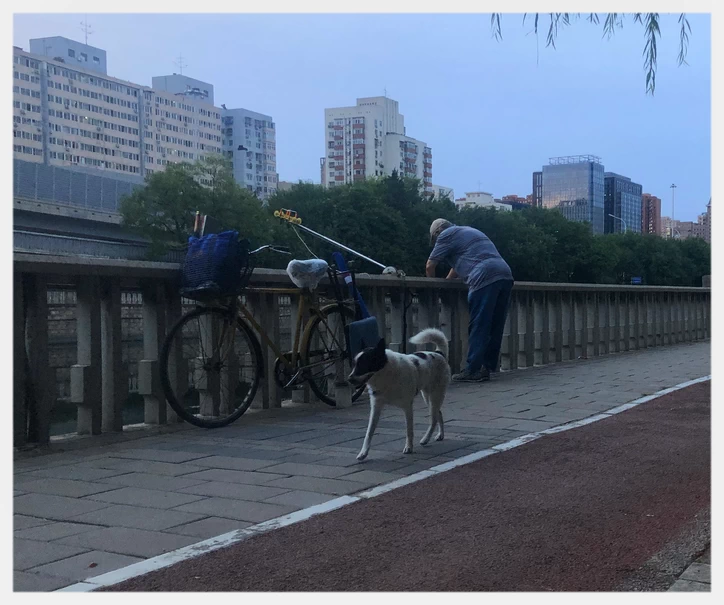
Some people were jogging. Others were walking briskly in small groups. A few elderly men had already set up their fishing lines along the edge of the moat. For them, angling seems to be the perfect way to begin the day.
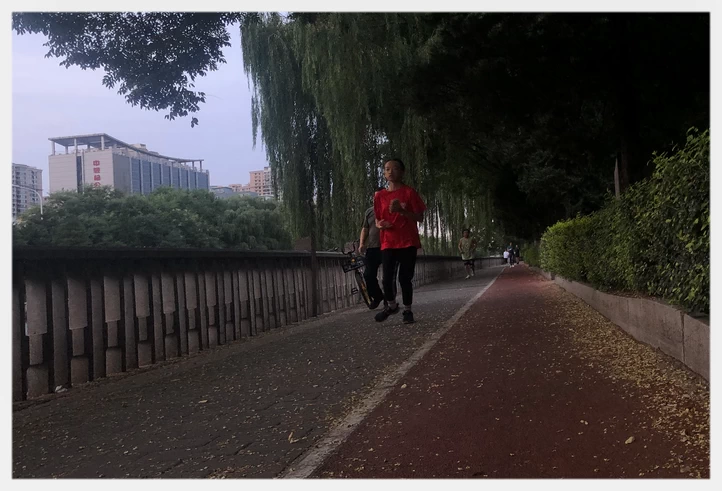
People Running along the city moat trail
The crowd represented many different ages and backgrounds. Some were retirees moving slowly along the path, others were young office workers finishing a run before heading to work.
The trail itself is carefully maintained. Willow trees line the water’s edge, their long branches gently touching the surface of the moat. Layers of trimmed shrubs separate the walking path from the road above.
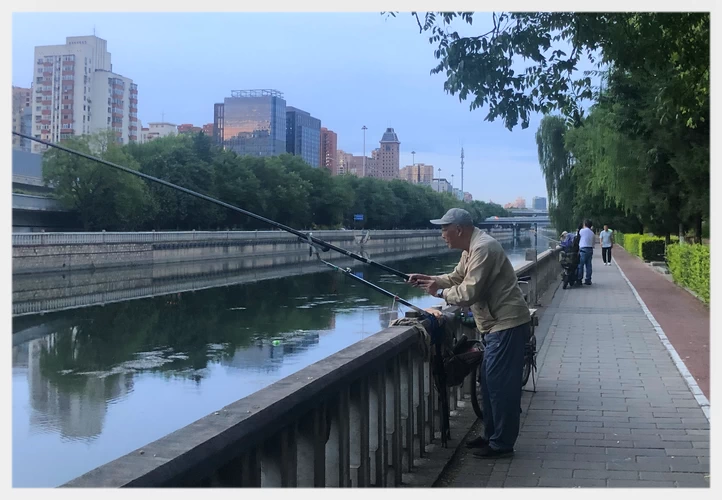
A senior angler
The pathway has two surfaces: a brick pedestrian path and a red rubber running track beside it. In a few places the rubber surface has begun to crack and peel slightly, a small reminder that even well-built public spaces need constant care.
Still, the setting felt peaceful.
The willow branches reflected in the water, and the soft light of early morning created a quiet scene that almost felt poetic. Despite being in the center of a huge city, the atmosphere was calm.
A Small Moment on the City Moat
After finishing my five-kilometer walk, I climbed the stone steps from the trail up to the road above the moat.
At that moment I noticed something that made me pause.
In the far distance, the tallest building in Beijing—the CITIC Tower, often called China Zun—rose clearly above the skyline. The early morning light was just touching its glass surface.
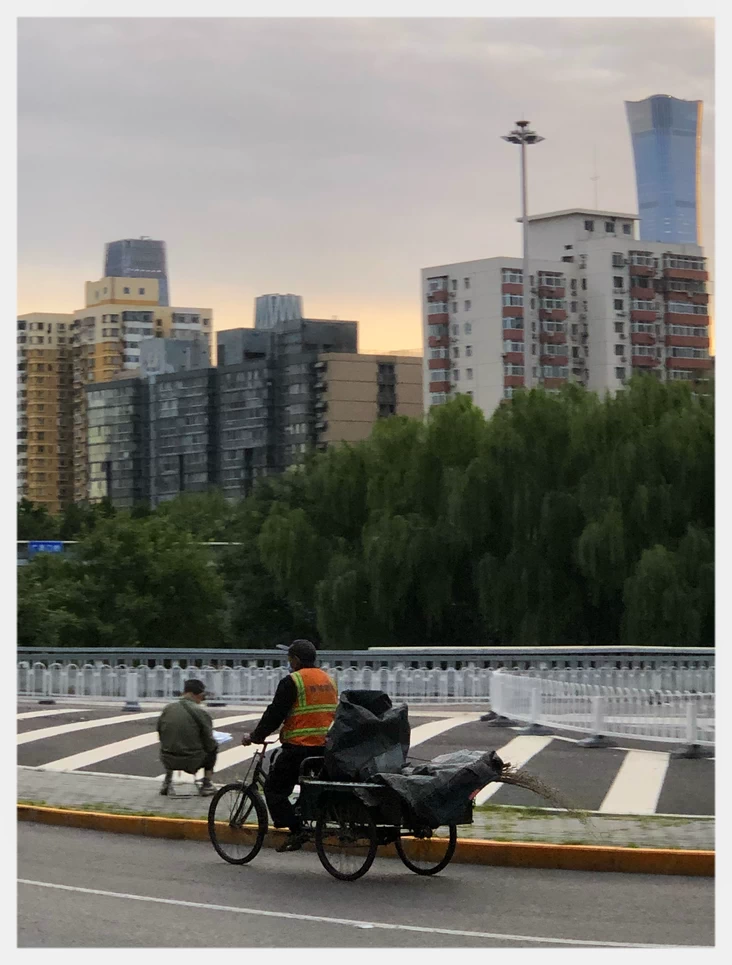
A painter and a street cleaner
In the foreground, a street cleaner riding a small tricycle slowly crossed the road.
For a moment the whole scene looked like a carefully composed picture: the quiet worker, the wide road, and the modern skyscraper standing far beyond him.
I suddenly felt that the man himself had become part of the picture he was helping to create.
Often we do not realize how beautiful our ordinary surroundings are simply because we are living inside them.
A City Waking Up
On my way home I deliberately crossed Jianguomen Bridge.
From there I could see the first glow of the sunrise spreading across the eastern sky. A new day was beginning.
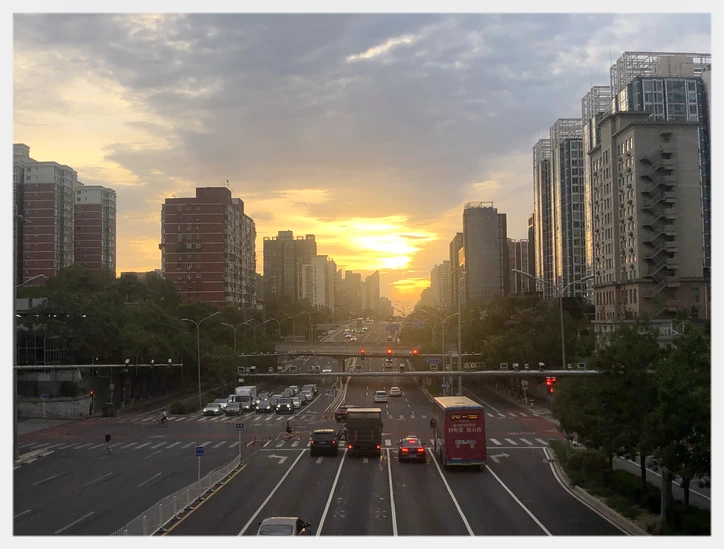
The Sunset glow over Guangqumen Bridge
Along the nearby streets, commuters were already gathering around the small breakfast stalls. Students in school uniforms waited in line for warm buns and soy milk. Office workers quickly bought pancakes, fried dough sticks, or steamed dumplings before heading toward the subway entrances.
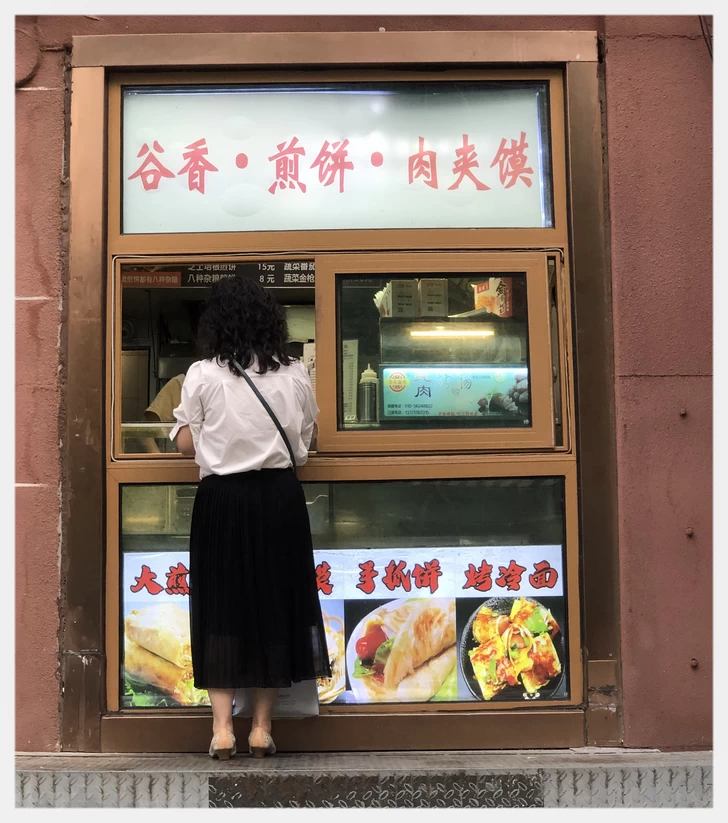
A lady is buying her breakfast at a hole in the wall.
The smells of fresh breakfast drifted through the morning air.
Everything was moving at its usual pace.
Watching the scene, I felt something very familiar about the city again. Despite its enormous size and constant development, Beijing still feels calm and down-to-earth, following its own steady rhythm of daily life.
Each time I return, that quiet rhythm makes me feel at home again.
About the Author
Ruqin is the founder of Ruqintravel.com and has spent more than four decades working in China’s travel industry. Drawing on hands-on experience in cities like Beijing and Hangzhou, he personally researches and updates each guide to help international travelers navigate China with confidence.
Further Reading
Beijing City Walks: Routes, Maps & Essential Travel Tips
Beijing Hutong Walks: Routes, Maps & Local Tips
Beijing CBD Photo Walk — Jianguomen Bridge to Guomao Bridge
Riverside Walk from Liangma River to Solana
Beijing Second Ring Road Moat Greenway Walk
Qianmen Street Beijing: Map, Food, Shopping & Local Tips
Caochang Hutongs in Beijing: Maps, Routes, Top Sights & Tips
Sanlihe Park Beijing: Map, Highlights and Travel Tips