Written and updated by Ruqin
Last updated: March 9, 2026
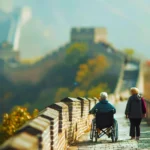
Not long ago, I visited the Badaling section of the Great Wall with my friend James, a wheelchair user and an endlessly curious traveler. Before we arrived, I wasn’t sure what to expect. The Wall climbs steep mountain ridges, after all. Yet that day became the beginning of this Badaling Great Wall Wheelchair Accessible Guide.
To my surprise, Badaling has made real progress in accessibility. Smooth ramps and step-free paths now connect parts of the site that once felt unreachable. I still remember watching James roll steadily upward toward North Tower No.1, smiling the whole way.
So in this guide, I’ll walk you through what we discovered—accessible routes, ramps, rest stops, and where to find accessible toilets. If you’re traveling with a wheelchair, these details can make planning your visit much easier.
1. Rolling Up to the Wall: Ramp and Lift Access
Many travelers imagine that visiting the Great Wall always means climbing long flights of steep stone steps. At Badaling, that’s not the only way. On my visit with James, we discovered that you can actually roll up toward the Wall using thoughtfully designed accessible routes.

Badaling now offers two practical barrier-free options. The first is a wide ramp path that gradually climbs the hillside, allowing wheelchair users to move up at a steady, manageable pace. The second is a small vertical lift system that helps visitors bypass one of the steeper sections.
Both options make it possible to reach the Wall safely and comfortably. In the sections below, I’ll walk you through exactly where to find them and how each one works, based on what we experienced that day.
1) The Wheelchair Accessible Ramp Route
Our adventure truly began at the entrance of the Badaling Great Wall Scenic Area.
James and I followed the clearly marked signs for the accessible route. They were everywhere—bright, easy to spot, and bilingual. That small detail already gave us confidence. China was ready for us.

Just past the Fortress West Gate (关城西城门), near Wangjing Square (望京广场) on the north side, we found it—a long, gently sloping path. This was the Badaling Great Wall accessible ramp slope, and it looked brand new.

The ramp stretched about 180 meters. Wide enough for smooth turns. Gradual enough for James to move on his own. No bumps. No awkward tilts. Just a steady path that slowly rose toward the wall.
Step by step—or wheel by wheel—we made our way up.

As we reached the East Platform (东平台), the view suddenly opened up. The mountains rolled in the distance. The ancient stone snaked along the ridge. The moment felt unreal. We were standing—well, James was rolling—right next to the Great Wall.
But that wasn’t all.

From the East Platform, a short accessible path leads directly to the first watchtower, North Tower 1. This ramp is a bit hard for James. But he made it.
This is where James did something that moved me deeply—he reached out and touched the wall. Cold, rough stone under his fingers. Not just a view. A real connection.
That ramp wasn’t just concrete. It was freedom. It was a bridge between history and possibility.
2) Badaling Accessible Lift: A Hidden Option Few Know About
While the Badaling Great Wall accessible ramp slope is smooth and reliable, there’s another way up—one almost no one talks about.
It’s a vertical accessible lift, discreetly tucked near the base, just below the East Platform. You won’t find crowds here. In fact, every time I’ve visited, it’s been completely empty.

This elevator stands just over two meters high. It was designed specifically for guests with mobility challenges. If you—or your friend—prefer to skip the long ramp, this is a great option. But there’s a catch: you need to book it in advance. The staff doesn’t always keep it running unless someone requests it.
During our visit, James didn’t need it. He actually enjoyed the ramp—said it made him feel more connected to the landscape. But on colder days, or when he’s tired, I know he’d appreciate this faster route.
3. Scenic Lift to the Sky: Cable Car Options at Badaling
Sometimes, the best way to experience the Great Wall isn’t by climbing—it’s by floating gently toward the sky.
1) Badaling North Line (Most Recommended) – Taking the Cable Car
Of all the Badaling accessible travel options, the northern cable car line is the one I always recommend first. It’s convenient. It’s beautiful. And yes—it’s accessible.
When James and I visited this time, we wanted to see the wall from above. So, we followed the signs from the entrance toward the northern cable car station (北线缆车). The path was smooth the entire way, and ramps led us right to the station doors.

Staff members greeted us warmly. The moment they saw James’s wheelchair, they jumped into action. “Don’t worry,” one of them said in English, “we’ve got you.”
The gondolas don’t stop completely—they glide slowly through the platform. There’s a narrow gap between the floor and the car, so getting in takes teamwork. Sometimes they help transfer a guest from a wheelchair to a fixed seat. Other times, they slow the car and gently roll the wheelchair in. It all depends on what you need—but they’re ready either way.
Once inside, we rose steadily above the treetops. The mountains opened before us. The wall snaked along the ridges, ancient and endless.
At the top, the gondola stopped at Tower 7. The platform there is wide and mostly flat—perfect for wheelchair users. We lingered, took photos, and let the view sink in.
North, south, everywhere we looked—the wall stretched like a stone ribbon across the mountains.
We didn’t try to go higher. Past Tower 7, the stairs get steep and rough. But honestly, we didn’t need more. The moment was already perfect. Later, we rode the cable car back down the same way. Easy, smooth, and unforgettable.
2) Badaling South Line (An Easy, Reliable Alternative) – Funicular Railway Ride
If you’re looking for a gentler way up the Wall, the south line funicular (南线地面缆车) might surprise you.
On another visit, James and I decided to explore a different route—something quieter, less dramatic, but still unforgettable. According to the Badaling Great Wall Accessible Guide, the southern route is one of the best options for barrier-free travel.
We followed signs to the funicular station near the main entrance. It was easy to reach. Elevators, smooth ramps, and wide passageways were all in place. The entire station felt new and thoughtfully designed for disability travel.

The funicular itself looked like a mini train on tracks. It moved slowly and steadily up the mountain. What impressed us most? The car floor and platform aligned perfectly. No gap. No lifting. No transfer needed.
James simply rolled straight into the carriage. No fuss. No stress. For wheelchair users, this was by far the smoothest boarding experience of the whole trip.
The ride took us up to Tower 4 on the south section of Badaling Great Wall. It wasn’t as high as the north side, but the platform was flat and wide, with an open view of the surrounding hills. The Wall still looked majestic, winding through the mountains like a living history book.
We stayed here a while, just soaking it in.
Stairs led off in both directions, but we didn’t push it. We knew this platform was the most accessible and safest place to explore.
Later, we took the funicular back down—no hassle, no delay.
4. Practical Tips for a Smooth Badaling Accessible Visit
Before visiting Badaling with James, I worried about the practical details—restrooms, transportation, and whether we could find a wheelchair on site. Thankfully, the area is much better prepared for accessibility than many travelers expect.
We began at the Visitor Center, where James was able to borrow a wheelchair for free. All he needed was an ID and a small refundable deposit. The chair was clean, sturdy, and perfectly suitable for moving along the accessible paths.
Getting there was also straightforward. We took the high-speed train from Beijing Qinghe Railway Station to Badaling Great Wall Station. Elevators were available in the station, and the shuttle bus connecting to the scenic area had barrier-free access, which made the transfer easy.
If you’re arriving by car, you’ll find clearly marked accessible parking spaces near the entrance. Once inside the scenic area, accessible restrooms are available in several convenient spots, including near the entrance plaza, around the cable car stations, and at the East Platform. Signage is generally clear and easy to follow.
The staff we met were attentive and willing to help. A couple of simple Chinese phrases can also be useful:
“请问,无障碍通道怎么走?” — Where is the accessible path?
“需要帮忙。” — I need help.
One tip I always share: give yourself plenty of time. We spent nearly six hours there, including transportation, which allowed us to move comfortably, take breaks, and enjoy the views.
For updated accessibility information:
📞 010-69121268
Emergency numbers in China:
📞 110 (police)
📞 120 (ambulance)
I hope this Badaling Great Wall Wheelchair Accessible Guide helps you plan your visit with a little more confidence and ease.
When I stood on the Wall that day with James, the moment felt bigger than the journey it took to get there. The mountain air was crisp, the watchtowers stretched across the ridges, and the ancient stones carried centuries of history beneath our wheels and feet. Seeing James reach the Wall on his own reminded me that travel is often about possibility—finding a way forward, even in places that seem impossible at first glance.
So when you visit, give yourself time. Move slowly, pause often, and take in the views rolling over the mountains. Whether you arrive by ramp, lift, or shuttle, the moment you reach the Wall is something you’ll remember long after the trip is over.
About the Author
Ruqin is the founder of Ruqintravel.com and has spent more than four decades working in China’s travel industry. Drawing on hands-on experience in cities like Beijing and Hangzhou, he personally researches and updates each guide to help international travelers navigate China with confidence.
Further Reading
How to Get to Badaling Great Wall: Buses, Trains, Maps & Tips
Best Hiking Trails at Badaling Great Wall: Maps and Hiking Tips
Badaling Great Wall Autumn Photography: Best Photo Spots & Tips
Badaling Great Wall Spring Flowers:Map, Tips & Best Photo Spots
Best Time to Visit Badaling Great Wall: Weather, Crowds & Tips
Badaling Great Wall Railway Station: Maps, Tickets, Times & Tips
Qinghe Railway Station: Maps, Tickets, Timetable & Travel Tips
Mutianyu Great Wall vs Badaling Great Wall – Your Ultimate Guide