Written and updated by Ruqin
Last updated: April 23, 2026
If you’re anything like me—always chasing places that feel like stepping into a time machine—this Xi’an Travel Guide is your perfect start. Xi’an swept me off my feet the moment I arrived. Once the heart of the Silk Road, this ancient city pulses with 3,000 years of history.
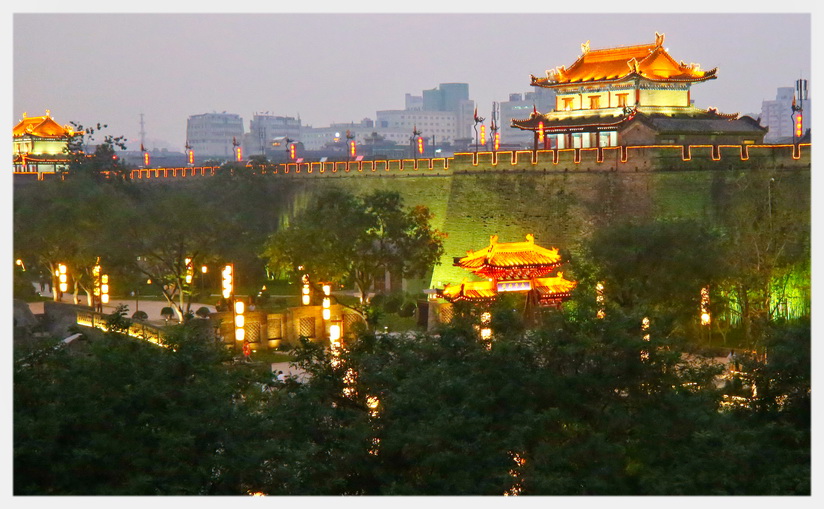
I’ll never forget walking the old city wall, watching modern life unfold below. From the silent Terracotta Warriors to the sizzling street food stalls, every moment felt unreal. Whether you’re into culture, cuisine, or quiet temples, Xi’an has it all. So, ready to explore? Let’s dive into the magic together.
1. Seasons of Xi’an: Finding the Best Time to Visit This Timeless City
Before I packed my bags for Xi’an, I had one big question: When’s the best time to go? So in this Xi’an Travel Guide, let’s talk about the city’s “personality”—its seasons. Trust me, knowing what to expect makes the journey smoother, more comfortable, and honestly, more magical.

Xi’an has four distinct seasons. Each one feels like meeting a different version of the city. Some days are bright and lively, others soft and mysterious. It’s like traveling with a friend who keeps changing outfits!
Spring (March–May) was my personal favorite. Everything wakes up—flowers bloom, birds sing, and the air feels fresh and full of promise. Days are mild, but mornings and evenings still carry a chill. I dressed in layers, like an onion—T-shirt, windbreaker, and a light scarf that doubled as a cute accessory.
Summer (June–August), however, turned up the heat—literally! Xi’an sizzles in July, with thick humidity and blazing sun. One minute it’s sunshine, the next, a surprise thunderstorm. I stayed cool with loose cotton clothes, big sunglasses, and lots of sunscreen. And yes, I always carried an umbrella—shade or shelter, depending on the mood.
Autumn (September–November)? Pure magic. Clear skies, golden light, and the smell of osmanthus flowers everywhere. I wore long sleeves, a light jacket, and spent hours walking the old city walls under soft, golden sun.
Winter (December–February) brought a dry, biting cold. Though snow was rare, the chill was real. I bundled up in a puffy coat, warm boots, and fuzzy gloves.
So, when’s the best time to visit Xi’an?
Without a doubt: April, May, September, and October. Perfect weather, stunning views, and outdoor adventures galore.
Whatever season you choose, Xi’an is always ready to welcome you—with ancient charm and open arms.
2. Finding My Place in Time: Best Places to Stay in Xi’an
Before I ever set foot in Xi’an, I had no idea where to begin. This city is massive—layered with history, buzzing with life. But as I started digging deeper for this Xi’an Travel Guide, I realized something magical: each district feels like stepping into a different chapter of China’s story.

Some districts pulse with Tang Dynasty grandeur. Others whisper secrets of emperors or sizzle with the smell of grilled lamb skewers. Picking the right area to stay isn’t just about convenience—it’s about choosing your time and place in Xi’an’s timeline.
So let me walk you through the neighborhoods that shaped my stay, and help you choose your perfect basecamp.
1) Beilin District 碑林区: The Beating Heart of the Old City
If Xi’an had a soul, I swear it lives right here—in Beilin District, the city’s ancient core. Streets here still follow a traditional grid, radiating out from the Bell Tower like clockwork. Every corner hums with old-city energy. This is where I felt closest to Xi’an’s ancient pulse.
Must-See Spots:
- Xi’an City Wall – I rented a bike and circled the wall. It was surreal—above the rooftops, history on every stone.
- Bell & Drum Towers – I stood in the center of Xi’an and watched the sun dip behind the Bell Tower’s golden eaves.
- Beilin Museum (Xi’an Stone Stele Museum)– If you’re into calligraphy, this place is gold. So many ancient stone tablets, it feels like walking through a carved library.
- Xi’an Museum & Small Wild Goose Pagoda – Calm, cultural, and quietly profound.

Where I Stayed: Near the Bell Tower, and I loved it. The subway (Line 1 and 2) made it a breeze to get around. At night, I wandered to the Muslim Quarter (though in Lianhu District) for snacks, and I was always just a short walk from museums, walls, and markets. For first-timers? Honestly, this area is perfect.
2) Yanta District 雁塔区 : A Glimpse into Glorious Tang
If Beilin was Xi’an’s soul, Yanta District was its imagination. Here, the past doesn’t whisper—it dazzles. This area is modern, spacious, and full of Tang-style charm, especially after sunset.

Can’t-Miss Experiences:
- Giant Wild Goose Pagoda – I stood in awe of this Buddhist marvel built by Monk Xuanzang. At night, the square turns into a dance of water, music, and light—the largest fountain show in Asia!
- Tang Paradise (Da Tang Furong Garden) – A royal garden that comes alive at night. Lanterns, pavilions, bridges… it felt like a Tang poem made real.
- Great Tang All Day Mall – I’m not kidding. That’s the name. It’s a vibrant, immersive pedestrian street with live performances and glowing facades. The night scenes? Pure magic.
- Shaanxi History Museum – This is a must. I spent half a day wandering through dynasties, staring at jade, bronze, and gold. Book online in advance—it’s popular for a reason.
Who Should Stay Here: Culture lovers. Nightlife seekers. Tang Dynasty dreamers. I stayed near Giant Wild Goose Pagoda, and it was perfect for slow strolls, night shows, and avoiding the late-night subway rides. The vibes? Regal, romantic, and full of charm.
3) Lianhu District 莲湖区: A Foodie’s Wonderland
Now let’s talk about Lianhu District, aka heaven for your taste buds. This is where Xi’an’s Muslim culture shines—and the air always smells delicious.

Mouthwatering Highlights:
- Muslim Quarter (Huimin Jie) – This is the food street of legends. Skewers, biangbiang noodles, pomegranate juice, fried persimmon cakes… my senses were in overdrive.
- Sajinqiao Food Street 洒金桥– A local favorite. Less touristy, more authentic, and seriously budget-friendly.
Where to Stay: Honestly, I didn’t stay here—but I was glad I stayed nearby in the Bell Tower area. It was only a short walk over, and I could dive into foodie heaven without dealing with the crowds 24/7. For me, that was the sweet spot.
4) Lintong District 临潼区: Home of the Emperors
About an hour outside the city lies Lintong District. It’s quiet. Majestic. And home to one of the greatest archaeological finds of our time.
Unforgettable Sites:
- Terracotta Warriors Museum – I’ll never forget the first moment I saw them. Thousands of soldiers, each one unique. The sheer scale? Goosebumps.
- Huaqing Palace (Huaqing Hot Spring) – A romantic, steamy slice of history—literally. This place has natural hot springs and was once the playground of emperors and consorts.
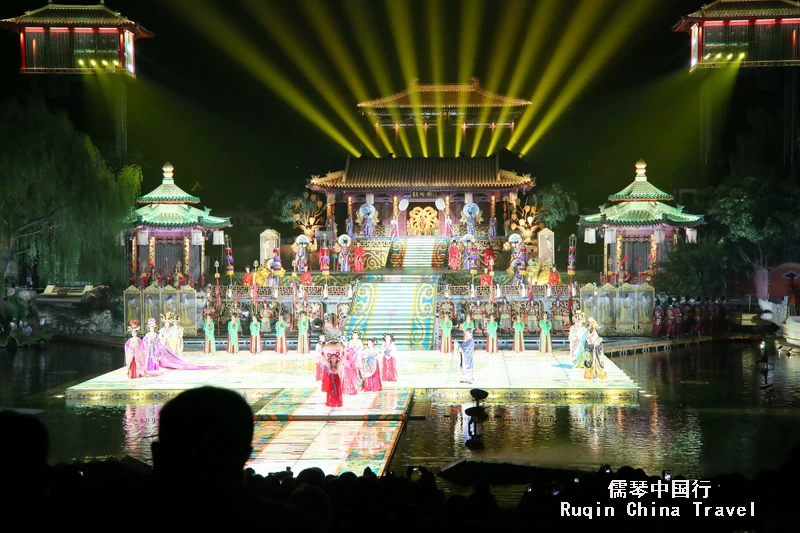
- The Song of Everlasting Sorrow – A live outdoor show at Huaqing Palace, retelling the love story of Emperor Xuanzong and Yang Guifei. Lights, music, mountains—it was breathtaking.
Important Travel Tip: Lintong isn’t central. I set aside a whole day for this trip. I took the tourist shuttle bus (about 1 hour from the city center) and didn’t regret it. I wouldn’t recommend staying out here unless you’re on a history-focused itinerary or want to soak in hot springs overnight.
5) Hidden Gems: Worth a Detour
Weiyang District (未央区)– I stopped by the Daming Palace National Heritage Park, once the grand palace of Tang emperors. It’s huge and rarely crowded. History fans? You’ll love it.
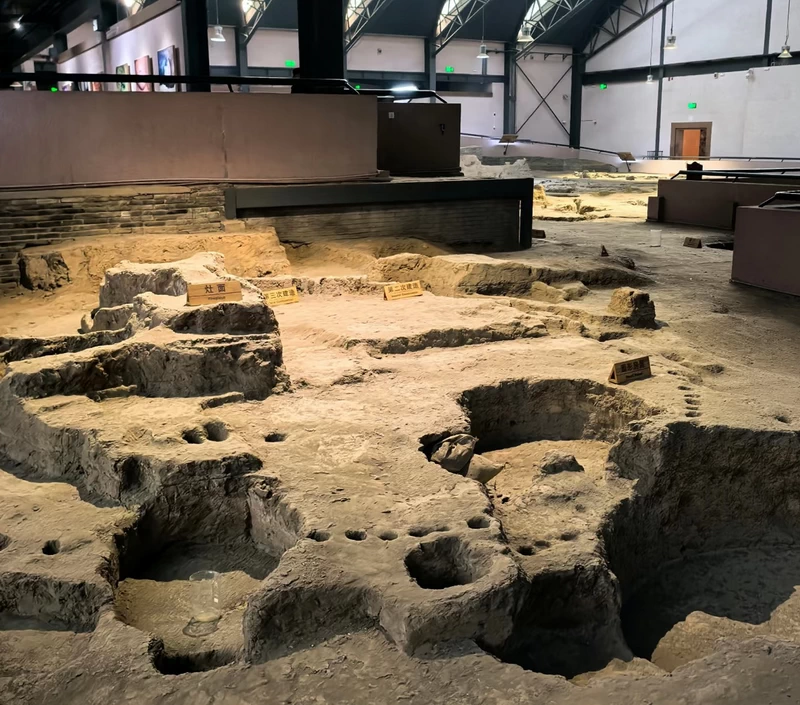
Baqiao District (灞桥区) – For prehistory lovers, Banpo Museum showcases a 6,000-year-old matriarchal village. A fascinating peek into Neolithic life.
SO, Best Places to Stay in Xi’an?
So, where should you stay? Here’s my quick cheat sheet:
- For convenience + classic sights: Stay near the Bell Tower in Beilin District. Everything’s walkable.
- For Tang culture + epic nights: Book a stay near Giant Wild Goose Pagoda in Yanta. The night scenes alone are worth it.
- For budget + flexibility: Look for hotels along Metro Line 2. It connects all the key areas and makes getting around easy.
I chose my “base camp” first—and that decision shaped the entire rhythm of my trip. Once you’ve got your own coordinates set, the rest of your Xi’an Travel Guide falls perfectly into place.
3. How to Get to Xi’an
Let me be honest—getting to Xi’an was way easier than I expected. Whether you’re flying in from halfway across the world or hopping over from another Chinese city, arriving here is straightforward, smooth, and surprisingly stress-free.
When I first started planning this trip, I had one big question: With so many ancient layers, how modern is Xi’an when it comes to transportation? Answer? Very. This city doesn’t just embrace the past—it runs on the future.
So in this part of my Xi’an Travel Guide, let me walk you through exactly how I got there (and how you can too).
1) Flying Into Xi’an: Xi’an Xianyang International Airport (XIY)
My journey started in the sky. Xi’an’s main airport—Xianyang International 西安咸阳国际机场 (XIY)—isn’t actually in Xi’an. Technically, it’s in Xianyang City, about 40 kilometers northwest of the city center. But don’t let that worry you—the connection is seamless.

Getting from the Airport to the City Center
1-1) Airport Shuttle Bus
After landing, I walked out of arrivals and easily spotted the signs for the intercity shuttle buses. They’re budget-friendly, clean, and stop at key spots like the Bell Tower, Xi’an Railway Station, and Xi’an North Station.
The ride took about 70 minutes, and I paid around 30 yuan. For solo travelers or anyone watching their budget, this is a great option.
2-2) Airport Metro (Line 14)
But if you want speed and comfort—this is the move. The Xi’an Metro now connects directly to the airport via Line 14.
From the terminal basement, I hopped on a sleek train, switched to Line 2, and arrived at the Bell Tower in under an hour. No traffic. No stress. Just smooth, air-conditioned bliss.
3-3) Taxi or Ride-Hailing Apps (like DiDi)
When I had extra luggage or was just too tired, I went for a taxi. The airport has organized taxi queues, and a ride into the city cost me about 130 yuan. It took around 50 minutes.
Traveling in a group? Splitting a ride is super cost-effective. And yes—DiDi, China’s version of Uber, works perfectly here.
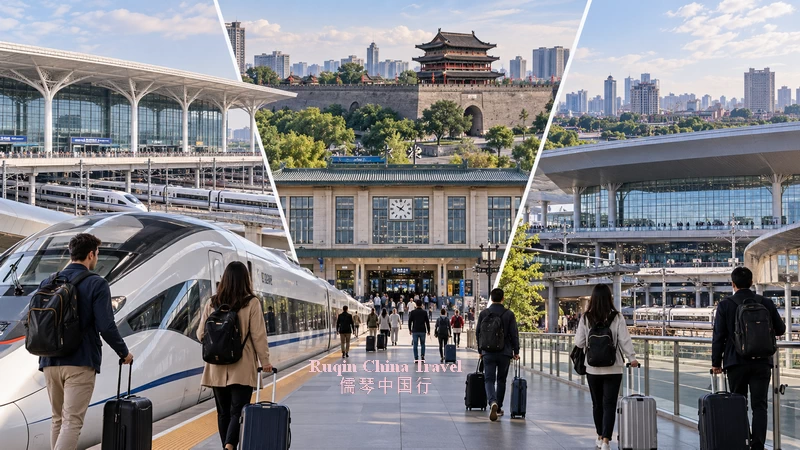
2) Arriving by Train: Understanding Xi’an’s Four Railway Stations
China’s high-speed rail is a marvel—and Xi’an is a major hub. There are four train stations here, but don’t worry. You’ll likely only use two.

Xi’an North Station – The High-Speed Rail Powerhouse
This is where I arrived from Beijing in just under 5 hours. If you’re traveling from Shanghai, Chengdu, Chongqing, or Guangzhou, chances are you’ll also land here.
Located in Weiyang District, Xi’an North Station is shiny, modern, and massive.
Even better—it connects directly to Metro Lines 2, 4, and 14.
From here, I took Line 2 straight to the Bell Tower in about 30 minutes. Super easy. No need to fight for taxis or wander outside.
Xi’an Railway Station – The Old Gateway
This one’s full of character. Nestled just outside the ancient city wall, Xi’an Station is the classic train hub. It mainly serves older, slower trains (think T, K, Z lines), as well as short-distance high-speed routes within the province.

I loved how close it was to everything. I stepped off the train and saw the city wall right in front of me! From here, it’s a quick 10-minute ride to the Bell Tower or Muslim Quarter.
Metro Line 4 and the new Line 7 serve this station, making it a breeze to connect elsewhere.
What About Xi’an West & Xi’an East?
- Xi’an West Station – Mostly freight trains. Very few passenger services. You can safely ignore this one.
- Xi’an East Station – Still under construction. One day it’ll be huge, but for now, it’s not open to the public.
Local Tip: Which Route Is Best for You?
After trying a few options, here’s what I recommend:
- Flying in from abroad or distant Chinese cities?
Land at Xi’an Xianyang Airport, then hop on the airport metro or a shuttle bus. - Taking a high-speed train from another major city?
Arrive at Xi’an North Station and glide into town via Metro Line 2. - On a slower, regional route or visiting from nearby provinces?
You might arrive at Xi’an Station, which drops you right near the heart of the old city.
Now that you’ve touched down—or rolled in—you’re officially here. And trust me, it’s just the beginning.
The ancient walls are waiting. The steam from a hot bowl of yangrou paomo is already rising.
In the next part of this Xi’an Travel Guide, I’ll show you how to get around inside the city, so you can explore every lantern-lit alley and hidden courtyard with confidence. Let’s keep going—adventure’s just around the corner.
4. How to Get Around in Xi’an
When I first arrived in Xi’an, I’ll admit—I was a bit nervous about getting around. A city this old must have complicated roads, right? Well, surprise: it was easier than I ever expected.
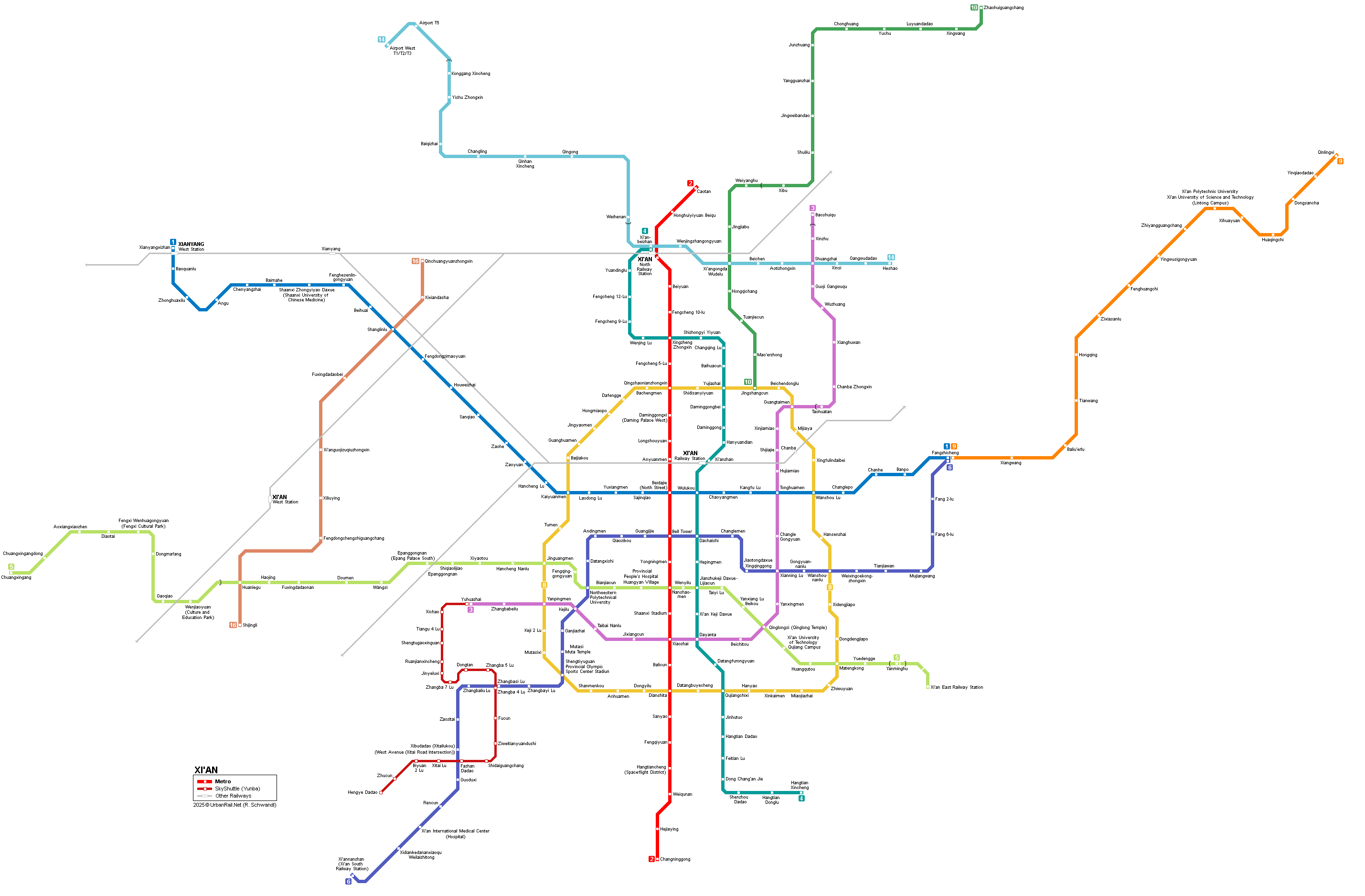
This city might be ancient in soul, but it moves with modern ease. From the efficient metro lines to helpful apps and scenic routes, getting around felt like part of the adventure. So, in this section of my Xi’an Travel Guide, I’ll walk you through exactly how I navigated the city—smoothly, quickly, and with zero stress.
1) First Stop: The Metro – Fast, Reliable, and So Easy to Use
If you only remember one tip from me—take the subway in Xi’an. Seriously, it became my best friend in Xi’an. It’s clean, cheap, punctual, and covers almost every major attraction. Within a couple of days, I was hopping between dynasties like a local.

To ride? I didn’t even need a transit card. I just opened Alipay or WeChat, scanned the QR code, and walked right through. If you’re not using those apps, there’s also the Xi’an Metro E-Card Mini Program—simple and tourist-friendly. Here’s how I used each line:
Metro Line 2 – The Golden North-South Backbone
This was my go-to line. It’s fast and runs through many of Xi’an’s top landmarks.
- Beikezhan 西安北站(Xi’an North Station) – If you’re arriving by high-speed train, this is where your journey begins.
- Zhonglou 钟楼站 (Bell Tower) – My favorite stop. Right in the heart of the city. I stepped out and was immediately surrounded by energy, food, and history.
- Yongningmen 永宁门站– Perfect for entering the South Gate of the City Wall. It’s one of the most iconic spots to climb and walk the wall.
- Xiaozhai 小寨站– Shopping, cafes, and a transfer to Line 3.
- Huizhan Zhongxin 会展中心站– From here, it’s a short walk to the Shaanxi History Museum. Worth every step.
Metro Line 3 – Northeast to Southwest
This line became my evening route—especially when chasing Xi’an’s magical night scenes.
- Dayanta 大雁塔站 (Giant Wild Goose Pagoda) – A beautiful place to start a night walk through Datang Everbright City.
- Qinglongsi 青龙寺站– I caught the cherry blossoms here in spring. Absolutely stunning.
Metro Line 4 – Cultural Gems + Train Transfers
This one runs parallel to Line 2 but hits different landmarks.
- Daminggong 大明宫站– I wandered through the ancient palace ruins here. So peaceful.
- Xi’an Station 西安站– Easy for catching conventional trains.
- Dayanta Station 大雁塔站 – Big Goose Pagoda and also connects to Line 3 for more flexibility.
- Datang Furongyuan 大唐芙蓉园站– This stop drops you right at the gates of Tang Paradise. Come at night—it’s dreamy.
Metro Line 14 – Airport Express
This is your lifeline from the airport. I used it on arrival and departure—no traffic, no stress.
- Airport West (T1/T2/T3) – Direct connection from terminals.
- Beikezhan (Xi’an North Station) – You can transfer to Lines 2 and 4 here. It’s incredibly efficient.
2) Taxis, Ride-Apps, and Buses: Other Options I Used
Local Buses
Cheap? Absolutely. But to be honest, I only used buses when I had extra time and wanted to feel like a local. They cost just 1–2 yuan, but can get crowded during rush hour.

Still, I loved riding one to see the street life up close. Just be sure to check routes in advance—they’re not always tourist-friendly.
Taxis
Reliable and everywhere. During off-peak hours, taxis were super convenient—especially if I was traveling with friends. Just make sure they run the meter.
Ride-Hailing Apps
DiDi became my default for comfort and clarity. It works just like Uber. I could type in destinations in English or Chinese, see the fare upfront, and track the route. Bonus? No language barriers.
3) Special Route: How I Got from the Bell Tower to the Terracotta Warriors
One of the most common questions I get is: “How do you get to the Terracotta Army from downtown Xi’an?”
So here’s what I did—and what I recommend.
Option 1: Tourist Shuttle Bus – Best for First-Time Visitors
There are dedicated direct buses from the Bell Tower area to the Terracotta Warriors. I booked one through my hotel, but many tour apps and kiosks near the Bell Tower sell tickets.
Why I loved it:
- Point-to-point. No transfers.
- A guide onboard gave background on the warriors—super helpful.
- It dropped me right at the museum entrance.
- The whole ride took about 1.5 hours. Easy.
Ticket prices? Around 30–50 yuan per person. Totally worth it for the convenience.
Option 2: Public Transport Combo – Cheap, but Complicated
One day, I tried the local route—metro to Xi’an North, then bus to Lintong, and finally a local ride to the museum.
It took forever. It was confusing. And honestly? Unless you’re on a tight budget and love a challenge, I wouldn’t recommend it for first-timers.
Option 3: DiDi or Taxi – Most Flexible
I also took a DiDi from my hotel one morning. It cost about 160 yuan one-way and took just under an hour. If you’re traveling in a group, splitting the fare makes it totally reasonable.
Insider Tip: Plan Your Day in Lintong
Here’s a secret I learned the hard way:
Visit the Terracotta Warriors, Huaqing Palace, and “The Song of Everlasting Sorrow” show on the same day.
They’re all in Lintong District, along the same route. I started with Huaqing Palace in the morning, explored the Terracotta Army in the afternoon, and ended the day with the light-and-sound show in the mountains. It was breathtaking.
Efficient, immersive, and unforgettable.
Now you know how to get around in Xi’an like a local—or better yet, like a traveler with a plan. Whether you’re racing through dynasties on the metro, catching a sunset show in Lintong, or flagging a DiDi to your next bowl of hand-pulled noodles—Xi’an makes it easy.
5. My Xi’an 3 Day Tour Itinerary
If you’re anything like me—someone who craves history, culture, food, and a good walk—then this Xi’an 3 Day Tour Itinerary is for you. I designed this trip to blend immersive Xi’an City Walk adventures with ancient wonders, royal splendor, and local flavor. It’s not just a sightseeing plan—it’s a journey through time.
So here’s how I spent three perfect days in this city of emperors, poets, and hand-pulled noodles.
Day 1: City Wall Strolls & Street Food Storms (Xi’an City Walk)
Theme: Stroll the old city, feel the rhythm of its streets, and eat your way through history.

Morning: Xi’an City Wall
I started my day at the iconic Xi’an City Wall—a massive, ancient structure that once defended the heart of the empire. I entered at Yongning Gate (South Gate), and honestly, there’s no better place to begin.

Walking on the wall gave me a bird’s-eye view of Xi’an: tiled rooftops inside, glass towers beyond. Renting a bike is popular, but I chose to walk and take it slow.
- Address: South Street, Beilin District (建议从永宁门登城)
- Metro: Line 2 to Yongningmen Station, Exit D1
- Ticket: Around 54 RMB
Midday: Bell Tower & Drum Tower
From the wall, I strolled up South Street for 10 minutes and found myself in the true center of Xi’an. The Bell Tower and Drum Tower face each other across a bustling square. I didn’t climb either—just admired their stunning architecture and soaked in the atmosphere.
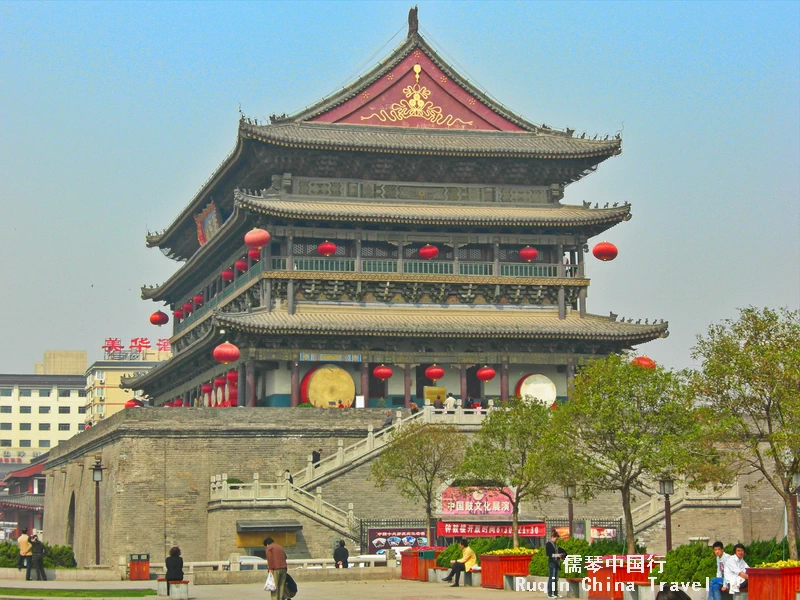
- Address: Intersection of East, West, South, and North Streets, Beilin District
- Metro: Line 2 to Zhonglou Station
- Tickets: 30 RMB each, or 50 RMB for a combo ticket
Afternoon to Evening: Muslim Quarter → Gao Family Mansion → Sajinqiao Food Street
Then came one of my favorite parts: the ultimate Xi’an City Walk food adventure.
Muslim Quarter (回民街) was first—only a 3-minute walk from the Bell Tower. Yes, it’s busy. Yes, it’s touristy. But it’s also vibrant, flavorful, and alive. I had lamb skewers, soup dumplings, and the most savory yangrou paomo of my life.

Then I ducked into Gao’s Grand Courtyard (高家大院), a beautifully preserved Ming/Qing-era home tucked just off the main street. Inside? Quiet, shade, and the echo of old stories. I caught a local opera and felt transported.
From there, I walked 10 minutes to Sajinqiao Street (洒金桥), where locals eat and prices drop. I tried spicy meatball soup, sour dumplings, and chewy sweet zenggao (胖子甑糕)—all incredible.
- Muslim Quarter: Hui Min Jie, Lianhu District
- Gao’s Courtyard: No. 144 Beiyuanmen, Lianhu District, Xi’an City. 西安市莲湖区北院门144号 English
- Sajinqiao Street: Sajinqiao is located in the Hui Fang area of Lianhu District. It stretches 800 meters, running north from Lianhu Road to Xinsi Lane. 洒金桥位于西安市莲湖区的回坊内,北起莲湖路南至新寺巷,全长800米.
- Gao’s Courtyard Ticket: About 15 RMB
- All walkable from the Bell Tower
Day 2: Tang Dynasty Splendor & Magical Nights
Theme: Experience the golden age of Chang’an—from solemn museums to glowing Tang-style streets.

Morning: Shaanxi History Museum
This was a highlight. The Shaanxi History Museum is a treasure chest of Chinese civilization. From bronze vessels to Tang horses, it laid the foundation for everything else I saw that day.
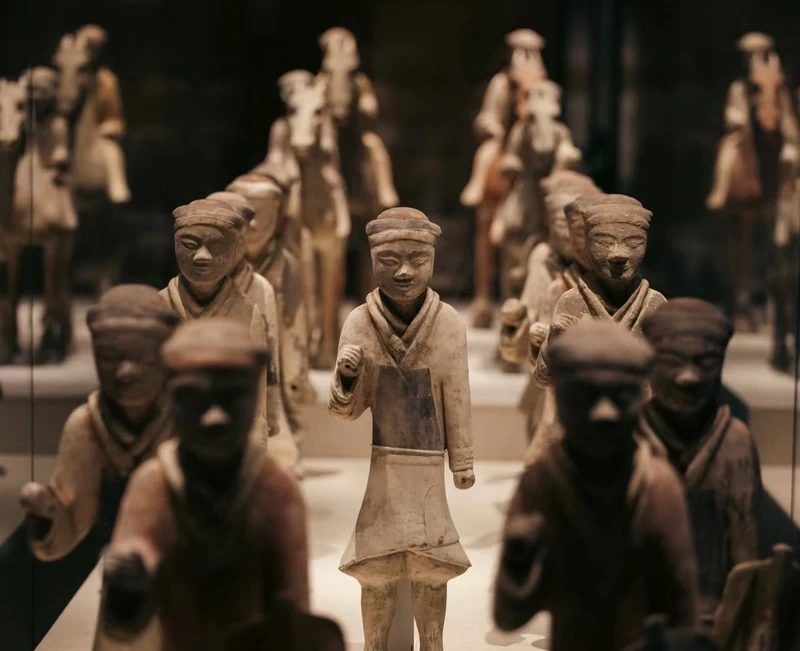
Make sure to book tickets ahead via the official WeChat account, especially in peak season. I arrived early to avoid crowds and it was worth it.
- Address: No. 91 Xiaozhai East Road, Yanta District (雁塔区小寨东路91号)
- Metro: Line 2 to Xiaozhai Station, then walk 15 minutes
- Ticket: Free with reservation
Afternoon: Giant Wild Goose Pagoda & Joy City Mall
From the museum, I walked through a leafy boulevard to reach the Giant Wild Goose Pagoda—a spiritual landmark built by the famous monk Xuanzang to house sacred scriptures. I didn’t climb it (legs were tired!), but I watched the massive music fountain show on the North Plaza.
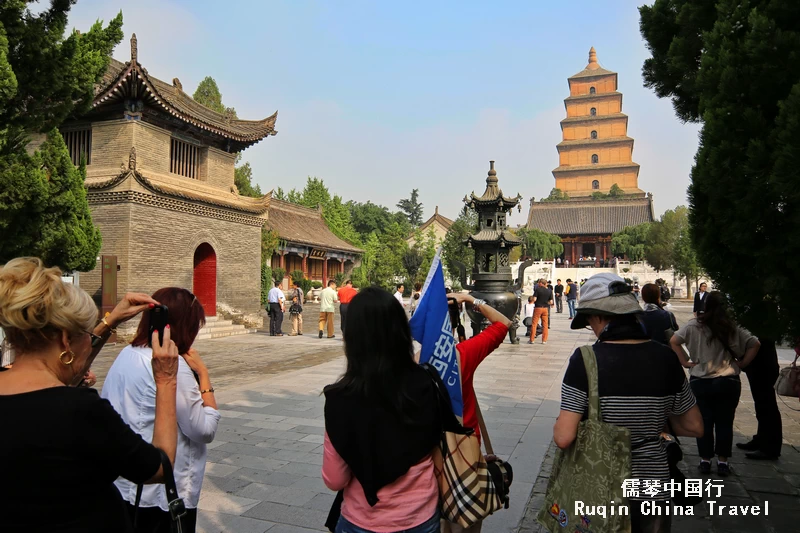
Then I grabbed lunch at Joy City Mall (大悦城), just across the way. I recommend the rooftop for amazing views and a break from the sun.
Pagoda Address: Ci’en Road, Yanta District inside Daci’en Temple, No. 11 South Yanta Road, Yanta District, Xi’an City. 西安市雁塔区雁塔路南段11号大慈恩寺内
Ticket: 40 RMB to enter the park, 30 RMB extra to climb
Joy City Mall Address: No. 66 Cien West Road, Yanta District, Xi’an City.西安市雁塔区慈恩西路66号
Evening: Tang Paradise → Datang Everbright City 大唐不夜城
As sunset approached, I walked to Tang Paradise 大唐芙蓉园 (Datang Furongyuan). It’s a giant, Tang-style garden park with pavilions, lakes, and courtyards. I entered just before dusk—perfect timing. As the sky darkened, the lights came on, and the whole place lit up like a dream.

Then I continued walking north into Datang Everbright City 大唐不夜城 (Great Tang All Day Mall)—a pedestrian street bursting with live shows, LED art, and costume performers. I saw dancers, light displays, and even a girl playing a Tang-era zither under a glowing archway.
- Tang Paradise Address: No. 99 Furong West Road, Qujiang New District, Xi’an City.西安市曲江新区芙蓉西路99号
- Everbright City Address: No. 46 Ci’en Road, Yanta District, Xi’an City 西安市雁塔区慈恩路46号
- Tang Paradise Ticket: Varies (sometimes free with reservation)
Day 3: The Valley of Emperors – Day Trip to Lintong
Theme: Witness the power of the Qin and the romance of the Tang, all in one unforgettable day.

Morning: Terracotta Warriors Museum
This was it—the day I’d been waiting for. The Terracotta Army is more than a museum—it’s a living miracle. Thousands of warriors, each unique, each frozen in motion.
I booked a direct shuttle from near the Bell Tower, which took about 1.5 hours. It was easy, comfortable, and had a guide onboard who shared cool facts during the ride.

- Address: Qinling North Road, Lintong District (临潼区秦陵北路)
- Ticket: Around 120 RMB
Afternoon: Huaqing Palace & Mount Li
From the warriors, I took a quick bus ride to Huaqing Palace—a luxurious ancient hot spring resort famous for the love story between Emperor Xuanzong and Yang Guifei. The gardens were lush, and the pools still shimmered.
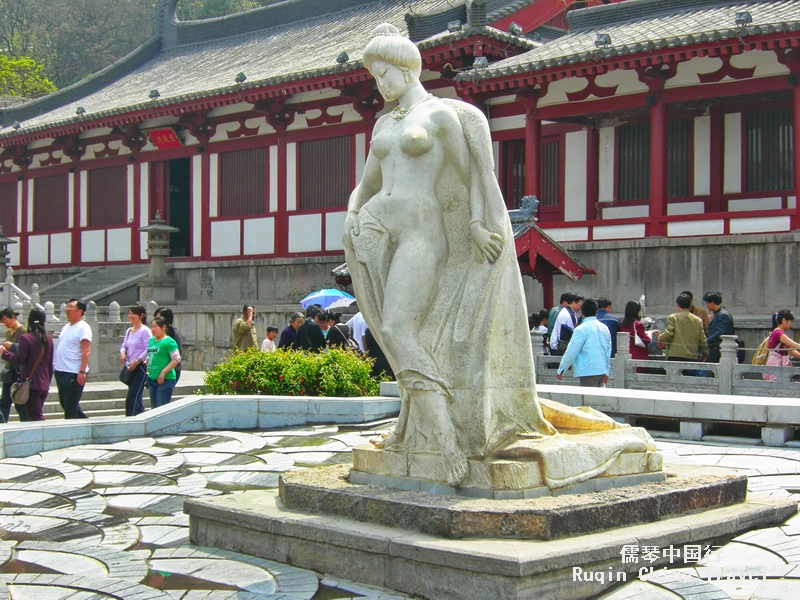
I also took the Lishan cable car up the mountain. From the top, the views were breathtaking. I could see the whole Lintong valley spread below me.
- Address: No. 38 Huaqing Road, Lintong District (临潼区华清路38号)
- Huaqing Palace: Around 120 RMB (includes Lishan scenic area)
- Cable Car: Extra fee
Evening: The Song of Everlasting Sorrow (Show)
That night, I saw “The Song of Everlasting Sorrow”《长恨歌》演出—a live performance staged inside Huaqing Palace itself. With Mount Li as the backdrop, and real water, fire, and light effects, the show brought the tragic romance of Xuanzong and Yang Guifei to life in the most breathtaking way.
It was the perfect finale to my three-day journey through Xi’an’s layered past.
- 📍 Show Location: Inside Huaqing Palace Scenic Area
- 🎟️ Tickets: 200–500+ RMB depending on seat; book early
- 🚌 Return Tip: Many shuttle services offer return rides after the show—reserve in advance
Final Thoughts: Your Time Travel Adventure Awaits
This Xi’an Travel Guide wouldn’t be complete without this three-day plan—because Xi’an isn’t just a place to see. It’s a place to feel. And this itinerary gave me a chance to feel every layer: the imperial grandeur, the street-level soul, and the quiet magic in between.
From biking on the city wall to sipping soup under Tang-style lanterns, I was transported again and again. So pack your best walking shoes. Bring a curious mind. And let the old capital guide you. Because in Xi’an, every step is a story.
6. Xi’an to Mount Huashan Day Trip
If you’re craving something epic—something that gets your heart pounding and your legs shaking just a little—then let me tell you: a Xi’an Mount Huashan Day Trip will do just that. It was easily the most adrenaline-filled day of my entire China journey.

This wasn’t just another hike. It was a full-on mental and physical challenge, with some of the most jaw-dropping mountain views I’ve ever seen. So in this part of my Xi’an Travel Guide, I’ll walk you through exactly how to visit Mount Huashan from Xi’an, what to expect, and how to make the most of it—without losing your breath (too early, anyway).
Before You Go: Gear Up, Friend
Let me be clear: this is not a gentle nature walk.
Huashan is dramatic, steep, and iconic for a reason. It’s physically demanding, so wear proper hiking shoes, dress in layers, and pack light but smart. I carried protein bars, 2 bottles of water, and a portable charger—and I used every one of them.
🚄 How to Visit Mount Huashan from Xi’an
I took the high-speed train, and I can’t recommend it enough. It was fast, smooth, and saved me precious time.
✅ Option 1: High-Speed Train (Fastest & Best Way)
- Route: From Xi’an North Railway Station (西安北站) to Huashan North Station (华山北站)
- Duration: 30–40 minutes
- Bonus: Trains run frequently—super easy to book online or at the station
From Huashan North Station, I caught a short taxi (about 15–20 RMB) to the Mount Huashan Visitor Center (生态广场). There are also free shuttle buses, but you might need to wait.
Option 2: Tourist Shuttle Bus
If you’re staying near the Bell Tower, some agencies offer direct tourist buses to Huashan. It’s convenient, especially for those who prefer a door-to-door service—but slower than the train.
What Makes Huashan So Special?
Known in ancient times as “Western Peak”, Mount Huashan is one of China’s Five Great Mountains. It’s a single giant slab of granite rising into the clouds, carved by nature into five stunning peaks.

And here’s a fun fact: the word “Hua” in “Huaxia” and “China” comes from this very mountain. That’s how deep its roots run.
- Address: Huayin City, Weinan, Shaanxi Province (陕西省渭南市华阴市)
Entrance Ticket Prices:
- Peak Season (March–November): 160 RMB
- Off Season (December–February): 100 RMB
Tickets are valid for two days, but for a day trip, you’ll only need one.
Best Mount Huashan Routes for a Day Trip
I had limited time and a decent fitness level—so I chose the most popular and scenic loop: “West Up, North Down”. Let me break it down:
Option A: West Up, North Down (The Smartest Day-Trip Route)
Step 1: At the Visitor Center, I bought my entry ticket + shuttle bus + cable car tickets. The lines were organized, but it still took 30–40 minutes total to process everything.
Step 2: I boarded a scenic shuttle bus (40 minutes) to the West Peak Cable Car Station (太华索道).
Step 3: The West Peak Cable Car is a wild ride—it cuts through sheer cliffs and narrow gorges. It’s Asia’s longest single-span cable car, and absolutely unforgettable.
Step 4: From the top, I followed this route:
- West Peak (Lotus Peak)
- South Peak (Landing Wild Goose Peak) — the highest at 2,154m! 🦢
- East Peak (Sunrise Peak)
- Central Peak (Jade Maiden Peak)
- North Peak (Cloud Terrace Peak)
Step 5: I took the North Peak Cable Car (三特索道) down and a shuttle bus back to the Visitor Center.
- Total hiking time: Around 5–6 hours
- Challenge level: Moderate (lots of stairs, mostly downhill)
- Pros: See all 5 peaks, save energy with the downhill focus
Option B: North Up, West Down (For the Hardcore Hikers)
If you love a true climb, you can take the North Peak Cable Car up, then hike uphill through all five peaks, and finally take the West Peak Cable Car down.
I met a couple doing this—it looked brutal, but they were loving every minute.
- Total hiking time: 6–8 hours
- Challenge level: High (mostly uphill)
- Pros: A deeper sense of achievement
Lunch on the Mountain: Eat Smart
Food is available on the mountain—there are small restaurants and snack stalls on each peak—but prices are 2–3 times higher than in town.
My advice? Pack your own lunch.
I brought:
- Energy bars
- Beef jerky
- Steamed buns
- 2 bottles of water
If you do decide to eat on the mountain, you’ll find noodles, fried rice, and instant ramen at the small food courts near each peak.
Don’t Miss This Hidden Gem: The Xiyue Temple (西岳庙)
After finishing the hike, I still had a little fuel in the tank. So I hopped on a free shuttle from the Visitor Center to the nearby Xiyue Temple—and I’m so glad I did.
This ancient temple was where emperors came to pray to the mountain gods. It’s huge, peaceful, and often skipped by tourists. Locals call it the “Mini Forbidden City” of Shaanxi—and once you step inside, you’ll see why.
- Address: 5 km from Huashan Scenic Area, Huayin City
- Included in your Huashan ticket
- Allow 30–45 minutes to explore
Sample Itinerary (Using West Up, North Down Route)
Here’s exactly how my day went—timed almost to the minute.
- 07:00 – Train from Xi’an North Station to Huashan North
- 08:00 – Taxi to Visitor Center
- 09:00 – Buy tickets, take shuttle to West Peak cable car
- 10:30 – Begin hike from West Peak
- 12:30–13:30 – Lunch break with a view
- 16:00 – Reach North Peak cable car and descend
- 17:30 – Return to Visitor Center, optional visit to Xiyue Temple
- 18:30 – Train back to Xi’an
Final Thoughts: Why This Day Will Stay With Me Forever
My Xi’an Mount Huashan Day Trip was exhausting, thrilling, and unforgettable. There were moments I was gasping for air, then seconds later, gasping at the view.
From narrow ridgelines to sacred temples, every moment felt surreal.It’s not an easy day—but it is one of the most rewarding. If you’re building your trip with the help of this Xi’an Travel Guide, make space for Huashan. It’s not just a side trip—it’s a true rite of passage.
Now your turn: pack your lunch, check your laces, and go meet the mountain.Because when you stand on that summit and see the clouds roll below your feet—you’ll understand exactly why I came.
7. Xi’an to Maijishan Grottoes Day Trip: Chasing the Eastern Smile Along the Silk Road
If you’ve already stood in awe before the Terracotta Warriors, and you’re itching to explore something deeper, quieter, and more soul-stirring, then this day trip is for you.
My Xi’an Maijishan Grottoes Day Trip felt like a portal to a forgotten world—where monks once carved serenity into stone, and the cliffs themselves seemed to whisper prayers.

Nestled into the edge of Gansu Province, the Maijishan Grottoes may not be on every tourist’s radar—but for lovers of Buddhist art, ancient sculpture, and Silk Road mysteries, this is an unforgettable journey.

So here’s exactly how to get to Maijishan Grottoes from Xi’an, and why it’s one of the most powerful experiences in this entire Xi’an Travel Guide.
1) First, Getting There: How to Get to Maijishan Grottoes from Xi’an
I started my day early—very early. This trip only works in one day if you catch one of the first high-speed trains from Xi’an.
Step 1: Xi’an North Railway Station → Tianshui South Station
- Departure Station: Xi’an North Railway Station (西安北站)
- Departure Time: I took the 7:00 AM train
- Travel Time: Around 1.5 hours
- Arrival: Tianshui South Station (天水南站)
It felt amazing to leave behind the buzz of Xi’an and glide into Gansu’s misty, green foothills. The contrast was instant. From ancient capital to mountain calm, in just over an hour.
Step 2: Tianshui to Maijishan Scenic Area
Once in Tianshui, I had two choices for getting to the grottoes. I went with comfort—here’s what I learned:
Option A (Best): Taxi or Ride-Hailing App (DiDi)
- Distance: Around 35 km
- Travel Time: About 50–60 minutes
- Fare: Around 80–100 RMB
I opened DiDi, booked a car instantly, and sat back as the road curved into forested mountains. My driver pointed out wildflower-covered hills and told me stories of visiting the caves as a child.
If you’re with friends or fellow travelers, splitting the fare makes it even more affordable.
Option B (Budget): Local Buses + Tourist Line
This combo involves at least two transfers and takes about 2 hours. For solo budget travelers with time to spare, it works. But honestly? For a day trip, I’d skip it.
2) Entering Maijishan: The Mysterious Mountain of Smiles
When I first caught sight of Maijishan, I froze.
It looked nothing like any Buddhist grotto I had seen before. Rising like a grain stack from the forest floor, this 140-meter-tall mountain has over 200 caves cut straight into its face.
Dozens of honeycomb-like grottoes, all stitched together by hair-thin plank walkways—dangling above nothing.
It was beautiful. And, frankly, a little terrifying.
- Address: No. 2 Quanhu Road, Maiji District, Tianshui, Gansu (甘肃省天水市麦积区泉湖路2号)
- Tickets:
- Peak season (May–Oct): ~90 RMB
- Off-season (Nov–Apr): ~70 RMB
- Tickets usually include electric shuttle service to the entrance.
3) Exploring the Grottoes: Art, Air, and Adrenaline
The Climb
The caves are carved into vertical cliff faces. To explore them, you must follow narrow wooden plank paths called “zhàndào”, built into the cliff itself. They’re sturdy—but they’ll make your heart race.
Don’t worry, the route is one-way, well-managed, and has guardrails. If you’re afraid of heights? Pause often. Breathe deeply. The views will help.
The Sculptures
Most of the statues here are made of clay, not stone. Unlike the sharper carvings of Longmen or Yungang, these have soft faces, delicate hands, and a surprising warmth. Especially the Northern Wei and Western Wei figures—their eyes feel alive, their lips curve with that signature “Eastern Smile”.
My favorite part? These sculptures show real human emotion. They aren’t cold gods—they’re compassionate beings full of grace, humility, and hope.
4) Optional: Special Caves (Totally Worth It)
If you have extra time (and a bit more budget), don’t miss the “special caves”—they require separate tickets and a guide, but they’re unforgettable.
- Cave 133 (Ten Thousand Buddhas)
- Cave 44
- Cave 121
Entry to these costs 100–200 RMB per cave, but you’ll gain access to rare masterpieces and private guided commentary.
5) Pro Tip: Hire a Guide
Right at the entrance, I hired a local guide. Best decision ever. She not only explained the iconography but also told me how each sculpture reflected changing dynasties, beliefs, and Silk Road influences. It turned stone into story.
6) Lunch at the Foot of the Mountain
After the cliffside climb, I was starving. Luckily, right outside the park entrance, I found a few family-run restaurants. Nothing fancy—just local Gansu noodles, warm spicy soup, and friendly smiles.
I tried:
- Jiangshui Noodles (浆水面) – sour and refreshing
- Guagua (呱呱) – a chewy, local wheat snack
Or, you can bring your own snacks if you prefer to save time.
Getting Back to Xi’an
By mid-afternoon, I was ready to head home. I booked a DiDi back to Tianshui South Station, leaving just enough buffer time for traffic.
Train Tip:
Book your return train for 4:00–6:00 PM. This gives you 4–5 hours at the site—enough to explore the grottoes, have lunch, and even visit one or two premium caves.
Train ride back: About 1.5 hours
Arrival: Xi’an North Station by early evening
Final Thoughts: What Maijishan Left Me With
My Xi’an Maijishan Grottoes Day Trip wasn’t just about seeing something beautiful. It was about standing inches from a thousand-year-old clay face, feeling the wind press against a mountainside walkway, and realizing that art, faith, and human hands can create something timeless—even on the edge of a cliff.
This day felt quiet. Spiritual. Unexpected. If you’ve already explored Xi’an’s city walls and famous tombs, and you’re ready for something off the beaten path, Maijishan is waiting—with its thousands of silent Buddhas, and just maybe, one of them will smile just for you.
Super Travel Tips:
- Bring your passport or ID (for train & ticket bookings).
- Wear grippy, comfortable shoes—some walkways are steep and exposed.
- Not suitable for those with severe vertigo.
- Trains & tickets can sell out in high season—book in advance!
8. Xi’an to Hukou Waterfall Day Trip
There’s something ancient and untamed about the Yellow River. It doesn’t flow—it surges, crashes, roars. And if you ever want to feel that raw power up close, then this Xi’an Hukou Waterfall Day Trip needs a place on your itinerary.

For me, this wasn’t just another day trip. It was a full-body experience. I saw the land shake. I heard thunder with no sky. I stood in mist and wind, watching China’s Mother River scream through a narrow gorge—and I’ll never forget it.

So here’s everything I learned, and exactly how to get to Hukou Waterfall from Xi’an, without losing your way—or your breath.
1) Getting There: Long Roads, Big Payoffs
First things first—Hukou is remote. It sits on the border between Shaanxi and Shanxi provinces. While you can see the falls from both sides, the Shaanxi side (Yichuan County) is much more accessible from Xi’an.
There are two main ways to go. I chose the first one—and I’d do it again.
Option A: Tourist Shuttle Bus (Most Recommended)
This is the easiest and most popular route. Many travel agencies and hotels near the Bell Tower area organize direct shuttle buses to the falls. You can book online or through your accommodation.
- Travel Time: 4 to 4.5 hours (each way)
- Comfort: Air-conditioned, point-to-point, no transfers
- Bonus: Some packages include entry tickets
I was picked up around 7 AM, half-asleep but excited. As we left the bustle of Xi’an, the landscape slowly changed—from the flat Guanzhong Plain to the rugged, earthy curves of the Loess Plateau. I watched farmers in straw hats, hills that crumbled like cake, and tiny villages clinging to dusty cliffs. It was a road trip through China’s northern soul.
Option B: High-Speed Train + Private Car (More Flexible, More Complex)
If you prefer to plan your own pace, you can:
- Take a high-speed train from Xi’an North Station to Yan’an Station (about 2–2.5 hours)
- Then pre-arrange a private car or shared ride to Hukou (1.5–2 hours more)
It’s faster overall and gives you freedom—but harder to coordinate. Also, finding a trustworthy driver in Yan’an takes research. For a first-time visitor, I suggest the direct shuttle instead.
2) Arriving at Hukou Waterfall: Prepare to Be Moved
- Address: Hukou Town, Yichuan County, Yan’an, Shaanxi (陕西省延安市宜川县壶口镇)
- Entry Ticket: About 90 RMB in peak season (April–October)
- Shuttle Bus Inside the Scenic Area: Around 40 RMB
Once we arrived, I grabbed a quick lunch (more on that later), bought my ticket, and boarded the scenic shuttle to the main viewing area.
Even before I saw the water, I heard it. A low, rumbling boom that grew louder with every step.
3) The Experience: Where the Sky Falls Into the Earth
Then I saw it—Hukou Waterfall. The Yellow River narrows suddenly into a rocky channel, creating a violent drop that sprays mist high into the air. Locals call it “The Yellow River pours from Heaven.” And it really does feel like that.
Massive torrents slammed into the rocks below. The air shook. I could feel vibrations through the wooden planks beneath my feet. The mist hit my face, cold and wild, while a rainbow curved silently through the spray.
Tip: Bring a waterproof cover for your camera or phone. The mist is no joke.
4) Local Color: A Touch of Shaanbei Culture
While walking the trails, I met a local man in traditional northern Shaanxi garb—white towel on his head, red sash at the waist, standing next to a decorated donkey. He offered photos for a small fee. I couldn’t resist.
It felt like stepping into a folk painting. The donkey looked unimpressed. I looked ecstatic.
Experiences like that—unscripted, human—are what make these trips feel real.
5) Safety First: Slippery but Worth It
The viewing platforms and wooden paths can get slippery from the mist, so wear good walking shoes with grip. Follow all signs and never cross safety barriers—this river doesn’t forgive carelessness.
Also, bring:
- A waterproof jacket or poncho
- Sunscreen (UV is strong up there!)
- A hat or scarf if it’s windy
6) Lunch by the Falls: Northern Comfort Food
Just outside the main entrance, I found a few farm-style restaurants packed with travelers. They served homestyle Shaanbei dishes—simple, hearty, and full of character.
Here’s what I tried:
- Yellow River Carp – fresh, meaty, with bold seasoning
- Hand-grabbed lamb (手抓羊肉) – tender, not gamey at all
- Yangyu Caca (洋芋擦擦) – a shredded potato noodle dish with a chewy bite
Prices were reasonable, portions generous. You can also bring snacks and bottled water from Xi’an if you want to keep it light.
7) Sample Itinerary: Xi’an Hukou Waterfall Day Trip (via Tourist Bus)
- 07:00–08:00: Depart from Xi’an (hotel or Bell Tower pickup)
- 12:30: Arrive at Hukou Scenic Area, quick lunch
- 13:00–15:30: Explore the waterfall, walk the trails, take photos
- 16:00: Return journey begins
- 20:30–21:00: Arrive back in Xi’an
Yes, it’s a long day. But it didn’t feel like a waste of time. The changing landscape kept things interesting, and the payoff was massive.
8) Final Reflections: The Roar That Stayed With Me
This wasn’t just water. It was history in motion. Energy made visible. The Yellow River, both revered and feared, poured its might into that canyon like it had something to prove.
And for a few minutes, as I stood drenched in its breath, I understood something ancient. This Xi’an Hukou Waterfall Day Trip reminded me why we travel. Not just to see—but to feel. To be humbled. To be moved. To carry something back that photos can’t capture.
Tips Before You Go:
- Book your shuttle tour a day in advance (via your hotel or an online platform)
- Pack snacks, water, and a small towel or dry cloth
- Bring your ID or passport—required for ticketing
- Expect weather shifts—layers are your friend
9. Xi’an Dining & Food Guide
Welcome to Xi’an, the culinary capital of carbs and culture! Here, eating is never just eating. It’s a sensory plunge into centuries of flavor, history, and street energy. From smoky lamb soup at dawn to crispy persimmon pancakes at dusk, this city feeds both body and soul.
Let me take you on a 24-hour food crawl across the ancient capital—where every bite is a time machine.
1) Breakfast — Smoke, Spice, and the Soul of the City
Xi’an mornings begin not with silence, but steam. By the time the city wall catches the sun, breakfast stalls are already calling out to locals like me.
油茶麻花 (Yóu chá má huā – Savory Fried Dough with Peppery Flour Tea)
A thick, savory “tea” made from roasted flour, beef fat, and pepper. It’s earthy and aromatic. Dip a crispy twisted dough stick (máhuā) in it until it softens—then bite. Salty, toasty, and warming. This is what wakes up Xi’an.
肉丸胡辣汤 (Ròu wán hú là tāng – Beef Meatball Spicy Soup)
Different from the Henan version. Here, the broth is thicker, richer, and packed with beef balls, potatoes, cabbage, and carrots. A spoonful of hot chili oil (油泼辣子) on top unlocks the magic. Best with a 坨坨馍 (tuótuó mó)—a chewy steamed bun perfect for dunking.
水盆羊肉 (Shuǐ pén yáng ròu – Mutton Soup in a Basin)
Tender slices of lamb float in a light, clear broth. The trick? Rip open a moon-shaped flatbread, stuff it with lamb and herbs, and then chase it with a spoon of soup. It warms you from the inside out.

甑糕 (Zèng gāo – Steamed Sticky Rice Cake with Dates and Beans)
Made by layering glutinous rice, red dates, and mung beans in a clay pot. It steams overnight. The first vendor to lift the lid in the morning? You’ll find me nearby. The steam alone is hypnotizing.
2) Noodle Kingdom — Where Dough Meets Art
If carbs had a palace, it would be Xi’an. This city’s noodles don’t just feed the stomach—they tell stories.
Biáng Biáng面 (Biáng Biáng Miàn – Hand-Slapped Belt Noodles)
The most iconic—and hardest to write—noodle in China. Each strip is wide and long, slapped against the table with a loud “biáng!” Then it’s drenched in garlic, vinegar, chili oil, and braised pork sauce. Chewy, spicy, unforgettable.

腊汁肉揪面片 (Là zhī ròu jiū miàn piàn – Hand-Torn Noodles in Spiced Pork Gravy)
Flat, uneven noodle pieces torn by hand and tossed into a thick pork broth. The flavors are bold, smoky, and comforting—like grandma’s stew, but from the Northwest.
麻食 (Má shí – “Cat-Ear” Pasta Dumplings)
Tiny hand-pinched dough pieces shaped like cat ears. Stir-fried or stewed with tofu, meat, and veggies. Soft but with bite. A local winter favorite.
凉皮 (Liáng pí – Cold Rice or Wheat Noodles with Chili and Vinegar)
My go-to in summer. Slippery noodles, fresh cucumber, crunchy bean sprouts—all bathed in a chilled mix of garlic water, vinegar, and chili oil. Cold, spicy, and tangy. A heatwave remedy in a bowl.
羊肉泡馍 (Yáng ròu pào mó – Crumbled Flatbread in Lamb Soup)
This isn’t fast food—it’s slow art. First, you hand-tear hard flatbread into bean-sized bits. Then hand it over to the chef, who turns it into a thick lamb stew. Add pickled garlic and chili paste. Every spoonful is heaven.
3) Muslim Quarter Feast — Deep Flavors from Deep Alleys
Step under the Drum Tower and into Huimin Jie (回民街 – Muslim Quarter). The aromas here? Mesmerizing. The flavors? Historic.

肉夹馍 (Ròu jiā mó – Chinese “Hamburger” with Braised Meat)
Think pulled pork sandwich, but with ancient flair. The braised meat (usually beef here) is shredded and tucked into a crisp flatbread (白吉馍) that’s fire-baked. Juices soak the crumb. It’s greasy in the best way.
灌汤包 (Guàn tāng bāo – Soup-Filled Dumplings)
Delicate wrappers filled with hot soup and meat. Take a bite—slowly. The key: “lift gently, move softly, open a hole, sip the broth.” Then eat. Best known spot? Jia San Dumplings (贾三灌汤包).
酸汤水饺 (Suān tāng shuǐ jiǎo – Dumplings in Sour Spicy Broth)
Forget soy sauce. These dumplings swim in a bright, sour soup with vinegar, chili, and cilantro. The tang cuts through the meat and keeps you coming back for more.
粉汤羊血 (Fěn tāng yáng xuè – Spicy Lamb Blood with Vermicelli)
Lamb blood, soft as tofu, meets springy noodles in a fiery broth. The pepper hits your lips first, then your forehead sweats. It’s intense—but it’s worth it.
卤汁凉粉 (Lǔ zhī liáng fěn – Savory Jelly Noodles in Spiced Gravy)
This one’s wild. Jelly noodles, bread cubes, and century egg chunks. All drowned in thick soy-based gravy, sesame paste, garlic water, and chili. You don’t stir—just scoop from the bottom. Every bite is layered.
4) Sweet Break — Xi’an’s Softer Side
Between all the spice and meat, Xi’an hides sweet gems.
柿子饼 (Shìzi bǐng – Persimmon Pancakes)
Not fruit—pastry. The skin is made from mashed fire-crystal persimmons, stuffed with sweet bean paste, then pan-fried. Crispy outside, molten inside. It smells like autumn.

油糕 (Yóu gāo – Fried Sweet Rice Cakes)
Golden discs of soft dough filled with sugar and sesame. Once fried, they puff and glisten. Bite in carefully—lava-like sugar awaits.
桂花糕 (Guì huā gāo – Osmanthus Rice Cake)
Light, fragrant, and floral. Made from glutinous rice and steamed with candied osmanthus flowers. Not overly sweet—just calming.
Foodie Tips for First-Time Xi’an Travelers
- Get lost on purpose. Skip the tourist lines—explore alleys like Sajinqiao (洒金桥) and Dapiyuan (大皮院) for real local eats.
- Order to share. Most dishes are massive. Grab a friend, split five things, taste ten.
- Eat like a local. Squat on a stool. Use your hands. Spend 30 minutes breaking up flatbread. It’s all part of the ritual.
This is not just eating—it’s living Xi’an’s history bite by bite. So come hungry. Stay curious. And remember: in this city, every meal is a memory waiting to be made. Happy feasting, fellow traveler.
From ancient walls to fiery noodles, misty mountains to golden dumplings, Xi’an is a city that feeds both your soul and senses. Whether you’re tracing the Silk Road, climbing Huashan’s cliffs, or simply tearing bread for a steaming bowl of pào mó, every step here is a brush with history.
I hope this Xi’an Travel Guide helps you not only navigate but truly feel the heartbeat of this timeless city. So pack light—but leave room for flavors, stories, and maybe a few extra snacks. Xi’an is calling, and your unforgettable adventure is just beginning.
About the Author
Ruqin is the founder of Ruqintravel.com and has spent more than four decades working in China’s travel industry. Drawing on hands-on experience in cities like Beijing and Hangzhou, he personally researches and updates each guide to help international travelers navigate China with confidence.
Further Reading
How to Visit the Terracotta Warriors: Tickets, Map, Highlights & Tips
How to Buy Terracotta Warriors Tickets: Your Ultimate Guide
How to Book Xi’an Attraction Tickets: All You Need to Know
How to Visit Xi’an City Wall
How to Visit the Muslim Quarter
How to Visit Big Wild Goose Pagoda
How to Visit Huaqing Pool in Xi’an
How to Visit Bell and Drum Towers
How to Visit Shaanxi History Museum
How to Visit Xi’an Stone Stele Museum
How to Visit Tomb of Emperor Jingdi
How to Visit the Great Mosque in Xi’an