Written and updated by Ruqin
Last updated: May 22, 2026
Welcome to Xining — your gateway to the Qinghai-Tibet Plateau. At 2,300 meters above sea level, this highland city feels like a peaceful pause between sky and earth. Cultures blend here: Han, Tibetan, Hui, Mongolian. The result? A place full of color, spice, and spirit.
From steaming bowls of hand-pulled noodles to quiet moments in centuries-old temples, Xining is a city that invites you to slow down and look deeper. Whether you’re just arriving in Qinghai or beginning a highland adventure, this Xining Travel Guide will help you discover what makes this city quietly unforgettable.
1. Xining Weather Explained: When to Visit and What to Expect
1) Understanding Xining’s Highland Continental Climate
When I first stepped into Xining, the air felt crisp, the sky unusually blue, and the sunshine—intense. I quickly learned that weather here follows its own rhythm.
Xining lies in the Huangshui River Valley (湟水谷地), at over 2,300 meters above sea level. Its location gives it a rare mix of continental and plateau climate. That means big swings in temperature, clear skies, and some surprises if you’re not prepared.
First, there’s the dramatic day-night temperature difference. Locals have a saying: “Leather coat in the morning, sheer shirt by noon.” It’s not a joke. One moment you’re soaking up the sun like it’s spring, and the next, you’re reaching for a jacket. Even in July, nights often call for a light coat. The reason? Thin, clean air lets sunlight heat things up fast during the day—but at night, that warmth disappears just as quickly. Swings of 10–15°C in a single day are common.
Next, summers are blissfully cool. While the rest of China sweats through July and August, Xining stays between 15°C and 25°C. No humidity, just a soft breeze and clear evenings. It’s no wonder people call it “China’s Summer Capital.”
However, winter is long and dry. From November to March, it can drop to -20°C. Still, it doesn’t feel harsh. There’s plenty of sunshine, and the dry air makes the cold more manageable—nothing like the wet chill in southern China.
Finally, two essentials: sunscreen and lotion. The UV here is strong due to the altitude, and the air is dry year-round. I learned that the hard way—sunburned in 20 minutes, and lips cracked by day two.
So, pack layers, drink lots of water, and let Xining’s weather be part of the adventure.
2) A Painting in Four Seasons: When Is the Best Time to Visit Xining?
In this Xining Travel Guide, one question always comes up: When’s the best time to go? After spending a full year here, I’ve learned that each season paints a different story. But if you want the full experience, May to October is pure magic.
First, let’s talk about summer—June to August. This is when Xining truly shines. The days feel warm and gentle, never too hot. It’s perfect for hiking, biking, or just breathing in the crisp highland air. I spent one July morning cycling along Qinghai Lake. Golden canola flowers stretched out to meet the deep blue water—it was like riding through a living postcard.
Meanwhile, the green grasslands bloom with life. It’s also the best time to visit places like Ta’er Monastery, Chaka Salt Lake, and of course, the lake itself. However, summer is peak travel season. Expect more crowds. I recommend booking trains, hotels, and tours early.
Spring (April–May) and Autumn (September–October) offer a quieter kind of beauty. In spring, wildflowers peek through fresh green fields. Fewer tourists mean peaceful temples and empty trails. In autumn, the skies turn a deeper blue, and the grasslands shift to golden. I still remember a sunset in September—the hills burned orange under cotton clouds. It felt like a dream.
Then comes winter (November–March). Xining slows down. Snow dusts the temples. The city turns quiet, even sacred. It’s cold, yes—but the silence is unforgettable. Some sites close, so plan ahead.
Each season in Xining holds its own charm. The right time? It depends on what you’re chasing—wild color, stillness, or something in between.
2. Discovering Xining’s City Core: Where to Stay and What to Explore
Before I arrived in Xining, I had no idea how diverse one city could be. But Xining isn’t just a stopover—it’s a layered place, shaped by history, culture, and everyday life. The city center spreads across four key districts (Chengzhong District, Chengxi District, Chengdong District, Chengbei District and Huangzhong District), each with its own rhythm. Exploring them helps you plan a smarter, richer journey.

Let’s start right at the heart of it all.
1) Chengzhong District — Old City Charm & Lively Downtown Vibes
Local Vibe: Where Xining’s Past Meets Its Pulse
Chengzhong District (城中区) is Xining’s beating heart. It’s where the city first took root and still thrives today. You’ll find big malls, bustling alleys, and some of the oldest streets in the city—like Mòjiā Street, packed with local flavor.
If it’s your first visit to Xining, start here. Everything’s close. You can walk from your hotel to traditional noodle shops, family-run teahouses, or late-night street BBQs. In the evening, the streets glow with neon signs and the hum of daily life. Locals sip yogurt drinks on street corners. Tourists wander through food stalls, eyes wide and mouths full.
This is also where I had my first 酿皮 (niàngpí, cold rice noodles). It was spicy, tangy, and unforgettable.
Where to Stay: Comfort in the Center
Chengzhong District offers a wide range of places to stay. Whether you’re on a backpacker budget or looking for a plush suite, you’ll find it here.
For a little luxury, check into:
- Changjiang International Hotel 西宁长江国际饭店
- San Want Hotel 西宁神旺大酒
- Hyatt Place Xining 君悦大酒店
- Jianyin Hotel 西宁建银宾馆
These high-end options come with spacious rooms, great service, and prime locations. Perfect for travelers who want convenience and comfort after a long day.
For budget-savvy travelers, there are clean and cozy picks like:
- World Trade Hotel Xining (世贸宾馆)
- Gongshang Hotel 工商宾馆
- Huating Hotel 华庭宾馆
- Xichui Hotel西陲宾馆
- Plus reliable chains like Motel 168 and Hanting Youjia Hotel 莫泰168、汉庭优佳酒店
I stayed in a modest guesthouse tucked behind a side street near Mòjiā Street (莫家街). It wasn’t fancy, but the owners made me breakfast every morning—and that, to me, is five-star service.
Must-See Spots: Where the City’s Soul Lives
Nanchan Temple 南禅寺
Address: 79 Nanshan Road, Chengzhong District 西宁市城中区南山路79号
Entrance: Free

This is one of the oldest Han Chinese Buddhist temples in Qinghai. It’s nothing like the grand Tibetan monasteries you’ll find later in your journey. Instead, it feels peaceful, intimate. The temple is built in Ming and Qing dynasty style, with dark wooden beams and hidden courtyards where monks quietly chant. I came here on a winter morning. The snow had just melted, and incense smoke curled slowly into the air. It was silent, sacred—and I stayed much longer than I planned.
Mojia Street & Yinma Street 莫家街 & 饮马街
These two pedestrian alleys are a feast for the senses. You’ll hear the sizzle of lamb skewers before you see the grill. You’ll smell cumin and chili as you pass windows lined with beef noodles and steaming buns.
Craving something adventurous? Try 羊杂碎 (yáng zá suì)—a rich soup made from lamb innards. Not into organ meats? No problem—酿皮, local yogurt, and sweet fried dough twists are crowd-pleasers.
I wandered these streets my first night in Xining. I didn’t know what half the food was—but everything tasted incredible. Locals were warm and curious, and one family even invited me to sit and eat. That’s Xining for you: unexpected, generous, and full of flavor.
2) Chengxi District — A Modern Face of Xining with Style and Space
When I needed a break from the old alleyways and bustling markets of central Xining, I found myself heading west—to Chengxi District (城西区). This part of the city feels like a deep breath. Wider streets, open skies, clean air, and sleek glass buildings gave me the sense that I’d stepped into a different Xining altogether.
This is the modern side of the city. It’s a key stop in any well-rounded Xining Travel Guide, especially for travelers who appreciate a blend of comfort, convenience, and a touch of city elegance.
Where to Stay: From International Class to Smart Comfort
Hotels in Chengxi suit every taste—especially if you like a little luxury. My personal favorite? The Sofitel Xining (Xinhua Lian Branch). Walking into the lobby felt like entering a quiet oasis. The rooms were plush, the breakfast buffet? Heavenly. But if Sofitel’s not your style, you’ve still got great options:
- Qinghai Yinlong Hotel – grand and reliable 青海银龙酒店
- Holiday Dynasty Hotel – sleek and centrally located 假日王朝酒店
For travelers who prefer something more boutique or budget-friendly, try:
- Orange Hotel (Chengxi Branch) – smart, stylish, and affordable 城西桔子商务酒店
- Weigu De Hotel and Shengwang Business Hotel – clean, comfortable, and well-run 唯谷德酒店
If you’re watching your wallet, don’t worry. Chengxi also has solid budget stays like:
- Wusi Hotel 西宁五四酒店
- Yinjiang Business Hotel 银江商务酒店
Even the simpler places here tend to be clean, quiet, and professionally managed.
What to See and Do: Culture, Locals, and a Dash of Fashion
Qinghai Provincial Museum 青海省博物馆
📍 58 Xiguan Street, Chengxi District 西宁市城西区西关大街58号
🎫 Free admission, online reservation required, closed Mondays

As a history nerd, this was a must-see for me. The museum is beautifully organized, and walking through its exhibits is like flipping through Qinghai’s long and layered story. I was especially struck by the Neolithic painted pottery—some of it over 4,000 years old. There’s also an incredible collection of Tibetan thangkas, religious statues, and ethnic costumes. My favorite? A wide ceramic basin with painted dancing figures, designated a national treasure. It made me pause. The detail, the motion—it felt alive.
Even if you’re not a museum person, give it a try. The building is modern and welcoming, and the exhibits are bilingual.
Next, for a taste of Xining’s stylish, younger side, head to Tangdao·637 or Haihu Wanda Plaza (唐道·637 & 海湖万达广场).
These areas are packed with trendy cafés, brand-name stores, and lively food courts. I grabbed bubble tea on the plaza steps and watched as teenagers posed for photos, kids chased each other under LED lights, and couples strolled past in streetwear as if on a Shanghai catwalk. This part of Xining feels young, fresh, and full of local life.
If your idea of travel includes stylish cafés, thoughtful museums, and peaceful nights, Chengxi belongs on your personal Xining Travel Guide map.
3) Chengdong District — Where Cultures Collide and Street Life Comes Alive
Some cities whisper their stories. But Chengdong District (城东区), in the eastern part of Xining City, sings them aloud—in the scent of grilled lamb, the call to prayer from a distant minaret, and the chatter of vendors in narrow alleys.
If you’re following this Xining Travel Guide with an appetite for culture, this is where things get truly flavorful.
A Living Tapestry of Culture
Walking through Chengdong District, I immediately felt a shift. The architecture changed. The rhythm of life slowed, then pulsed again with a different kind of energy. This is the heart of Xining’s Hui Muslim community, and it shows.
On Dongguan Avenue, Islamic-style arches rise above busy storefronts. Men in white skullcaps greet you with warm smiles, and the smell of freshly baked naan wafts from family-run bakeries. Meanwhile, women in colorful headscarves chat outside fruit stalls, haggling over crisp apples and sun-dried raisins.
It’s busy, yes—but not overwhelming. There’s a warm, lived-in feel here. The kind of place where neighbors know each other. Where food isn’t just a product, but a shared experience.
Where to Stay: Practical and Well-Placed
Most hotels here are just steps from Xining Railway Station, the city’s main transportation hub. So if you’re arriving or departing by train, Chengdong is a smart choice.
Remmended picks include:
- Huachen Grand Hotel 青海华辰大酒店
- Vienna Hotel (Delingha Road Branch) 维也纳酒店(西宁德令哈路店)
- Chaoman Hotel (Xining High-Speed Railway Station Branch) 潮漫酒店(西宁高铁火车站店)
- Huitong Hotel 青海西宁汇通酒
These hotels offer great value, especially for their location. I stayed in one just across from the station. It was quiet, clean, and had hot noodles waiting at the breakfast buffet—perfect after a chilly morning train ride.
Must-See Spots: History, Faith, and Flavors
Dongguan Grand Mosque 东关清真大寺
📍 31 Dongguan Avenue, Chengdong District, Xining City 西宁市城东区东关大街31号
🎫 Free entry; respectful attire recommended. Donations appreciated.

This is one of Northwest China’s largest and most iconic mosques—and one of my favorite stops in Xining.
From the outside, it looks like a palace. The architecture blends Chinese symmetry with Islamic arches and domes. Inside, it’s even more striking: vast prayer halls, carved wooden ceilings, and quiet courtyards where time seems to slow.
The mosque is still very much in use, so visit with respect. I kept my camera low, my voice soft, and simply observed. The atmosphere—solemn but welcoming—moved me more than any tour ever could.
Xia Nanguan Market(下南关市场) : Street Life in Full Color
📍 Chengdong District, from Ledou Road to Gonghe Road
Next, I wandered through Xia Nanguan Market (下南关市场), a historic stretch of food stalls and family shops stretching nearly 500 meters. This area has served the people of Xining for over a century—and it shows in all the best ways.
Vendors call out their specials: spicy lamb skewers, sweet milk tea, hand-pulled noodles tossed with cumin and vinegar. Children laugh between carts, licking popsicles. Old men sip tea and play cards under red umbrellas. It’s chaotic. Joyful. Real.
I stopped at a small stand selling 酸奶 (local yogurt) and ended up staying for 40 minutes, chatting with the vendor about his family, his faith, and his favorite noodle shop (which, yes, I later visited).
Chengdong District (东区东) may not be the fanciest part of Xining, but for me, it felt the most human. It’s a place where cultures don’t just coexist—they intertwine. Where the sacred and the everyday walk side by side.
If your idea of travel means going deeper—not just seeing, but feeling—then Chengdong deserves a solid spot in your Xining Travel Guide. Come hungry. Come curious. And come ready to slow down and listen.
4) Chengbei District — Quiet Streets, Cultural Treasures, and a Different Side of Xining
Some places don’t shout for your attention. They don’t have neon lights or busy night markets. But that doesn’t mean they’re not worth visiting.
Chengbei District (城北区), in the northern part of Xining, is one of those quiet gems.
At first glance, this area feels more like a university town than a tourist hub. It’s calm, clean, and spacious. Here, leafy roads lead to research institutes, schools, and local homes. You won’t find crowds with selfie sticks. But what you will find—if you slow down and look—might just surprise you.
This is a must-know stop in any thoughtful Xining Travel Guide, especially for travelers who crave culture over chaos.
A District of Minds and Museums
Chengbei District is known as Xining’s educational and scientific center. It’s home to several universities, labs, and academic institutions. Because of that, the energy here is different. More focused. More introspective.
While other districts pulse with nightlife or shopping, Chengbei offers something quieter and deeper. And if you’re someone who loves museums, art, or Tibetan culture, this is where your journey gets really interesting.
Where to Stay: Practical and Peaceful
Hotels in Chengbei District are practical, comfortable, and well-suited for travelers who don’t need frills—but still want a good night’s sleep.
More upscale options include:
- Fairfield by Marriott Xining North (万枫酒店) – modern, reliable, and comfortable
- Xidong Hotel – well-rated and stylish 熙东大酒店
- Degong Hotel – popular with business travelers 西宁德宫大酒店
- Vienna Hotel (Chengbei Branch) – consistent service and great location 维也纳酒店
Budget-friendly stays:
- Xijia Hotel – simple, clean, and quiet 西加酒店
- Qingtang Guesthouse – local, no-fuss hospitality 青唐宾馆
- Starway Hotel and Zhefei Hotel – great for solo travelers or short stays 星程酒店、喆菲酒店
During my stay in Chengbei, I picked a mid-range hotel near a university. It wasn’t fancy, but the staff gave me great tips on local spots—and I loved the slower pace of the neighborhood.
Don’t Miss This: A Tibetan Cultural Masterpiece
Qinghai Tibetan Culture Museum 青海藏文化博物院
📍 36 Jing’er Road, Chengbei District (Biopark Area) 西宁市城北区生物园区经二路36号
🎫 Around ¥60 RMB

This museum deserves a spotlight in every serious Xining Travel Guide. From the moment I walked into the Qinghai Tibetan Culture Museum, I knew I was somewhere special. The air inside was hushed, reverent, and filled with color. This isn’t just a museum—it’s a living archive of Tibetan life, art, and belief.
The highlight? A jaw-dropping, 618-meter-long hand-painted thangka scroll titled “A Panorama of Tibetan Culture.” It wraps along the museum walls like a spiritual river of ink and color. Every inch is bursting with stories—gods, mountains, rituals, and legends, all rendered in vivid detail.
I spent nearly an hour just walking alongside it. I wasn’t the only one. A monk in saffron robes stood beside me for several minutes, silently admiring the same scene. No words were needed.
In addition to the scroll, the museum showcases artifacts from everyday Tibetan life—musical instruments, clothing, religious objects, and ceremonial masks. It’s an intimate and respectful look into a world that feels both ancient and very much alive.
Pro tip: Try to go on a weekday morning. The museum is less crowded, and the natural light spilling through the windows adds something magical to the exhibits.
A Quiet Rail Hub: Xining West Railway Station
Also located in Chengbei District is Xining West Railway Station (西宁西站) —a smaller, less busy cousin to the city’s main train station. It handles slower trains and regional routes, making it useful if you’re heading west into the less-traveled parts of Qinghai.
I passed through here on my way to a small village stay near the Qilian Mountains. The station was calm, efficient, and easy to navigate—especially compared to larger stations in China.
So, is Chengbei worth adding to your Xining Travel Guide? Absolutely—especially if you’re the kind of traveler who enjoys meaningful museums, local life, and places that aren’t overrun by tourists. Chengbei may not be flashy, but it’s thoughtful. Grounded. And, in many ways, deeply moving.
For me, it was a gentle reminder that some of the richest travel moments happen not in the spotlight—but quietly, off to the side.
5) Huangzhong District — A Sacred Gateway to Tibetan Buddhist Culture
Some places don’t just feel like destinations—they feel like thresholds. For me, Huangzhong District (湟中区), southwest of Xining City, was exactly that. About 29 kilometers from the city center, this area didn’t just change the scenery—it shifted the whole rhythm of the journey. Here, the air felt a little thinner. The silence, a little deeper. And the sense of purpose? Undeniable.
Welcome to the spiritual heart of this Xining Travel Guide—home to Ta’er Monastery 塔尔寺(Kumbum Monastery), and the birthplace of one of Tibetan Buddhism’s most revered figures: Tsongkhapa, the founder of the Gelug sect.
A Pilgrimage, Not Just a Visit
Visiting Huangzhong District (湟中区) felt different from wandering the food streets of Chengdong or museum-hopping in Chengbei. This was slower. Quieter. Almost sacred.
I arrived early in the morning, just as the sun began to warm the rooftops of Lusha’er Town (鲁沙尔镇), where Ta’er Monastery stands nestled in a mountain hollow. Gold-tipped roofs gleamed through the mist. Prayer flags fluttered between trees. Monks in maroon robes walked in silence, their hands wrapped around beads.
This wasn’t just sightseeing—it felt like a pilgrimage.
Where to Stay: Between Spiritual and Practical
Now, here’s something most travelers miss: Ta’er Monastery is in Lusha’er Town (鲁沙尔镇) , but most of the well-equipped hotels are actually in Duoba Town (多巴镇), about 15 to 20 minutes away by car. That gap matters, depending on your travel style.
If you want to wake up close to the monastery, your best bet is:
- Vienna Hotel (Xining Huangzhong Lianhu Park Branch) 维也纳酒店(西宁湟中莲湖公园店)
📍 56 Tongning Road, Lusha’er Town 维也纳酒店(西宁湟中莲湖公园店)
This is the most conveniently located chain hotel near Ta’er. You can walk to local restaurants, grab a quick breakfast, and get to the monastery before the crowds. I stayed here once in winter and was able to walk to the gates just as the monks began morning prayers—utterly unforgettable.
If you’re driving or planning to explore more of Huangzhong District, then Duoba Town (多巴镇) is your base.
Top options in Duoba include:
- Yingjilihao Grand Hotel 西宁盈吉丽豪大酒店
📍 Xindun Crossroads, Duoba Town, Xining
Just a short drive from Laji Mountain Viewpoint, this hotel is perfect if you’re heading to the hills. The area around it has solid food options and plenty of space to park. - Shilin Business Hotel 西宁石林商务宾馆
📍 200 meters east of the Plateau Training Base, Duoba Town, Xining
Great for road trippers. It offers free parking, laundry, and multiple room types at reasonable rates. I met a group of cyclists here who were riding up into the mountains. They swore by its hot showers. - Chenyu Hotel 西宁辰裕酒店
📍 1 km east of Xindun Crossroads, Duoba Town, Xining
Simple but clean. Ideal for one-night stays if you’re passing through or just need a rest between stops.
Traveler Tips: Stay or Day-Trip?
For many visitors, the easiest option is still a day trip from Xining, especially if you’re based in Chengxi District, where hotels and dining options are plentiful. The drive takes about 40–50 minutes, and it’s possible to visit the monastery and return by nightfall.
However, if you want to watch monks perform rituals at sunrise or attend a quiet evening ceremony, staying in Huangzhong is worth it. Just be prepared—outside of Lusha’er and Duoba, services are basic and few locals speak English. A translation app or phrasebook helps a lot.
Ta’er Monastery: More Than a Monument
📍 Lianhua Mountain, Lusha’er Town, Huangzhong District 西宁市湟中区鲁沙尔镇西南的莲花山坳中
🎫 Approx. ¥70 during peak season
🕒 Plan for 3–4 hours minimum

Even in a city packed with spiritual sites, Ta’er Monastery stands apart. This isn’t just a religious complex—it’s a living, breathing Buddhist university, a place of prayer, and a gallery of breathtaking sacred art.
Three words: Thangka. Butter. Embroidery. Known as the “Three Great Arts of Ta’er,” these include:
- Intricate murals (Thangka) that tell layered spiritual stories.
- Colorful butter sculptures (Suyouhua)—fragile, fragrant, and sculpted with jaw-dropping precision.
- Layered silk appliqué (Duixiu), a rare textile art you won’t see just anywhere.
I hired an official guide on-site—well worth it. Without him, I would’ve missed the symbolism in the paintings, the logic in the layout, and the incredible stories behind every corner.
Huangzhong is more than just another district. It’s the spiritual gateway of any authentic Xining Travel Guide.
Whether you come for an hour or stay for a night, you’ll leave carrying something more than photos. Maybe it’s a moment of peace, or maybe it’s just the memory of spinning prayer wheels in the cold mountain wind. Either way, Huangzhong stays with you—long after the road turns back toward the city.
3. Arriving in Xining by Air: Your Airport Guide
Stepping off the plane at Xining Caojiabao International Airport (西宁曹家堡国际机场), I felt it immediately—the air was dry, crisp, and the sky impossibly blue. This was no ordinary arrival. It was the beginning of something higher, both in altitude and experience.

Known by its code XNN, this is the main airport in Qinghai and the aerial gateway to the Qinghai-Tibet Plateau. Though officially located in Haidong City (海东市), it’s just 28 kilometers southeast of Xining—a reminder that here, the borders between city and wilderness often blur.
As a high-altitude airport at 2,178 meters, it welcomes you with sunlight and space. First tip? Take it slow. Let your body adjust. You’ve just arrived on top of the world.
Getting from the Airport to Xining
1. Airport Shuttle Bus
After collecting your bags, follow signs for the airport bus. It’s affordable (around ¥21) and super convenient. Most lines go straight to Chengzhong District, the city’s center. The ride takes about 45 minutes and offers your first glimpse of Qinghai’s sweeping landscapes.
2. Taxi or Rideshare
Prefer door-to-door service? Grab a taxi (¥100–150) from the official queue or use Didi, China’s Uber. It’s fast, easy, and widely used in Xining.
3. Car Rental
Planning a road trip around Qinghai? Pick up a rental right inside the arrivals hall. Just book ahead—especially in summer.
Final tips from this Xining Travel Guide: connect to airport Wi-Fi, consider a local SIM card, and embrace the slower pace.
4. Arriving in Xining by Train: Your Station-to-City Guide
I’ve always loved arriving in a new city by train—especially in places like Xining, where the scenery shifts right before your eyes. One moment, you’re gliding past barren hills. The next, you’re rolling into a city hugged by mountains, its rooftops glowing in the sun.
If you’re following this Xining Travel Guide and arriving by rail, here’s what to expect.
Xining Railway Station: The Main Hub
Most travelers arrive at the main Xining Station (西宁站), located in Chengdong District (城东区). It’s the city’s largest and busiest terminal, serving high-speed trains and regular routes. Once you step out, the city is only 5 kilometers away.

First, you have several options to reach downtown:
- Bus: Lines 5, 3, 32, or 22, 103 run frequently to the city center. The ride takes 30–40 minutes and costs as little as ¥1–6. It’s a great way to get a feel for local life.
- Taxi: For speed and comfort, hop in a cab. It takes about 15–20 minutes to reach the heart of Xining, and costs around ¥15–20.
Xining West Railway Station: A Quieter Alternative
If your ticket says Xining West Station (西宁西站), you’ll arrive in Chengbei District (城北区), about 12 kilometers from the center. This station handles a few slower trains and regional routes.
To reach town:
- Take bus 69 to Center Square.
- Or grab a taxi—¥20 should cover it.
Wherever you arrive, the journey into Xining begins the moment you step off the train. Welcome to the next chapter of your adventure.
5. Getting Around Xining: A Friendly Guide to City Transport
One of the things I love most about Xining is how easy it is to get around. The city feels compact, yet full of contrasts—modern malls sit beside old temples, and you can hop from a quiet alley to a bustling plaza in minutes.
This part of my Xining Travel Guide covers everything you need to move smoothly through the city.
1) Taxis: Quick, Direct, Reliable
When I’m carrying luggage or heading to a tucked-away spot, I choose taxis. They’re everywhere. Flag one down with a wave (green light = available), or queue at stations and shopping centers.
- Starting fare: ¥8–10 for the first 3 km
- Typical ride: ¥20–40 from Chengxi to Chengdong
- Tip: Expect some traffic during rush hours. Pay by cash or QR code—both work well.
2) Ride-Hailing: Smart and Easy
If you’re used to apps, you’ll love DiDi—China’s answer to Uber. I use it often when I want a smoother ride.
- Set pickup in-app, no need to explain directions
- Prices are shown upfront
- Bonus: It’s great when language barriers pop up
3) Public Buses: Budget-Friendly Local Flavor
Want to travel like a local? Hop on a bus. It’s cheap (¥1–2), reliable, and gives you a front-row seat to daily life in Xining.
- Scan your phone or drop coins
- Use Gaode or Baidu Maps to track real-time routes
4) Shared Bikes: Pedal Through the Plateau
On sunny days, I grab a shared bike and ride through the quiet backstreets. It’s relaxing and cheap.
- Apps: HelloBike, Meituan, Qingju
- Just scan and go
- Stay in city zones and always return bikes to marked spots
Pro tip from this Xining Travel Guide: Download key apps before you arrive, prep your phone for mobile payments, and take your time. In Xining, the journey itself is half the joy.
6. Shopping in Xining: Bringing the Plateau Home
Shopping in Xining isn’t just about buying souvenirs—it feels like discovering stories woven into wool, carved into turquoise, and dried under the highland sun. Every gift here carries the spirit of the plateau.
What to Buy in Xining
First – Tibetan Carpets
These aren’t just floor coverings; they’re works of art. Handwoven from highland sheep wool, they feel dense and warm. Patterns feature symbols of blessing and protection. Always check the back—handmade carpets show slight irregularities, a mark of authenticity.
Next – Goji Berries
Qinghai goji berries are plump, sweet, and famous for their nutrition. Choose berries in deep red, not bright neon. A handful should feel dry, not sticky.
Meanwhile – Ethnic Handicrafts
From prayer wheels to turquoise jewelry, every piece represents a wish for peace. If you’re not ready to invest in a large Thangka painting, pick a small print or notebook with Thangka patterns—lightweight and meaningful.
Also Popular
- Yak jerky: chewy, high-protein energy from the plateau
- Highland barley wine: smooth, with a strong aftertaste
- Xining yogurt: not transportable, but unforgettable—enjoy it on the spot
Where to Shop
1. Shuijing Lane Market (水井巷市场)
This is where locals shop. It’s lively, noisy, and full of character. You can bargain here and find the best prices for dried fruits and handicrafts.
2. Mojia Street (莫家街)
Famous and convenient. Prices are more fixed, but the range is excellent. If you’re short on time, this is your one-stop destination.
3. Xinqian International Plaza (新千国际广场)
Modern, clean, and air-conditioned. It offers specialty supermarkets and creative night market stalls—perfect if you prefer organized shopping.
Wherever you go, shopping in Xining is less about spending money and more about collecting pieces of its culture. And that’s what this Xining Travel Guide is truly about—bringing the journey home.
7. Xining Cuisine: A Feast of Flavor from the Highlands
In Xining, food isn’t just fuel—it’s an experience. Each bite feels like a story passed down from the plateau. Here, the flavors are bold, comforting, and shaped by both nature and culture.
What to Eat First? Lamb, of Course
Start with shǒu zhuā yáng ròu 手抓羊肉 (hand-pulled lamb). Just boiled lamb, served with salt and chili. That’s it—but the meat melts in your mouth. No gamey taste, just pure, buttery flavor.
Then try kǎng guō yáng ròu 炕锅羊肉—lamb stewed with potatoes, onions, and glass noodles in a sizzling pan. It arrives bubbling and fragrant. I still remember the first bite—crispy outside, juicy inside. Unforgettable.
For Snacks, Go Local
Niàng pí (酿皮) is the ultimate summer treat—chewy cold noodles drenched in garlic, vinegar, and chili oil.
Gǎ miàn piàn (尕面片), tiny hand-pinched noodles, are a cozy local staple. You’ll find them in soup or stir-fried.
And don’t skip the desserts. Local yogurt arrives in a ceramic bowl, topped with golden rapeseed oil. Sweet, sour, and so creamy. Pair it with tián pèi (甜醅), a chilled barley dessert with a hint of alcohol.
Where to Eat? Follow the Smells
Mojia Street (莫家街) is the go-to for first-timers. It’s busy but packed with classic dishes. Try Mǎ Zhōng Food Court (马忠食府) for variety.
For local life, head to Xia Nanguan Market (下南关街). That’s where I met a Hui vendor making fried snacks from scratch.
When night falls, Daxin Street (大新街夜市) turns into barbecue heaven. Smoky, loud, delicious.
8. Xining to Qinghai Lake: A One-Day Journey to the Blue Heart of the Plateau
I remember the first time I stood on the shores of Qinghai Lake. The light shimmered on the water like a sheet of glass. Behind me, golden canola fields danced in the breeze. Before me, the endless blue stretched to the edge of the world. It didn’t feel like a lake. It felt like the sky had fallen.

Leaving Xining early that morning, I didn’t expect such emotion. But by the time I returned that evening, something had shifted. This wasn’t just a day trip—it was a full-body, full-heart experience. And it starts just a few hours outside the city.
Why Make a Day Trip from Xining to Qinghai Lake?
First, it’s close. Around 150–200 km from Xining, it’s the perfect highland getaway. No need to pack bags or plan a long journey—you can do it all in one day.
Next, the scenery is surreal. This is China’s largest saltwater lake, and when the summer light hits, it becomes a living painting. In July and August, fields of canola flowers bloom around the southern shore. Yellow against blue. Sky against earth. You won’t believe your eyes—or your camera.
But there’s more. Tibetan culture pulses through the land here. Prayer flags flutter in the breeze. Yaks graze nearby. If you’re lucky, you may even spot migratory birds in flight.
Top Stops and Highlights of the Trip
1) Erlangjian Scenic Area (Main Tourist Zone) 青海湖主景区(二郎剑景区)
This is the most developed and tourist-friendly section of the lake. Located on the southern shore, it offers easy lake access and plenty of photo opportunities.

- Start with a walk on the wooden boardwalk that stretches over the water. As I stepped further out, the lake shifted from turquoise to deep sapphire, reflecting the vast plateau sky.
- Next, try a boat ride. You’ll drift farther into the lake and see the distant mountains framing the horizon. It’s quiet out there, just wind and water.
- Finally, take the classic tourist photo next to the large stone engraved with “青海湖” – it’s cheesy, but it makes a great memory.
2) Canola Fields Along the Lakeshore 湖畔油菜花海
From late June to August, the drive along the southern lakeside becomes otherworldly. Entire fields explode in yellow bloom. It’s not one set spot—the flowers line the road for kilometers.

Most drivers will pull over when the view hits peak beauty. Local herders may ask for a small fee (¥10–20), but it’s worth every cent. I wandered into a field once, waist-deep in gold, with nothing but lake and sky around me. Pure joy.
3) East Lakeshore and Nanshan Viewpoint 环湖东路与南山观景台
Not a fan of crowded ticket booths? The East Lakeshore Road is your hidden gem. Dirt paths lead directly to the water, often with no one else in sight—just you, the waves, and maybe a few grazing yaks.
Some locals charge ¥10–50 to access their stretch of shoreline. I found it peaceful and personal, away from tour groups.

If time allows, climb Nanshan Viewpoint. It’s free, and the panoramic view of the lake from up there is breathtaking. Bring a scarf—it gets windy.
Sample One-Day Itinerary
- 07:30–08:00: Depart from your Xining hotel. I recommend hiring a private driver or joining a small tour—the flexibility is key.
- Along the way, pass through Sun and Moon Mountain, a spot tied to the legend of Princess Wencheng on her way to Tibet. My driver told the story as we drove—part history, part myth.
- 11:30–14:00: Arrive at Qinghai Lake’s southern shore. Choose between the Erlangjian Scenic Area or a peaceful, less-developed section near East Road.
- Take photos. Breathe. Let the lake wash over you.
- 14:00–15:30: Stop in a nearby town for lunch. Try mutton hotpot or grilled yak meat—simple, rustic, delicious.
- Visit a canola field and soak up the full summer palette.
- 15:30–18:30: Return to Xining, possibly stopping at Nanshan Viewpoint for a final look.
By 6:30 PM, you’re back in the city—tired, full, and glowing.
How to Get There
Private Car or Shared Ride (Best Option)
- Most flexible.
- Stop whenever the view gets too good to pass up.
- Approx. ¥500–700 for a full-day sedan. Split between 3–4 people, it’s excellent value.
Local Tour Group
- Includes lunch, entry tickets, and a guide.
- Good if you want structure and stories, but limited time at each stop.
- Some tours include shopping detours—ask in advance.
Self-Drive
- Ultimate freedom.
- But beware: highland roads require caution. Drive slowly, especially in early morning fog or late-day sun.
9. The 2200km Qinghai Grand Loop: 8 Days of Epic Landscapes, From Xining to the Ends of the Earth
Some trips feel like stories. This one felt like a novel—with wild chapters of salt lakes, sand dunes, painted mountains, and silent deserts. It all began in Xining, where I packed my bags, filled my thermos, and hit the road toward one of northwest China’s most iconic journeys: the Qinghai Grand Loop (also known as the Qinghai-Gansu Loop).

This wasn’t just a trip. It was a 7–10 day journey across over 2,200 kilometers of changing landscapes, cultures, climates, and altitudes.
By the end, I had seen lakes that mirrored the sky, deserts that whispered, and mountains that made me stop breathing—for a second, just to feel it all.
Day 1: Xining → Qinghai Lake 150km→ Chaka Town 145km
西宁 → 青海湖 → 茶卡镇(宿)
We left Xining early, coasting past rolling hills as the city faded behind us. Soon, golden canola fields spread across the land like a sea of sun.
Our first stop: Qinghai Lake—but not the crowded tourist gate. Our driver took a small path through a local herder’s land, where we paid a few yuan and got the lake to ourselves. Blue water. Yellow flowers. Quiet wind. Heaven.

Later that afternoon, we arrived at Chaka Salt Lake (茶卡盐湖), also called the Mirror of the Sky. As sunset hit, the water turned into a perfect reflection. I wore red for the photos—pro tip, it pops.
Overnight: Chaka Town (茶卡镇), elevation around 2,300 meters. Rest early. You’ll need energy for what’s next.
Day 2: Chaka → Emerald Lake 405→ Dachaidan Town 11km
茶卡镇 → 翡翠湖 → 大柴旦(宿)
Next came the Emerald Lakes (翡翠湖) near Dachaidan Town (大柴旦镇). Not one, but dozens of small salt pools. Some were deep green, others milky white or glowing blue.

I flew my drone for ten minutes. When I looked at the footage, I gasped—it looked like someone had scattered jewels across the desert.
The drive took us through the Qaidam Basin (柴达木盆地). Long, empty roads. Gobi on both sides. You feel small here, in the best way.
Overnight: Dachaidan (大柴旦镇), still high in the mountains. The stars that night were unreal.
Day 3: Dachaidan → Aksai Oil Town 266km→ Dunhuang 100km 大柴旦 → 阿克塞石油小镇 → 敦煌(宿)
This day felt like stepping between two worlds. We left Dachaidan Town (大柴旦镇) in the quiet morning light, driving through the endless, windswept Gobi. The vastness of the Qaidam Basin (柴达木盆) was humbling—bare land, blue sky, and silence.

After about four hours, we reached Aksai Oil Town (阿克塞石油小镇), a hauntingly beautiful “ghost city.” Once the county seat, it was abandoned in the ’90s due to high altitude and radioactive groundwater. Now, it’s a surreal film set. Crumbling schools, broken buses, and faded slogans whisper stories of a vanished era. Movies like Chronicles of the Ghostly Tribe were filmed here—and it shows.
We lingered, cameras clicking, then headed west. Soon, the desert air turned warmer—Dunhuang was near. That evening, we wandered through the buzzing Shazhou Night Market (沙州夜市), sipping apricot juice and savoring spicy lamb skewers under neon lights.
This route wasn’t just shorter—it was richer, stranger, and more unforgettable.
Day 4: Dunhuang Wonders 敦煌一日游
We stayed in town and soaked it in.

- Morning: Mogao Caves. Do not miss this. Book online at least a month ahead. I followed a guide through carved halls and ancient murals—1,000 years of color and devotion in stone.
- Afternoon: Crescent Spring & Singing Sand Dunes. I rode a camel into the dunes, then climbed the tallest one to watch the sunset. The sand glowed orange. The spring, small but perfect, shimmered below.
Dinner? Skewers at Shazhou Night Market (沙州夜市). Washed down with apricot juice. Absolute bliss.
Day 5: Dunhuang → Jiayuguan 370km 敦煌 → 嘉峪关(宿)
We left Dunhuang early, the sun just brushing the Gobi with gold. The road ahead stretched straight and silent. As we drove east, I couldn’t help but imagine ancient caravans tracing this same path, their bells echoing across the desert.

By noon, we reached Jiayuguan City (嘉峪关市), the legendary “steel fortress of the Gobi.” After checking in and grabbing lunch, we headed straight to the Jiayuguan Fort (嘉峪关关城).
Standing at the western end of the Great Wall, the fort felt powerful and poetic. Its thick walls, layered gates, and echoing towers told stories of borderlands and brave soldiers. At the western gate, the stone engraved with “天下第一雄关” caught my eye—it really did feel like the gateway to the vast unknown.
Later, from the tower, I gazed at distant snow-capped Qilian Mountains under a desert sky. That contrast—white peaks and yellow dust—was unforgettable. Evening brought hearty food and deep rest.
Day 6:Jiayuguan → Zhangye Danxia Park 213km – Zhangye City 50km 嘉峪关 → 张掖七彩丹霞 → 张掖(宿)
We started the day slow. After a hearty breakfast in Jiayuguan, we hit the road. The drive to Zhangye (张掖) was easy and peaceful—just endless sky, open land, and my favorite playlist on repeat.
By mid-afternoon, we arrived at the stunning Zhangye Danxia National Geological Park (张掖七彩丹霞). This was the moment I had been waiting for. Zhangye City – Zhangye Danxia Park: 42km.
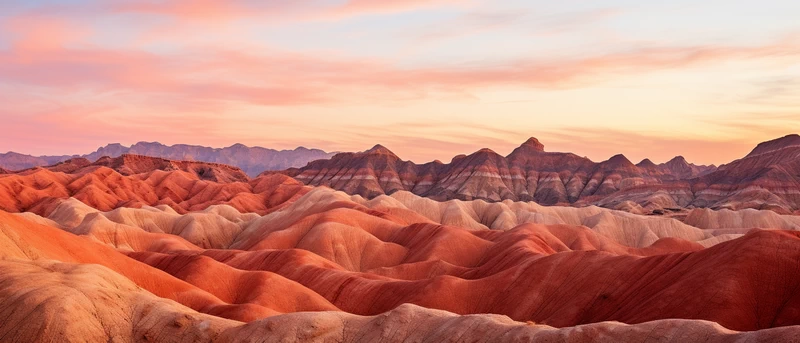
The landscape here felt unreal. Waves of red, orange, yellow, and even green rolled across the hills. It truly looked like someone had spilled a giant paint palette across the earth.
We took the park shuttle, stopping at each viewpoint. I lingered longest at Platform 1 and 4—both breathtaking.
Finally, just before sunset, the colors deepened. The mountains glowed like fire under the soft light. Cameras clicked. But honestly, no photo could ever capture this feeling.
We returned to Zhangye city at nightfall, still dazzled by that unforgettable, painted world.
Day 7: Zhangye → Qilian Grasslands 135km→ Qilian County 72km :张掖 → 祁连草原 → 祁连县(宿)
This day was green. After so many days of desert, suddenly the world turned soft and rolling.
We drove through Qilian Grasslands (祁连山草原), past yaks and sheep grazing beneath snow-capped peaks. It looked like a Windows desktop wallpaper—too perfect to be real.

Zhuer Mountain (卓尔山) came next. They call it the “Swiss Alps of the East”, and I believe it. From the top, I saw layers of green, gold, and white—the town, the fields, and the mountains stacked in harmony.
Overnight: Qilian County (祁连县), tucked into the hills at 2,800 meters.
Day 8: Qilian → Menyuan 173km→ Xining 122km
祁连县 → 门源油菜花 → 西宁(行程结束)
Our final day. We crossed Daban Mountain Pass (达坂山), one of the highest roads in Asia. At the top, the air was thin and cold. But the view?

Below us, the Menyuan Canola Sea (门源百里油菜花海) stretched for miles. If you come in July or early August, it’s one of the world’s greatest flower fields. I stood there quietly, letting the wind carry it all in.
We reached Xining by late afternoon. Dusty, tired, full of awe. I didn’t want it to end.
10. Xining Travel Tips: What I Learned the Hard (and Helpful) Way
Traveling through Xining taught me one thing fast: the highland weather plays by its own rules.
First, always carry a light jacket. Even in July, mornings can bite and nights cool down quickly.
Next, dress respectfully at religious sites like Ta’er Monastery and Dongguan Mosque. Long pants, covered shoulders, and quiet voices go a long way. Never take photos inside without permission.
Also, remember the Qinghai Museum is closed on Mondays, unless it’s a public holiday. Plan ahead.
Hydration is essential. I drank water constantly. It helped with the altitude and kept headaches away. Avoid running or strenuous hikes on your first day.
So, what should you pack?
- Sun protection: high-SPF sunscreen, a wide-brimmed hat, and UV-blocking sunglasses.
- Layered clothes: Think “onion-style.” Base layer to wick sweat, mid-layer for warmth, outer layer to block wind.
- Footwear: Bring supportive walking shoes. You’ll thank yourself later.
- Moisturizers: Lip balm, lotion, and hand cream. The dry air sneaks up on you.
- A refillable bottle: Water breaks are not optional here.
Finally, the best time to visit? June to October. Expect cool breezes, golden fields, and skies that go on forever.
Trust me—Xining in these months feels like a gift wrapped in blue and gold.
Xining is a city that whispers and roars. Its rich culture, endless skies, and kind people stay with you long after you leave. Whether you pause here briefly or dive deep into its stories, the memories you make will become part of your own Xining Travel Guide.
So pack your curiosity, bring your open heart, and set off on this highland adventure. May it fill you with both peace and wonder. And if you ever need more tips? Just ask a local. They’re always happy to help.
Safe travels—and see you on the plateau.
About the Author
Ruqin is the founder of Ruqintravel.com and has spent more than four decades working in China’s travel industry. Drawing on hands-on experience in cities like Beijing and Hangzhou, he personally researches and updates each guide to help international travelers navigate China with confidence.
Further Reading
Yinchuan Travel Guide: Map, Scenic Routes, Highlights and Tips
Lanzhou Travel Guide: Map, Highlights and Travel Tips
Urumqi Travel Guide: Map, Scenic Routes, Highlights and Tips
Lhasa Travel Guide: Map, Highlights and Travel Tips