
Written and updated by Ruqin
Last updated: March 9, 2026
Today I am driving to the Gan Xiu Suo (干休所) in Hangzhou to visit my father. At 91, he is a retired military veteran and the quiet center of our family. Every visit makes me think about the long road he has walked.
His life is not dramatic in the way history books describe events, but it has moved through many of the same decades that shaped modern China. When I sit with him and listen to his stories, I often feel that his personal journey runs quietly alongside the country’s own history.
The Legacy of Gan Xiu Suo
The Gan Xiu Suo (干休所) where my father lives is a residential compound for retired PLA officers. These communities exist across China, quietly supporting veterans who served during the early decades of the People’s Republic. In recent years, especially since the establishment of the Ministry of Veterans Affairs in 2018, their care has become more organized and visible.
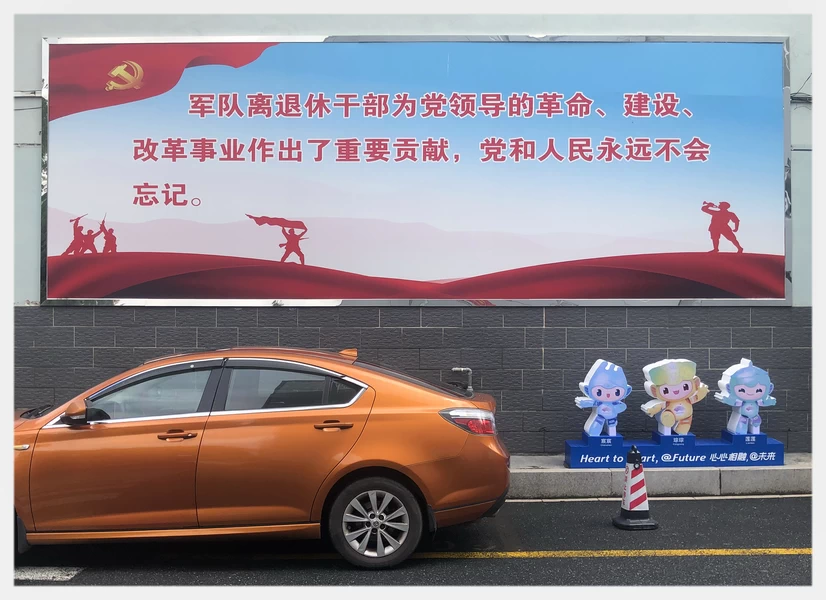
Whenever I enter the compound in Hangzhou, I notice the calm atmosphere. The buildings are modest apartment blocks, shaded by old trees. In the mornings, some of the elderly residents walk slowly along the small paths, greeting one another like old colleagues who have known each other for half a lifetime. Many of them once served in different units across the country, but now they share the same quiet stage of life.
My father belongs to a generation known in China as Li Xiu Gan Bu (离休干部) — veteran cadres who joined the revolutionary forces before 1949, the year the People’s Republic of China was founded.
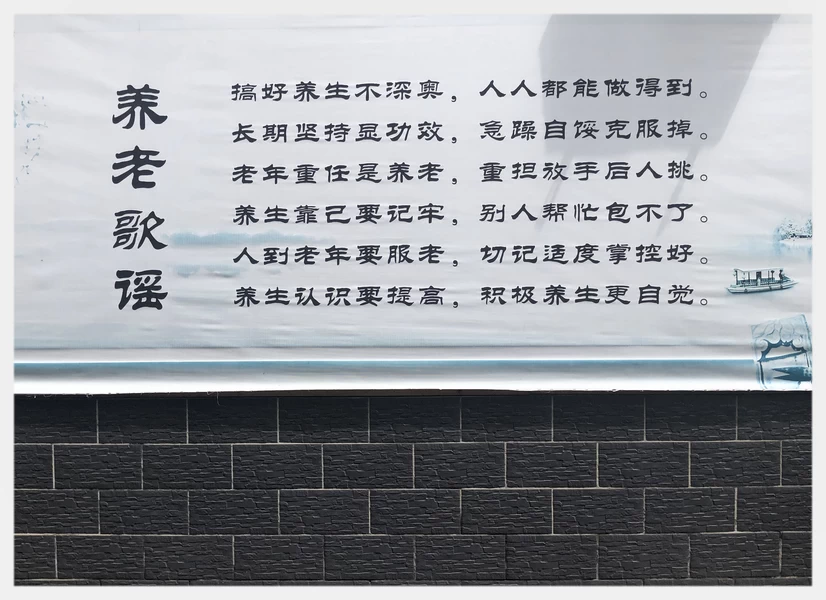
That generation lived through an extraordinary period of history. When they were young, the country was still in turmoil. Many joined the army as teenagers, often with little idea of where life would take them.
Now they are in their late eighties or nineties.
Each year their numbers grow smaller.
Whenever I visit my father at the Gan Xiu Suo, I feel that I am also stepping quietly into the closing chapter of a generation that witnessed the founding years of modern China.
A Child Soldier in Turbulent Times
My father entered the army when he was only twelve years old. It was during the final years of the Chinese Civil War (1945–1949), a time when the country was still unsettled and uncertain.
His reason for joining was very simple. He wanted to stay close to his mother.
My grandmother had already been serving for years in the New Fourth Army (新四军), one of the Communist forces that fought during the War of Resistance against Japan (1937–1945). Like many women of her generation who joined the revolution, she spent long periods away from home, moving with the troops from one place to another.
In those unstable years, families connected with the Communist forces often faced real danger in areas controlled by the Kuomintang. Bringing my father with her into the army was, in many ways, the safest choice she could make. It meant he would grow up among soldiers rather than risk being left behind.
An Educational Journey
After 1949, when the new government was established, the army began to invest in the education of many young soldiers. My father was one of them.
Instead of remaining an ordinary soldier, he was sent to study.
First, he attended a special military high school, part of a system designed to educate young cadres who had joined the revolution early in life. For my father, who had spent his early teenage years moving with army units, the classroom was a completely new world.
He studied seriously and did well. Eventually he was selected to continue his education at Zhejiang Medical University in Hangzhou.
In those days medical training was long and demanding. My father spent nine years there studying medicine and completing his clinical training. It was during those years that he gradually found his specialty in orthopedics.
Medicine became his life’s work.
After graduation, he remained in the military medical system and served for many decades. Over time he rose through the ranks and eventually became a senior colonel and the chief of an army hospital.
Whenever he talks about those years, he rarely emphasizes titles or ranks. What he remembers most are the long hours in the hospital wards, treating injured soldiers and patients who came from all over the region.
Retirement: A Quieter Chapter
My father retired from the army in 1994.
After decades of hospital work, long shifts, and military routines, life slowly became quieter. He moved into the Gan Xiu Suo in Hangzhou, where many retired officers spend their later years.
His daily life is simple now.
He wakes early, as he always did in the army. After breakfast he reads the newspapers carefully, sometimes switching on the television to follow the morning news. Later in the day he often takes a short walk in the compound or does a bit of gentle exercise to keep his body moving.
Nothing dramatic fills his schedule, but the rhythm suits him.
What matters most to him now is family. Whenever we visit, he becomes visibly brighter, asking about everyone’s work, our travels, and the small details of daily life.
After my mother passed away in 2017, those family visits became even more important. Their marriage lasted many decades, and her absence left a quiet space in his life.
Yet my father has remained steady, just as he always was. When I sit with him in his small living room at the Gan Xiu Suo, I still feel the same calm presence that has anchored our family for so many years.
The Essence of Home
For our family, my father has always been the quiet center of what we call home. It is not just a place. It is the feeling that comes from sitting with him, listening to his stories, hearing his familiar laugh, and sharing a simple meal together.
He is not living alone. A devoted baomu (保姆) — whom we usually call ayi (阿姨) — helps take care of his daily life. Over time she has become part of the rhythm of the household, adding a warmth that makes the apartment feel lived in rather than simply managed.
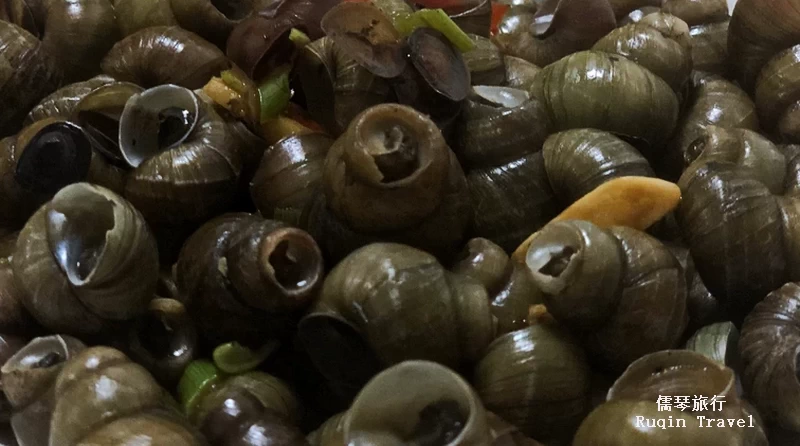
Whenever I plan to visit, my father always asks her to cook two dishes I loved when I was a child: fried river snails and fried eggs with green peppers.
Yesterday she heard that I would be coming to the Gan Xiu Suo. She went early to the small neighborhood market to buy fresh river snails. Back home, she placed them in a basin of water and left them there for a full day so the snails could release the mud inside and lose their earthy smell.
It is a small preparation, but somehow it carries the feeling of home.
A Legacy to Cherish
When I leave the Gan Xiu Suo after visiting my father, I often carry a quiet feeling with me.
His life has passed through many different chapters — a boy following his mother into the army during wartime, a young student studying medicine after 1949, and later a military doctor who spent decades caring for patients in an army hospital.
He rarely speaks about these experiences in dramatic terms. To him, it was simply the path his life took.
But when I listen carefully, I realize that his personal story runs alongside a much larger period of Chinese history. His generation lived through years that shaped the country we see today.
Now, at 91, his life has slowed down. His days are simple and steady inside the quiet compound of the Gan Xiu Suo.
Yet every time I sit with him, I feel I am still learning something from him — about patience, modesty, and the quiet strength that carried his generation through difficult times.
As I drive away from the compound, I often think that these ordinary conversations with him are becoming small pieces of family history that I want to remember.
About the Author
Ruqin is the founder of Ruqintravel.com and has spent more than four decades working in China’s travel industry. Drawing on hands-on experience in cities like Beijing and Hangzhou, he personally researches and updates each guide to help international travelers navigate China with confidence.