
Written and updated by Ruqin
Last updated: April 16, 2026
The first time I tried to take a taxi in Beijing, I stood on the curb watching three empty cabs pass me by. No eye contact, no stop. That’s when I realized—how to take taxi in Beijing isn’t as obvious as it looks.
This Beijing Taxi Guide comes from those small, real moments. I’ll walk you through what actually works—from hailing a cab to handling fares—so you can move around the city with calm confidence, not guesswork.
1. Beijing Taxi System
First and foremost, it’s important to understand how Beijing’s taxi system works. Taxis are widely available throughout the city, making them a popular choice for both locals and tourists.
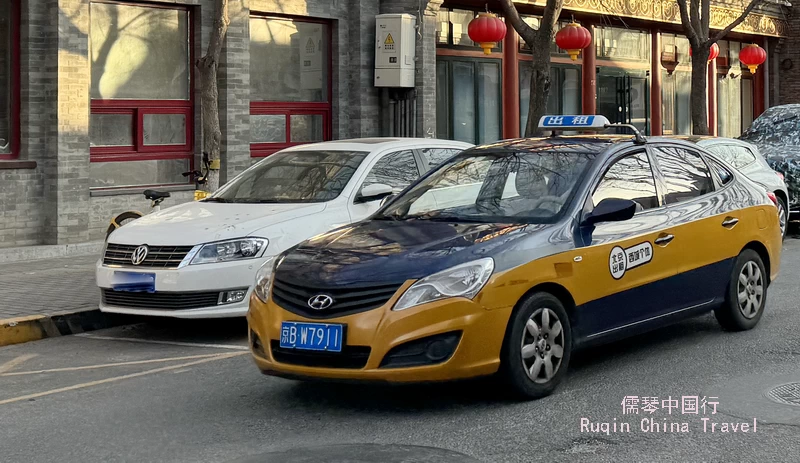
Most taxis are easy to spot, typically painted in two-tone colors such as yellow and green, or red and silver. However, it’s important to note that Beijing has a high volume of traffic, especially during rush hours. Therefore, it’s a good idea to plan extra time for your trips.
Next, it’s helpful to know that all taxis in Beijing are metered, and drivers are required to use the meter for every trip. This ensures that you pay a fair price based on the distance traveled.
2. How to Pay for a Taxi in Beijing
Paying for a taxi in Beijing is easy and convenient. There are several payment options available, so you can choose the one that works best for you.
1) Cash
You can pay with cash directly to the driver. However, many locals prefer digital payments, so it’s a good idea to carry small bills for taxis that may not have change.
2) Mobile Payment
Most taxis in Beijing accept mobile payments via WeChat Pay and Alipay. This is the most popular and convenient option, especially if you don’t have Chinese currency.
3) Card Payment
Some taxis support Beijing Pass, IC transit cards or bank cards, but this is less common. It’s always best to check with the driver before starting your ride.
In addition to these options, Beijing taxis also support various electronic and mobile payment methods, making it easy to pay in any situation.
3. How to Hail a Taxi in Beijing
Hailing a taxi in Beijing is relatively straightforward. However, there are a few tips to keep in mind to make the process smoother.
First, it’s best to look for taxis at designated taxi stands, which are often located outside major hotels, shopping centers, and tourist attractions.
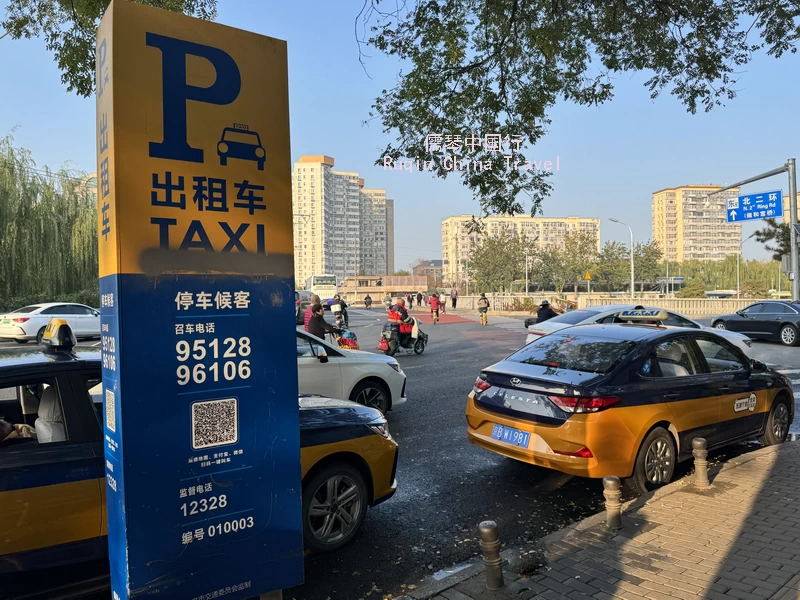
If you’re not near a taxi stand, you can also hail a taxi on the street by raising your hand when you see an available cab approaching.
It’s important to note that during rush hours or in busy areas, it might be harder to find an available taxi. In these situations, you may want to use a taxi-hailing app like Didi Chuxing, which is the Chinese equivalent of Uber. However, the app is primarily in Chinese, so you might need some help setting it up if you don’t speak the language.
Taxi Call: 95128, 96106
Additionally, when hailing a taxi, it’s a good idea to have your destination written down in Chinese characters. While some taxi drivers in Beijing may speak a little English, many do not, so showing the driver the written address can help avoid confusion.
4. Taxi Fares in Beijing
Understanding taxi fares in Beijing will help you avoid overpaying for your rides. The base fare for taxis in Beijing is typically 13 RMB for the first three kilometers. After that, the fare increases by 2.3 RMB for each additional kilometer. If your ride exceeds 15 kilometers, the fare may increase slightly due to a surcharge for long-distance trips.
Additionally, it’s important to note that there is a small fuel surcharge added to each trip, usually around 1 RMB. Taxis in Beijing also charge extra for waiting time, which can add up if you’re stuck in traffic. However, the meter will automatically calculate these charges, so you don’t need to worry about doing the math yourself.
To give you a general idea, a taxi ride from Beijing Capital International Airport to the city center typically costs between 100 and 150 RMB, depending on traffic. It’s always a good idea to ask for a receipt at the end of your ride, known as a “fapiao” in Chinese, in case you need to track your expenses or report a problem.
5. Beijing Taxi Safety Tips
Safety is a top priority when taking taxis in any city, and Beijing is no exception. While most taxi rides in Beijing are safe and uneventful, it’s still important to be aware of a few safety tips. First, always ensure that you’re getting into a licensed taxi. Licensed taxis will have a taxi sign on the roof, a meter inside, and a driver’s identification card displayed on the dashboard.
Secondly, it’s wise to avoid unmarked or unofficial taxis, which are often referred to as “black cabs.” These vehicles may not be insured, and the drivers might try to overcharge you. If you’re unsure whether a taxi is licensed, it’s best to wait for another one.
Additionally, it’s important to buckle up as soon as you get in the taxi. Although some taxi drivers might not insist on it, wearing a seat belt is essential for your safety, especially in busy city traffic. Lastly, always keep an eye on your belongings and avoid discussing personal or financial information during the ride.
6. How to Avoid Taxi Scams in Beijing
Like any major city, Beijing has its share of taxi scams, but with a little awareness, you can easily avoid them. One common scam involves drivers who claim their meter is broken and then quote an inflated price for the trip. To avoid this, always insist that the driver uses the meter, or simply get out and find another taxi if the driver refuses.
Another scam to watch out for involves drivers taking unnecessarily long routes to increase the fare. If you’re unfamiliar with the city, it can be challenging to know if this is happening, but using a map app on your phone to track the route can help you feel more confident. Additionally, you can ask the driver to take a specific route if you know a shorter or quicker way.
Finally, be cautious of drivers who offer to take you to a different location than your intended destination, such as a “better” restaurant or shop. These drivers might be receiving a commission from the establishment and may not have your best interests in mind. It’s always best to stick to your planned destination.
7. Using Taxi Apps in Beijing
In recent years, taxi-hailing apps have become increasingly popular in Beijing. The most widely used app is Didi Chuxing, which allows you to book a taxi directly from your smartphone. This can be especially useful if you’re having trouble finding a taxi on the street, or if you’re in an area where taxis are less frequent.
To use Didi, you’ll need to download the app and create an account. The app is available in English, but some features may still be in Chinese, so it can be helpful to have someone assist you with the setup. Once you’ve set up your account, you can input your destination, choose the type of service you want (such as a standard taxi or a premium car), and confirm your booking. The app will provide an estimated fare, and you can pay directly through the app using WeChat Pay, Alipay, or a linked credit card.
Using a taxi app can also provide additional safety and convenience, as the app tracks your ride and allows you to share your trip details with friends or family. However, it’s important to note that while the app is convenient, it’s still a good idea to have your destination written in Chinese characters to show the driver if needed.
8. Taxi Etiquette in Beijing
When taking a taxi in Beijing, it’s important to be aware of some basic etiquette to ensure a smooth and pleasant experience. First, when you enter the taxi, it’s customary to greet the driver with a polite “Ni hao,” which means “hello” in Mandarin. While most drivers won’t expect you to speak Mandarin, making an effort to use a few basic phrases can go a long way in showing respect.
Additionally, it’s common practice to sit in the back seat of the taxi, especially if you’re traveling alone. This is considered polite and also allows the driver to focus on driving without feeling uncomfortable. If you’re traveling with a group, it’s fine for one person to sit in the front seat, but the back seat is generally preferred.
When it comes to payment, it’s a good idea to have small bills or exact change ready. While most drivers can provide change for larger bills, having the exact fare can make the transaction quicker and easier. If you’re paying with a mobile app, simply let the driver know at the beginning of the trip, and confirm the payment before exiting the taxi.
Lastly, tipping is not expected in Beijing taxis, but if the driver provides exceptional service, rounding up the fare to the nearest whole number is appreciated. However, this is entirely optional.
9. Navigating Beijing by Taxi: Additional Tips
While taxis are a convenient way to get around Beijing, it’s important to keep a few additional tips in mind. First, be aware that traffic in Beijing can be heavy, especially during peak hours, which are typically from 7:30 to 9:30 AM and 5:00 to 7:30 PM. If you’re traveling during these times, allow extra time for your journey.
Additionally, some areas of Beijing may have restrictions on where taxis can pick up or drop off passengers, particularly near major tourist attractions and government buildings. In these cases, the driver may need to drop you off a short distance from your destination, so be prepared to walk a little if necessary.
Finally, if you’re unsure of your route or have any concerns during your ride, don’t hesitate to use a map app on your phone to track your journey. This can help you feel more confident and ensure that you’re headed in the right direction.
By the end of my first few days, taking a taxi in Beijing stopped feeling uncertain and started feeling easy. Once you understand the rhythm—where to stand, how to signal, what to expect—it becomes one of the simplest ways to get around. That’s really the heart of this Beijing Taxi Guide.
If you remember just a few things—stay aware, keep your destination clear, and don’t hesitate to use apps—you’ll quickly figure out how to take taxi in Beijing without stress. And once you do, the city opens up in a much more relaxed way.
About the Author
Ruqin is the founder of Ruqintravel.com and has spent more than four decades working in China’s travel industry. Drawing on hands-on experience in cities like Beijing and Hangzhou, he personally researches and updates each guide to help international travelers navigate China with confidence.
Further Reading
How to Use the Beijing Subway: Map, Tickets, Pass & Apps
How to Use the Beijing Public Transport – A First-Timer’s Guide
Beijing Day Tour Planner | Plan Your One-Day Tours in Beijing