Written and updated by Ruqin
Last updated: May 27, 2026
Ready to step into a real-life snow kingdom? Welcome to Harbin—”an Ice city” where Russian charm meets Chinese heart. Often called the “Moscow of the East,” Harbin is full of surprises. In winter, crystal ice castles glow under golden sunlight. In summer, tree-lined boulevards whisper old European tales beside the Songhua River.
Whether you’re chasing icy adventures or hidden cultural gems, Harbin promises an unforgettable journey. From the grandeur of Saint Sophia Cathedral to sizzling street BBQs, every corner invites discovery. This Harbin Travel Guide will help you explore it all—maps, highlights, festivals, and secret local tips await.
1. Best Time to Visit Harbin — Unlocking the City’s Four-Season Symphony
Imagine this—your breath turns into tiny clouds as you step into a world of ice. Towering crystal castles surround you, each glowing in the winter sun.
But there’s more to this city than just snow and ice. Harbin, tucked away in China’s northeast, experiences four dramatically different seasons. Each one brings its own mood, colors, and charm.
Let’s walk through the seasons—one by one—and find the best time to visit Harbin for your kind of adventure.
Winter (December – February): The Reign of the Ice Queen
The best time to visit Harbin for a once-in-a-lifetime winter experience. Winter is Harbin’s crown jewel. It’s cold—really cold. Daytime temperatures often drop below -10°C, and nights can hit -25°C or even colder. But don’t let that scare you.
This cold is dry, not bone-soaking. Locals call it “biting but beautiful.” With the right clothes, you’ll feel exhilarated, not frozen.
Why winter is pure magic:
- Harbin Ice and Snow World (冰雪大世界): Open from late December to late February. It’s not just a park—it’s an entire glowing city made from blocks of ice. Come at night, and it feels like you’ve stepped into a frozen fairytale.
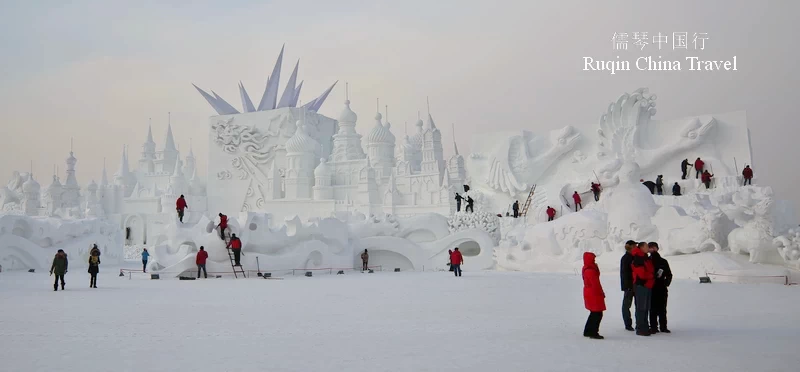
- Sun Island International Snow Sculpture Art Expo (太阳岛上的雪博会): Gigantic snow sculptures—some as tall as buildings—turn the city into an open-air gallery.
- Frozen river fun: Slide down icy ramps on the Songhua River, take a horse-drawn sled, or even try local winter sports.
Spring (March – May): Quiet Thaw and Gentle Mornings
Spring in Harbin is a soft transition. Snow melts slowly. March still carries a winter chill, but by April, warmth begins to return.
You won’t find festivals this time of year, but that’s the charm. The crowds thin out. The city breathes.
What to do in spring:
Wander the famous Central Street (中央大街), free of snow. Admire the bare beauty of its European facades. The streets are quieter now. You’ll hear the rustle of old trees and the chatter of local life.
Summer (June – August): Europe in China’s North
Summer in Harbin is surprisingly cool. Average highs stay around 26–28°C. Locals call it “China’s summer capital”—a retreat from southern heat.
Why summer is so romantic:
- Sun Island (太阳岛): A green escape perfect for picnics and bike rides. Trees sway in the breeze, and families gather under blue skies.
- Central Street at night: Take an evening stroll. Musicians play, lights twinkle, and the famous Modern ice cream bar melts slowly in your hand.
- Harbin Summer Music Festival: The city pulses with art and energy. Open-air concerts and orchestras echo from historic buildings.
Autumn (September – November): A Painter’s Dream
Autumn in Harbin is a masterpiece. The skies stretch wide. The air is crisp. September feels warm, but by October, leaves turn fire-red and gold.
Where to go in autumn:
- Volga Manor (伏尔加庄园): With Russian-style architecture set against forests of amber, it feels like you’re wandering inside a fairytale.
- Sun Island (太阳岛) again becomes a favorite—this time for its fall foliage. Photographers love it here. Every corner is frame-worthy.
2. Where to Stay in Harbin — Discover Your Perfect Home Base
Welcome to what I like to call Harbin’s living room—its historic heart and modern soul wrapped into one unforgettable city.
Harbin wasn’t built by accident. It was born from the old Chinese Eastern Railway, and its layout still feels like a walkable museum. Streets twist and turn with history. East meets West in every corner. Architecture mixes Russian romance with local grit. Each neighborhood tells its own story—and they’re all worth exploring.
To understand where to stay in Harbin, picture this: the Songhua River flows right through the city, dividing it in two.

- South of the river (江南): This is the old town—full of history, stories, and charm.
- North of the river (江北, also called Songbei): Welcome to modern Harbin—spacious, futuristic, and still growing.
Now, let’s explore each district like a local. You’ll find your perfect home base in no time.
1) Daoli District: Harbin’s Elegant Stage
If Harbin were a graceful woman, Daoli District (道里区) would be her most dazzling dress. This is where most travelers begin—and for good reason. It’s the center of Harbin’s European charm, culture, and irresistible food.
Highlights:
- Central Street (Zhongyang Dajie) 中央大街
Not your average shopping street. Your feet walk over time-smoothed cobblestones, surrounded by European buildings. The scent of Modern ice cream and malty Kvass floats in the air. Day and night feel like two different stories. - Saint Sophia Cathedral 圣索菲亚大教堂
The city’s most iconic sight. This Russian Orthodox church with its green onion dome is simply breathtaking. By day, pigeons flutter around. By night, it glows in quiet grandeur. - Flood Control Monument & Songhua River Promenade 防洪纪念塔
Where Central Street ends, the river begins. Here, you’ll see Harbin’s skyline and walk along the banks like the locals do—be it a breezy summer stroll or a playful winter trek on frozen waters.
Where to Stay:
🌟 The heart of it all. If you want the convenience of stepping out and seeing the city unfold around you, this is your spot. From luxury hotels to charming boutiques, Daoli has it all. Prices can be higher—but the experience is absolutely worth it.
2) Daowai District: Harbin’s Soulful Time Machine
If Daoli is polished and poised, Daowai District (道外区) is full of fire, flavor, and stories. This is where you’ll feel the pulse of old Harbin. Locals call it “the real Harbin”—raw, warm, and full of life.
Highlights:
- Zhonghua Baroque Historic Street (中华巴洛克历史街区)
Ever seen Chinese courtyards hiding behind Baroque facades? This is one of the only places in the world where East meets West in the walls themselves. Walking through this neighborhood feels like stepping into a black-and-white film. - Old Daowai Food Scene (老道外美食)
Craving authentic Harbin cuisine? Come hungry. Tiny, family-run places like Zhang Bao Pu and Fan Ji Yong may look unassuming, but their dumplings and grilled meats will blow you away.
Where to Stay:
For culture-lovers and foodies on a budget. Stay here if you want to be close to the best eats, and don’t mind wandering through neighborhoods that feel more local than luxurious. Guesthouses and inns offer charm at great value.
3) Nangang District: The Brain of the City
Nangang District () is calm, practical, and packed with local life. It’s home to Harbin’s universities, museums, and transit hubs. If you’re looking for balance—this is it.
Highlights:
- Museum Business Circle (南岗区)
Centered around Hongbo Plaza, this area blends commerce with culture. You’ll find the Heilongjiang Provincial Museum here, nestled among shops and cafés. - Guogeli Avenue (Gogol Street) (果戈里大街)
A quieter, more lived-in version of Central Street. Russian architecture lines the road, and the Alexeyev Church (阿列克谢耶夫教堂) peeks out between trees. This is where Harbin locals live, shop, and sip coffee. - Qiulin Company (秋林公司)
Looking for authentic Harbin smoked sausage? This hundred-year-old shop is legendary. And yes, it smells amazing inside. - Harbin Railway Station (Main Station) 哈尔滨火车站
Your key to getting around northeast China. Super central and very well connected.
Where to Stay:
Practical and well-rounded. This area offers excellent transport, lower prices than Daoli, and a peaceful local vibe. Hotels range from business-class to cozy mid-range options. It’s less touristy, but that’s part of its charm.
4) Haxi (West Nangang District): Harbin’s Modern Gateway
Though technically part of Nangang District, Haxi District (哈西地区) feels like a city of its own. It’s sleek, efficient, and surprisingly vibrant.
Highlights:
- Modern Malls & Urban Parks
This is where Harbin’s new generation hangs out. Think shopping, dining, and clean green spaces. - Harbin West Railway Station 哈尔滨西站(高铁站)
If you’re arriving by high-speed train, you’ll likely land here. Trains from Beijing and other major cities often stop at this station instead of the older one.
Where to Stay:
Modern comfort, close to the trains. Ideal for travelers who value sleek hotels, newer amenities, and convenience to high-speed rail. It’s a bit farther from the classic sights—but Harbin’s metro makes up for that.
5) Songbei District (North Harbin): A Glimpse of the Future
Cross the river, and everything opens up. Songbei District (松北区) is wide, green, and quietly ambitious. This is Harbin’s newest frontier—home to snow palaces and futuristic buildings.
Highlights:
- Harbin Ice and Snow World 冰雪大世界
This is the place you’ve seen in photos—castles of ice, glowing in rainbow light. Only open in winter, and located right here in Songbei. - Sun Island Scenic Area 太阳岛风景区
A relaxing green space in summer. In winter, it transforms into the Snow Sculpture Expo, filled with breathtaking art carved from snow. - Harbin Grand Theatre 哈尔滨大剧院
Its flowing, white shape looks like snowdrifts or wind-sculpted mountains. Whether you attend a show or just admire it, this building is unforgettable.
Where to Stay:
⛄ Only if snow and space are your thing. Hotels here are modern, and the scenery is striking. But nightlife and restaurants are few. If you’re visiting Ice and Snow World and want to stay close, it makes sense. Otherwise, treat Songbei as a day trip.
Final Tips: Where Should You Stay in Harbin?
| Traveler Type | Best Area to Stay |
|---|---|
| First-time visitor, want everything nearby | Daoli (Central Street area) |
| Budget traveler, foodie, cultural explorer | Daowai (Zhonghua Baroque) |
| Want convenience, local life, great transport | Nangang (Museum Circle) |
| Modern traveler, love new hotels, rail access | Haxi (West Railway Station) |
| Visiting for Ice & Snow World only | Songbei District |
Finding the right place to stay in Harbin changes your entire experience. Whether you crave culture, comfort, or cold weather adventures, there’s a district that fits you perfectly. So, pick your base. Get comfy. Unpack your bags.
3. How to Get to Harbin — The Easy Way In
Dear traveler, no matter where you’re coming from—whether it’s the other side of the world or just another corner of China—getting to Harbin is already part of the adventure.
Let me walk you through the smoothest ways to arrive in Harbin—with tips I wish someone had told me before my first visit.
1) Flying into Harbin: Touchdown in the North
Let’s start from the sky. As the plane descends, you’ll see it—vast, snowy plains in winter, or lush green fields in summer. That’s Harbin, welcoming you with open arms.
Harbin Taiping International Airport (HRB)

Harbin’s airport (哈尔滨太平国际机场) lies southwest of the city, about 38 kilometers from Central Street—Harbin’s famous pedestrian heart. Though it’s not right downtown, it’s modern, efficient, and very foreigner-friendly.
Once you land, you’ll have three great ways to get into the city. Let’s break them down.
Airport Shuttle Bus – Budget-Friendly and Reliable
This is my go-to choice when I’m traveling solo or want to save money.
- You’ll spot shuttle bus signs right outside the arrival terminal.
- Buses cover key spots like Central Street, Harbin Railway Station, and Convention Center.
- The ride costs around ¥20 RMB, and buses leave when full—usually every 15–20 minutes.
Pro Tip: Check in advance which route stops near your hotel. It saves time and avoids extra transfers.
Taxi – Door-to-Door Ease
If you’re carrying heavy luggage or traveling with family, a taxi can be worth the splurge.
- A standard ride to the city center costs around ¥100–¥120 RMB, including highway tolls.
- Travel time is about 45–60 minutes, depending on traffic.
Important: Always use the official taxi stand. Follow the signs at arrivals and make sure the driver uses the meter.
Ride-Hailing Apps (e.g., Didi) – Book with a Tap
Prefer tech over taxis? I often use Didi, China’s version of Uber.
- The cost is similar to a taxi, sometimes slightly cheaper.
- Pickup zones are clearly marked at the airport—just follow the signs.
- The app is available in English and allows credit card payments.
Heads-up: Make sure your phone has data, and install the Didi app before your flight. It’ll save you hassle later.
2) Taking the Train to Harbin: Which Station Should You Choose?
Harbin has three major train stations, and each plays a different role. Don’t worry, I’ll help you tell them apart—think of them as three different personalities ready to greet you.
Harbin Railway Station (Main Station) – The City’s Beating Heart

Harbin Railway Station (哈尔滨站)– this beautiful, historic station sits right in the Nangang District, the very center of old Harbin. The building itself is a blend of Russian nostalgia and modern upgrades.
- It serves a mix of traditional trains (K/T/Z lines) and a few high-speed trains (G/D lines).
- If you’re coming from Heilongjiang province cities like Mudanjiang or Jiamusi, you’ll likely stop here.
Getting to downtown: You’re basically already there.
- Metro Line 2 connects the station with major areas.
- A quick 10–15 minute ride gets you to Central Street or your hotel.
- Taxis and buses are also available just outside.
- Harbin West Station – The High-Speed Hub
Harbin West Station (哈尔滨西站) is my top recommendation if you’re arriving by bullet train.
Located in the Haxi area (West Nangang District), Harbin West is sleek, spacious, and purpose-built for China’s G/D high-speed trains.
- Almost all high-speed trains from Beijing, Tianjin, Dalian, Shenyang, and Changchun arrive here.
- It’s modern, well-signed, and easier to navigate than older stations.
Getting to the city:
- Metro Line 3 runs directly from the station into the heart of Harbin.
- A taxi to Central Street takes about 25–30 minutes.
- You can also take Didi if you prefer a private ride.
Bonus: The area around the station is new and vibrant—great if you’re staying in Haxi.
Harbin North Station – The Northern Gate
Last but not least, there’s Harbin North Station (哈尔滨北站) in the Songbei District, across the Songhua River. It’s mostly used for regional trains and less relevant unless you’re exploring Heilongjiang’s northern regions.
Still, it’s clean, organized, and surprisingly quiet.
Getting downtown:
- Hop on Metro Line 2, which crosses the river and connects to the city center.
- It’s a bit farther, but totally manageable.
Next up in this Harbin Travel Guide, I’ll show you how to get around the city like a local—because once you’re in, you’ll want to explore it all.
4. Getting Around Harbin Like a Local
Dear traveler, on the streets of this northern city, you’ll quickly find your rhythm. Some mornings, it’s a quick ride on the metro. Other times, you might slow down, hop on a bus, and let the city reveal itself—bit by bit—through its windows. Every ride tells a story. Every route holds a new discovery.
Metro – The City’s Beating Pulse
The metro is my favorite way to explore Harbin—especially in winter. It’s fast, clean, and always warm. Locals love it. Travelers depend on it. Currently, there are three main lines:

- Line 1 (Red): Runs east to west. It links Harbin Railway Station, and the bustling museum district.
- Line 2 (Blue): This line is a gem. It runs north to south—and it’s the only one that crosses under the Songhua River. What makes it special? It takes you directly to Sun Island, Ice and Snow World, and Central Street. That’s why many travelers using this Harbin Travel Guide call it the “tourist express.”
- Line 3 (Orange): Still expanding, but already connects Harbin West Station to the rest of the city. You can switch to Line 2 at Zhujiang Road (珠江路站).
Tickets are affordable—just 2 to 4 RMB. Machines are bilingual, and mobile scanning is quick. On freezing days, the metro feels like a cozy retreat beneath the snow-covered streets.
Taxis & Ride-Hailing – Comfortable and Straightforward
Sometimes, especially after a long day of walking, four wheels are just what you need.
- Taxis start at 8 RMB for the first 3 km. After that, it’s 1.9 RMB/km plus a 1 RMB fuel fee.
Always use official taxi stands, especially at train stations. Show the driver your destination in Chinese or point to it on a map.
- Didi is an excellent choice for visitors. It’s like Uber but designed for Chinese roads—and it works beautifully with this Harbin Travel Guide.
You’ll get upfront pricing, real-time tracking, and an English interface. No guessing, no miscommunication—just tap, ride, and enjoy the view.
Buses – Local Life on a Budget
Buses in Harbin are ridiculously cheap—just 1 or 2 RMB—and incredibly local. No need to rush. Sit by the window, and watch neighborhoods drift by.
You’ll pass markets, schools, backstreets, and bakeries. It’s raw, real Harbin.
However, be warned: rush hours get packed, and some routes can crawl in traffic. Still, if you’re not in a hurry, it’s an authentic slice of daily life. Bring small change or scan with WeChat or Alipay.
Walking & Biking – Hidden Corners, Unexpected Joys
The best parts of this city? You find them when you slow down. Start with Central Street. You can’t drive there. You can’t rush it. You have to walk it.
Each stone beneath your feet is polished by decades of footsteps. Baroque facades, candy stalls, and hidden cafés line your path. Grab a candied hawthorn stick or a famous ice cream. That’s Harbin in a bite.
In warmer seasons, rent a shared bike. They’re everywhere—especially in the old city south of the river. I love riding along the Songhua River. The breeze is gentle, and the city feels alive.
Sometimes, the best transportation tip in this Harbin Travel Guide is simple: look up, slow down, and just wander.
5. Top Attractions in Harbin — From Ice Palaces to Local Life
Dear traveler, pack your curiosity and charge your camera. We’re about to explore the places that define Harbin’s character. Some are grand and glittering. Others are tucked away in quiet corners. But each one? Unforgettable. Let’s begin.
1) Hongzhuan Street Morning Market
Hongzhuan Street Morning Market (红专街早市) isn’t just a market—it’s Harbin waking up. While most of the city still sleeps, this street buzzes. Steam rises from breakfast stalls. Vendors shout prices in thick northeastern accents. The smell of fried dough and garlic fills the air.

Want to feel like a local? Come early. Munch on a hot egg burger or try the legendary rose-stuffed fried rice cake from Yin Pangzi (尹胖子油炸糕). Trust me—it’s worth setting an alarm for.
Address: Hongzhuan Street, Daoli District (near Shangzhi Street) 道里区红专街(近尚志大街)
Entrance: Free, but bring cash or mobile pay
How to Get There: Line 2 to Central Street Station, then walk 10 minutes
2) Central Street (Zhongyang Dajie)
Central Street (中央大街) is Harbin’s most famous street—and its architectural postcard.
The cobblestone path stretches for over a kilometer, flanked by Baroque, Renaissance, and eclectic facades. In summer, café tables spill onto sidewalks. In winter, it becomes a glittering corridor of ice lights and snowflakes.

You’ll find century-old eateries here like Modern Ice Cream and Huamei Western Restaurant. By day, it’s busy. By night, romantic.
Address: Central Street, Daoli District 道里区中央大街
Entrance: Free
How to Get There: Line 2 to Central Street Station
3) Saint Sophia Cathedral (Night View)
By day, it’s majestic. By night, Saint Sophia Cathedral (圣索菲亚大教堂夜景) is magical. When the lights come on, the green onion dome glows softly. Its brick walls seem to whisper old stories. Across the plaza, fountains dance to music, making it the perfect spot for nighttime photos.

Address: 88 Toulong Street, Daoli District 道里区透笼街88号
Entrance: Free for the plaza; ~¥20 to enter (now an architecture museum)
How to Get There: Walk 10–15 minutes from Central Street
4) Songhua River & Ice Activities
Songhua River (松花江) flows through Harbin’s soul. In winter, it freezes solid. Locals turn it into a playground. Slide down ice chutes, ride a horse sled, or try “ice spinning tops” like the locals.

In summer, you can cruise the river while enjoying the breeze and views on both sides.
Address: Stalin Park & Songhua River (north end of Central Street) 道里区斯大林公园及江面
Entrance: Free for river walk; winter rides cost ¥10–50
How to Get There: Walk from Flood Control Monument, north end of Central Street
5) Qunli Music Square (The Giant Snowman)
Each winter, a star rises in Qunli Music Square (群力音乐广场). Standing 18 meters tall, this adorable snowman wears a red hat and scarf—and smiles like he knows he’s famous. Snap a photo beside him. You’ll want to remember it.

Address: Qunli Music Park, Daoli District 道里区群力音乐公园
Entrance: Free
How to Get There: Best by taxi or ride-hailing (search “Qunli Music Square”)
6) Zhonghua Baroque Street
It feels like walking through time. These buildings in Zhonghua Baroque Street (中华巴洛克风情街) have ornate Baroque facades. But step inside, and you’ll find classic Chinese courtyards. This fusion exists nowhere else. It’s beautiful, mysterious, and perfect for photos. Don’t leave without tasting the street snacks.

Address: Between Nantoudao and Nansidao Streets, Daowai District 道外区南头道街-南四道街
Entrance: Free
How to Get There: Line 1 to Jingyu Park Station, then walk 10 minutes
7) Heilongjiang Provincial Museum
Start here to understand this land. From dinosaurs to local folk culture, Heilongjiang Provincial Museum (黑龙江省博物馆) gives you context. It’s not huge, but it’s smartly curated and well worth your time.

📍 Address: 64 Hongjun Street, Nangang District 南岗区红军街64号
🎫 Entrance: Free (reserve via WeChat)
🚇 How to Get There: Line 1 or 2 to Museum Station
8) Harbin Institute of Technology Aerospace Museum
If you’re into rockets, don’t miss Harbin Institute of Technology Aerospace Museum (哈工大航天馆). Inside China’s top tech university, this museum traces the nation’s space program. Real satellite models. Rocket engines. Space suits. You’ll walk out inspired.

Address: 92 Xidazhi Street, HIT Campus, Nangang 南岗区西大直街92号
Entrance: Free, but public opening times vary—check online
How to Get There: Line 1 to Xidaqiao or Railway Bureau, then walk
9) Unit 731 Museum
Unit 731 Museum (七三一部队遗址) isn’t an easy visit—but it matters. Here, Japan’s WWII-era biological warfare experiments are remembered. It’s haunting, powerful, and necessary. Walk slowly. Read everything. Leave with a heart full of thought.

Address: 47 Xinjiang Street, Pingfang District 平房区新疆大街47号
Entrance: Free (reservation required)
How to Get There: Taxi or ride-hailing recommended (far from downtown)
10) Siberian Tiger Park
Up close with the kings of the north – Siberian Tiger Park (东北虎林园) . A caged bus takes you through open enclosures where hundreds of tigers roam. It’s wild, raw, and unforgettable—especially if you love big cats.

Address: 88 Songbei Street, Songbei District 松北区松北街88号
Entrance: ~¥110
How to Get There: Line 2 to Shimao Avenue Station, then taxi
11) Harbin Polarland
Harbin Polarland (哈尔滨极地馆) is best known for its world-class white whale show. Watch belugas perform elegant routines. See penguins waddle and polar bears play. It’s fun, educational, and a hit with kids (and grown-ups too).

Address: 3 Taiyang Avenue, Songbei 松北区太阳大道3号
Entrance: ~¥160
How to Get There: Line 2 to Sun Island Station
12) Ice and Snow World (Winter Only)
Ice and Snow World (冰雪大世界) is Harbin’s crown jewel. Each year, a new frozen city rises—built entirely of ice and lights. Towering castles. Twinkling palaces. Massive slides. It feels like a dream you can walk through.

Address: Songbei Avenue, west of Sun Island 松北区松北大道(太阳岛西侧
Entrance: ¥298–330 (varies)
How to Get There: Line 2 to Ice and Snow World Station (winter only)
13) Sun Island Snow Sculpture Expo
Across the river lies a garden of snow – Sun Island Snow Sculpture Expo (太阳岛雪博会).
Unlike the colorful Ice World, here everything is white. Giant snow sculptures stretch across the park, carved with impossible detail. It’s quiet, poetic, and absolutely magical.
Address: Sun Island Scenic Area, Songbei 松北区太阳岛风景区
Entrance: ~¥220
How to Get There: Line 2 to Sun Island Station
14) Qiulin Company & Fendou Food Hall
End your trip with flavors to take home. Buy Harbin red sausage, Russian bread, and kvass from Qiulin Company (秋林公司)—a century-old shop. Then pop next door to Fendou for ready-to-eat snacks. Don’t blame me if your suitcase smells like smoked meat.

Address: 319 Dongdazhi Street, Nangang 南岗区东大直街319号(秋林公司)
Entrance: Free
How to Get There: Line 1 to Museum or Railway Bureau Station
Tips Before You Go:
- Winter Attractions: Ice and Snow World + Snow Expo run from late Dec to late Feb. Check dates before visiting.
- Book Tickets Early: Use official WeChat accounts or authorized platforms to avoid long lines.
- Stay Warm: Dress in layers. Bring heat packs and a good thermos. Cold is real—but manageable.
I’ve visited every spot in this list—and I’d go back in a heartbeat. From river ice to rooftop lights, these are more than just top attractions in Harbin—they’re stories waiting to be yours. Use this Harbin Travel Guide as your compass. The memories? Those, you’ll make on your own.
6. Harbin’s Best Side Trips -Worthy Detours into the Northeast
Dear traveler, if you’ve carved out a few extra days, you’re in for something unforgettable.
Beyond the city lies a wild, poetic, and powerful side of China that few international visitors ever see.
From snow-covered forests to steaming hot springs, border villages to ethnic flavors, these are the Harbin side trips that left me speechless. Let’s journey together, one trail at a time.
1) Changbai Mountain & Yanji — Sacred Peaks and Korean Flavors
This is a journey of contrasts. One moment, you’re climbing an extinct volcano. The next, you’re sipping hot broth in a Korean BBQ house.
First, the mountain. Changbai Mountain (长白山) is Northeast China’s most sacred peak. Its crown jewel, Tianchi (Heaven Lake), glows in icy blue from the mouth of a sleeping volcano. If the weather’s right—and luck’s on your side—you’ll see it mirrored like glass. Nearby, you’ll find Changbai Waterfall, underground forests, and epic winter trails.

Then, there’s Yanji (延吉). It’s China, yes—but also Korea. Streets are lined with bilingual signs. Local stalls sell bibimbap, naengmyeon, and sticky rice cakes. You’ll swear you left the country without your passport.
Distance from Harbin:
Changbai Mountain ~500 km, Yanji ~400 km
How to Get There:
Take a high-speed train from Harbin West Station to Dunhua 敦化站 (3.5 hrs), then transfer to a car or bus to Erdaobaihe Town (二道白河镇), the base for the north slope.
Or take a direct train to Yanji 延吉 (4 hrs). You can combine both into a round route.
Where to Stay:
In Changbai, sleep in Erdaobaihe—from cozy inns to spa hotels like Crowne Plaza.
In Yanji, base yourself near Yanbian University for easy food, markets, and nightlife.
2) Mohe — A Journey to China’s Arctic
Looking for the edge of the map? This is it. Mohe 漠河) is China’s northernmost city. It’s remote, quiet, and stunningly cold. But it has magic. When I woke up on the sleeper train, snow blanketed everything. Pines stood frozen like statues.

First stop: Beiji Village 北极村 (North Pole Village).
Here, you can send a postcard from the northernmost post office, visit the border outpost, and walk across the frozen Heilongjiang River, gazing across to Russia.
Then, visit a reindeer tribe—the Ewenki people still raise them traditionally. If you’re lucky, you might witness the northern lights, though they’re rare.
Distance from Harbin: ~1,100 km
How to Get There:
Take the overnight sleeper train from Harbin Station (~17 hrs). You’ll fall asleep to the rhythm of the tracks and wake up in a world of snow.
Where to Stay:
Stay in local guesthouses with heated beds (called kang). It’s rustic but unforgettable. Many include meals and thick duvets.
3) Xuexiang (China Snow Town) — China’s Dreamiest Winter Village
Want the ultimate snowy postcard scene? You’ll find it here. Xuexiang (雪乡), or China Snow Town, feels like a fairytale. Its rooftops look like giant snow mushrooms. Lanterns glow red in the cold. And Snow Charm Avenue becomes magical after dark, when lights reflect off soft drifts.

Make sure to visit Dream Home Garden, where snow art turns cottages into sculptures. Or head up Yangcaoshan at sunrise—go by snowmobile or on foot if you’re feeling brave.
Distance from Harbin: ~280 km
How to Get There:
- By car: 5 hours (best for flexibility)
- By train: High-speed rail to Yabuli West Station (~1.5 hrs), then shuttle or shared car (~2 hrs)
Where to Stay:
Stay in a family guesthouse with a traditional kang bed. It’s warm, charming, and very local.
4) Wusong Island — Misty Mornings on the River
Waking up before dawn has never been so rewarding. Wusong Island (雾凇岛) is located on a bend of the Songhua River, Wusong Island in Jinlin City becomes a fantasy land in winter.

Cold air freezes the river fog onto tree branches, creating white lace against blue skies. Locals call it “rime frost”. Poets call it spring blooming in snow.
The best view? Just after sunrise.
Distance from Harbin: ~240 km (via Jilin City)
How to Get There:
Take a high-speed train to Jilin Station (~2 hrs), then taxi or minibus to Hantun Village (韩屯), the island’s main access point.
Where to Stay:
Stay in a rural homestay in Hantun. That way, you can walk to the riverside before first light.
5) Xuegu (China Snow Valley) — Untouched Snow and a Hiker’s Dream
If you want nature, solitude, and a little challenge, head to Xuegu (雪谷).

Nestled in a remote forest, this place is peaceful, raw, and real. From here, you can hike the classic crossing trail to Snow Town—via Yangcaoshan (羊草山). It’s a 5–6 hour winter trek across rolling snowfields, with sweeping mountain views along the way.
Distance from Harbin:
About 280 km to Xuegu (雪谷), then 15 km hiking to Xuexiang (雪乡)
How to Get There:
Usually added as part of a Snow Town itinerary. Charter a car or take a bus to Xuegu, then hike the crossing route.
Where to Stay:
Xuegu has affordable homestays with warm meals and even warmer locals. It’s simpler than Snow Town—and quieter, too.
Final Tips from the Road:
- For nature + culture: Combine Changbai Mountain and Yanji
- For bucket list bragging rights: Go to Mohe
- For dreamy snow scenes: Choose Snow Town
- For jaw-dropping winter photos: Wake early on Wusong Island
- For hiking and peace: Try the Snow Valley to Snow Town route
These side trips expanded my idea of what Harbin really is. They’re not just detours—they’re adventures.
With this Harbin Travel Guide, you’ve already seen the city. Now, let it take you further. Because the north isn’t just a place. It’s a feeling.
7. Bite Into Harbin — A Culinary Journey of Ice, Fire, and Flavor
Dear traveler, bring your biggest appetite—and your deepest curiosity. In this city, every meal tells a story. Sometimes it whispers of Russian romance. Other times, it shouts in bold, smoky dialects of the northeast.
Food in Harbin is more than nourishment. It’s heat in the dead of winter. It’s a hug on a plate. It’s the glue of stories told over boiling pots and clinking chopsticks. Let’s eat our way through the very soul of the city.
1) Guo Bao Rou — Harbin’s Sweet & Sour Legend
Guo Bao Rou (锅包肉) isn’t just food—it’s folklore. Over a century ago, a clever chef in Harbin created it for foreign guests. Since then, it’s become the region’s most famous culinary ambassador.
Perfect guo bao rou crackles when you bite. The outside? Golden and shatteringly crisp. The inside? Tender pork coated in a warm, sour-sweet glaze that hits every corner of your palate.
You must try it. It’s not optional.
🍴 Where:
Lao Chu Jia (老厨家)— the original restaurant where this dish was born. A must-stop for history and flavor.
2) Tie Guo Dun — Rustic, Smoky, and Shared
Picture this: You and your friends huddled around a giant iron pot, flames licking the base. Inside? Whole goose, pork ribs, or fresh river fish simmer in a bubbling broth. Around the edges, cornmeal pancakes slowly crisp and soak in the flavor.
That’s tie guo dun (铁锅炖). Part meal, part winter ritual.
Tip: Add wide noodles, potatoes, and string beans. The broth-soaked veggies are the secret stars.
Many family-run restaurants in Daowai or near Yabuli serve this in its full rustic glory.
Street Eats & Iconic Snacks: The Best Food in Harbin is Often Handheld
1) Modern Popsicle, Vintage Soul — Madieer Ice Cream Bar
It’s -20°C. You’re shivering. And then, like every rebel before you, you bite into a Madieer ice cream bar (马迭尔冰棍). Why? Because in Harbin, eating ice cream in the snow is tradition.
It’s dense, milky, slightly chewy. Unlike air-puffed Western ice cream, this one feels real. Like snow cream, but richer.
Where:
At the door of Madieer Cold Drink Shop on Zhongyang Street. Only that one counts.
2) Harbin Hongchang — Smoky, Garlicky, Giftable
This smoked sausage(哈尔滨红肠) is the pride of Harbin. It smells like firewood and garlic, and it travels well—making it the ultimate edible souvenir.
Locals argue over brands. Some swear by Qiulin Lidaosi (秋林·里道斯). Others fight for the elusive Shangwei Hongchang (商委红肠), which often sells out.
Best places to buy:
- Qiulin Company Basement
- Fendou Grocery Mall
Eat it cold, or toss it in fried rice. I personally love it sliced with beer.
3) Dalieba & Kvass — Russian Staples, Harbin Soul
They go together like dumplings and vinegar. Like snow and boots. Dalieba (大列巴) is a massive, chewy Russian-style sourdough bread. You tear it, not slice it. It’s dense, dark, and earthy.
Kvass (格瓦斯) is the fizzy, fermented drink made from this bread. It looks like beer, but it’s not. It’s tangy, slightly sweet, and perfect with fatty food.
Buy them fresh:
At Qiulin Company, again. Go for the bagged kvass, not the bottled version. It’s way better.
4) Zhang Bao Pu Dumplings — Juicy Bombs of Nostalgia
I stumbled across this humble spot while exploring the Baroque Street in Daowai (张包铺包子). The queue outside was my first clue. The second? The rich aroma of pork broth and fresh dough in the air.
Their buns are thin-skinned, fat-laden, and absolutely gush when you bite in. I loved the pork rib filling most—meaty and soulful.
Order tip: One “shuang” = 2 buns. Get a few to try different flavors.
Sit Down & Slow Down: Where to Dine with Style
1) Russian-Western Restaurants — History with Silverware
Harbin’s past lives on in its food.
Nowhere is this clearer than in its Russian-Chinese fusion cuisine, known locally as “Harbin-style Western food”.
Huamei Restaurant 华梅西餐厅 :
An icon. Think borscht, shrimp stew in clay pots, and chandeliers. It’s classy, slightly faded, and full of ghosts from the 1920s.
Tadasi Western Restaurant 塔道斯西餐厅:
Tucked underground like a secret. Rustic brick walls, candlelit nooks. Perfect for romance or quiet reflection.
Portman Western Restaurant 波特曼西餐厅:
My favorite. Their braised beef stew and red beet soup warmed my soul. Some nights, there’s live piano. It feels like a dream.
2) Dongbei Homestyle Eateries — Comfort Food on Every Block
Beyond the fancy stuff, Harbin shines in its homey northeastern fare. These dishes don’t pretend. They satisfy.
Try:
- Di San Xian (eggplant, potatoes, green peppers) 地三鲜
- Braised pork with noodles 猪肉炖粉条
- Stewed fish from Demoli Lake 得莫利炖鱼
Just follow the locals. If a place is packed and smells like garlic—go in.
Perfect Day of Eating (Follow Me!)
Morning: Start with an egg burger and fried sticky rice cakes at the Hongzhuan Street Market.
Late morning: Bite into a Madieer popsicle as you stroll Zhongyang Street.
Lunch: Eat Guo Bao Rou and hot rice at Lao Chu Jia.
Afternoon: Sip fresh kvass at Qiulin Company, and maybe grab a sausage or two for the road.
Dinner: Dress up. Go to Portman for Russian-Western elegance and live music.
Late night: Still hungry? Find a place for tie guo dun with friends. Trust me, nothing beats ending your day with a bubbling pot and good laughter.
This city changed how I see cold weather—and how I taste comfort. If you’re using this Harbin Travel Guide, know that the best food in Harbin often comes without a menu, without a plan, and sometimes… even without heat. But it always, always comes with heart.
9. Harbin Winter Travel Tips: What to Wear, Pack, and Expect
Dear traveler, Harbin’s winter is stunning—but she’s also a little moody. If you respect her rules, she’ll treat you to magic. If not? She’ll freeze your eyelashes and your phone battery. Let’s make sure you’re ready.
First—layer like an onion.
Locals don’t survive the cold by accident. Start with a sweat-wicking base (never cotton). Add a warm middle layer—fleece or wool. Finish with a windproof, waterproof down jacket (200g fill or more). For your legs, thermal pants are great for the city. But if you’re visiting Ice and Snow World? Wear proper snow pants. And yes—heat packs on your knees and lower back are lifesavers.
Next—head-to-toe protection matters.
Choose a hat that covers your ears. Gloves? Bring two pairs—thin ones for your phone, thick ones for snow. For your feet, think warm and grippy: wool socks plus snow boots with deep tread. Bonus: heated insoles.
Now—protect your electronics like your life depends on it.
Phones die fast in -20°C. Stick a heat pack on the back, keep it in an inside pocket. Use a big power bank. For cameras, always seal them in a bag before moving indoors to avoid condensation.
Lastly—slow down. Let the snow set the pace.
Yes, it’s crowded. Yes, it’s cold. But Harbin rewards patience. Sip from your thermos. Smile at strangers. Let winter do its quiet, dazzling work.
Once you’re dressed, charged, and relaxed—you’re ready to enjoy the season in full. This Harbin Travel Guide isn’t just about where to go… it’s about how to thrive.
About the Author
Ruqin is the founder of Ruqintravel.com and has spent more than four decades working in China’s travel industry. Drawing on hands-on experience in cities like Beijing and Hangzhou, he personally researches and updates each guide to help international travelers navigate China with confidence.
As your journey through this Harbin Travel Guide comes to an end, I hope you feel ready, inspired, and excited to explore this enchanting northern city. Whether you’re chasing ice castles, tasting local flavors, or strolling along historic streets, Harbin offers unforgettable experiences in every season.
Let this Guide be your trusted companion—from planning your trip to navigating each snow-covered step. Now it’s your turn to bundle up, head north, and create your own winter fairytale. Don’t forget to share your favorite moments and help others discover the magic of Harbin, too. Safe travels, and happy exploring!
Further Reading
How to Book Harbin Attraction Tickets: All You Need to Know
1-Day Harbin Ice Festival Itinerary: Snow Fair & Ice and Snow World
2-Day Harbin Winter Itinerary: Ice Festival, Snow World & City Highlights
2-Day Yabuli Ski Resort & China Snow Town Itinerary from Harbin
3-Day Harbin Winter Itinerary: Ice Festival, Snow World & City Highlights
Best Harbin Tour | Ice Festival & Snow Adventures