Written and updated by Ruqin
Last updated: May 22, 2026
I still remember stepping out of the metro and, within minutes, hearing water before I saw it. That’s the quiet shift into Qibao Ancient Town—stone bridges, narrow lanes, and the smell of grilled snacks pulling you forward. It feels compact, lived-in, and unmistakably local. Visiting Qibao Old Town is simple—it’s one of the easiest day trips you can make in Shanghai.
Even now, I often suggest Qibao when travelers want a first taste of a water town without the long journey. It’s close, yes—but more importantly, it’s real. In this guide, I’ll walk you through exactly how to visit Qibao Old Town, from metro routes to simple walking paths, so you can explore it with ease.
1. How to Get to Qibao Ancient Town
Getting to Qibao Ancient Town couldn’t be easier, even for a first-time visitor to Shanghai. Nestled in Minhang District, it’s just a short metro ride away—but it feels like you’ve traveled back in time.
I started my journey from People’s Square, right in the heart of the city. I hopped on Metro Line 1, switched to Line 9 at Xujiahui, and within 30 minutes, I was stepping out at Qibao Station. Exit 2 led me straight into local life. Just a 10-minute walk later, the northern gate of Qibao Old Street came into view, already buzzing with life.
Coming from Nanjing East Road or even the futuristic skyline ofLujiazui? No worries—Line 10 or Line 2 connects easily to Line 9. From anywhere in central Shanghai, you can reach Qibao Old Town in under an hour.

If you prefer taxis, just open DiDi, type in “七宝老街” (Qibao Old Street), and you’re good to go.
Quick tip: the Shanghai Metro supports Alipay QR code payments. If you’re staying longer, grab a transportation card—it works everywhere and saves time. Exploring how to visit Qibao Ancient Town really starts with the ride. And the ride is half the fun.
2.Tickets & Opening Hours
Here’s the good news—Qibao Ancient Town tickets cost absolutely nothing. That’s right, entry is free! You can stroll the alleys, cross the stone bridges, and soak in the atmosphere without spending a dime. Of course, if you’re curious about the smaller attractions inside, like the Qibao Shadow Puppet Museum, you’ll need to buy a separate ticket—but even those are inexpensive.
The town is open all day, every day. But timing your visit makes all the difference. I arrived just after 9 AM, when the cobbled lanes were still quiet, and the morning light danced off the canal. It’s the perfect time for peaceful walks and postcard-worthy photos.
Later, around 4 PM, the energy shifted. Lanterns lit up. The smell of grilled skewers and sweet rice cakes filled the air. Locals and tourists alike gathered at food stalls, creating that unmistakable “Shanghai street” vibe. By 7 PM, Qibao Ancient Town felt like a cozy festival.
Plan for at least two to three hours here—you won’t want to rush it. Whether you’re chasing sunlight or chasing snacks, there’s a perfect moment waiting.
3. Walking Route Through Qibao Ancient Town
Qibao Ancient Town isn’t huge, but that’s part of its charm. The whole place is built around the winding Pu Hui Tang River (蒲汇塘河), which curves through town like a drawn bow. Two main streets—North Street and South Street are connected by three stone bridges and lined with centuries of stories.

I started my walk at the North Street entrance, wherethe Clock Tower Square welcomes you with a burst of local life. From there, I passed the oldQibao Pawnshop—once a vital part of town trade.
Then came the iconic Pu Hui Tang Bridge (蒲汇塘桥). As I crossed it, the whole vibe shifted. The north side, steeped in tradition and museums, gave way to South Street’s buzzing food stalls and vendors calling out their specialties.

I wandered further west to Anping Bridge (安平桥), which led into quiet residential lanes, almost hidden behind the hustle.
Later, I turned east along the riverside path, crossed over Kang Le Bridge (康乐桥), and found myself standing before the serene Qibao Temple—a moment of peace in the heart of the town.

Each bridge in Qibao Old Town opens up a new scene. Pu Hui Tang Bridge connects the cultural to the culinary. Anping Bridge brings you to local life. Kang Le Bridge leads you to a touch of Zen. This route doesn’t double back, making it an ideal loop for first-timers.
And if you’re short on time? Linger at Pu Hui Tang Bridge. It captures everything I love about Qibao Ancient Town—bridges, water, history, and the hum of everyday life. A real slice of the old Jiangnan spirit.
4. Top Sights in Qibao Ancient Town
Wandering through Qibao Ancient Town felt like stepping into a living museum—one that smells like grilled pork and echoes with ancient chimes. I started on North Street, the town’s historic heart.

Right away, the Clock Tower Square (仿古钟楼) caught my eye. Its traditional rooflines soared against the sky, and every hour, the bell rang out with a deep, solemn tone. Locals barely noticed, but I stood still—it felt like the town was catching its breath.

Just beyond stood the Qibao Pawnshop (七宝当铺), a gem from the Qing Dynasty. Inside, I peered at dusty ledgers and wooden counters that once held desperate deals.

A guide shared old slang used by pawnbrokers—phrases like “a hairless board” (for low-value items). I even snapped a photo pretending to pawn my umbrella at a replica window. Classic.
Then came the quirky Cricket House (蟋蟀草堂). Yes—crickets. Locals once bet fortunes on these tiny fighters, and here you’ll find their porcelain homes and tools of the trade. In season, you can even hear the real stars chirping. It’s a glimpse into an obsession as intense as horse racing.
Continue south, I stopped by the Weaving Hall (棉织坊). Elderly women spun thread on creaky looms while tourists like me watched, mesmerized.

For a few yuan, I tried spinning my own thread. (Spoiler: it’s harder than it looks.) Their indigo-dyed scarves and pouches made perfect gifts.
Before crossing the bridge, I step into the enchanting world of traditional Chinese shadow art at the Qibao Shadow Puppet Museum. Tucked inside Qibao Ancient Town, this small yet fascinating museum showcases colorful handmade puppets, delicate leatherwork, and the history of shadow plays—a beloved form of folk storytelling.

If you’re lucky, you might even catch a live performance, where light and silhouette bring ancient tales to life on the screen.
Crossing Pu Hui Tang Bridge into South Street, I entered another world—Qibao Old Street in full flavor. My first stop? Qibao Tangyuan (七宝汤圆), the town’s signature glutinous rice balls. I tried the pork-filled ones first—hot, juicy, and surprisingly savory. Then a classic sesame ball oozing with rich, black paste. Heaven.

Further down, I bit into a warm haitang cake (海棠糕)—crispy outside, sweet red bean inside, with toasted sesame on top. Just five yuan, and totally worth it. Locals say its shape mimics the blossom it’s named after.
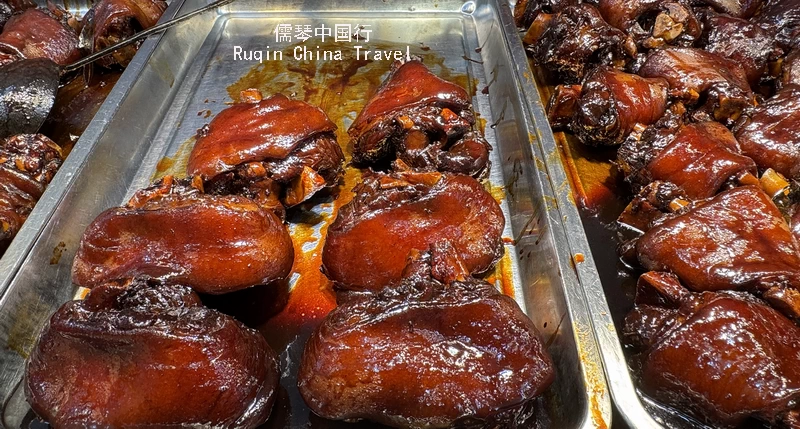
For something hearty, I grabbed a piece of braised pork knuckle (酱猪蹄) from a vendor near the gate. It was fall-off-the-bone tender, slick with gelatin, and sweet-salty in that irresistible Shanghai style. Ask for it cut up—you’ll want to snack as you walk.
And yes, I gave in to stinky tofu (臭豆腐). The kind from “Bridgehead Tofu Stall” had the perfect crunch and just enough funk to keep it exciting. Add chili sauce and share—it’s bold, but fun.
Qibao Ancient Town is more than just old bridges and quiet alleys. It’s a place where past and present collide—where shadow puppets share space with sizzling street food. I’d visited for the history, but I stayed for the flavors and stories.
5. Qibao Ancient Town vs Zhujiajiao: Which Water Town Should You Visit?
If you’re short on time but still dreaming of Shanghai’s water towns, your top two choices are likely Qibao Ancient Town and Zhujiajiao Ancient Town. I’ve visited both—and they each have their magic. Here’s how they compare, to help you choose your perfect day out.
Getting There:
Qibao Ancient Town wins on convenience. It’s right within Shanghai’s city limits, and you can reach it via Metro Line 9—no transfers, no stress. From People’s Square, you’re there in just 30 minutes. Meanwhile, Zhujiajiao is more of a journey: take Line 17, then transfer to a bus or taxi. It’s a full hour, but the ride has its charm.
Vibe & Crowds:
Qibao buzzes with life—food stalls, souvenir shops, locals chatting by the canal. It’s more commercialized, yes, but that also makes it dynamic and colorful. Zhujiajiao, on the other hand, feels quieter and more authentic. Locals still live in old houses, and the pace is slower. If you crave peace, Zhujiajiao wins.
Scenery & Architecture:
Zhujiajiao is bigger, with wide canals and iconic bridges like Fangsheng Bridge—perfect for those classic Jiangnan water town photos. You can hop on a boat and glide under stone arches while the oarsman hums a local tune. In contrast, Qibao Ancient Town is more compact. Its star sights—like the old pawnshop and the cricket museum—offer quirky, bite-sized glimpses into Shanghai’s past.
Foodie Heaven:
Hungry? Qibao Old Street is your dream come true. Tangyuan, braised pork, fried stinky tofu—you can snack your way down the entire block. Prices are fair, portions are generous, and the smoky, sizzling vibe is irresistible. Zhujiajiao has more riverside tea houses, where you can sip and relax, but the food leans pricier.
Boat Rides:
Both towns offer boat rides, but Zhujiajiao steals the show. For a bit more money, you get a longer, scenic journey through its old waterways. In Qibao, the ride is shorter and the view more enclosed—great if you’re short on time, but less immersive.
Final Thoughts:
Choose Qibao Ancient Town if:
- You have just a few hours.
- You love food and street scenes.
- You prefer minimal travel hassle.
Go for Zhujiajiao if:
- You want iconic water town views.
- You enjoy peaceful wandering and photography.
- You have a full day to spare.
Of course, if you’re like me and don’t want to choose—do both! Spend your morning exploring Qibao Ancient Town, then head to Zhujiajiao for a tranquil afternoon on the water. Each offers a different side of Jiangnan charm, and together, they tell a richer story of Shanghai’s heritage.
6.Travel Tips for Foreign Visitors
Exploring Qibao Ancient Town as a foreign traveler is both exciting and eye-opening—but a little prep goes a long way. Here’s what I learned (sometimes the hard way) and what you should know before you go.
Language First. Most shopkeepers in Qibao Old Town speak little or no English. Don’t worry—it adds to the adventure. I relied on Google Translate, which worked like a charm. Still, learning a few phrases helped me connect:
- “Duōshǎo qián?” (How much is it?)
- “Zhège hǎochī ma?” (Is this tasty?)
Even saying “nǐ hǎo” (hello) gets you smiles.
Payment Pointers. Unlike central Shanghai, many street vendors here only accept cash or mobile payments (WeChat, Alipay). As a foreigner, unless you’ve linked a Chinese bank card, mobile apps might be tricky. I brought small bills in RMB—lifesaver.
Timing Matters. Trust me—avoid weekends if you can. I visited once on a Sunday afternoon, and it was wall-to-wall people. Go on a weekday, especially in the morning, and you’ll find space to breathe, wander, and snack in peace.
Photos & Light. If you’re a photo lover, arrive early. Morning light casts a warm glow on the bridges and rooftops. Or come before sunset—Pu Hui Tang Bridge and the Clock Tower Square are magic at golden hour.
With a little planning, your visit to Qibao Ancient Town will be smooth, immersive, and unforgettable.
I’ve walked Qibao Ancient Town more than once, and each time it reminds me how layered Shanghai really is. Between the snacks, the canals, and the everyday rhythm, it never feels staged—just quietly alive. If you follow this Qibao Ancient Town Travel Guide, you’ll notice the small details that make the place linger with you long after you leave.
It’s simple to reach, easy to explore, and generous in what it offers. Take your time here. Wander without a plan, eat what smells good, and let Qibao unfold at its own pace.
About the Author
Ruqin is the founder of Ruqintravel.com and has spent more than four decades working in China’s travel industry. Drawing on hands-on experience in cities like Beijing and Hangzhou, he personally researches and updates each guide to help international travelers navigate China with confidence.
Further Reading
How to Visit Zhujiajiao Water Town: Tickets, Things to Do & Tips
Zhouzhuang Water Town: Tickets, Routes, Highlights & Tips
Nanxun Old Town: Entry Info, Location, Highlights and Travel Tips
Wuzhen Water Town, Zhejiang Province, China
Tongli Town: A Visitor’s Guide