Written by Ruqin
July 26, 2026
Every time I return to Chengdu, I slow down first.
I find a small local teahouse, sit on a bamboo chair, and order a cup of covered tea. Then I watch people around me chat, play cards, and enjoy the afternoon.
That relaxed rhythm is the real spirit of Chengdu.
Many first-time visitors make the same mistake. They try to see everything quickly. However, Chengdu is not a city you should rush through.
The slower you move, the more this city gives you.
Over the years, I have watched many travelers make the same mistakes. So, I put together this guide to help you avoid them.
Skip these common traps, and Chengdu will show you its best side.
1. Sleeping In and Missing the Best Panda Time
One of the biggest mistakes first-time visitors make is arriving too late at the panda base.
You wake up slowly, have breakfast, and arrive around 10:30.
By then, the sun is already high. Many pandas lie on their wooden platforms. They turn their backs and barely move.
You may think, “Are they always this lazy?”
Actually, you just missed their active hours.
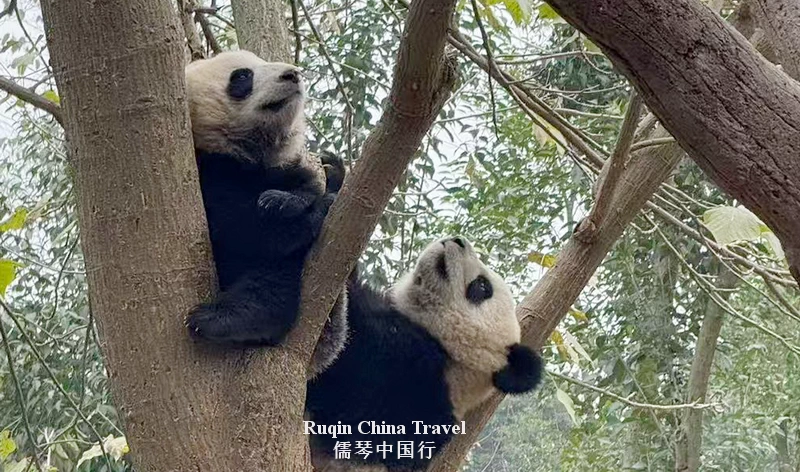
Pandas usually become more active in the cooler morning and afternoon. Early in the day, they eat bamboo, play, and move around.
However, once the temperature rises, they start resting. Even the panda babies often fall asleep.
I once stood outside the Moon Nursery and saw a foreign child almost crying. She kept asking her mother, “Why are they not moving?”
Her mother did not know how to answer.
Meanwhile, the solution was simple.
Arrive before 7:30 a.m. Then you can enter with the first group.
The baby pandas at the Moon Nursery may still be drinking milk. The young pandas at the Sun Nursery may be playing outside.
You can stand close to the glass. Sometimes, the pandas are only a few meters away.
Later, around 10 a.m., you can leave slowly. Meanwhile, the crowds are just starting to arrive.
Remember this: if you do not see pandas early, you may miss the best part of the experience.
2. Ordering “Mild Spicy” Hot Pot on Your First Try
You sit down at a Chengdu hot pot restaurant, and when the server asks what soup base you want, you carefully say “mild spicy” because you love Sichuan food but do not want to challenge your stomach too much.
Then the pot arrives, the red oil starts bubbling, and you pick up a piece of beef tripe, dip it several times, and put it into your mouth.
A few seconds later, your eyes become watery, and you start wondering if Chengdu has misunderstood the meaning of “mild.”
Actually, it has not.
Chengdu’s “mild spicy” follows the local standard, which means “this is not really spicy” to many Chengdu people.
I once met a British traveler who ordered “extra mild spicy” at an old hot pot restaurant near Chunxi Road, but he still ended up drinking three bottles of soy milk.
Later, he learned the local way and started ordering yuanyang hot pot, with half spicy red broth and half mild broth.
The mild side usually comes with mushroom or tomato soup, and you can cook most of your food there while trying only a few pieces in the spicy broth for the real Sichuan flavor.
If you truly cannot handle spicy food, tell the server “less spicy, less numbing” instead of simply saying “mild spicy.”
Those four words will help you much more.
Meanwhile, do not forget the dipping sauce.
Adding more vinegar and sesame oil can soften the heat and make the flavors easier for first-time visitors.
After all, Chengdu hot pot is not about proving how much spice you can survive.
It is about sitting around the table, slowing down, and enjoying the moment.
3. Eating a Full Meal Inside Jinli or Kuanzhai Alley
The first time I visited Kuanzhai Alley, I was completely drawn in by the atmosphere.
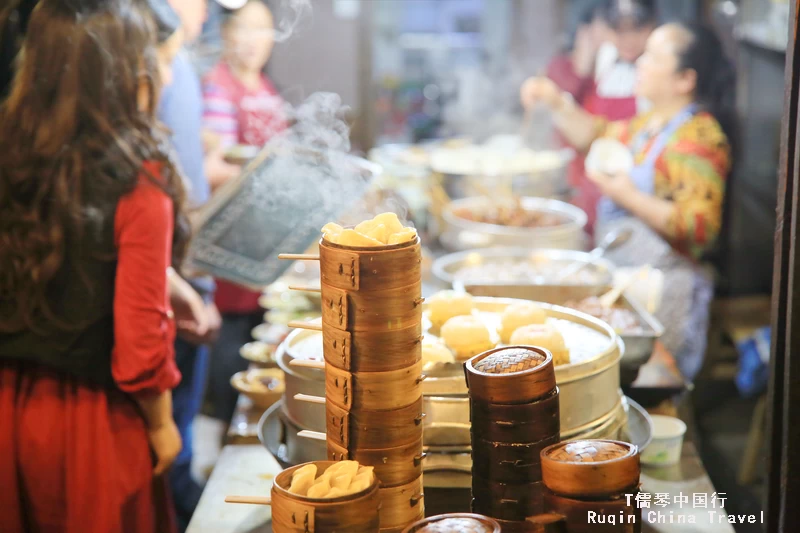
The streets were full of energy. Small food stalls filled every corner. I saw sanda pao, sweet rice snacks, rabbit head, and countless local treats.
Everything looked tempting.
So, I bought a bowl of dandan noodles there. It cost 15 yuan, but the taste was only average.
Later, I mentioned it to a local friend. He smiled and said, “We do not really eat there.”
That was when I learned an important Chengdu lesson.
Jinli and Kuanzhai Alley are wonderful places to walk, take photos, and feel the atmosphere.
However, they are not always the best places for a serious meal.
The snacks on the main streets often cost much more than nearby neighborhoods. Meanwhile, the flavors may not represent the best version of Chengdu food.
A bowl of sweet water noodles there may taste fine. But you are probably only getting part of the real experience.
Local people usually do it differently.
First, they walk through Kuanzhai Alley, take photos, and enjoy the old streets.
Then, they walk about five minutes to Kuixinglou Street.
This small food street attracts many locals. You can find places like spicy skewers, chicken feet, and traditional desserts.
What you eat in Kuanzhai Alley is often the visitor’s version of Chengdu.
What you find on Kuixinglou Street feels much closer to everyday Chengdu.
Jinli works the same way.
After taking photos under the red lanterns and exploring the Three Kingdoms culture, walk a little farther.
Later, look around areas like Shuadu or Gaoshengqiao.
You will find more authentic restaurants, better prices, and the flavors that Chengdu locals actually enjoy.
4. Thinking Chengdu is Only About Pandas and Jinli, Missing the Slow Life
After visiting Jinli and seeing the pandas, you may feel like you have already seen Chengdu.
However, there is still one important experience waiting for you: a local teahouse.
Chengdu’s teahouses are like the city’s living room.
You walk in, order a cup of covered tea, and sit back on a bamboo chair. Nobody rushes you. Nobody asks you to leave after one drink.
Meanwhile, life quietly happens around you.
An older man may sit nearby, reading a newspaper and taking a slow sip of tea.
At another table, a few friends chat about everyday things. Their voices rise and fall gently, like background music.
This is the Chengdu rhythm that many visitors miss.
I often recommend Heming Teahouse in People’s Park.
The teahouse has a history of more than one hundred years. Every day, locals fill the seats from morning until evening.
You only need to spend a few dozen yuan on a cup of tea. Then you can sit there for the whole afternoon.
Some people enjoy ear cleaning. Some play cards. Some simply sit and watch the world pass by.
Later, when you look around, you will understand something.
Chengdu’s famous “slow life” is not a slogan. It is hidden in small moments like this.
One small tip before you go: when your covered tea arrives, lift the lid slightly to let it cool.
Do not keep the lid completely closed.
Local people notice these small details. They will immediately know you are a first-time visitor.
5. Taking Taxis Everywhere and Missing Chengdu’s Comfortable Slow Travel
Many visitors arrive in Chengdu and immediately open a taxi app.
Of course, taxis are convenient. However, Chengdu traffic can surprise you.
I once saw visitors take a taxi from Chunxi Road to Kuanzhai Alley. The car moved slowly through traffic for nearly twenty minutes. The fare kept increasing, but the distance was still not far.
Actually, the walk takes around fifteen minutes.
And honestly, the street outside the car window is often the better part of the journey.
Inside Chengdu’s Second Ring Road, many older neighborhoods are perfect for walking.
The streets have large trees, small restaurants, and quiet lanes. Meanwhile, the smell from noodle shops and local snack stores follows you as you walk.
Sometimes, you turn into a small alley and discover a noodle shop that has been open for twenty years.
This is the side of Chengdu you cannot see from a taxi.
During the day, I suggest walking more.
Later, in the evening, try a shared bike.
Chengdu has built many comfortable cycling paths. The greenway along the Fu and Nan Rivers is especially pleasant.
You ride slowly, feel the breeze, and watch the city lights appear along the water.
It often feels better than sitting in traffic.
The subway is another good choice.
Chengdu’s metro network covers many popular areas. You can use Alipay’s Chengdu Metro QR code to enter stations without buying paper tickets.
Meanwhile, Lines 2 and 3 connect many places travelers usually visit.
Sometimes, the fastest way to experience Chengdu is not to move faster.
It is to slow down and let the city appear around you.
6. Watching Random Street “Face-Changing Shows” Instead of Real Sichuan Opera
Walking through Jinli, you may hear someone call out, “Want to watch face-changing? Only ¥50 per person.”
It sounds tempting, especially when you are visiting Chengdu for the first time.
However, these quick street shows are often not the Sichuan opera experience you are looking for.
You follow the person inside, sit on a few small chairs, and watch a performer change several faces in a small room.
Twenty minutes later, the show ends.
You walk out thinking, “Was that it?”
Actually, you did not really watch Sichuan opera.
The real experience happens in a proper theater.
I usually recommend Yuelai Teahouse if you want to see traditional Sichuan opera in Chengdu. It is one of the old places where locals still enjoy performances.
There, you can watch a complete opera section, not just face-changing.
Meanwhile, Shufeng Yayun in Chengdu Culture Park offers a more complete evening show.
You can see face-changing, fire breathing, rolling lantern performances, and other traditional acts.
They also include local experiences like ear cleaning demonstrations.
The ticket costs more, usually a few hundred yuan, but it feels worth it.
Because that is the real performance.
It is not just a quick street trick.
Later, remember one small detail during the show.
Do not use flash photography during face-changing.
The sudden light can affect the performer’s vision and make the movement harder.
A little respect helps you enjoy the tradition better.
Every time I think about Chengdu, I remember the same feeling: no need to rush. The city rewards people who slow down, whether you are sitting in a teahouse, walking through old streets, or sharing hot pot with friends.
So, avoid these common mistakes, leave some empty space in your schedule, and let Chengdu surprise you. The best memories often come from the moments you did not plan.
About the Author
Ruqin is the founder of Ruqintravel.com and has spent more than four decades working in China’s travel industry. Drawing on hands-on experience in cities like Beijing and Hangzhou, he personally researches and updates each guide to help international travelers navigate China with confidence.
Further Reading
10 Common Mistakes to Avoid on Your First Trip to China
10 Common Mistakes to Avoid on Your First Trip to Beijing
7 Common Mistakes to Avoid on Your First Trip to Shanghai
9 Common Mistakes to Avoid on Your First Trip to Xi’an