
Written and updated by Ruqin
Last updated: April 15, 2026
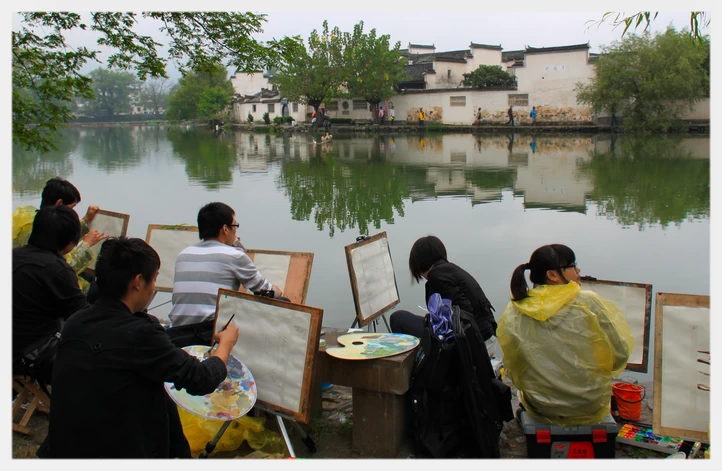
I still remember stepping into Hongcun Village just after rain—the stone lanes quiet, the ponds reflecting white walls and dark roofs like a painting. It didn’t feel staged. It felt lived-in, slow, and quietly beautiful in a way that stays with you.
Hongcun Ancient Village, tucked in Anhui Province, is known for its preserved layout and water system—but what matters is how it feels to walk it. If you’re planning your visit, I’ll guide you through tickets, routes, and the small choices that make your time here smoother.
1. Why Hongcun Ancient Village
Historical Significance: Hongcun Ancient Village is over 900 years old and was designed and constructed in the Ming Dynasty (1368-1644). It is renowned as a masterpiece of ancient Chinese architecture and urban planning, offering a glimpse into the country’s traditional village culture.
Traditional Architecture: Hongcun Ancient Village is celebrated for its unique architectural design, characterized by traditional Hui-style buildings. The town features well-preserved courtyard houses, intricate wood carvings, and ancient streets. Notable architectural attractions include the Chengzhi Hall, the South Lake Academy, and the Moon Pond.
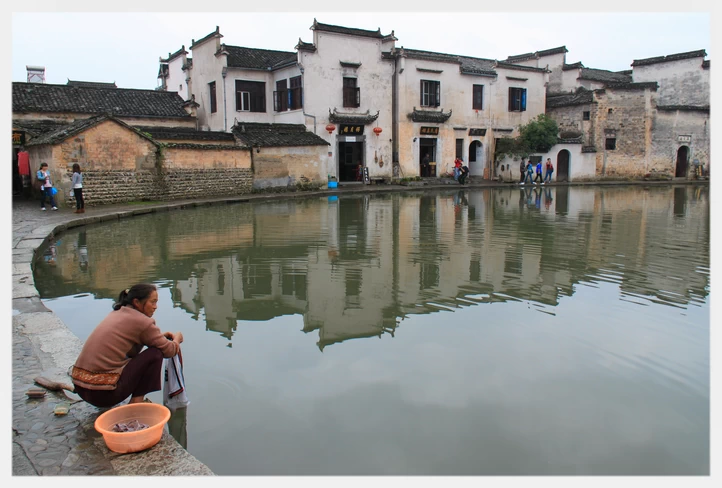
Moon-shaped Village Layout: One of the most distinctive features of Hongcun Old Town is its moon-shaped village layout. The town was designed to resemble a water buffalo, with the two large ponds representing the head and body, and the winding canals and lanes symbolizing the legs and tail. This design reflects the harmony between human and nature.
UNESCO World Heritage Site: Hongcun Ancient Village was recognized as a UNESCO World Heritage Site in 2000. It is lauded for its exceptional preservation of traditional southern Anhui-style architecture and its significant cultural and historical value.
Huizhou Culture: Hongcun Old Village is deeply rooted in Huizhou culture, a distinctive regional culture that flourished from the 11th to the 19th century. The town showcases the intricate woodwork, elegant calligraphy, and traditional lifestyle of the Huizhou people.
Scenic Beauty: Hongcun Old Town is surrounded by picturesque landscapes, including lush mountains, idyllic villages, and peaceful waterways. The town is particularly famous for its reflection photography, where the beautiful traditional buildings are mirrored in the tranquil water of the Moon Pond.
Attractions: In addition to its architectural beauty, Hongcun Old Town offers various attractions to explore. Visit the Huizhou Ancient Architecture Museum to learn more about the history and culture of the region. Hike to the nearby Huangshan Mountain for breathtaking views or take a boat ride on the beautiful South Lake.
2. Best Time to Visit
The best time to visit Hongcun is during the spring (March to May) and autumn (September to November) seasons. During these times, the weather is pleasant with mild temperatures, making it ideal for exploring the village and its surrounding natural beauty.
In spring, Hongcun is adorned with blooming flowers and lush greenery, creating a picturesque atmosphere. The cherry blossoms in late March to early April add a touch of beauty to the village.
Similarly, autumn in Hongcun is characterized by cool temperatures and stunning fall foliage. The leaves turn vibrant shades of red, orange, and gold, enhancing the charm of this ancient village.
Avoiding the peak summer and winter seasons is recommended as the summer can be hot and humid, while winter temperatures can drop below freezing, making it less comfortable for sightseeing.
It’s worth noting that Hongcun is a popular tourist destination, especially during weekends and public holidays. To avoid crowds, it is advisable to visit on weekdays or during non-peak hours.
3. How to get to Hongcun Village
To get to Hongcun in Anhui Province, China, you have a few transportation options depending on your starting point:
By Air:
The nearest major airport to Hongcun is Huangshan Tunxi International Airport (TXN) in Huangshan City. From the airport, you can take a taxi or a shuttle bus to the Huangshan City Bus Station. From there, you can catch a bus to Hongcun. The bus ride takes about 1-2 hours.
By Train:
The nearest train station to Hongcun is Huangshan North Railway Station. From major cities like Shanghai, Nanjing, or Beijing, you can take a high-speed train to Huangshan North Railway Station. From the station, you can take a taxi or a local bus to the Huangshan City Bus Station, and then catch a bus to Hongcun.
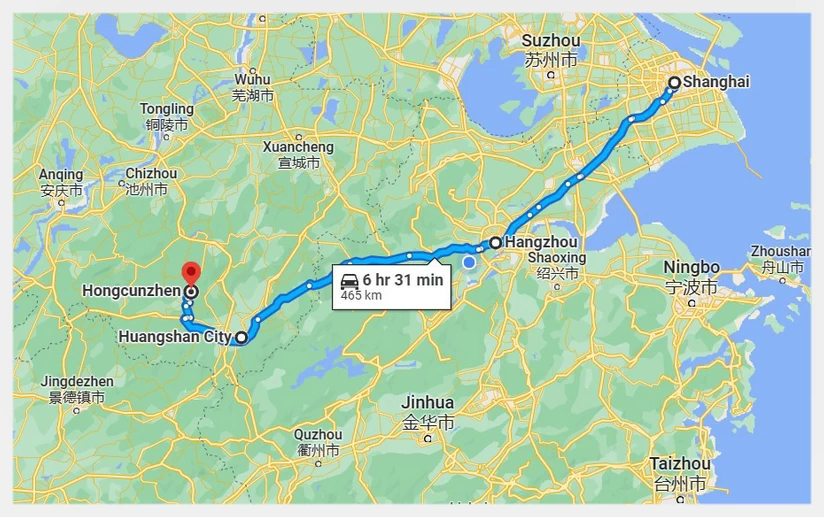
Shanghai – Hangzhou – Huangshan – Hongcun Travel Map ( Google)
By Bus:
There are direct buses from major cities and towns in Anhui Province, like Huangshan City, Tunxi, and Shexian, to Hongcun. You can check local bus schedules and departures from the respective bus stations or consult with the local tourism information centers for the most up-to-date information.
Once you arrive in Hongcun, you can explore the village on foot as it is relatively small. It is a good idea to have the address and contact information of your accommodation or a local guide to assist you in navigating the transportation options and finding your way around.
4. Decide the Duration of Stay
The first time I visited Hongcun Ancient Village, I thought half a day would be enough. I was wrong. I rushed through the main ponds, took a few photos, and left feeling like I had only skimmed the surface.
If you can, give yourself at least one full day—or better yet, stay overnight. During the day, you can explore the architecture, wander the narrow lanes, and maybe take a short trip toward the nearby hills. But it’s early morning and evening when Hongcun Village truly slows down. The tour groups leave, the reflections settle, and the village feels like it belongs to you for a while.
That extra time isn’t about seeing more—it’s about finally feeling the place.
5.Accommodation Options
Look for accommodation options in Hongcun or nearby. The town offers a range of accommodation, including traditional courtyard hotels, guesthouses, and modern hotels.
Consider factors such as location, amenities, and reviews when choosing your accommodation.
Suggested Accommodations:
Tianlai Villa (天籁之墅): This is a very distinctive homestay with unique room style, gym, cinema, bar and other entertainment facilities, which is a great choice for families and friends traveling.
Tiandong Villa (华栋别墅): This is a luxury villa with a private pool and garden, offering an upscale stay experience.
Zhangjia Courtyard (张家大院): This is a traditional ancient residence, after careful reconstruction and decoration, has become a beautiful homestay. Here, you can taste authentic local food and feel the rich historical and cultural atmosphere.
Lanju Xiaozhu (岚居小筑) Lansu Small Building is known as the most beautiful ancient building in Hongcun, with beautiful scenery. Offering comfortable accommodation and special cuisine, it is a great place to relax and enjoy.
6. Entrance Fees
The first thing you’ll notice when you arrive at Hongcun Ancient Village is how organized the entrance feels—it’s clearly set up for a steady flow of visitors. And yes, this is one of those historic villages in China where you’ll need a ticket to enter.
As of now, the entrance fee for Hongcun Village is 104 RMB per person, and it’s open all day. That said, I’ve found it’s worth arriving early or later in the afternoon. The village feels very different once the daytime crowds thin out—you’ll actually hear the water, not just the voices around you.
7. Plan Your Activities
The first time I walked into Hongcun Village, I didn’t follow a plan—I just wandered. And honestly, that’s still the best way to start. The village reveals itself slowly: a quiet courtyard here, a carved doorway there, reflections shifting as you move.
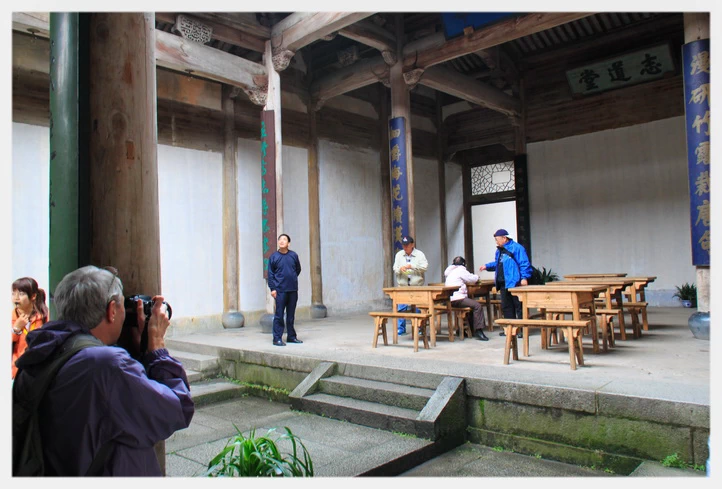
That said, there are a few places worth intentionally finding. Step inside Chengzhi Hall to see the intricate woodwork up close, then make your way to South Lake Academy for a calmer, more reflective corner. And of course, spend time by Moon Pond—it’s the heart of the village.
If you have extra time, you can pair your visit with Huangshan. But don’t rush it. Hongcun is best experienced slowly, with space to pause and notice the details.
8. Local Cuisine
The first meal I had in Hongcun Village was almost accidental. I stepped into a small, family-run place just to rest my feet—and ended up staying longer than planned, watching the owner move between the kitchen and tables while the smell of slow-cooked pork filled the room.
Food here is simple, local, and deeply tied to the region. One dish you’ll see often is Hongcun Rou—rich, tender, and slightly sweet from the soy-based sauce. Another local favorite is Zhacai, usually served as a side that balances heavier dishes.
Most restaurants in Hongcun Ancient Village are small and informal. Menus may not always have English, so I usually rely on a mix of pointing, photos, and simple translation apps. If a place looks busy with local visitors, that’s often a good sign. And don’t hesitate to ask for recommendations—they’ll often suggest their house specialties without much fuss.
What I’ve learned is this: don’t over-plan your meals here. Walk, explore, and stop when something smells good. In Hongcun, some of the best meals come from simply following your curiosity.
9. A Few Things I Always Keep in Mind in Hongcun
The first evening I stayed in Hongcun Ancient Village, I realized how quickly small details matter—having the right payment method, knowing how to ask for help, even just understanding how quietly people move through shared spaces here.
Start with the basics. Carry some cash (RMB), especially in smaller दुकानदार spots where cards don’t always work. Mobile payments like WeChat and Alipay are widely used, but setup can take time if you’re visiting from abroad. I usually keep a mix of both cash and digital options.
Culturally, Hongcun is calm and residential. You’re not just visiting a site—you’re stepping into a living village. Dress simply, keep your voice low in quieter lanes, and be mindful when photographing locals or private homes. That awareness goes a long way here.
Health and safety are generally straightforward, but I still travel with basic insurance and a small personal kit—medications, hand sanitizer, and anything I might not easily find locally. It’s not about expecting problems, just removing small uncertainties so you can relax into the experience.
And finally, stay flexible. Save your hotel address in Chinese, keep a few key phrases or a translation app ready, and don’t overpack your schedule. Hongcun isn’t a place you rush through—it’s a place you settle into, one slow step at a time
By the time you arrive in Hongcun Village, most of the planning fades into the background. What stays with you are the quiet moments—walking along the water, pausing by Moon Pond, and noticing how the village moves at its own pace.
Hongcun Ancient Village isn’t about checking off sights. It’s about slowing down, staying a little longer than planned, and letting the place unfold naturally. Give yourself that space, and the experience will feel far more meaningful than any itinerary.
About the Author
Ruqin is the founder of Ruqintravel.com and has spent more than four decades working in China’s travel industry. Drawing on hands-on experience in cities like Beijing and Hangzhou, he personally researches and updates each guide to help international travelers navigate China with confidence.
Further Reading
How to Book Huangshan Attraction Tickets: All You Need to Know
Wuyuan Travel Guide: Best Villages, Routes, and Travel Tips
Cuandixia Village, Beijing: Maps, Transport, Sights, Trails & Tips