Written and updated by Ruqin
Last updated: March 01, 2026
I’ve walked the Great Wall more times than I can count, but nothing compares to that first morning at Mutianyu Great Wall. The air was crisp, the mountains still wrapped in a whisper of mist, and—best of all—it was nearly silent. No tour buses. No crowds. Just me, the stones beneath my feet, and a horizon lined with ancient watchtowers.
Mutianyu Great Wall, located about 80 kilometers northeast of Beijing, is one of the most beautiful and best-preserved sections of the Wall. Unlike Badaling Great Wall, which often feels like a festival ground packed with tourists, Mutianyu offers something rare: a chance to breathe the history.
But here’s the secret—timing is everything.
Even this quieter section can get crowded during weekends, holidays, or peak hours. If you’re planning a visit, knowing the best time to visit Mutianyu Great Wall will change your experience entirely. From the golden light of early morning to the peaceful rustle of chestnut trees in autumn, it’s all about choosing the right moment.
In this guide, I’ll share exactly how I avoid the crowds at Mutianyu Great Wall, and when this majestic stretch of Wall truly comes alive.
1. Best Season to Visit Mutianyu Great Wall
Before you plan the exact day or hour, start with the best season to visit Mutianyu Great Wall. Each season paints the Wall in a different light—but some times are simply more magical than others, especially if you’re like me and want to avoid the crowds at Mutianyu.
Spring (April to Early May): A Quiet Bloom Before the Rush
I still remember my visit one spring—mid-April, to be exact. The mountains had just shaken off the last of their winter hush. Tiny wildflowers pushed through the underbrush, and the hillsides were blushing with new green. It felt like the Wall itself was waking up.

The weather at Mutianyu in spring is gentle and cool. Not too hot, not too cold. Just right for climbing. And if you time it right—say, the second half of April—the crowds haven’t arrived yet. You’ll find long stretches of the Wall almost to yourself. It’s a photographer’s dream and a hiker’s delight.
But here’s the trick: avoid the Qingming Festival in early April and steer clear of the May Day holiday. That’s when the peace shatters, and the tour groups roll in.
There can be the occasional gust of wind and the air sometimes carries a touch of spring dust from the north. I kept my scarf close, just in case. Mornings and evenings can still be chilly, so layering is key.
Still, nothing compares to standing atop Watchtower 14 as the sun rises behind the peach blossoms. In my opinion, mid to late April is the best time to visit Mutianyu Great Wall in spring—a perfect balance of beauty, weather, and calm.
Summer (June to August): Lush Green and Early Morning Calm
I’ve visited Mutianyu in every season, but summer—ah, summer!—is when the Wall feels alive. Everything is bursting with color. The forested hills roll out in deep green waves, and ivy begins to climb parts of the ancient stones.
If you love nature, this might be the best season to visit Mutianyu Great Wall—but only if you know exactly when to go.
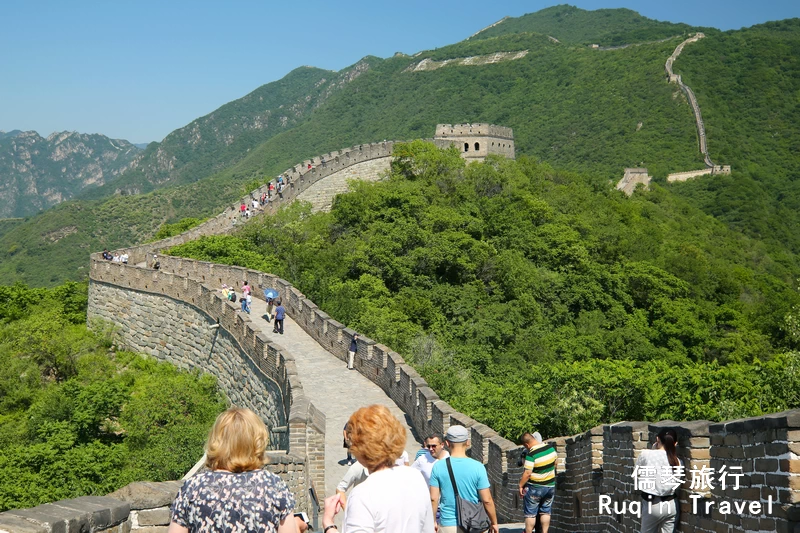
The truth? Summer in Mutianyu can be brutal. The heat is heavy, and by mid-morning, the sun bears down hard. I remember one July day when I forgot to bring enough water—I won’t make that mistake again! Still, if you time it right, summer has its charm.
Here’s my tip: wake up early. Earlier than you think. I arrived just after the gates opened, around 7:30 a.m., on a Wednesday. The Wall was empty, bathed in golden morning light, and the air was still cool from the night. By 10 a.m., the tour buses began to pull in—and that serene moment was gone.
Weekends and school holidays are especially crowded! Chinese families travel during July and August, and Mutianyu is one of the top choices. So if summer is your only window, go on a weekday morning—never a weekend. And always bring water, sunblock, and a hat.
Despite the crowds later in the day, Mutianyu in summer is something special. The green hills stretch forever, and you feel like you’re walking through a sea of life. I wouldn’t trade those early morning steps for anything.
Autumn (Late September to Early November): Golden Light and Fiery Hillsides
If I had to choose just one season to visit Mutianyu Great Wall, I wouldn’t even hesitate—autumn wins every time.
I remember arriving in late October, just after the morning fog had lifted. The Wall snaked through mountains drenched in color—flaming reds, amber golds, deep rusts. The chestnut forests below were glowing in the soft sun, and fallen leaves crunched beneath my boots as I climbed. It was the kind of beauty that stops you mid-step.
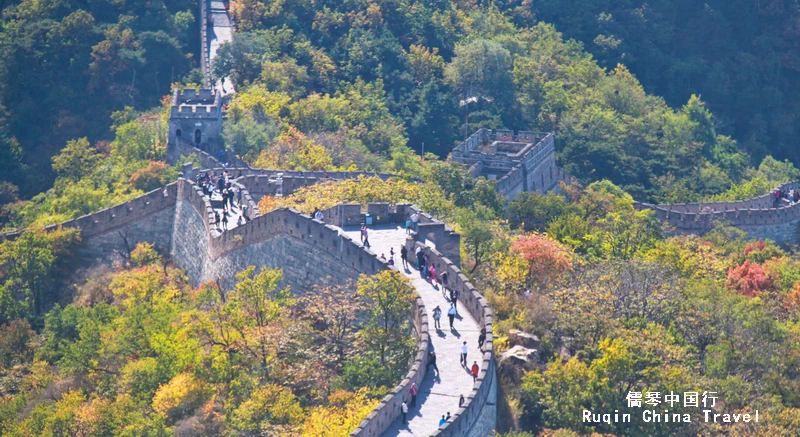
This is the best time to visit Mutianyu Great Wall if you’re chasing unforgettable scenery and hoping to avoid crowds. The air is crisp and dry. The skies stretch endlessly blue. And the crowds of summer? Mostly gone. You’ll find fewer tour groups and more quiet moments to soak it all in.
But there’s one big exception: China’s National Day holiday, known as Golden Week, from October 1st to 7th. I made the mistake of visiting once during that week—never again. It was wall-to-wall people, selfie sticks everywhere, and the peace was completely lost.
If you can, go in late September or anytime after mid-October. That sweet spot, after the holiday rush but before winter winds arrive, offers a calm, golden experience. One morning, I sat at Watchtower 20 for nearly an hour, wrapped in my jacket, sipping tea from my thermos, and not a soul passed by.
In every way, Mutianyu in autumn is where the Wall tells its most poetic story.
Winter (December to February): A Silent Wall Wrapped in Snow
Winter at Mutianyu isn’t for everyone—but if you’re seeking solitude and a bit of magic, it might just be your perfect season.
I went once in early January, after a rare snowfall. The Wall was draped in white, like an ancient dragon sleeping beneath a blanket of ice. I’ll never forget the crunch of snow under my boots or the silence—so complete I could hear my own breath. That day, I passed fewer than ten people in three hours. It felt like the Great Wall belonged only to me.
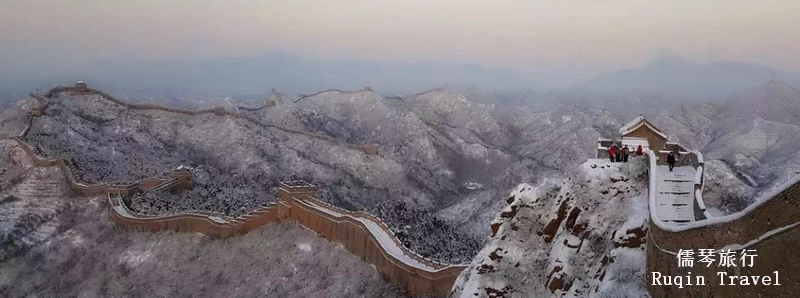
Of course, winter comes with its challenges. Temperatures can drop to -10°C (14°F), and the wind bites. Some facilities, like the toboggan or a few small shops, may be closed. But if you dress warm and pick a clear, windless day, it’s completely worth it.
Winter is the best time to visit Mutianyu Great Wall if your dream is peace and snow-kissed views. The crowds are gone. The Wall sleeps. And you, for a few frozen hours, are part of its quiet story.
2. Best Time of Day: Catching the Quiet Hours at Mutianyu
Even if you come during the off-season, Mutianyu Great Wall can still get surprisingly busy. I’ve seen it happen—quiet one moment, then swarming with day-trippers by late morning. That’s why timing your visit within the day itself matters just as much as picking the right season.
In my experience, the true magic happens before 9 a.m. I once arrived right at opening time, just as the cable car hummed to life. The air was fresh, the light was soft, and I had the path nearly to myself. The morning sun poured through the trees, casting golden shadows on the stone. It’s the best time for photography—and peace.
Later in the day, from around 10 a.m. to 3 p.m., things get livelier. Tour buses arrive, and the quiet gives way to chatter and clicking cameras.
But if you can’t make it early, try the late afternoon. By 3 p.m., most groups have started to head back. One autumn day, I lingered until sunset. The sky turned orange, the crowds thinned, and the Wall glowed like fire. That walk down in golden light? Unforgettable.
So, whether you’re an early bird or a sunset chaser, there’s always a quieter time—you just have to plan for it.
3. My Favorite Tips for Dodging the Crowds at Mutianyu
Over the years, I’ve learned that avoiding crowds at the Great Wall isn’t just luck—it’s strategy. If you’re wondering how to avoid the crowds at Mutianyu Great Wall, here’s what’s worked best for me.
First, skip the weekends. Holidays like Labor Day, National Day, and Spring Festival? Forget it. I always go between Tuesday and Thursday. On those midweek mornings, it feels like the Wall is breathing just for you.
Second, book early—always. I use apps like Klook, Trip.com, or Viator to grab tickets in advance, including the cable car or toboggan. It’s a lifesaver. One time, I breezed past a long line of shivering tourists in winter just because I had my QR code ready.
Third, take the road less traveled. Most visitors follow the classic route: from Tower 14 up to Tower 20. I love starting at Tower 6 (where the toboggan ends) and hiking backward toward Tower 1. It’s peaceful, with barely a soul in sight. Or better yet, go from Tower 14 to Tower 23, where the Wall turns wild and quiet.
And if you’re fit enough—hike it. The 40-minute trail up is shaded, quie
4. A Hidden Gem: Night Visits to Mutianyu (Summer Only)
If you think the best time to visit Mutianyu Great Wall is during the day, let me share a secret: some summer nights, the Wall stays open late—and it’s pure magic.
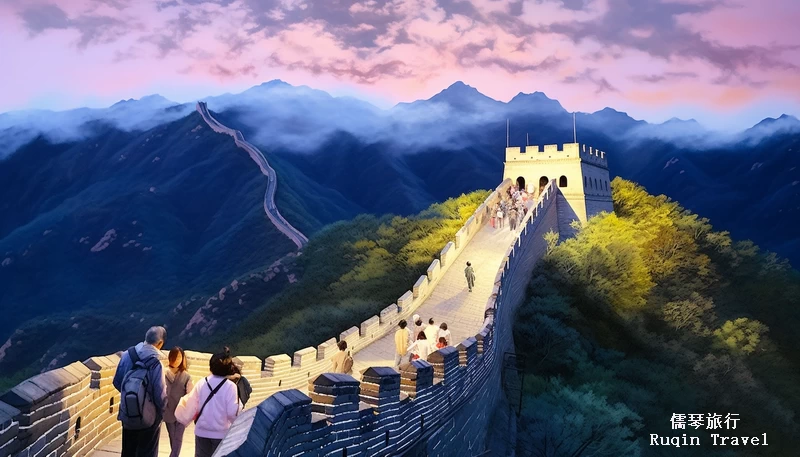
Last July, I managed to snag a ticket for one of those rare night openings, and I’ll never forget it. The sky was still glowing as I rode the cable car up around 6:30 p.m. A warm breeze brushed past the lantern-lit towers. The stone glowed under golden floodlights, and the trees rustled softly in the dusk. There were barely a dozen people around. For once, it wasn’t just peaceful—it felt sacred.
These special night tours of Mutianyu usually run from 6:00 to 9:00 p.m. on selected summer weekends and holidays. But here’s the key: you have to check in advance and reserve early, as spots are limited.
If you want to avoid the crowds entirely and see the Wall in a whole new light—literally—this is it. Watching the stars rise above the ancient stones? It’s something that stays with you.
5. Getting There: Leave Early, Travel Freely
Over the years, I’ve learned that how—and when—you arrive at Mutianyu Great Wall makes a huge difference. If your goal is to soak in the views and avoid the crowds, it all starts with your journey.
I usually leave Beijing around 6:30 a.m., whether I’m driving myself or hiring a private car. That way, I reach the entrance just before 8:00, often beating the tour buses and grabbing the Wall at its most peaceful. It’s early, yes—but that first breath of mountain air makes it worth every minute.
If you don’t have a car, don’t worry. There’s a great option: the Mutianyu Great Wall Tourist Shuttle, which leaves from Qianmen. It takes about 90 minutes, and I always try to catch the earliest departure at 7:00 a.m. Any later, and you risk arriving with the crowds.
Whatever you do, avoid the big group tours. They usually show up between 9:00 and 10:00 a.m., and from that point on, the peace starts slipping away.
The Wall rewards early risers. So brew your coffee the night before, set your alarm, and hit the road while the city’s still asleep. You won’t regret it.
The beauty of Mutianyu Great Wall isn’t just in its ancient stones or sweeping mountain views—it’s in the silence, the stillness, and the feeling of standing somewhere timeless. But to truly feel that, you need to get the timing right.
For me, the best time to visit Mutianyu Great Wall has always been those quiet windows: mid-to-late April, late September to early November, and even winter’s snowy hush from December through February. Pair that with a weekday morning around 7:30, or late afternoon after 3:00, and you’ll see the Wall in its most intimate light.
Over the years, I’ve learned a few simple tricks: take the less-traveled paths, book your tickets ahead, and hike up if you can. Start from Tower 6 instead of the usual tourist flow—or go beyond Tower 20 into the wilder stretches. These little decisions make all the difference.
Because when you step onto the Wall and find no one else around—just wind, stone, and sky—it feels like it was built just for you.
I hope this guide helps you plan your own unforgettable journey. And if you have any questions, feel free to reach out. I’d love to help.
About the Author
Ruqin is the founder of Ruqintravel.com and has spent more than four decades working in China’s travel industry. Drawing on hands-on experience in cities like Beijing and Hangzhou, he personally researches and updates each guide to help international travelers navigate China with confidence.
Further Reading
How to Get to Mutianyu Great Wall: Buses, Trains, Maps & Tips
How to Get to Mutianyu Great Wall from Beijing by Bus
Best Wheelchair Travel Great Wall of China: Mutianyu Great Wall
Mutianyu Great Wall: The Best Section for Traveling with Kids
Mutianyu Great Wall vs Badaling Great Wall – Your Ultimate Guide
Mutianyu Great Wall Night Tour: A Complete Guide for Summer Evenings
Fall Colors on the Great Wall: Best Time, Top Sections & Tips
How to Visit the Great Wall in Winter from Beijing