
Written and updated by Ruqin
Last updated: June 7, 2026
Beijing can feel overwhelming at first—I remember stepping out of the subway, surrounded by crowds heading toward the Forbidden City. But one quiet afternoon, I wandered a few streets west and found Miaoying Temple, also known as the White Stupa Temple. Everything slowed down the moment I entered.
The white stupa rises calmly above old trees, and the atmosphere feels almost untouched. If you’re looking for a quieter, more reflective side of Beijing, Miaoying Temple offers a gentle pause from the city’s constant motion.
1. Miaoying Temple Overview
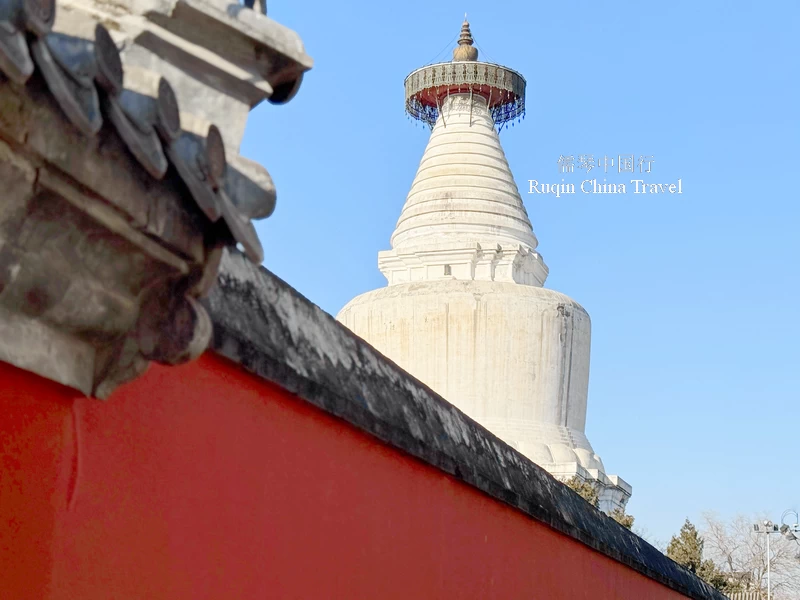
Miaoying Temple (妙应寺) is commonly referred to as the White Stupa Temple (白塔寺 Baita Si ), or Baita Temple due to the striking all-white appearance of its pagoda. Located at 171 Fuchengmennei Avenue, Xicheng District, Beijing, the temple’s centerpiece, the White Stupa, was constructed during the Yuan Dynasty and remains one of the most important and well-preserved examples of Lamaist architecture in China.
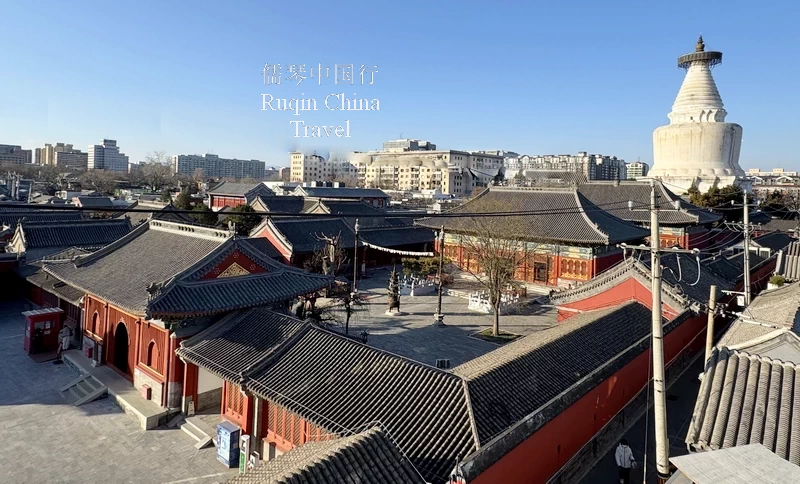
The stupa’s construction began in 1271, during the 8th year of the Yuan Dynasty. Emperor Kublai Khan personally selected the site. The famous Nepali architect Arniko, along with the Yuan Dynasty’s national master, Yi Lian Zhen, oversaw the design and construction. The White Stupa was completed in 1279 and soon became an important symbol of unity, representing the fusion of Tibetan, Han, and Mongol cultures.
In 1961, the State Council of the People’s Republic of China listed the White Stupa as a national key cultural heritage site. Today, it stands as an iconic historical, cultural, and architectural landmark in Beijing.
2. How to Get to Miaoying Temple
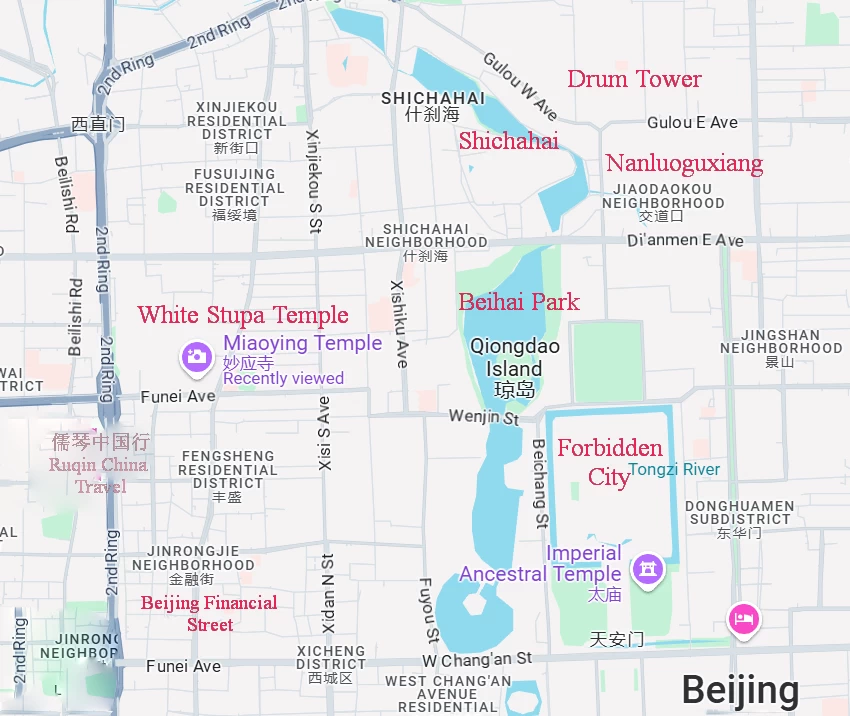
The first time I went to Miaoying Temple (White Stupa Temple), I almost missed it. The streets around it feel very local—small shops, quiet lanes—so it doesn’t announce itself like Beijing’s bigger sights. But once you know the route, it’s actually very easy to reach.
By Subway:
I usually recommend taking Line 2 to Fuchengmen Station. Come out from Exit B, and then just walk east for about 10 minutes. It’s a straightforward walk, but keep an eye out—the white stupa will suddenly appear above the rooftops, which is your cue you’re close.
Another good option is Line 4 to Xisi Station. Exit from Exit A and walk west for about 800 meters. I’ve done this route too—it feels a bit more atmospheric, passing through older Beijing streets before you reach the temple.
By Bus:
If you’re already exploring nearby areas, buses can be quite convenient. Routes 3, 13, 42, 101, 102, 103, 409, and 612 all stop near the temple. Get off at Bai Ta Si Dong (White Stupa Temple East), then walk about 5 minutes. It’s an easy final stretch, and you’ll start to see signs pointing toward the temple.
3. Opening Hours and Ticket Prices
I arrived at Miaoying Temple (White Stupa Temple) a little after 9:00 AM, right when it opened. The courtyard was still quiet—just a few locals walking slowly, and the soft sound of birds. If you can, come early. The calm here is part of the experience, and it fades a bit later in the day.
The temple is open Tuesday to Sunday, 9:00 AM to 5:00 PM, with last entry at 4:30 PM. It’s closed on Mondays, which is easy to forget when planning—so double-check your schedule.
Tickets are very reasonable—20 RMB for adults, and 10 RMB for discounted entry. If you’re over 60, you can enter for free with ID. There’s no rush or pressure once you’re inside, which makes it feel very different from Beijing’s bigger attractions.
4. White Stupa Architectural Style
The White Stupa combines elements of Indian, Tibetan, and Nepali architectural styles. It is the earliest and largest Lamaist stupa in China and is built with brick and stone. The stupa’s design follows the Su Zhubo style (窣渚波), an ancient Indian form of stupa, while incorporating unique Nepali craftsmanship.

The stupa consists of three main sections: the base, the tower body, and the finial. The base is shaped like a T-shaped platform with three tiers. Each tier has four sides with inward-folding corners, creating distinct angular stones and flat surfaces. The middle section, called the Mount Meru seat, is framed by corner pillars and horizontal beams.T
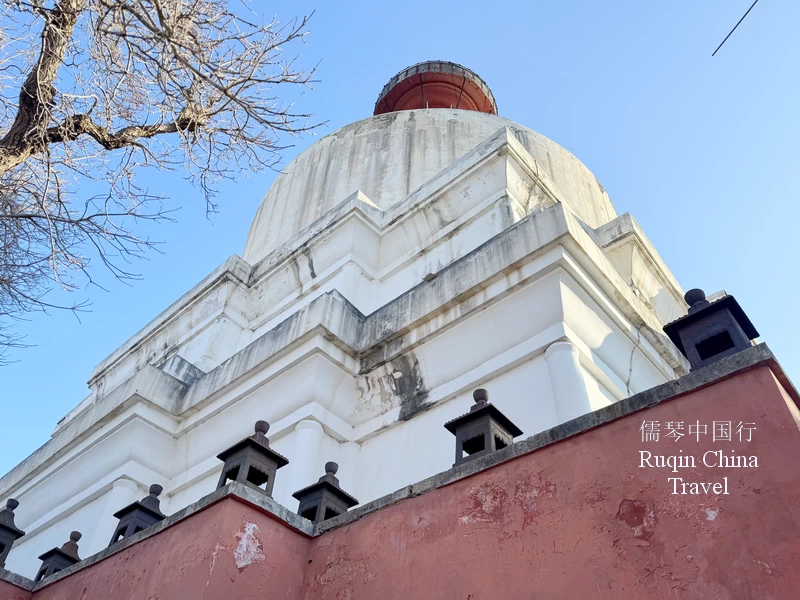
The tower body is gourd-shaped, with a long, conical neck divided into 13 sections, known as the Thirteen Heavens. The stupa is crowned with a bronze plate and 36 small bronze bells.
The design of the White Stupa is not only a remarkable feat of architecture but also holds deep cultural significance. It is a key symbol of Yuan Dynasty Buddhism and continues to draw scholars studying the religious and artistic practices of that era.
5. Miaoying Temple Layout
Miaoying Temple covers an area of 13,000 square meters and is divided into two main sections: the main courtyard and the stupa courtyard. The central axis of the temple features several important buildings:
Mountain Gate
The Mountain Gate is the first structure that visitors encounter when entering Miaoying Temple. Serving as the main entrance, it marks the beginning of the temple’s spiritual journey.
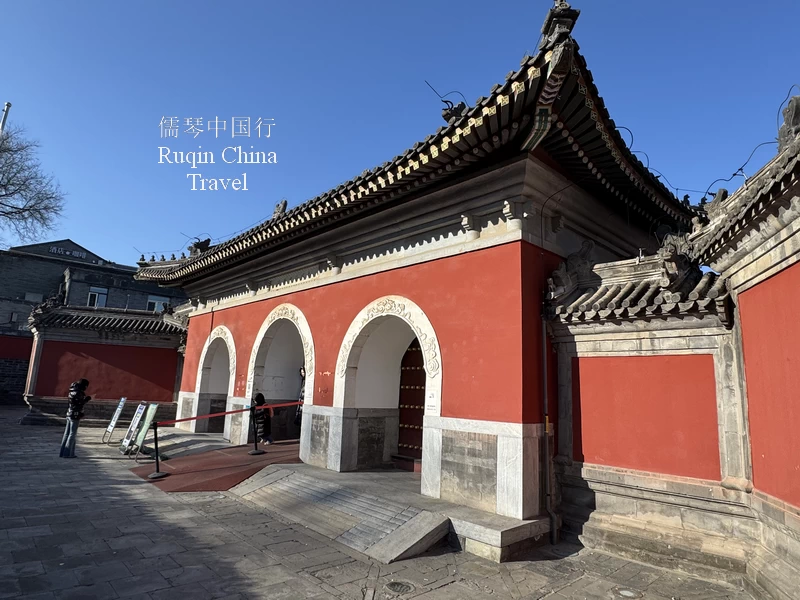
This gate is a symbolic threshold, transitioning visitors from the mundane world outside into the sacred, peaceful space of the temple. It’s a traditional architectural feature that enhances the temple’s sense of reverence and tranquility.
Bell and Drum Tower
Situated just behind the Mountain Gate, the Bell and Drum Towers are significant in Buddhist practice. These towers were traditionally used to signal the start of religious ceremonies, with the bell announcing the hour and the drum marking special occasions. The sound of the bell and drum also adds to the temple’s solemn atmosphere, symbolizing the passage of time and the rhythm of Buddhist life.
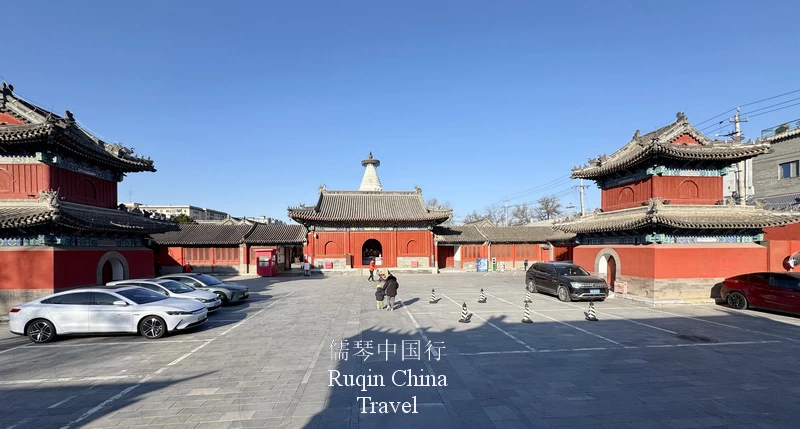
Heavenly King Hall
The Heavenly King Hall is dedicated to the Four Heavenly Kings and Maitreya Buddha. The Four Heavenly Kings are revered as protectors of the Buddha’s teachings, and their statues are usually found here. Maitreya, the future Buddha, symbolizes peace and prosperity. Together, they embody the temple’s message of harmony and good fortune, offering blessings to all who visit.
Mahavira Hall (Daju Hall ) 大觉宝殿
Originally built to house the Three Buddhas of the past, the Mahavira Hall now serves as an exhibition space for historical artifacts and artworks.
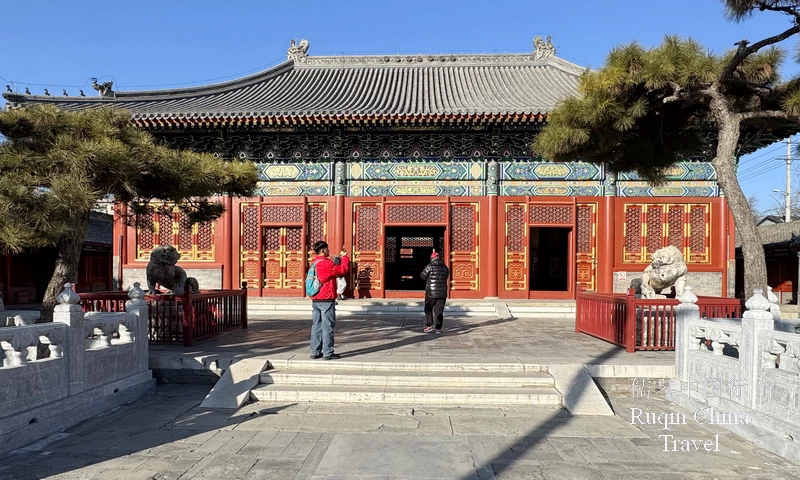
The hall still retains a sense of its original sacred purpose, with its grand architecture and space for meditation.
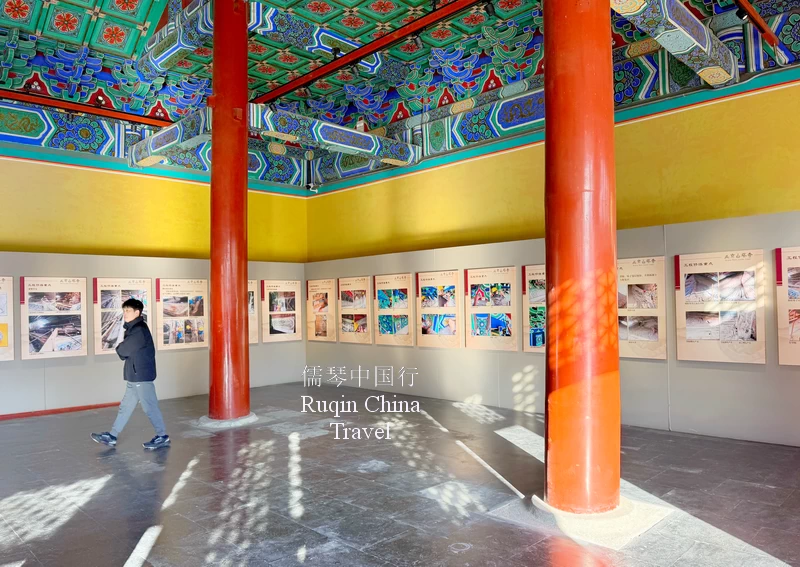
Seven Buddha Hall 七佛宝殿
The Seven Buddha Hall is home to seven magnificent gilded copper Buddha statues. These statues represent various aspects of Buddhist teachings and are intricately crafted with detailed adornments.
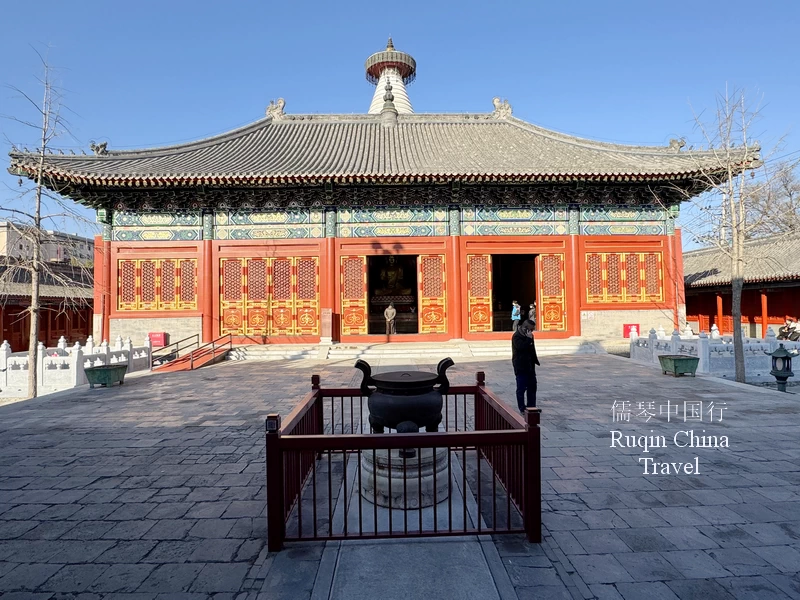
Additionally, the hall features a striking statue of the Thousand-Hand Guanyin Bodhisattva, a symbol of compassion. The hall serves as a place for reflection and prayer, drawing visitors into a deeper understanding of Buddhist philosophy.
Stupa Courtyard
The Stupa Courtyard is the central and most sacred area of Miaoying Temple. Here stands the awe-inspiring White Stupa, which rises to a height of 50.9 meters.
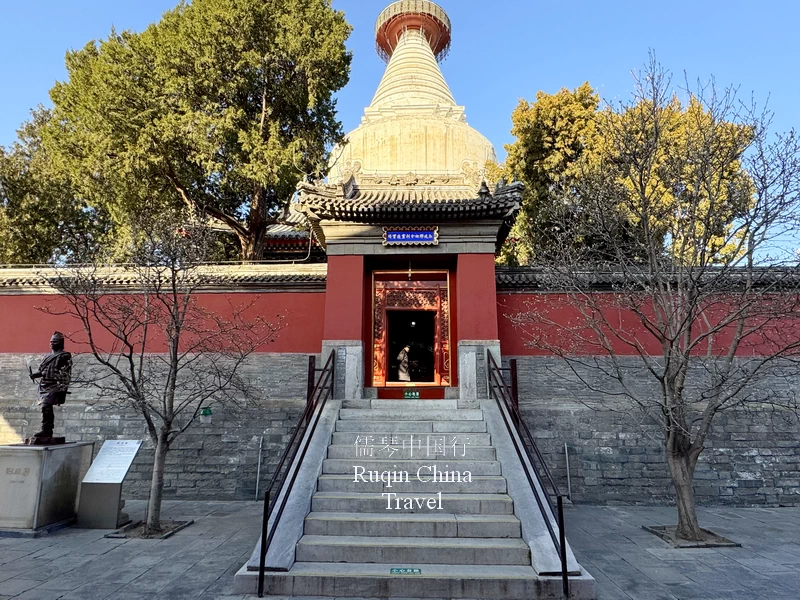
As one of the largest and earliest Tibetan-style stupas from the Yuan Dynasty, the White Stupa is a symbol of Buddhist devotion and a focal point for spiritual practice. The courtyard’s design emphasizes the stupa’s grandeur, offering visitors a space for contemplation and worship.
6. Introduction to Arniko (阿尼哥)
Arniko (1244–1306) was a Nepali architect, sculptor, and artisan who played a crucial role in constructing the White Stupa at Miaoying Temple. Born into a noble family, Arniko was a direct disciple of the famous Tibetan Lama Phags-pa. His early talent in sculpture, painting, and casting Buddhist statues set him on a path to become one of the most prominent artists of his time.
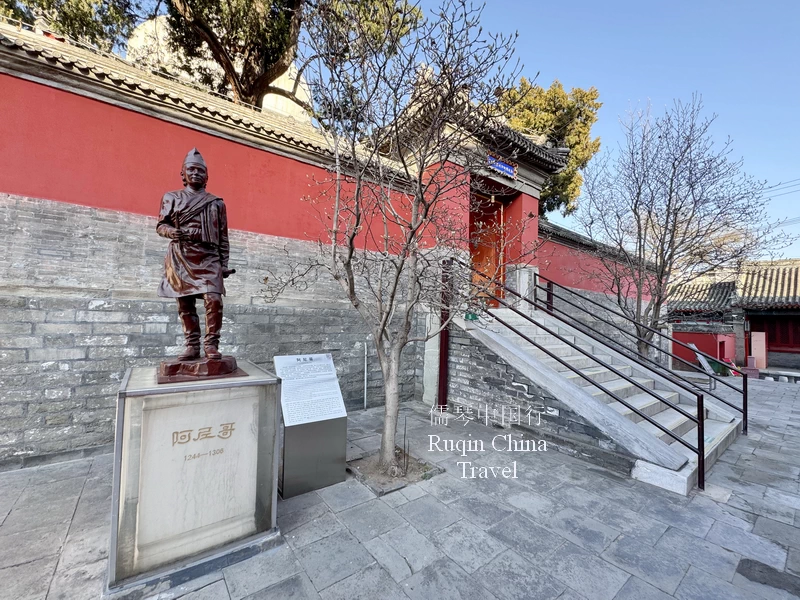
Arniko’s greatest achievement was overseeing the design and construction of the White Stupa at Miaoying Temple. His work represents the blending of Tibetan, Mongolian, and Nepali artistic traditions. This stupa is considered one of the earliest and largest Lamaist stupas in China. In 2002, to honor his contributions, a bronze statue of Arniko was placed at the temple.
7. Enjoying the Blossoms at White Stupa Temple
The first time I visited Miaoying Temple (White Stupa Temple) in spring, I didn’t expect the flowers to be what stayed with me. But as I walked into the courtyard, soft pink and white blossoms framed the white stupa so naturally that I slowed down without even thinking.
If you come during blooming season, give yourself time to wander. The trees, the quiet paths, even the benches feel inviting. I’ve seen photographers setting up carefully, but honestly, you don’t need a camera to appreciate it—just sit for a while and look up at the stupa through the branches.
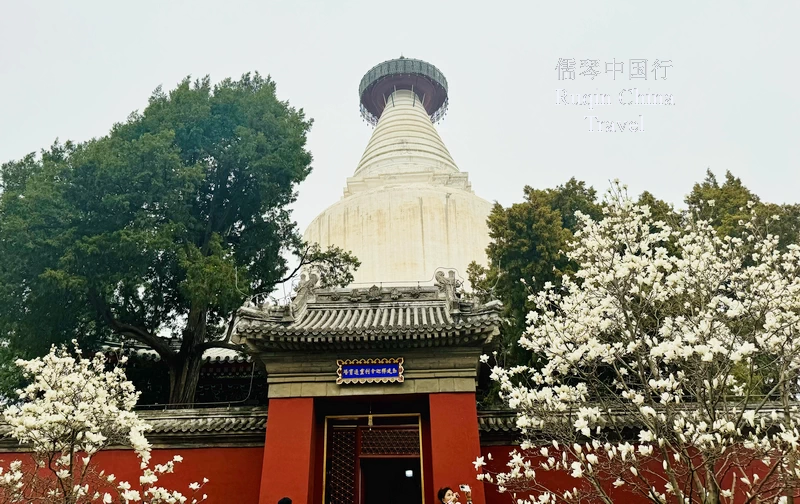
What I love most is how gentle everything feels here. The blossoms don’t overwhelm the space—they soften it. And in a city as fast-moving as Beijing, that kind of quiet beauty is something you really notice.
8. Cafes and Bars Near Miaoying Temple
After exploring the temple, why not relax in one of the nearby cafés and enjoy a drink with a view of the White Stupa? These cafés not only offer delicious beverages but also provide fantastic views of the temple.
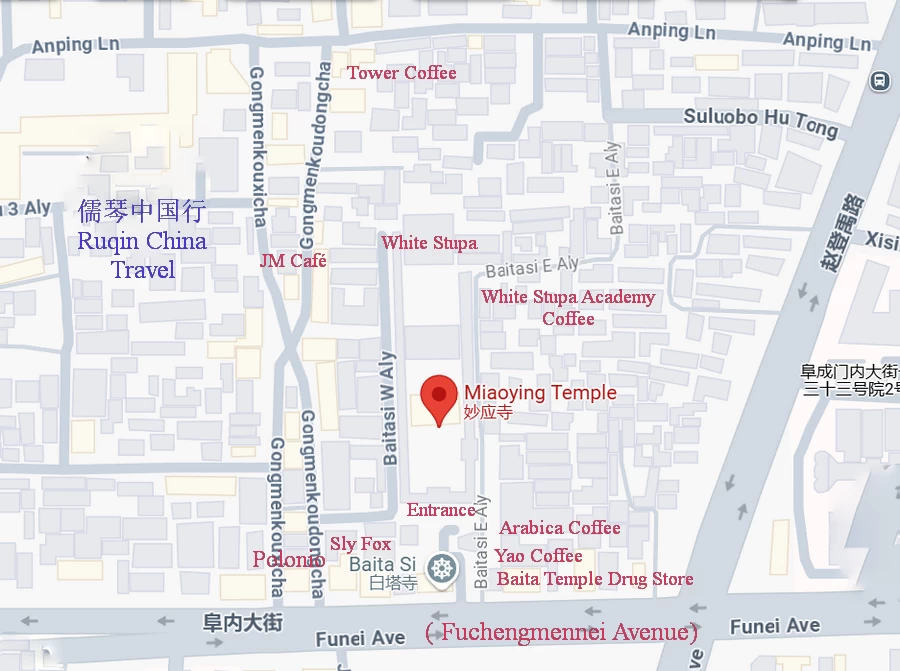
Yao Coffee (耀咖啡): Located at the entrance of the east side alley near Miaoying Temple, this café’s third-floor terrace offers a panoramic view of both the temple and the White Stupa.
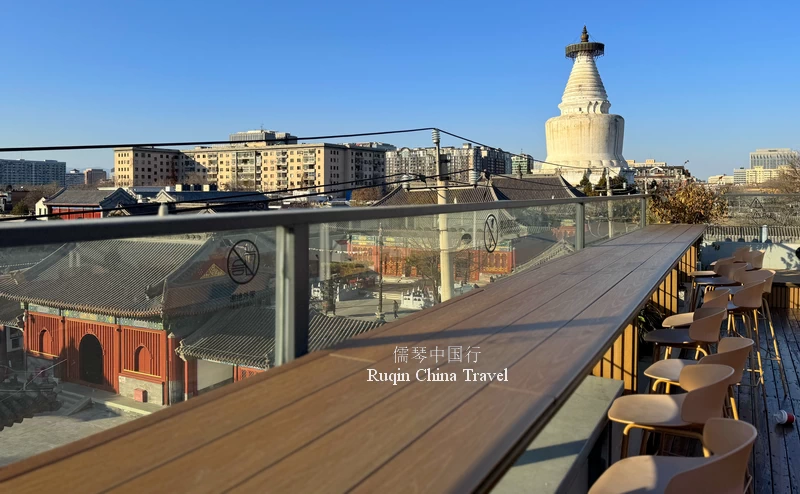
Recommended drinks include the White Tower Cake and Roselle Plum Drink. Operating hours: 8:30 AM – 11:00 PM.
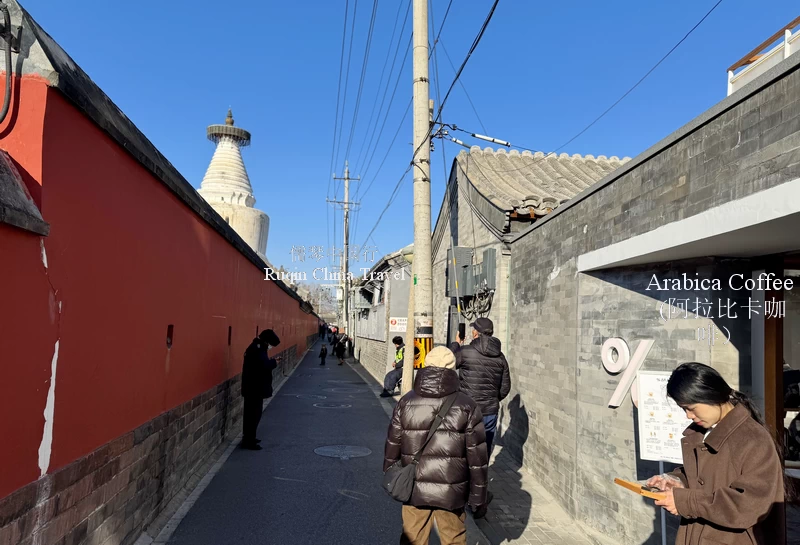
Arabica Coffee (阿拉比卡咖啡) Arabica Coffee is opening its 13th store in Beijing. It’s located in White Stupa Temple East Alley, right next to the temple. This spot is just steps away from another favorite, Yao Coffee, and offers a fantastic view of the White Stupa.
White Stupa Academy (白塔书院): Located close to the temple at the end of the east side the alley, this café is a great spot to capture a photo with the red gate and White Stupa in the background.
Sly Fox (小狐狸咖啡):Located at the west side of the temple, The American coffee at Sly Fox Coffee is simple yet delicious, perfect for starting your day on a good note. Although the seating area is small, the surrounding products are incredibly cute!
Polonio 咖啡馆: Located next to the White Stupa Temple in Beijing, POLONIO Café is the perfect spot to enjoy the winter sunshine. The café is spread over two floors. The first floor has a dining area and a coffee bar, along with comfortable seating for guests. The second floor features a small terrace that offers a great view of the White Stupa Temple and the surrounding hutongs. The terrace’s design is inspired by South American nature, with blue and white tones, checkered folding chairs, and plenty of greenery. It feels like stepping into a cozy camping environment.
JM Café: Located on Anping Alley, JM Café has a playful design with fluffy clouds, pink sun umbrellas, and garden-style seating. It’s a modern space that pairs beautifully with the White Stupa in the background.
Tower Coffee ((塔儿咖): With three floors, this café’s second floor has minimalist décor, offering a view of the White Stupa through large windows. The rooftop has ample seating, with the stupa visible to the northwest.
9. Nearby City Walk Highlights
If you have time, explore the nearby historical attractions:

Chinese Historical Imperial Temple 历代帝王庙
Just a short walk from Miaoying Temple, the Temple of Successive Emperors (also called the Imperial Temple or Emperors Temple of Past Dynasties ) honors China’s ancestors, emperors, meritorious officials, and famous generals.

Located at 131 Fuchengmennei Street, Xicheng District, Beijing, the temple was originally founded in 1531 during the Ming Jiajing era. It was first known as the Bao’an Temple before being renovated in 1530 and rebuilt in 1729 during the Qing Yongzheng era. The temple covers 22,000 square meters, with a construction area of around 4,000 square meters.
Guangji Temple 广济寺
Guangji Temple, a historic Buddhist temple, is a remarkable example of ancient Chinese architecture and religious devotion.

The temple is beautifully preserved, with intricate wood carvings and a peaceful atmosphere that offers visitors a relaxing break from the city. Its deep cultural ties to Beijing’s Buddhist heritage make it an essential stop for those interested in China’s spiritual traditions.
Xishiku Church 西什库教堂
Also known as Beitang Church, Xishiku Church is a striking example of Gothic-style architecture in Beijing. Just a short distance from Miaoying Temple, it offers a unique contrast with its medieval European design, set within the traditional Chinese surroundings.

The church’s tall spires, stained-glass windows, and peaceful ambiance provide visitors with a refreshing look at Beijing’s diverse cultural and religious landscape.
I remember leaving Miaoying Temple (White Stupa Temple) feeling unexpectedly calm. It’s not just about the history—you feel it in the quiet courtyards, the slow rhythm, the way the white stupa anchors everything around you.
If you’re exploring Beijing and need a pause, this is where I’d send you. Miaoying Temple offers a softer, more personal side of the city that many travelers completely miss.
About the Author
Ruqin is the founder of Ruqintravel.com and has spent more than four decades working in China’s travel industry. Drawing on hands-on experience in cities like Beijing and Hangzhou, he personally researches and updates each guide to help international travelers navigate China with confidence.
Further Reading
Xishiku Church: Mass Times, Sights, Transport & Travel Tips
Huguosi Street, Beijing (Huguosi Snack Street): Map & Travel Tips
Beijing Shichahai Travel Guide: Hutongs, Lakes, Food & Tips
Nanluoguxiang: Maps, Shopping, Bars, Cafes, Food, Hutong & Tips