
Itinerary designed by Ruqin
Last updated: August 16, 2026
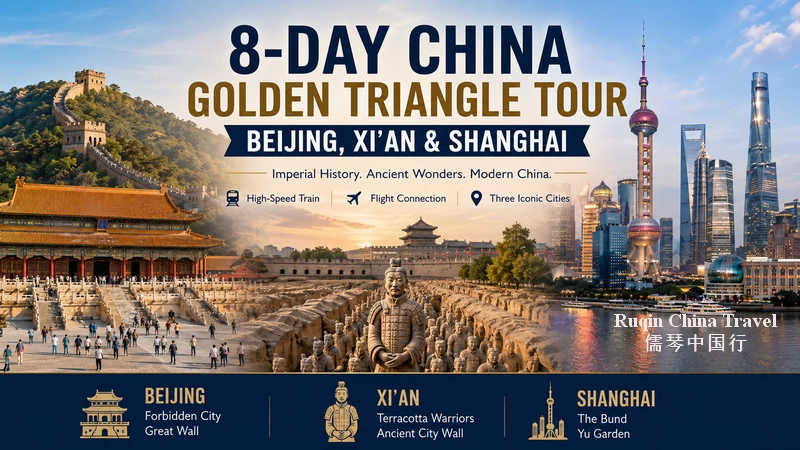
8-Day China Golden Triangle Tour Overview
For a first trip to China, Beijing, Xi’an and Shanghai form one of the country’s classic travel routes. It is often called the China Golden Triangle, and for good reason.
Beijing introduces imperial China and the Great Wall. Xi’an takes you deeper into China’s ancient history and the Silk Road, while Shanghai brings the journey into modern China.
This eight-day itinerary connects the three cities without making every day a race. You travel from Beijing to Xi’an by high-speed train, then fly from Xi’an to Shanghai.
I have designed the route for travelers who want China’s essential sights but also need time to absorb them. Eight days is not long, so the key is choosing well rather than simply adding more attractions.
Who Is This Tour For?
I recommend this itinerary especially for first-time visitors to China. It works well for couples, families, friends, and independent travelers who want a clear introduction to the country.
Expect plenty of walking. However, the itinerary balances major sightseeing days with lighter arrival, transfer, and evening periods.
You can also reverse the route. If your international flights work better through Shanghai, start there and travel Shanghai → Xi’an → Beijing.
8-Day China Golden Triangle Tour at a Glance
| Day | Route | Main Experiences | Overnight |
|---|---|---|---|
| Day 1 | Arrive Beijing | Arrival, hotel, easy neighborhood walk | Beijing |
| Day 2 | Central Beijing | Tiananmen Square, Forbidden City, Jingshan, Temple of Heaven | Beijing |
| Day 3 | Beijing → Mutianyu | Mutianyu Great Wall | Beijing |
| Day 4 | Beijing → Xi’an | Summer Palace, high-speed train to Xi’an | Xi’an |
| Day 5 | Xi’an | Terracotta Warriors, Ancient City Wall | Xi’an |
| Day 6 | Xi’an → Shanghai | Big Wild Goose Pagoda, flight to Shanghai | Shanghai |
| Day 7 | Shanghai | Shanghai Museum, Bund, Yu Garden & Old City | Shanghai |
| Day 8 | Shanghai | Free time, departure | — |
Day 1: Arrive in Beijing
Arrival — Airport to Your Beijing Hotel
Welcome to Beijing.
After immigration and baggage collection, travel to your hotel and check in. Depending on your airport, hotel location, and arrival time, the transfer can take an hour or longer.
Do not plan serious sightseeing today.
International flights, immigration, airport transfers, and jet lag can easily consume more energy than expected.
Afternoon or Evening — Easy Introduction to Beijing
If you arrive early and still feel fresh, take a gentle walk near your hotel.
I prefer this to immediately sending first-time visitors to a major attraction. You need a little time to adjust to Beijing’s scale, traffic, and rhythm.
Explore a nearby hutong, park, shopping street, or local restaurant.
Then have an early dinner and rest.
Tomorrow is your first full sightseeing day.
Day 2: Tiananmen Square, Forbidden City, Jingshan & Temple of Heaven
7:30 am — Breakfast & Departure
Have breakfast and leave your hotel early.
Today covers Beijing’s historic imperial center, so wear comfortable shoes. You will spend much of the day walking.
Carry your passport.
Security checks are common around central Beijing, and major attractions require identification.
8:30–9:30 am — Tiananmen Square
Begin at Tiananmen Square.
The square forms the monumental southern approach to the Forbidden City. Standing here also helps first-time visitors understand the scale of Beijing’s historic central axis.

Do not rush through simply for a photograph.
Look north toward Tiananmen Gate, then notice the major public buildings surrounding the square.
Advance reservations and security procedures may apply. Therefore, check the current requirements before your visit.
9:30 am–12:30 pm — Forbidden City
Walk north into the Forbidden City, the heart of imperial Beijing.
Allow around three hours for a first visit.
Follow the central route through the great ceremonial halls, but occasionally move into quieter side courtyards. The smaller spaces often reveal more about everyday palace life.

The Forbidden City served as the imperial palace during the Ming and Qing dynasties.
However, avoid trying to see every hall.
The complex contains hundreds of buildings. A focused three-hour visit usually gives first-time travelers a much better experience than an exhausting attempt to cover everything.
12:30–1:30 pm — Lunch
Leave through the northern side and have lunch nearby.
Keep the meal simple.
After several hours inside the Forbidden City, you will appreciate a short rest.
Then walk toward Jingshan Park.
1:30–2:30 pm — Jingshan Park
Climb the central hill in Jingshan Park.
The climb is short but steep enough to remind you that you have already walked all morning.
At the top, turn south.
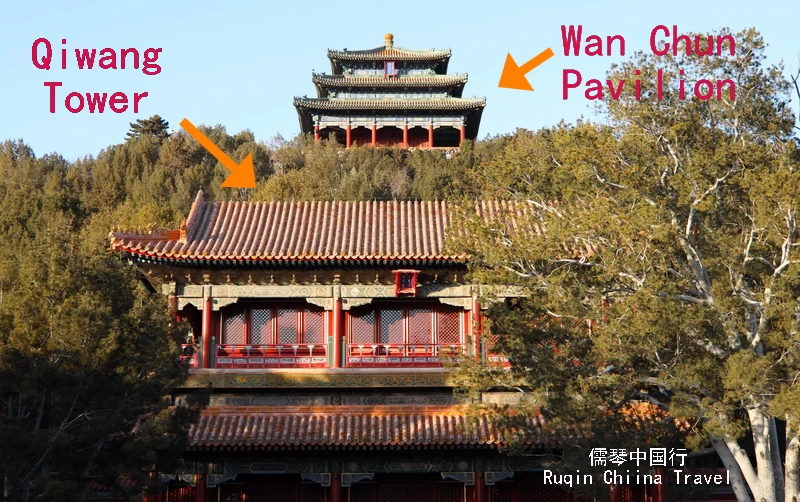
The entire Forbidden City spreads below you, with its yellow roofs aligned along Beijing’s historic central axis.
This is one of the best views in Beijing.
It also gives you a perspective that you cannot get while walking inside the palace itself.
3:00–5:00 pm — Temple of Heaven
Next, travel south to the Temple of Heaven.
The change of atmosphere is immediate.
The Forbidden City represented imperial government and residence. The Temple of Heaven was where emperors performed important rituals and prayed for good harvests.
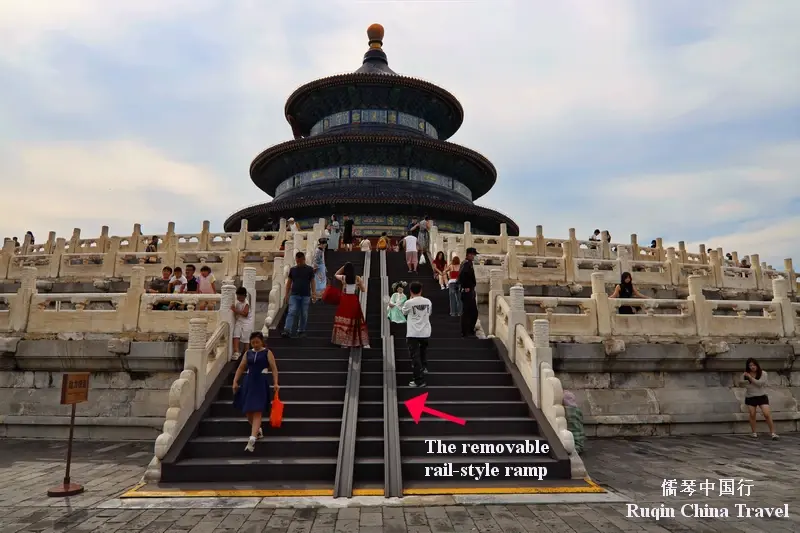
Visit the Hall of Prayer for Good Harvests, Imperial Vault of Heaven, and Circular Mound Altar.
However, also watch what happens in the surrounding park.
Depending on the time and season, you may see local residents exercising, playing cards, singing, or simply spending time together.
That everyday Beijing life provides a useful counterpoint to the monumental architecture.
Evening — Dinner & Rest
Return to your hotel.
Keep the evening flexible.
If you still have energy, have dinner in a nearby neighborhood rather than adding another scheduled attraction.
Tomorrow you head into the mountains.
Day 3: Mutianyu Great Wall Day Trip
7:30 am — Leave Beijing
Have an early breakfast and leave for the Mutianyu Great Wall.
Allow roughly 1½–2 hours by road, depending on traffic and your starting point.
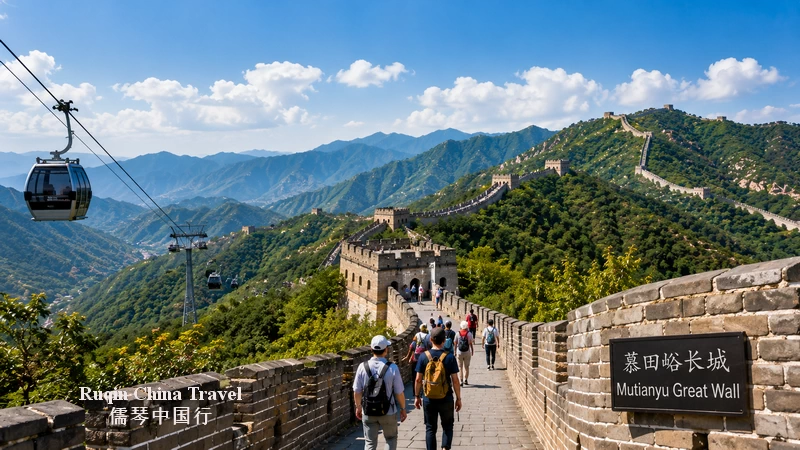
I recommend Mutianyu for many first-time foreign visitors because it combines impressive scenery with good visitor facilities.
It is also generally less intense than trying to combine the Great Wall with several other major sights.
9:30 am–1:00 pm — Mutianyu Great Wall
Once you arrive, take the shuttle toward the main access area.
You can reach the Wall by cable car or chairlift, depending on your chosen route.

Then spend several hours walking.
Mutianyu runs along a dramatic mountain ridge, with watchtowers rising and falling across the hills.
Do not measure the experience by how many towers you reach.
Stop occasionally.
Look back at the Wall winding across the mountains, examine the watchtowers, and give yourself time for photographs.
For a first visit, three hours around the Wall is usually enough.
1:00–2:00 pm — Lunch
Come down and have lunch near Mutianyu.
Choose something simple and take a proper break.
You have already spent several hours climbing steps.
2:00–4:00 pm — Return to Beijing
Drive back to Beijing.
Traffic can change the arrival time considerably, especially later in the afternoon.
That uncertainty is another reason I do not add the Ming Tombs to this day.
Once back in Beijing, rest at your hotel.
Evening — Free Time
Keep tonight open.
You might explore Wangfujing, Sanlitun, Shichahai, or a hutong neighborhood, depending on where you stay.
Alternatively, do nothing.
After the Great Wall, an early night is perfectly reasonable.
Day 4: Summer Palace & High-Speed Train to Xi’an
8:00–11:00 am — Summer Palace
Check out after breakfast, leave your luggage with the hotel, and visit the Summer Palace.
This is your final major Beijing attraction.
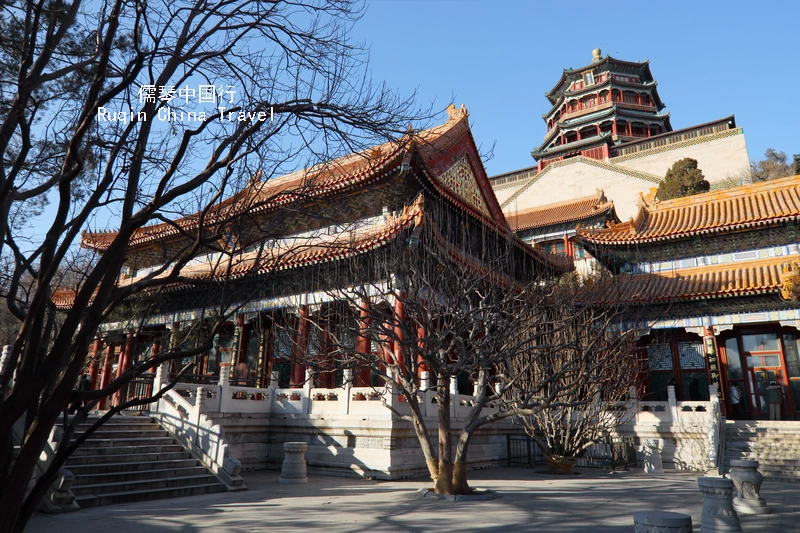
Walk through the imperial garden, see Kunming Lake, and explore the area around Longevity Hill.
The atmosphere differs sharply from the Forbidden City.
Here, water, hills, gardens, pavilions, corridors, and palace buildings work together as one landscape.
If boats are operating and weather permits, take a short boat ride.
However, leave enough time for your railway transfer.
11:30 am–12:30 pm — Lunch
Have lunch, then collect your luggage.
Head to the railway station shown on your ticket.
Beijing has several major stations, so check carefully.
Do not automatically assume that your Xi’an train leaves from the same station shown in an older itinerary.
Around 2:00–6:30 pm — High-Speed Train to Xi’an
Take a high-speed train from Beijing to Xi’an North Railway Station.
Fast services usually make the journey in roughly 4½–5½ hours, although schedules vary.
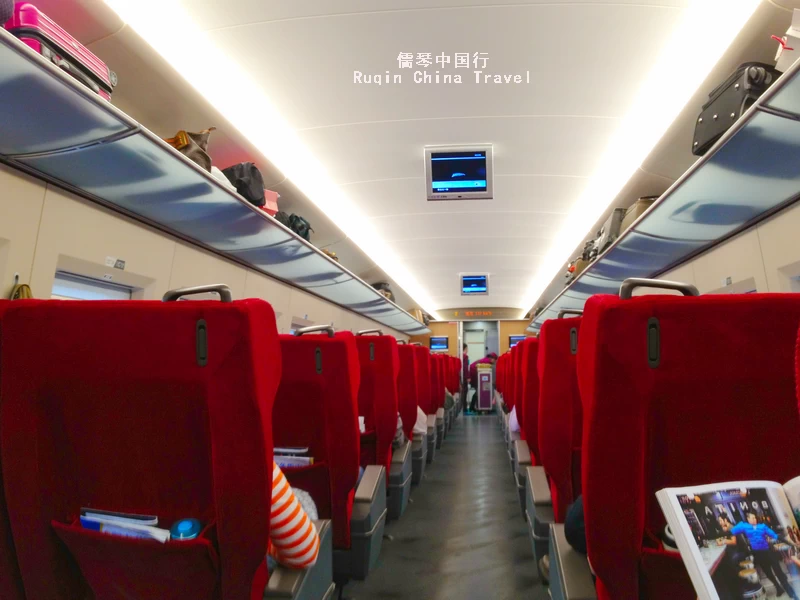
I prefer rail for this section rather than flying.
City-center access is easier, the journey is comfortable, and you avoid much of the airport process.
The train also lets you watch northern China’s landscape change along the way.
Evening — Arrive in Xi’an
After arrival, transfer to your hotel.
For a first visit, staying near the Bell Tower, South Gate, or within convenient reach of the Ancient City Wall works well.
Have dinner nearby.
Then rest.
Day 5: Terracotta Warriors & Xi’an Ancient City Wall
7:30 am — Leave for the Terracotta Warriors
Start early and travel east toward the Museum of the Terracotta Warriors.
Allow roughly an hour or more for the road journey, depending on traffic and your hotel.
The museum becomes busy, so an early start helps.
9:00 am–12:00 pm — Terracotta Warriors
Give the site around three hours.
The scale becomes clear when you enter Pit 1 and see rows of life-sized warriors extending across the excavation hall.
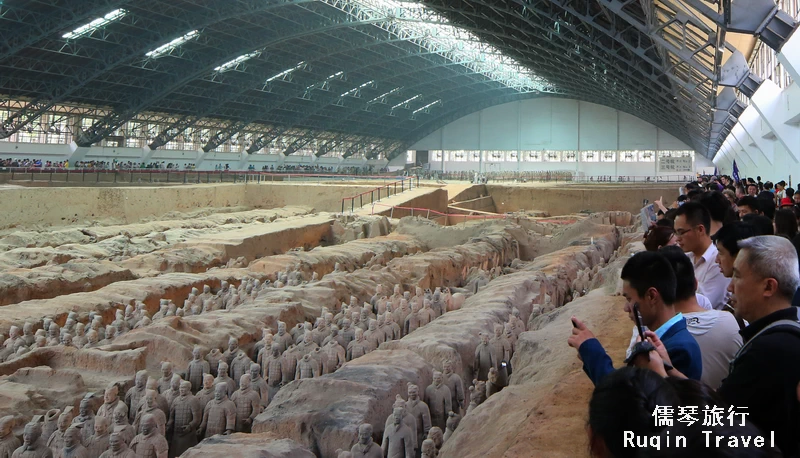
However, do not stop with the famous panoramic view.
Look closely at individual figures.
Faces, hairstyles, armor, posture, and rank vary. These details make the army feel far more human than photographs suggest.
The warriors were created for the mausoleum complex of Qin Shi Huang, China’s first emperor.
For many first-time visitors, this becomes one of the defining experiences of the entire trip.
12:00–1:00 pm — Lunch
Have lunch near the museum or on the way back to Xi’an.
Then return to the old city.
Use the drive as a break.
3:00–5:30 pm — Xi’an Ancient City Wall
Spend the late afternoon on the Xi’an City Wall.
You can walk a section or rent a bicycle if conditions and current rules allow.
The complete wall stretches around the historic city center.
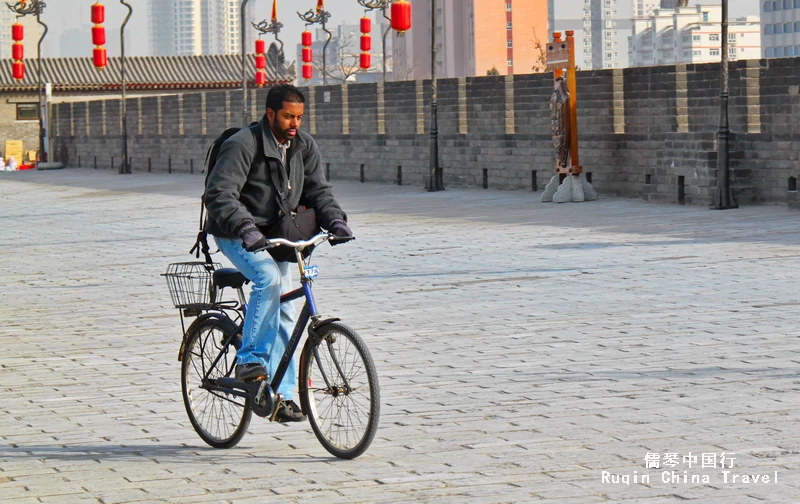
From above, you see traditional roofs on one side and modern Xi’an rising beyond them.
Late afternoon is particularly pleasant.
The light softens, temperatures often become more comfortable, and the city begins shifting toward evening.
Evening — Xi’an Food & Old City
Spend the evening exploring Xi’an’s food scene.
Try roujiamo, liangpi, dumplings, noodles, or other Shaanxi dishes.
You can also explore the Muslim Quarter area.
However, remember that its busiest streets are heavily touristed.
Walk beyond the most crowded lanes if you want a quieter look at the neighborhood.
Day 6: Big Wild Goose Pagoda & Fly to Shanghai
8:30–10:30 am — Big Wild Goose Pagoda
After breakfast, visit the Big Wild Goose Pagoda.
The site connects Xi’an with the history of Buddhism and the Silk Road.

The pagoda is closely associated with the monk Xuanzang, who traveled to India and returned with Buddhist scriptures.
Spend time around the temple complex rather than viewing the pagoda only from outside.
After yesterday’s Qin dynasty story, today’s Tang dynasty setting shows another period when Xi’an stood at the center of a much wider world.
11:00 am–12:00 pm — Lunch
Have an early lunch.
Then return to your hotel, collect your luggage, and head to the airport.
Allow a generous transfer buffer.
Xi’an airport sits well outside the central city.
Afternoon — Fly from Xi’an to Shanghai
Fly from Xi’an to Shanghai.
For this particular eight-day route, flying saves useful time compared with spending much of the day on another long train journey.
The flight itself takes roughly 2½ hours, although the complete airport-to-airport process takes longer.
Check whether your flight arrives at Shanghai Hongqiao or Shanghai Pudong.
That makes a significant difference to your hotel transfer.
Evening — First Look at Shanghai
Check into your hotel.
For first-time visitors, I like staying around People’s Square, Nanjing Road, or another central area with convenient metro access.

If you arrive early enough, take an easy evening walk.
Do not worry about seeing the Bund tonight.
You have set aside proper time for it tomorrow.
Day 7: Shanghai Museum, Bund & Yu Garden
9:00–11:00 am — Shanghai Museum
Begin with the Shanghai Museum.
Its collections provide a useful overview of Chinese art and material culture after several days of visiting historic sites.
Focus on the galleries that interest you most.
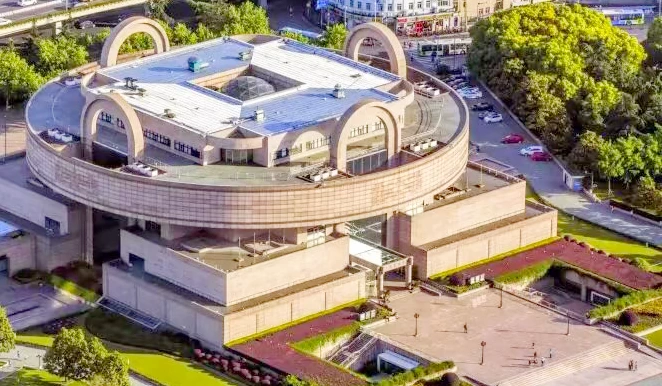
Bronzes, ceramics, painting, calligraphy, seals, and other collections can easily consume several hours.
However, you do not need to see everything.
Check the museum’s current location, opening arrangements, and reservation requirements before visiting, as exhibitions and access arrangements can change.
11:15 am–12:30 pm — The Bund
Continue to the Bund.
Walk along the Huangpu River and look across toward Pudong.
Few places summarize Shanghai so clearly.

Behind you stand historic banks, hotels, trading houses, and commercial buildings associated with Shanghai’s international past.
Across the river rises the modern Pudong skyline.
Old Shanghai and modern Shanghai face each other across the water.
Take your time with that contrast.
12:30–1:30 pm — Lunch
Have lunch near the Bund or toward the Old City.
Shanghai offers endless choices.
For a local meal, consider xiaolongbao, noodles, or classic Shanghai dishes.
Then continue toward Yu Garden.
2:00–4:30 pm — Yu Garden & Old City
Spend the afternoon at Yu Garden and the surrounding historic commercial area.
The garden dates to the Ming dynasty and uses classic Jiangnan garden design.
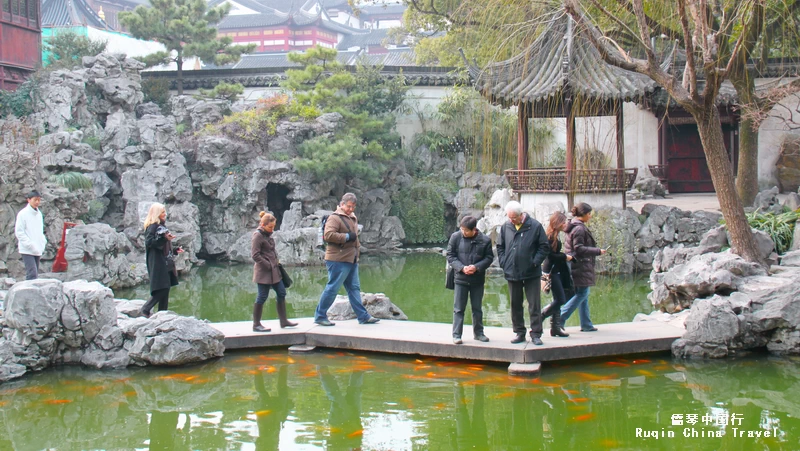
Pavilions, ponds, rockeries, corridors, and framed views create a world very different from Beijing’s huge imperial spaces.
Move slowly.
Small gardens reward attention to details.
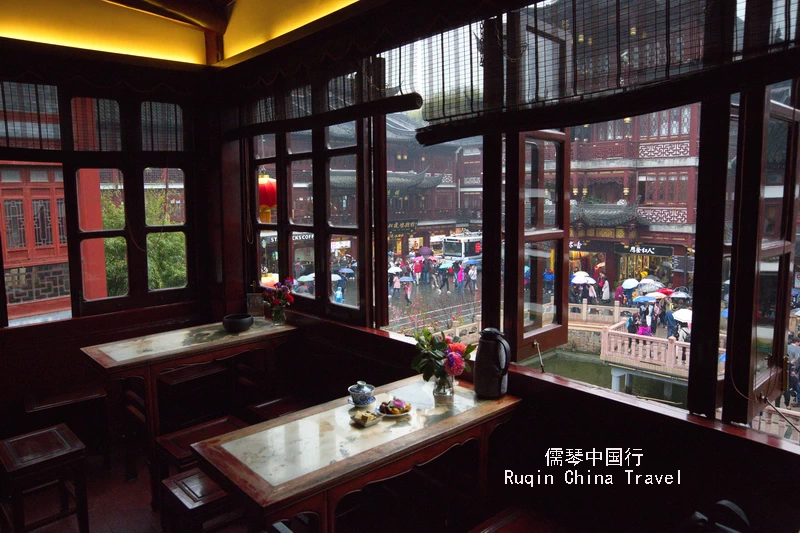
Afterward, walk through the surrounding bazaar and old-city streets.
The commercial areas can become crowded, but they remain an interesting part of the experience.
5:00–7:00 pm — Free Time & Dinner
Return to your hotel or continue exploring central Shanghai.
Have dinner and rest for a while.
Then, if you wish, return to the waterfront after dark.
Evening — Optional Bund Night Walk
Shanghai changes after sunset.
Pudong’s towers light up across the Huangpu River, while the historic Bund buildings glow behind you.
A night walk here makes a fitting final evening.
Eight days ago, you arrived among Beijing’s imperial monuments.
Now you are standing beside one of Asia’s great modern skylines.
Day 8: Free Time in Shanghai & Departure
Morning — Keep It Flexible
Do not schedule a major excursion on departure day unless your flight leaves very late.
Have breakfast and use the remaining time according to your interests.
You might walk along Nanjing Road, revisit the Bund, explore a neighborhood, buy a few gifts, or simply enjoy coffee without a timetable.
After seven active days, some unstructured time is useful.
Departure — Shanghai Airport
Return to your hotel, collect your luggage, and leave for the airport.
Check carefully whether you depart from Pudong International Airport or Hongqiao International Airport.
Allow a generous buffer for international departures.
Your China Golden Triangle journey ends here.
Tickets, Transport & What to Bring
Major Attraction Tickets
Book the Forbidden City well ahead. Tiananmen Square, major Beijing attractions, museums, and other sites may also require advance reservations.
The same principle applies to the Terracotta Warriors and popular Shanghai attractions.
Reservation systems and entry rules change. Therefore, check current procedures shortly before travel.
Always carry your passport.
Beijing → Xi’an: High-Speed Train
For this itinerary, I recommend high-speed rail.
The journey generally takes around 4½–5½ hours on faster services and connects Beijing directly with Xi’an North Railway Station.
Book early during holidays and peak travel periods.
Second class is comfortable for most travelers.
Xi’an → Shanghai: Flight
Flying works better for this eight-day itinerary because Xi’an and Shanghai are far apart.
Choose a convenient daytime flight and avoid extremely early departures if possible.
Remember to check your Shanghai arrival airport.
Hongqiao is much closer to central Shanghai than Pudong.
Local Transport
Beijing, Xi’an, and Shanghai all have extensive metro systems.
For sightseeing within the cities, combine the metro with taxis or ride-hailing.
For Mutianyu, use a shuttle bus, tourist bus, private car, or organized transfer.
Do not rent a car and drive yourself unless you already understand China’s licensing requirements.
Where to Stay
In Beijing, stay somewhere with convenient metro access to the historic center.
Areas around Dongcheng, Wangfujing, or convenient Line 2/Line 5 connections work well for first-time visitors.
In Xi’an, I prefer the Bell Tower, South Gate, or central old-city area for a short stay.
In Shanghai, choose a central base around People’s Square, Nanjing Road, or another well-connected metro area.
Location matters more than chasing a slightly better hotel rate far outside the center.
What to Bring
Travel as lightly as possible.
Bring comfortable walking shoes, your passport, phone, charger, power bank, and weather-appropriate clothing.
A compact umbrella is useful. Bring sunscreen and a hat during warmer months.
Most importantly, prepare your phone before arrival.
Set up Alipay and/or WeChat Pay, install useful transport and translation apps, and arrange reliable mobile data.
China becomes much easier once your phone is ready.
Ruqin’s Trip Design Note
The biggest mistake with an eight-day first trip to China is trying to turn it into a ten-city tour.
I would not.
Beijing, Xi’an and Shanghai already tell a remarkably complete first chapter of China.
Beijing gives you the imperial capital, the Forbidden City, Temple of Heaven, Great Wall, and Summer Palace. Xi’an takes you back to China’s first emperor and then into the cosmopolitan world of the Tang dynasty.
Finally, Shanghai changes the perspective.
The Bund, modern skyline, Jiangnan-style Yu Garden, museums, restaurants, and neighborhoods show a China that cannot be understood only through ancient monuments.
I have also deliberately left the Ming Tombs out.
They are important, but eight days require choices. I would rather give you three good hours on Mutianyu than rush from the Great Wall to another large historical site.
The same rule applies throughout this route.
Do not confuse seeing more with understanding more.
Three cities are enough.
Travel them well.
Plan More of Your Beijing, Xi’an & Shanghai Trip
Before departure, use Ruqin China Travel’s practical guides to prepare for China high-speed trains, domestic flights, mobile payments, internet access, attraction reservations, local transport, food, and essential travel apps.
You can also reverse this itinerary. For travelers arriving internationally in Shanghai, follow Shanghai → Xi’an → Beijing and fly home from Beijing. An open-jaw international ticket can save you from returning across China simply to catch your flight.
Questions About Planning Your China Golden Triangle Tour
Still have questions about this route? You’re welcome to write to me.
If you need advice on timing, transport, tickets, or adjusting the itinerary, I’m happy to offer a practical suggestion based on my experience in Beijing, Xi’an and Shanghai.
There’s no fee for a simple question. Just use the form below and tell me about your plans.
We respect your privacy. Your details will never be shared or used for marketing