
Written by Ruqin
July 15, 2026
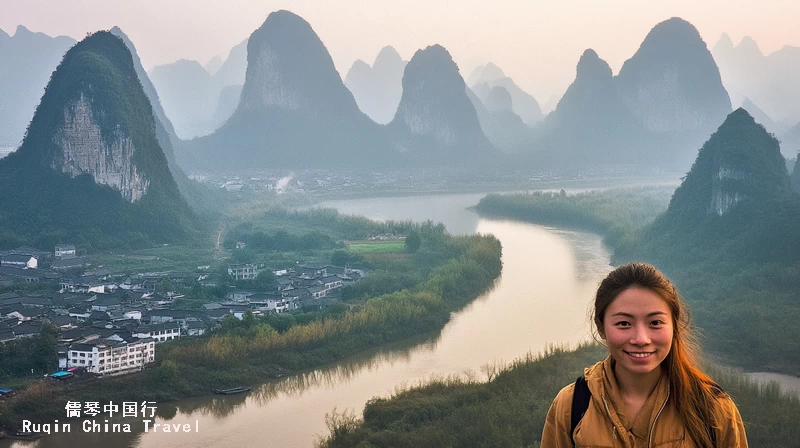
The first thing that stayed with me about Guilin wasn’t a famous landmark.
It was the water.
The Li River doesn’t seem to rush downstream. Instead, it glides quietly between limestone peaks, reflecting every mountain like a sheet of green silk. Around each bend, another postcard view appears.
That’s why so many people fall in love with Guilin.
However, first-time visitors often discover that beautiful scenery doesn’t automatically make travel easy. A few common mistakes can cost you time, money, or some of the best experiences the region has to offer.
This guide will help you avoid those pitfalls, so you can spend less time figuring things out and more time enjoying Guilin’s remarkable landscapes.
1. Assuming Yangshuo Railway Station is in Yangshuo
This catches more visitors than you might expect.
You book a high-speed train to Yangshuo Station, step off the train, and expect to be close to West Street.
Instead, you find yourself surrounded by mountains with no town in sight.
That’s because Yangshuo Railway Station is actually in Xingping Town, nearly an hour’s drive from Yangshuo town center.
As soon as you leave the station, drivers may approach you with expensive offers to take you into town.
My advice is simple.
Ignore anyone who approaches you first.
Instead, follow the signs to the official shuttle buses outside the station. They run regularly to Yangshuo town, cost only a fraction of a private ride, and are the safest option.
The same advice applies if you’re traveling from Guilin to Yangshuo.
Rather than accepting rides from people outside the station, take a scheduled coach from Guilin Bus South Station. It’s inexpensive, comfortable, and reaches Yangshuo in about 90 minutes.
2. Waiting Until You Arrive to Book a Bamboo Raft
A bamboo raft ride is one of Guilin’s signature experiences.
Unfortunately, it’s also one of the easiest activities to miss during busy seasons.
I’ve met travelers who arrived at the pier only to find a sign saying, “Sold Out Today.”
That’s especially common on the Yulong River, where tickets disappear quickly during holidays and weekends.
Meanwhile, unofficial ticket sellers often wander around the pier promising “guaranteed” tickets.
Many of those tickets aren’t valid.
Instead, book your raft at least three days in advance.
Use the official Li River Ticket Office or Yulong River WeChat booking channels whenever possible.
Tickets are usually released around 8:00 a.m. each day, and the popular Jinlong Bridge to Jiuxian section often sells out first.
International visitors can book using their passport details.
One more thing to remember.
Each bamboo raft carries up to four adults.
If your group has fewer than four people, you can either share with other travelers or pay for the empty seats if you prefer a private raft.
3. Eating Beer Fish on West Street
West Street is lively, especially after sunset.
Naturally, many first-time visitors eat there.
You’ll see restaurant after restaurant advertising “Award-Winning Beer Fish” with huge signs and busy dining rooms.
However, bigger signs don’t always mean better food.
In my experience, prices on the main street are usually much higher, while the fish isn’t always the freshest.
Instead, leave the busiest pedestrian street behind.
Walk a few minutes toward Kangzhan Road or Ding’e Road, where many local families eat. The atmosphere feels more relaxed, prices are clearer, and the food is often better.
If you’d rather choose a reliable name, look for established restaurants such as Master Chef Beer Fish (大师傅啤酒鱼) or Xie Sanjie Beer Fish (谢三姐啤酒鱼). They’ve been popular for years and generally offer consistent quality.
Before ordering, always ask one question:
“Is the fish priced by weight or by portion?”
Also, be cautious if the menu simply says “market price.”
That’s often where unexpected bills begin.
If you’re not sure which fish to choose, order Jiangu Fish (剑骨鱼).
Its meat is tender, almost boneless, and cooks beautifully in Guilin’s local beer sauce. The rich broth is perfect poured over a bowl of rice
4. Renting an Electric Scooter Without Checking It
One of my favorite ways to explore Yangshuo is by electric scooter.
The roads through the countryside are quiet, and the scenery changes with every turn.
However, don’t rent the first scooter you see.
Some rental shops promise a full battery.
Later, halfway through the ride, the battery dies.
Then you’re left pushing the scooter down a country road while waiting for expensive roadside assistance.
I’ve also seen travelers charged for scratches that were already there.
Before riding away, do three things.
First, take a short test ride.
Next, check the battery level.
Finally, record a quick video showing every side of the scooter.
That one-minute video can save you a long argument later.
As a guide, expect to pay 30 to 40 RMB per day.
If someone asks for much more than 50 RMB, I’d look elsewhere.
Choose a well-established rental shop whenever possible.
It’s worth paying a little extra for better service if something goes wrong.
5. Taking an Unofficial Taxi from the Airport or Train Station
When you arrive in Guilin, you may hear someone call out:
“Taxi? Cheap ride!”
Keep walking.
Unofficial drivers often quote one price before you get in and another after the journey ends.
Others strike up a friendly conversation, ask about your travel plans, and then recommend a travel agency or ticket office where everything costs much more than it should.
Instead, use DiDi, China’s official ride-hailing app, or join the taxi queue outside the terminal.
Prices are transparent, and your route is recorded.
A regular taxi from Guilin Liangjiang International Airport to downtown Guilin usually costs around 80 to 100 RMB, depending on traffic.
Once you’re in the city, public buses are inexpensive, and shared electric bikes are everywhere for short rides.
If you’re heading to Yangshuo, coaches leave regularly from Guilin Bus South Station throughout the day.
6. Paying Someone to Enter Elephant Trunk Hill
This surprise catches quite a few visitors.
Elephant Trunk Hill Park is now free to enter.
However, people still stand near the entrance offering “fast-track tickets” or “special entrance passes.”
You don’t need them.
The park is free, but you still need to make a reservation before visiting.
You can do that through the official the AI Guilin (AI桂林) Mini Program. or the park’s official WeChat account.
While you’re nearby, another small warning.
If someone dressed in elaborate costumes asks to take a photo with you, expect them to request payment afterward.
The same goes for people handing out roses or small gifts.
A polite smile and a simple “No, thank you” usually works well.
7. Visiting the Two Rivers and Four Lakes Only During the Day
The Two Rivers and Four Lakes scenic area changes completely after sunset.
During the day, it’s pleasant.
At night, it’s magical.
Bridges glow with colorful lights. Trees reflect across the water. Historic buildings seem to float above the lakes.
The whole city feels transformed.
That’s why I always recommend saving this experience for the evening.
If your budget allows, take one of the night cruises.
Watching the lights appear from the water is one of Guilin’s most memorable experiences.
If you’d rather stay on land, simply walk along the lakeside after dark.
Be sure to stop near the Sun and Moon Pagodas.
Their reflections make some of the city’s most beautiful night photographs.
8. Overlooking Guilin’s Digital Visitor Services
Guilin has quietly made travel much easier for international visitors.
Many people don’t realize that until after they arrive.
At Guilin Liangjiang International Airport, you’ll find ATMs that accept international bank cards, self-service foreign currency exchange machines, and staff who can help visitors with payment services.
The city’s railway stations also provide multilingual service desks, smart translation devices, and support for international card payments.
Once you’ve settled in, I recommend opening WeChat and searching for the AI Guilin (AI桂林) Mini Program.
Think of it as Guilin’s digital travel hub.
It brings together information on major attractions, hotels, restaurants, transportation, and local services. The platform also supports multiple languages, making it much easier to plan your days.
Another useful resource is One-Click Tour Guangxi (一键游广西).
You can use it to book attraction tickets, reserve hotels, and plan your route across Guangxi Province without switching between multiple websites.
If you’re planning to visit popular attractions such as Reed Flute Cave, remember to reserve your tickets ahead of time, especially during Chinese holidays.
A few minutes of planning can save you a long wait later.
Guilin is not a city you rush through.
Its beauty isn’t found at one famous viewpoint.
It’s in the quiet moments between them.
You’ll notice it when a bamboo raft drifts silently across the Li River. You’ll smell it in a bowl of fresh Guilin rice noodles on a cool morning. You’ll feel it while riding an electric scooter through rice fields with limestone peaks rising all around you.
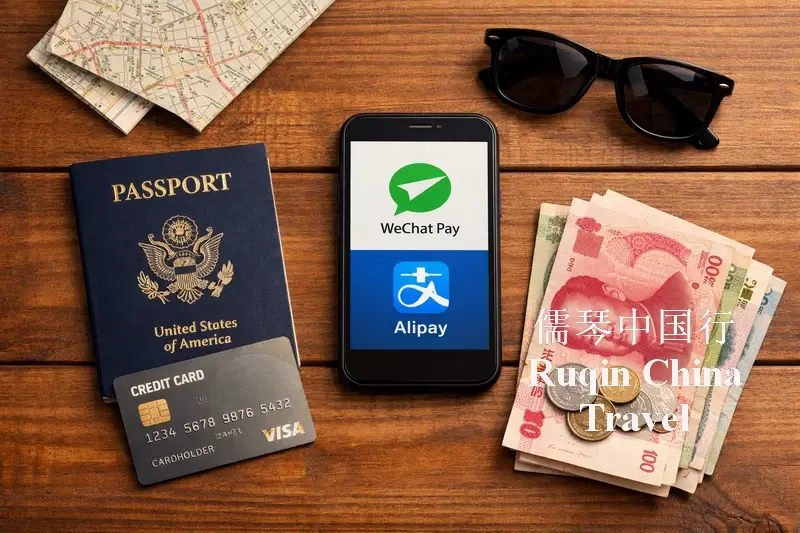
Of course, planning still matters. Book your bamboo raft early. Prepare your payment apps. Learn where the local buses stop. Those small details make the trip much smoother.
Then, once everything practical is taken care of, slow down.
Look up at the mountains. Listen to the river. Leave time to wander.
That’s when Guilin begins to reveal why people have called it one of China’s most beautiful landscapes for centuries.
About the Author
Ruqin is the founder of Ruqintravel.com and has spent more than four decades working in China’s travel industry. Drawing on hands-on experience in cities like Beijing and Hangzhou, he personally researches and updates each guide to help international travelers navigate China with confidence.
Further Reading
How to Plan a Li River Cruise in Guilin: Tips, Routes & Timing
Bamboo Rafting on Yulong River in Yangshuo: Tickets, Hours & Tips
Must-Try Local Foods in Guilin – A Visitor’s Guide
10 Common Mistakes to Avoid on Your First Trip to Beijing
7 Common Mistakes to Avoid on Your First Trip to Shanghai
9 Common Mistakes to Avoid on Your First Trip to Xi’an