
Written and updated by Ruqin
October 8, 2026
Beijing has a clear indoor smoking ban, but travelers can still encounter cigarette smell in hotels, entrances, small restaurants, and outdoor waiting areas.
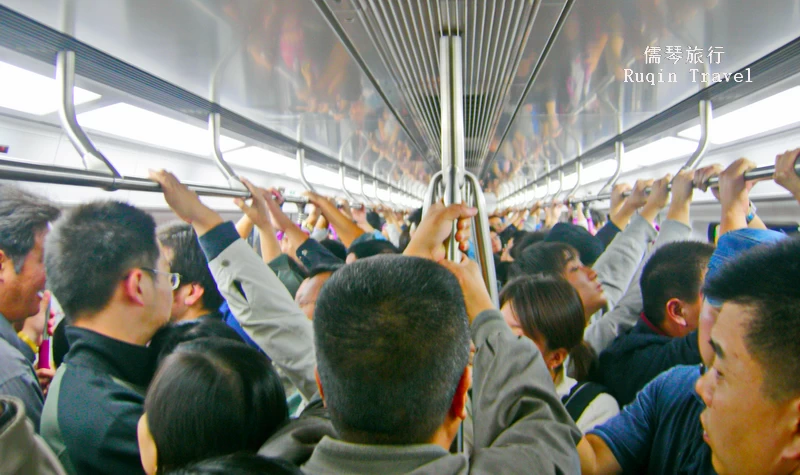
Smoking is prohibited in Beijing’s indoor public places, indoor workplaces, and public transport. Enforcement is generally strong on the subway, buses, at airports, and inside major attractions. It can feel less consistent in some hotels and smaller businesses.
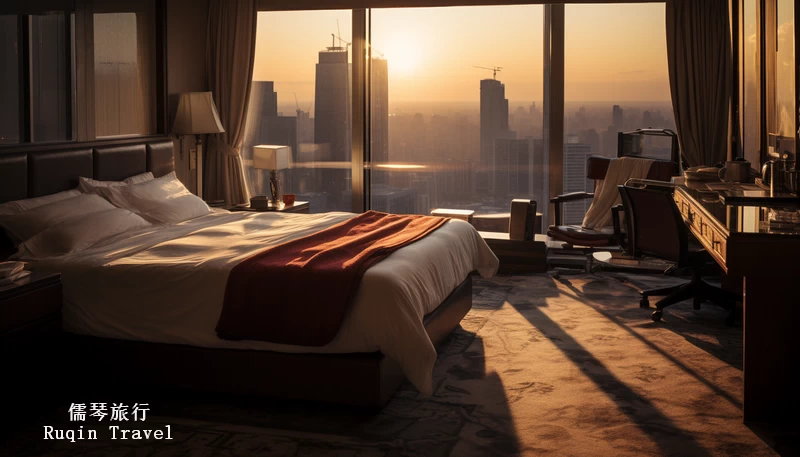
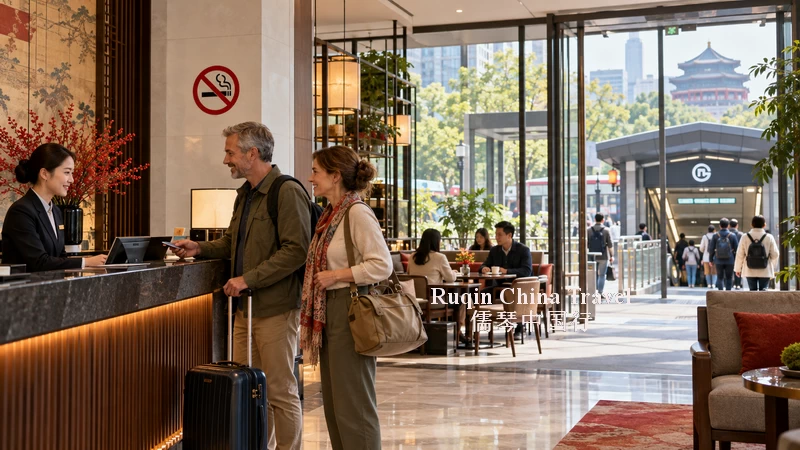
If smoke affects your sleep or health, do not depend only on a “non-smoking room” label. Choose a fully non-smoking property when possible, read recent reviews, confirm your request in writing, and inspect the room before unpacking.
What Beijing’s Smoking Rules Say
The Beijing Smoking Control Regulation has been in force since June 1, 2015 and was amended in 2021. It prohibits smoking in the indoor areas of public places and workplaces, as well as inside public transport.
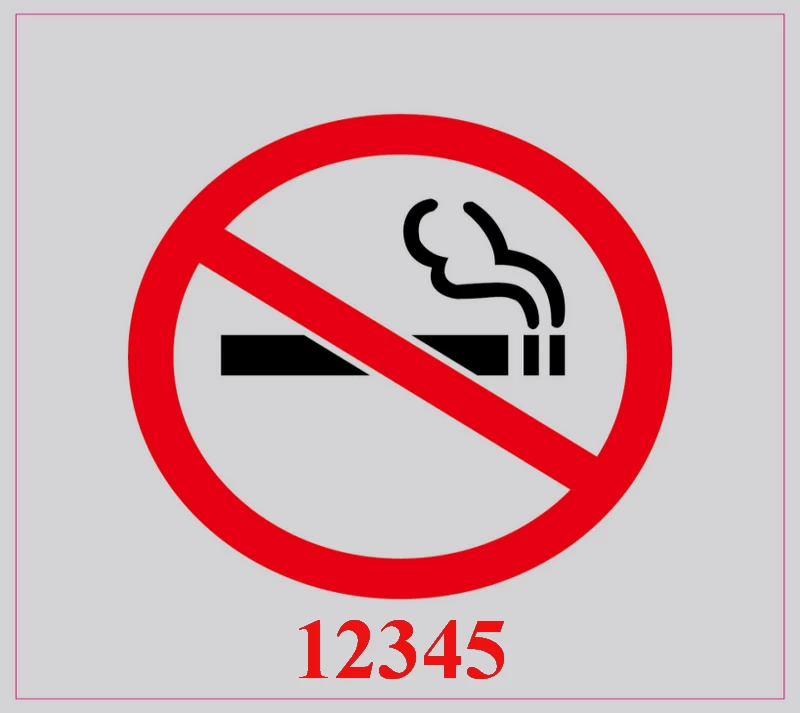
This covers the indoor areas of restaurants, cafés, shopping centers, museums, theatres, railway stations, airports, subway stations, taxis, buses, and other shared public spaces.
Some outdoor areas are also smoke-free. These include cultural heritage sites open to the public, outdoor areas mainly used by children, and spectator or competition areas at sports venues. Smoking is also prohibited while standing in a queue.
The law requires venue managers to display no-smoking signs, avoid providing ashtrays, conduct checks, and stop people from smoking. If a smoker refuses to stop, management should ask that person to leave and may report the violation.
These are confirmed legal rules. Reports of lingering hotel smoke or ignored signs are traveler observations. Enforcement and ventilation are not equally reliable everywhere.
The regulation also clearly states that smoking is prohibited while waiting in a queue. Anyone who breaks this rule may receive a fine of RMB 50. Those who refuse to stop can be fined up to RMB 200.
The operators and managers of smoke-free venues also have a legal duty to enforce the rules. They must stop people from smoking in prohibited areas and may face penalties if they fail to take action.
Where Smoke Is Least Likely to Be a Problem
Beijing’s subway trains and stations are normally reliable smoke-free environments. The same is true inside city buses, airport terminals, major railway stations, and high-speed trains.
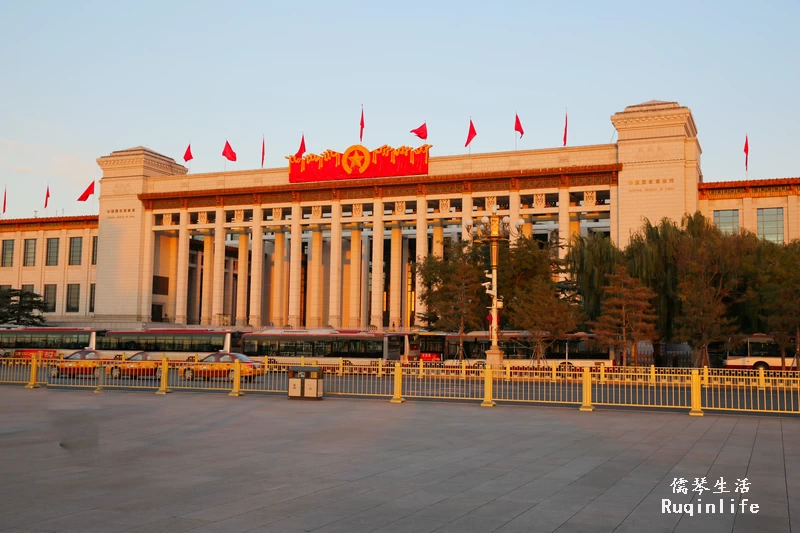
Large museums and ticketed attractions generally enforce the rules more consistently. The National Museum of China, Capital Museum, major shopping malls, and modern office complexes are usually straightforward for non-smokers.
At the Forbidden City and other protected heritage sites, the outdoor grounds are also covered by Beijing’s smoke-free rules. You may still notice smoking close to an outer gate or beyond the managed area, but it should not occur inside the protected visitor site.
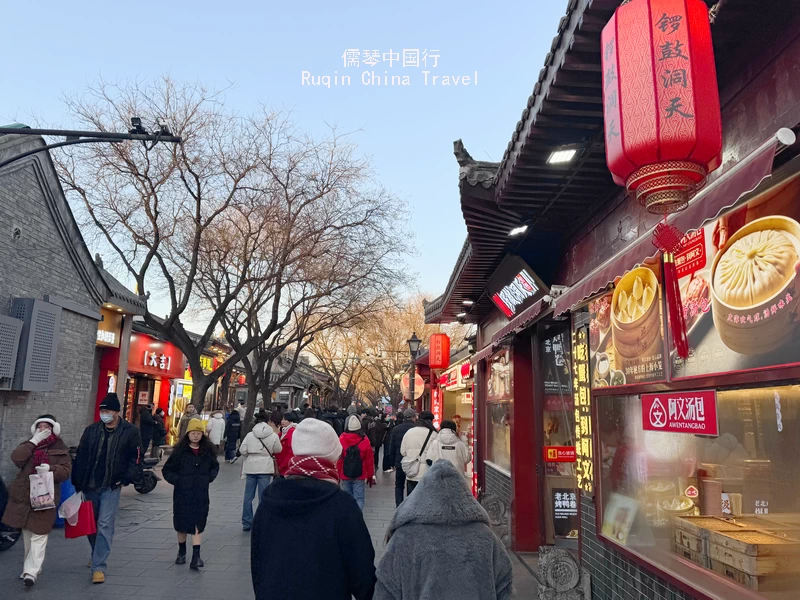
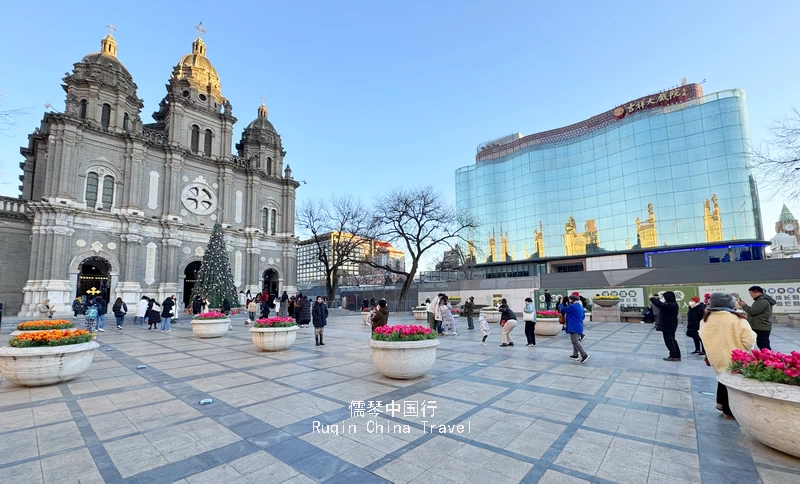
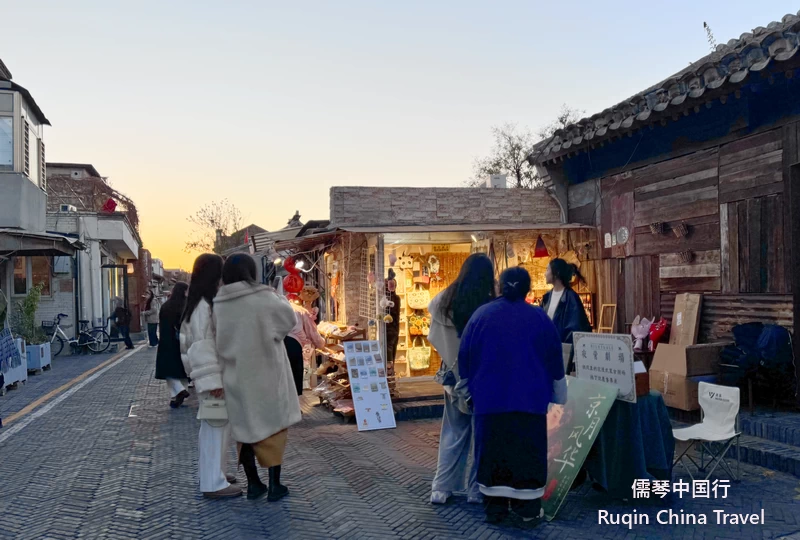
Outdoor streets are different. On Wangfujing, Qianmen, Guijie, and in hutong neighborhoods, you may pass people smoking beside a doorway or while walking. The exposure is usually brief, but it is difficult to avoid completely.
Why a “Non-Smoking Room” May Still Smell
A booking label can describe the room assigned to you without guaranteeing that the entire hotel is smoke-free. Smoke may have remained from a previous guest, entered from a corridor, or travelled through ventilation.
There is an important difference between:
- A fully non-smoking hotel
- A non-smoking floor inside a mixed hotel
- A non-smoking room near smoking-permitted rooms
- A room listed as “non-smoking on request”
The first offers the best chance of a comfortable stay. “On request” may depend on availability when you arrive.
Price and international branding can improve the odds, but neither guarantees success. Recent reviews from smoke-sensitive guests are more useful than a general score.
How to Choose a Smoke-Free Beijing Hotel
Check the Whole Property, Not Only the Room
Look for wording such as “100% non-smoking property” or “smoke-free hotel.” Then check whether the booking page separately lists smoking rooms.
If both smoking and non-smoking rooms appear, assume smoke could be present in shared corridors or nearby rooms. This does not mean the hotel will be unsuitable, but it is a higher-risk choice.
Read the Newest Reviews
Search recent reviews for “smoke,” “cigarette,” “smell,” “non-smoking,” and “corridor.” A hotel may have changed its policy, ventilation, or management since older reviews were written.
One complaint proves little. Several similar recent reports deserve attention.
Confirm Your Request in Writing
Send the hotel a message before paying, especially if the reservation cannot be cancelled. Ask whether the entire property is smoke-free and whether the hotel can guarantee a room with no cigarette smell.
You can write:
我对烟味很敏感。请安排完全无烟、没有烟味的房间,最好远离吸烟房和电梯。
Wǒ duì yānwèi hěn mǐngǎn. Qǐng ānpái wánquán wúyān, méiyǒu yānwèi de fángjiān, zuìhǎo yuǎnlí xīyān fáng hé diàntī.
“I am very sensitive to cigarette smoke. Please arrange a completely smoke-free room with no smoke smell, preferably away from smoking rooms and the lift.”
Save the reply. Repeat the request briefly at reception.
For broader accommodation planning, see Where to Stay in Beijing.
Inspect the Room Before Unpacking
Check the room as soon as you enter. Smell the bedding, curtains, carpet, bathroom, and air coming from the ventilation system. Also check the corridor outside.
Do not unpack or use the bathroom if the smell is unacceptable. Return to reception immediately and request another room. It is easier for the hotel to move you before the room has been used.
Say:
这个房间有烟味,我订的是无烟房。请帮我换一个没有烟味的房间。
Zhège fángjiān yǒu yānwèi, wǒ dìng de shì wúyān fáng. Qǐng bāng wǒ huàn yí ge méiyǒu yānwèi de fángjiān.
“This room smells of smoke, and I booked a non-smoking room. Please move me to a room without any smoke smell.”
Inspect the replacement too. Another room on the same corridor may not solve a ventilation problem, so ask for a different floor if necessary.
An air purifier may reduce airborne particles, but it does not remove smoke residue from carpets, curtains, and upholstery. Air freshener only covers the smell. If you have asthma or another condition aggravated by smoke, changing rooms or hotels is safer than trying to mask a serious problem.
Restaurants, Cafés and Bars
Indoor smoking is prohibited in Beijing restaurants, cafés, and bars. Larger restaurants, malls, hotel dining rooms, and established chains usually enforce the ban more consistently.
Smaller restaurants may be less predictable, especially during a busy private dinner. If someone begins smoking nearby, ask a server or manager to handle it rather than confronting the table directly.
You can say:
这里可以请客人不要吸烟吗?我对烟味很敏感。
Zhèlǐ kěyǐ qǐng kèrén búyào xīyān ma? Wǒ duì yānwèi hěn mǐngǎn.
“Could you please ask the guest not to smoke here? I am very sensitive to cigarette smoke.”
If staff do not respond, moving tables or leaving may be the most practical solution. Keep the receipt and record the venue name if you intend to complain.
Outdoor terraces and pavement seating require more caution. Even when the table itself is marked non-smoking, smoke can drift from the entrance or a neighboring outdoor table.
Taxis, DiDi and Public Transport
Smoking is prohibited inside Beijing taxis and other public transport. The subway and buses are usually the easiest choices for travelers who want to avoid smoke.
A taxi may retain an old cigarette smell even if nobody smokes during your ride. If the smell is strong when the door opens, it is reasonable to decline the car before entering.
With DiDi, cancel only through the app and check whether a cancellation fee applies. If you are already in the vehicle, politely ask the driver not to smoke:
请不要在车里吸烟,谢谢。
Qǐng búyào zài chēlǐ xīyān, xièxie.
“Please do not smoke in the car. Thank you.”
For general transport arrangements, see the Beijing Taxi Guide and How to Get Around Beijing.
What to Do When Someone Smokes Indoors
Start with the venue, not an argument with the smoker.
- Tell a staff member or the front desk.
- Ask the manager to enforce the no-smoking rule.
- Photograph the no-smoking sign and record the location and time if the problem continues.
- Move away if the exposure is affecting you.
- For an unresolved violation, call Beijing’s 12345 citizen service hotline or ask a Chinese-speaking person to help report it.
- You can also follow the “Smoke-Free Beijing” (无烟北京) official WeChat account and submit a smoking-related complaint online.
Current official Beijing guidance says no-smoking signs should display the complaint number 12345. Foreign-language assistance may vary, so hotel staff, a guide, or a Chinese-speaking companion can help explain the location.
For a single brief incident, changing seats is often faster than making a formal complaint. For repeated smoking in a hotel or a room that was sold as non-smoking, document the problem and contact the booking platform before cancelling the reservation yourself.
Extra Planning for Smoke-Sensitive Travelers
Carry any prescribed inhaler or medication in your day bag. Do not place essential medicine in checked luggage or leave it at the hotel.
Choose newer properties with hard flooring and individual room ventilation when possible. Carpet, heavy curtains, and central air systems can hold or transfer odors.
Ask for a room away from lifts, stairwells, service rooms, and building entrances, where people may gather. During meals, choose a mall restaurant, hotel restaurant, or established chain if avoiding smoke is more important than seeking a small neighborhood dining room.
Be realistic about outdoor exposure. Beijing is much more regulated than it was years ago, but a completely smoke-free street environment cannot be promised.
Ruqin’s Practical Advice
Most visitors can travel around Beijing without cigarette smoke becoming a major problem. The subway, airports, railway stations, museums, and large attractions are generally the easiest environments.
Hotels require the most careful preparation. If smoke seriously affects you, book a fully non-smoking property with recent positive reviews and free cancellation. Confirm the request in writing, inspect the room before unpacking, and request a change immediately if necessary.
For restaurants and other indoor venues, the law is on your side, but a calm request to staff is usually the quickest first step. Your budget matters, but recent enforcement reviews, ventilation, and the hotel’s willingness to move you matter more than star rating alone.
Further Reading
Where to Stay in Beijing: Maps, Best Areas, Hotels & Travel Tips
Beijing Taxi Guide: Essential Tips for First-Time Visitors
Do Hotels in China Require a Deposit at Check-In?