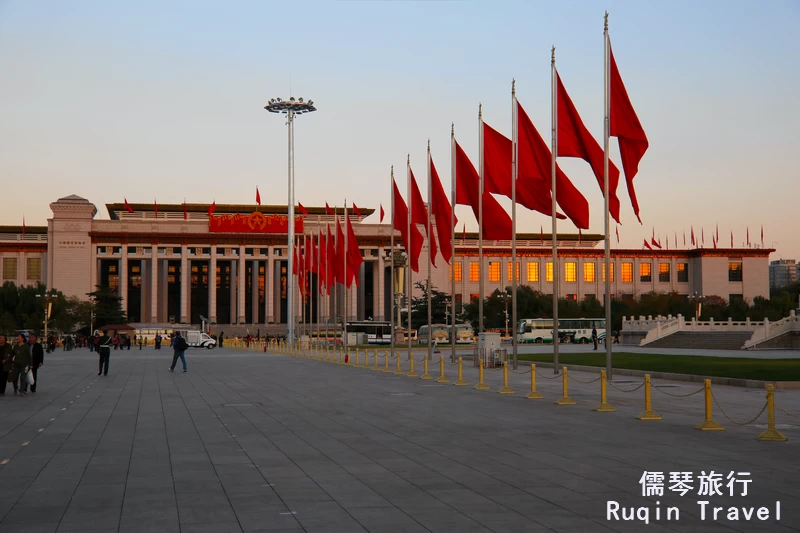

Written and updated by Ruqin
Last updated: March 11, 2026
The first time I experienced Tiananmen Square at night, it felt completely different from the busy daytime crowds. The wide open space grows quieter, the lights come on, and the surrounding buildings begin to glow against the dark Beijing sky. Standing there, with the city slowing down around you, the moment feels surprisingly calm and reflective.
For many visitors, the night view of Tiananmen Square becomes one of the most memorable scenes in Beijing. In this guide, I’ll walk you through what to see, where to stand for the best views, and how to enjoy Tiananmen Square at night with a bit more confidence.
1. The Nightly Flag Lowering Ceremony
One evening, I stayed in Tiananmen Square a little longer than most visitors and ended up witnessing the flag-lowering ceremony at sunset. As the sky slowly darkened, a group of soldiers from the People’s Liberation Army marched out in perfect formation from the gate area toward the flagpole. The entire square seemed to grow quiet as people paused to watch.
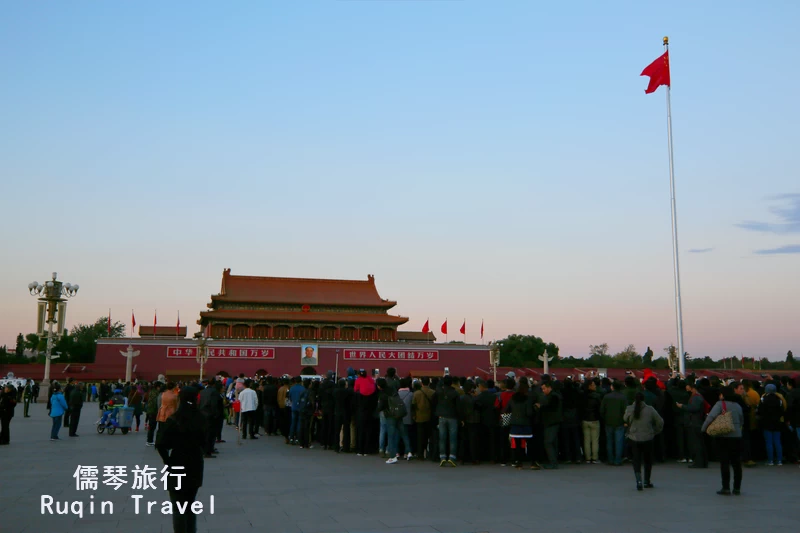
The ceremony itself is brief but striking. The soldiers move with precise, synchronized steps as the national flag is lowered with the setting sun.
If you want to see it, arrive a bit early. Crowds gather quickly near the flagpole area, especially during peak travel seasons. Standing there in the evening light, watching the ceremony unfold, gives you a very different perspective on the square after dark.
2. Illuminated Tiananmen Gate
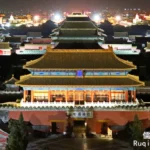
One of my favorite moments at Tiananmen Square at night is simply standing still and looking toward Tiananmen Gate (天安门城楼) after the lights come on. During the day the gate is surrounded by crowds, tour groups, and constant movement. But at night, the atmosphere shifts. The red walls and golden rooflines glow softly under the floodlights, and the entire structure feels calmer and more majestic.
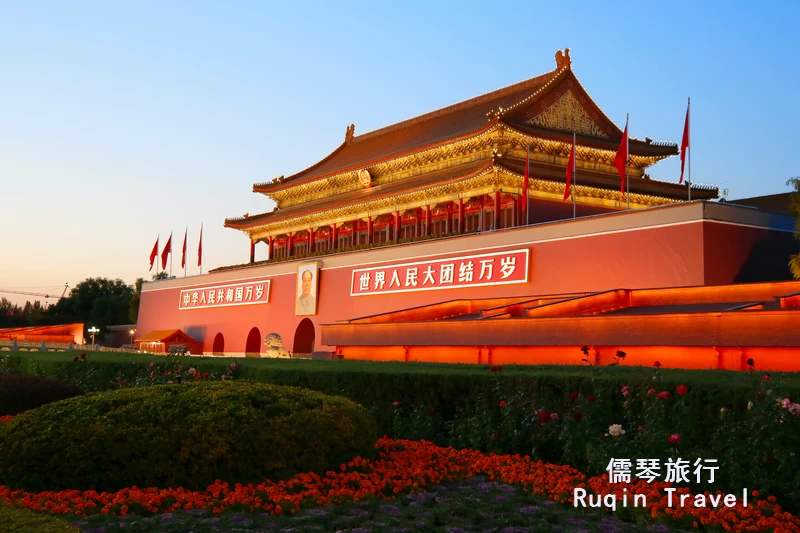
The large portrait of Chairman Mao at the center of the gate becomes even more striking against the dark sky. Many visitors pause here for photos, especially from the open space in the square where the full façade is perfectly visible.
I usually take a slow walk across the square and stop for a few minutes just to take it in. With the lights reflecting across the wide stone plaza, the n
3. The Monument to the People’s Heroes
As I walked deeper into the square one evening, the Monument to the People’s Heroes (人民英雄纪念碑) gradually came into view. Standing in the very center of Tiananmen Square, this tall granite obelisk feels even more imposing at night, when soft lights illuminate its base and the detailed carvings along its sides.
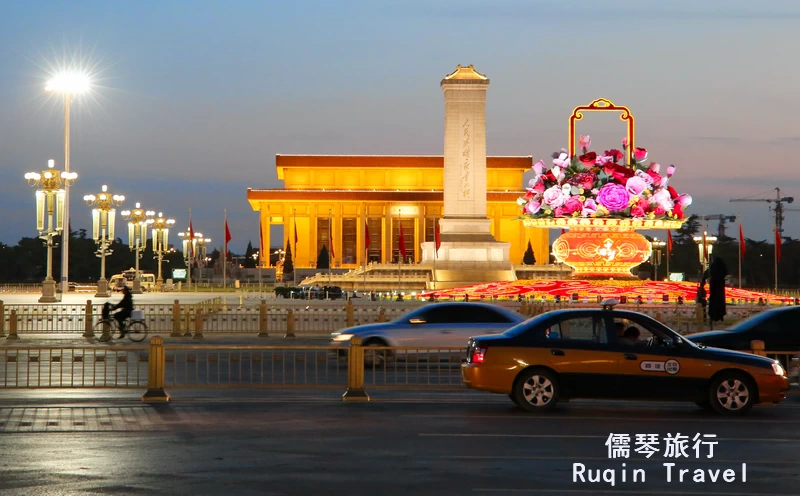
During the day, the monument is surrounded by constant movement. But at night the space around it becomes calmer. Visitors often slow down here, some quietly reading the inscriptions, others simply pausing to take in the atmosphere.
If you’re exploring the night view of Tiananmen Square, this is a natural place to stop for a few minutes. Standing near the monument, with the illuminated buildings of the square surrounding you, you begin to feel the scale and historical weight of this vast public space.
4. The National Museum of China and the Great Hall of the People
As you stand in the center of Tiananmen Square at night, it’s hard not to notice the two massive buildings stretching along the east and west sides of the square. One evening, I slowly walked across the open plaza and realized how impressive they look once the lights come on.
On the east side, the National Museum of China (中国国家博物馆) appears calm and stately under soft lighting. During the day, it’s one of the best places to explore China’s long history, but even at night its illuminated columns and long façade are worth admiring from the square.
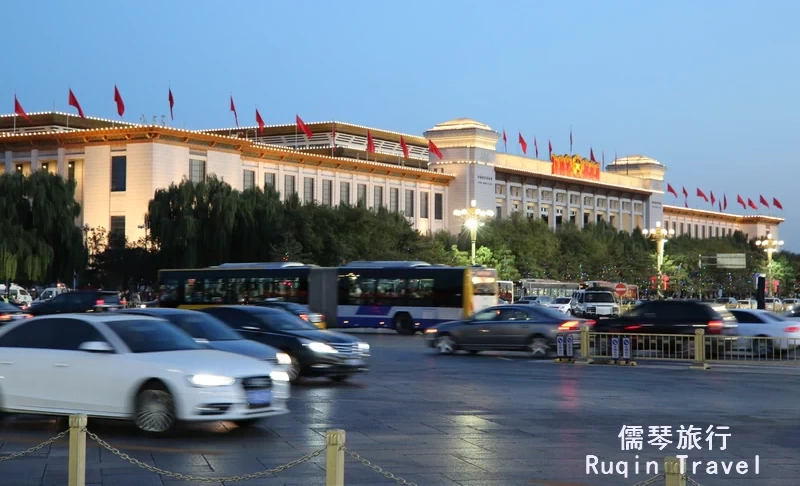
On the west side, the Great Hall of the People (人民大会堂) glows warmly under rows of lights that highlight its grand architecture. This is where major national meetings and ceremonies take place.
Standing between these two monumental buildings, you really feel the scale of the square—and how the night lighting quietly brings the whole space to life.
5. The Chairman Mao Memorial Hall
As you walk toward the southern side of Tiananmen Square at night, you’ll notice the Chairman Mao Memorial Hall (毛主席纪念堂) standing quietly in the open plaza. The first time I passed by it in the evening, the building looked almost serene under the soft golden lighting.
During the day, visitors line up here to enter the mausoleum, where Mao Zedong, the founding leader of the People’s Republic of China, is memorialized. But at night the hall is closed, and the surrounding area becomes noticeably calmer.
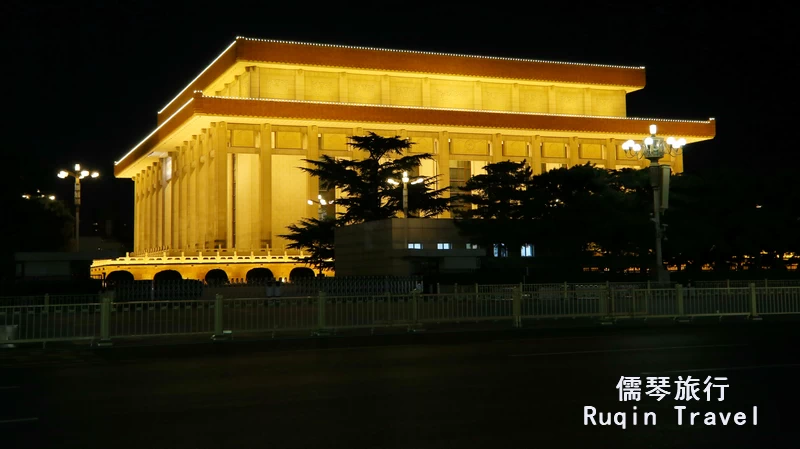
Without the daytime queues, you can step back and take in the building’s symmetrical design and the quiet atmosphere around it. The lighting gives the structure a solemn presence, and many visitors pause here briefly while exploring Tiananmen Square at night, reflecting on the history connected to this landmark.
6. Zhengyangmen Tower and Arrow Tower (Qianmen)
If you continue walking toward the southern end of Tiananmen Square at night, you’ll notice another impressive sight in the distance—the historic gate complex known as Zhengyangmen (正阳门), often simply called Qianmen (前门).
One evening, after leaving the main square, I walked toward these towers and realized how beautifully they stand against the night sky. The Zhengyangmen Tower, with its layered roofs and traditional architecture, is brightly illuminated, revealing details that are easy to miss during the day.
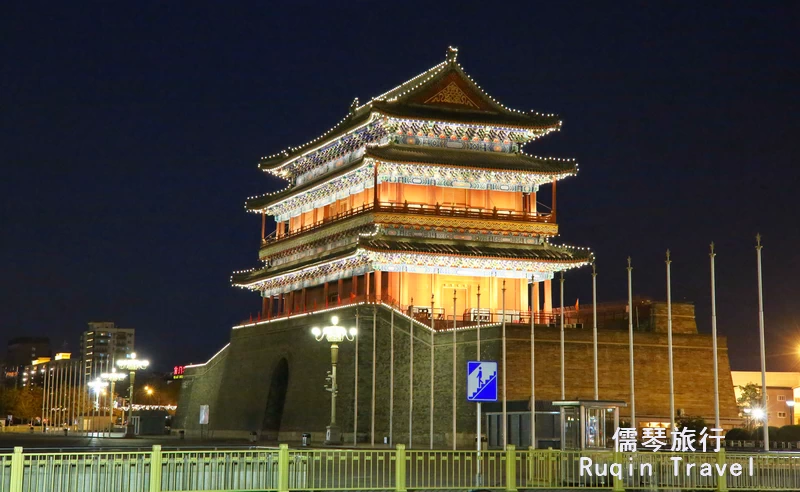
Just in front of it sits the Arrow Tower (箭楼), which once served as a defensive structure guarding the main gate to Beijing’s inner city during the Ming and Qing dynasties.
At night, the lighting gives the entire gate complex a dramatic presence. Walking toward Qianmen after exploring the square feels like stepping from modern Beijing into a piece of the city’s imperial past.
7. China Railway Museum (Former Beijing East Railway Station)
One evening while wandering along the southeast corner of Tiananmen Square, I noticed a historic building that feels quite different from the monumental structures surrounding the square. This is the China Railway Museum (中国铁道博物馆), located in the former Beijing East Railway Station (北京东站旧址).
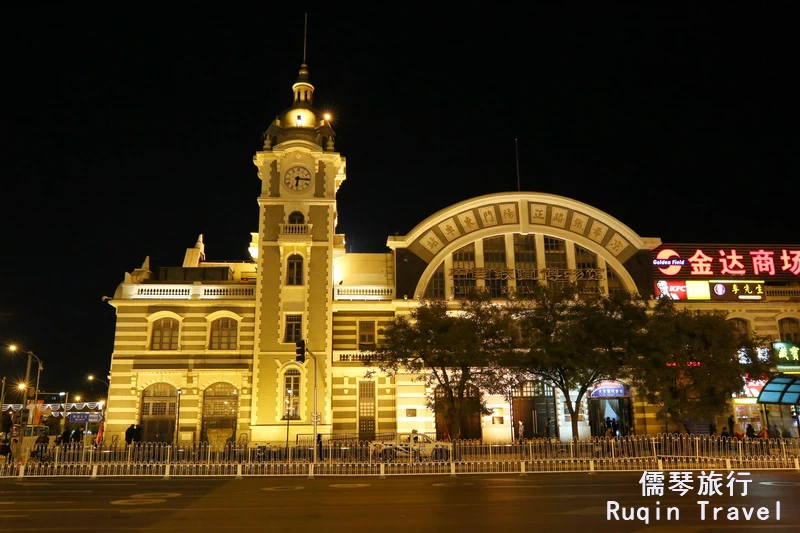
The building dates back to the early 20th century and once served as one of Beijing’s important railway stations. Today it houses exhibits about the development of China’s railway system.
Even if you visit Tiananmen Square at night, when the museum is closed, the building itself is worth a look. The exterior lighting highlights its older architectural style, which contrasts nicely with the vast open square nearby. For me, it’s a quiet reminder of how Beijing has evolved—from early rail travel to the modern capital you see today.
8. Tiananmen Square’s Evening Lights and Atmosphere
What stays with me most about Tiananmen Square at night isn’t just the landmarks—it’s the atmosphere. After the daytime crowds thin out, the square feels surprisingly calm. Soft lights illuminate the wide stone plaza while the surrounding buildings glow quietly in the distance.
I remember walking slowly across the square one evening and noticing how different the space felt. During the day it’s full of movement, tour groups, and constant activity. But at night, people tend to stroll, pause for photos, or simply stand and take in the view.
This slower rhythm is what makes the night view of Tiananmen Square so memorable. With fewer crowds and the city lights reflecting across the open space, you can truly appreciate the scale, symmetry, and quiet grandeur of this historic square.
9. Safety and Practical Tips for Visiting Tiananmen Square at Night
From my experience, Tiananmen Square at night feels very orderly and well-managed. Security staff are visible around the square, and all visitors pass through a security check before entering. When I visited in the evening, the process was smooth, but it’s still a good idea to allow a little extra time, especially during busy travel seasons.
Try to carry only what you need. Bags will be checked, and traveling light makes the process easier.
The easiest way to reach the square is by subway. Line 1 stops at Tiananmen East and Tiananmen West, both just a short walk from the entrances. After your visit, the metro is usually still running, and taxis are easy to find around the nearby Qianmen and Wangfujing areas.
10. Nearby Places to Explore After Dark
After spending time in Tiananmen Square at night, I often like to continue walking a little farther. The area around the square stays lively in the evening, and a short stroll can reveal a different side of central Beijing.
If you walk north, you’ll reach the outer walls of the Forbidden City (故宫). Although the palace itself closes before evening, the illuminated red walls and watchtowers along the moat create a beautiful nighttime scene.
Heading south, the Qianmen (前门) area is another great option. The pedestrian street and nearby Dashilar lanes are full of traditional shops, snacks, and old Beijing storefronts.
You can also take a short evening walk along Chang’an Avenue (长安街). With government buildings on one side and modern city lights on the other, it offers a fascinating contrast between historic and contemporary Beijing.
Experiencing Tiananmen Square at night reveals a very different side of this famous landmark. After the daytime crowds fade, the illuminated buildings, wide open space, and slower rhythm create a calm and memorable atmosphere.
Whether you come for photography, a quiet evening walk, or simply to see the night view of Tiananmen Square, the experience feels surprisingly reflective. Standing there under the evening lights, surrounded by some of Beijing’s most important landmarks, you begin to sense both the history and the scale of the city in a way that’s hard to feel during the day.
About the Author
Ruqin is the founder of Ruqintravel.com and has spent more than four decades working in China’s travel industry. Drawing on hands-on experience in cities like Beijing and Hangzhou, he personally researches and updates each guide to help international travelers navigate China with confidence.
Further Reading
How to Visit Tiananmen Square: Maps, Tickets & Security Checks
Chairman Mao Memorial Hall: Booking, Hours & Visitor Guide
How to Visit the Forbidden City: Tickets, Hours, Maps & Travel Tips
How to Visit the National Museum of China: Tickets & Tours Guide
Qianmen Street Beijing: Map, Food, Shopping & Hotels
Beijing’s Former Legation Quarter (All You Need to Know)
Dashilan Street: Map, Food, Shopping & Hotels
Sanlihe Park Beijing: Map, Highlights and Travel Tips
Caochang Hutongs in Beijing: Maps, Routes, Top Sights & Tips