
Written and updated by Ruqin
Last updated: May 16, 2026
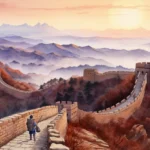
The first time I stood on the Great Wall, I remember going quiet for a moment. Not because of the crowds or the famous history — but because the wall kept disappearing into the mountains like it had no end. Photos never prepare you for that feeling.
Most travelers arrive expecting “an old wall.” Then they step onto the stones and suddenly understand why the Great Wall became one of the most recognized landmarks on earth.
So what is the Great Wall famous for?
Yes, it is famous for its enormous size and military history. But honestly, that’s only part of the story. The Great Wall is also famous because it represents endurance, unity, ambition, sacrifice, and the scale of ancient China in a way few places in the world can.
If you’re planning your first China trip, here’s what makes the Great Wall so unforgettable — and why it still leaves such a strong impression on travelers today.
The Great Wall Is Famous for Its Incredible Length
One of the first things people learn about the Great Wall is its massive scale.
The entire wall system stretches more than 21,000 kilometers across northern China. That includes walls, mountain fortresses, watchtowers, trenches, and defensive barriers built by different dynasties over many centuries.
What surprises many visitors is that the wall is not one continuous structure. Instead, it’s a network of connected military defenses spread across deserts, grasslands, cliffs, and mountain ridges.
And once you actually visit, the scale feels even more impressive.
At sections near Beijing like Mutianyu or Jinshanling, the wall twists sharply along steep mountain peaks. Some stairways are so steep they feel closer to hiking trails than historic walkways.
That physical effort is part of what makes the experience memorable. You don’t just “see” the Great Wall. You feel the geography that shaped China’s defenses for centuries.
It’s Famous as One of History’s Greatest Engineering Achievements
The Great Wall was built long before modern machinery existed. That’s what makes it astonishing.
Workers carried stone, brick, wood, and earth across rugged mountains using basic tools and manpower. In some remote sections, construction materials were sourced directly from the surrounding landscape.
Different dynasties expanded and rebuilt the wall over time, especially during the Ming Dynasty, when many of the best-preserved sections near Beijing were constructed.
As you walk along the wall today, you’ll notice:
- Massive stone staircases
- Watchtowers placed at strategic viewpoints
- Beacon towers used for military signals
- Fortified gates controlling trade and movement
The engineering was practical, not decorative. Every tower and curve had a defensive purpose.
And honestly, that practicality is part of its beauty.
The Great Wall Is Famous for Defending Ancient China
Historically, the wall was built to protect Chinese states and empires from invasions by northern nomadic groups.
For centuries, rulers used the wall system to slow raids, monitor movement, and strengthen border control. Soldiers guarded watchtowers while smoke and fire signals carried warnings across long distances.
Many travelers imagine the Great Wall as an impenetrable barrier. In reality, it worked more as a military defense network than a single giant shield.
Still, its strategic importance shaped Chinese history for generations.
When you visit some of the quieter sections like Jinshanling, you can still see how carefully the wall follows mountain ridges. The positioning gave defenders visibility across huge distances.
And suddenly the wall makes historical sense in a very physical way.
It Became a Powerful Symbol of Chinese Unity
Over time, the Great Wall became more than a military structure.
Today, it symbolizes the endurance and unity of China itself.
That symbolism matters deeply in Chinese culture. You’ll often hear Chinese people describe the wall as a representation of determination and national strength.
There’s also a famous Chinese saying:
“He who has never been to the Great Wall is not a true hero.”
You’ll see this phrase displayed at some sections near Beijing, especially Badaling.
For many domestic travelers, visiting the Great Wall is emotional as well as historical. It’s tied to national identity in a way many foreign visitors don’t initially realize.
The Great Wall Is One of the World’s Most Famous Landmarks
Even people who know very little about China usually recognize the Great Wall immediately.
That global recognition comes from several things:
- Its dramatic appearance across mountain landscapes
- Its extraordinary history
- Its sheer scale
- Its reputation as one of the world’s great wonders
The Great Wall has also appeared in films, books, documentaries, paintings, and school textbooks around the world.
And unlike some famous landmarks that feel smaller in real life, the Great Wall genuinely exceeds expectations for many travelers.
That’s rare.
It’s Famous for the Views
This is something many travel articles underestimate.
The scenery around the Great Wall is spectacular.
In autumn, the mountains around Beijing turn red, gold, and orange. In spring, the hills become green and soft again after winter. Even cloudy days can create dramatic layers of mist rolling across the ridges.
Some sections feel polished and accessible, while others feel wild and remote.
Here’s the quick difference between the major Beijing sections:
Mutianyu
Best for first-time visitors who want beautiful scenery with easier access and fewer crowds than Badaling.
Badaling
The most famous and most restored section. Convenient but often crowded.
Jinshanling
Ideal for hikers and photographers. More rugged and atmospheric.
Simatai
Known for steep climbs and beautiful night views.
Personally, I often recommend Mutianyu for first-time visitors because it balances scenery, restoration, and comfort very well.
The Great Wall Is a UNESCO World Heritage Site
The Great Wall was designated a UNESCO World Heritage Site in 1987.
That recognition helped increase global awareness while also encouraging preservation efforts.
And preservation matters here.
Some remote parts of the wall have naturally deteriorated over time due to weather, erosion, and human activity. Meanwhile, heavily visited sections near Beijing are carefully restored for tourism and conservation.
When travelers ask me whether restored sections are “less authentic,” I usually say this:
You don’t visit the Great Wall only to see ancient bricks. You visit to understand the scale, geography, and human effort behind it.
Even restored sections still communicate that power very clearly.
The Great Wall Is Surrounded by Myths
One of the most famous myths is that the Great Wall can be seen from space with the naked eye.
Most astronauts have explained that this is generally not true without special viewing conditions or equipment.
But the myth itself shows how legendary the wall has become globally.
There are also countless historical stories and legends connected to the wall, including tales of soldiers, laborers, and families separated during construction.
These stories helped transform the wall from a military structure into a cultural symbol woven into Chinese history and folklore.
Why the Great Wall Still Matters Today
The Great Wall is famous because it combines history, landscape, engineering, and symbolism in one place.
But more importantly, it still creates a strong emotional reaction in people.
I’ve watched travelers arrive tired from Beijing traffic, unsure whether visiting would be “worth it.” Then they climb a few towers, look across the mountains, and suddenly stop talking for a minute.
That reaction happens all the time.
The Great Wall reminds people how ambitious human beings can be — and how history can still feel physically real centuries later.
And honestly, that’s why it continues to inspire millions of visitors from around the world every year.
About the Author
Ruqin is the founder of Ruqintravel.com and has spent more than four decades working in China’s travel industry. Drawing on hands-on experience in cities like Beijing and Hangzhou, he personally researches and updates each guide to help international travelers navigate China with confidence.
Further Reading
What to Pack for the Great Wall: Seasonal Checklist (First-Timers)
How to Get to Mutianyu Great Wall from Beijing: Bus, Shuttle & Private Car
How to Get to Badaling Great Wall from Beijing: Train, Bus 877 & Shuttle
How to Visit Gubeikou Great Wall from Beijing: Hikes, Map & Transport
How to Get to Jinshanling Great Wall from Beijing: Bus, Train & Car
How to Get to Simatai Great Wall from Beijing: Direct Bus, S5 Train & Car
How to Visit Juyongguan Great Wall from Beijing: Bus, Tickets & Hike