
Written and updated by Ruqin
Last updated: May 22, 2026
For many international travelers, visiting a Chinese bathhouse is one of the most unexpected cultural experiences in China. It’s relaxing, affordable, deeply local—and sometimes a little intimidating if you’ve never been before.
Many first-time visitors have the same questions before going. Do people go alone or in groups? Do you need to be naked? Is the body scrub worth trying? How do you know if a bathhouse is family-friendly? And what time should you go if you want to avoid crowds?
If you’re wondering the same thing, this guide will walk you through everything you need to know before your first visit.
1. What Is a Chinese bathhouse?
A Chinese bathhouse is usually called 澡堂 (zǎotáng) or 洗浴中心 (xǐyù zhōngxīn). The older neighborhood bathhouses tend to be simple bathing spaces, while modern bathhouse complexes can feel more like a spa and leisure center combined.
After check-in, staff will direct you to the locker room, where you change clothes and store your belongings before entering the bathing area.
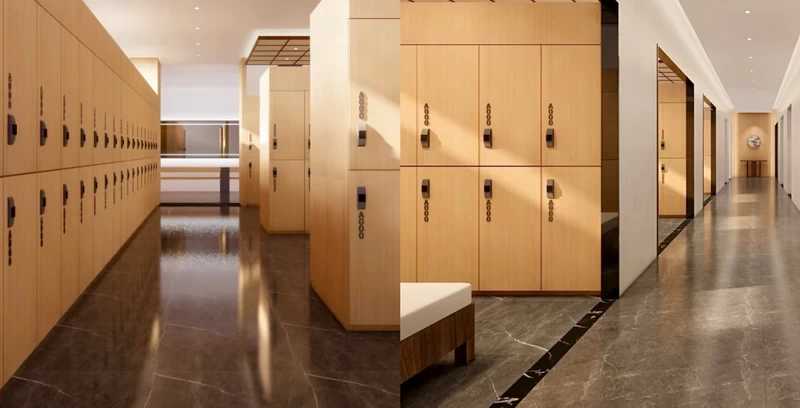
The locker room (the changing room)
In many cities—especially in northern China—bathhouses are part of everyday life. People go there not only to wash, but also to soak in hot pools, sit in steam rooms, get body scrubs, eat snacks, nap, watch TV, or spend time with family and friends.
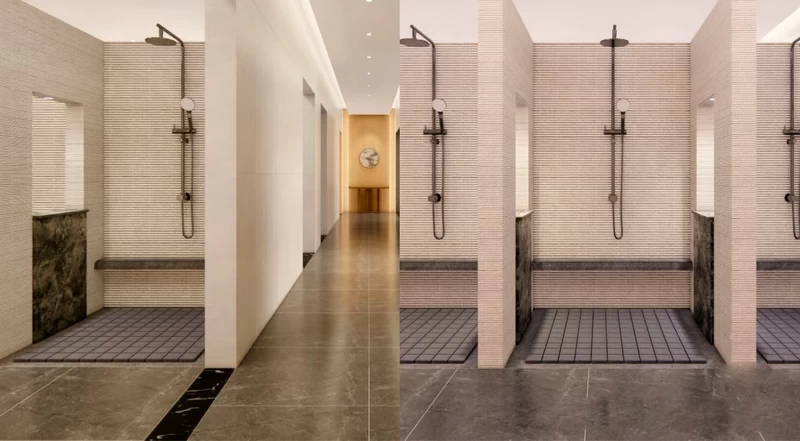
The shower area
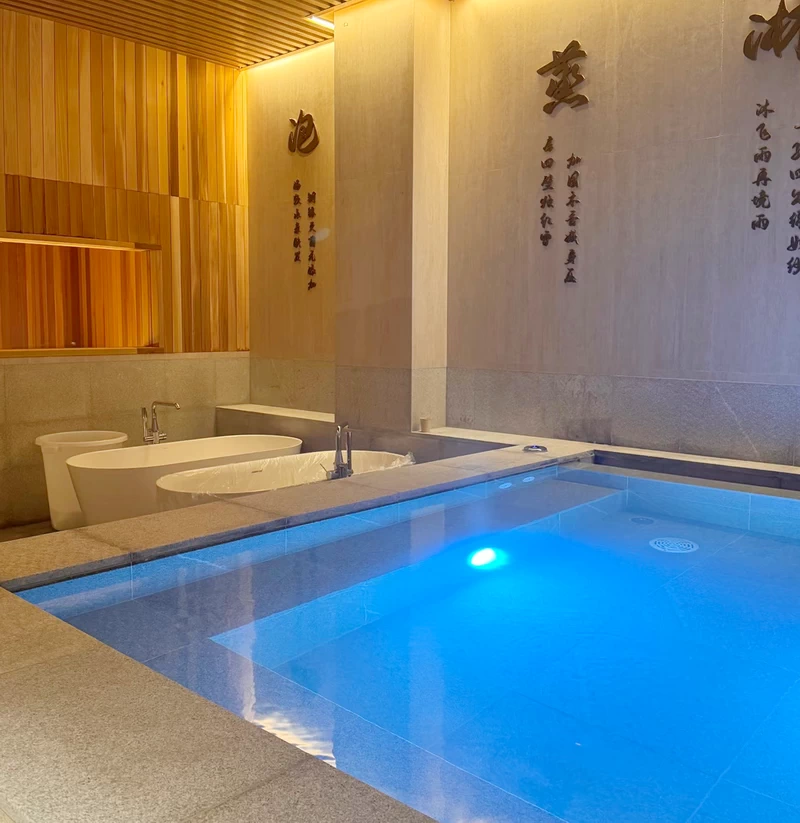
Larger bathhouse complexes often include hot and cold pools, sauna rooms, massage services, lounges with reclining chairs, restaurants, fruit buffets, children’s play areas, and sometimes overnight sleeping rooms. Some are open 24 hours.
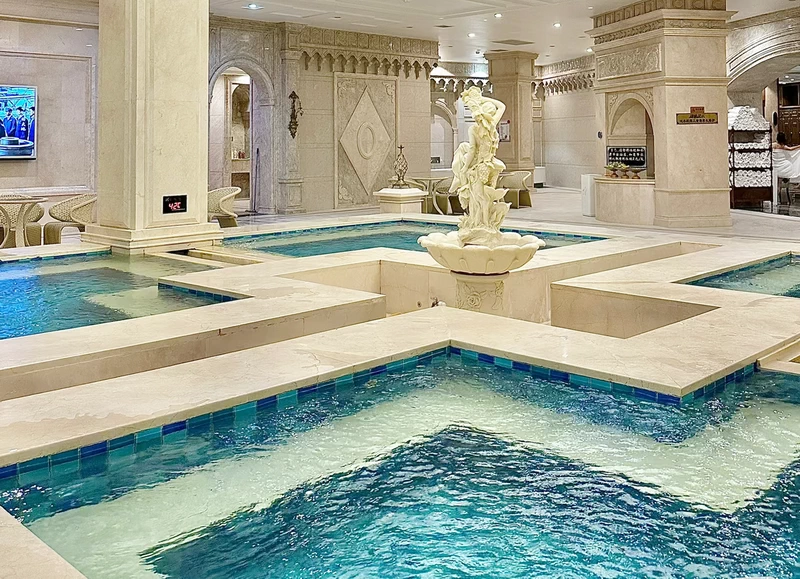
The hot and cold pools
Prices vary depending on the city and size of the venue. A neighborhood bathhouse may charge around ¥25–40 for entry, while larger spa-style bathhouses in major cities often range from ¥80–180, sometimes including towels, bathrobes, pajamas, and access to rest areas.
2. Do People Go Alone or With Friends?
Both are completely normal.
Many Chinese people visit bathhouses with friends, relatives, parents, or children and stay for several hours. It can be a social outing, especially on weekends or in winter.
At the same time, going alone is very common. Many solo visitors stop by after work, after the gym, or simply for a quiet soak. If you’re traveling alone in China, you won’t feel out of place going by yourself.
If you prefer privacy and relaxation, going solo can actually be very enjoyable.
3. Do You Need to Be Naked?
This is usually the biggest concern for first-time visitors.
In most traditional Chinese bathhouses, the answer is yes—in the wet bathing area, nudity is standard.
The bathing area is usually separated by gender. This is where you’ll shower, soak in hot pools, use the steam room, and receive a body scrub. Most people do not wear swimsuits there.
For many foreign travelers this feels unfamiliar before entering, but once inside it tends to feel very normal. People generally pay little attention to each other. Everyone is focused on bathing, relaxing, or chatting with companions.
If you feel uncomfortable, some bathhouses are more flexible than others, but swimsuits in the main bathing pools are uncommon and may feel out of place.
4. What Do You Wear in the Bathhouse?
This depends on which part of the bathhouse you’re in.
In the gender-separated wet bathing area, most guests are nude.
After bathing, you’ll usually dry off and change into bathhouse clothing provided by the venue. This is often a loose cotton or linen-style pajama set, shorts and top, or a bathrobe.
You then wear this in the shared common areas, such as the relaxation lounge, restaurant, fruit buffet, tea area, or TV room.
Some newer spa complexes also have mixed-use pool areas where swimwear may be required, but this varies by venue. If unsure, simply ask staff or follow what others are doing.
5. Is the Body Scrub Worth Trying?
For many visitors, yes—it’s one of the highlights of the experience.
The Chinese body scrub is called 搓背 (cuō bèi). It usually takes place after you’ve soaked in the hot pools for a while. The heat softens the skin first, which makes the exfoliation more effective.
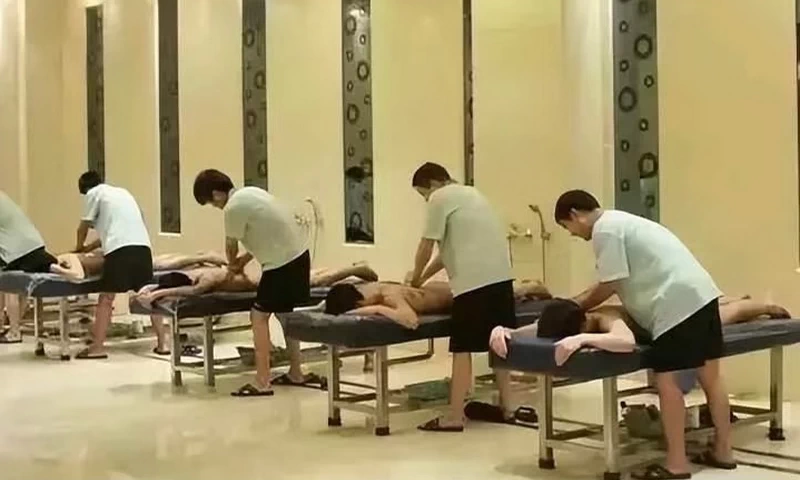
Body Scrub
The attendant uses a rough scrubbing mitt or towel to exfoliate the skin across your back, arms, legs, and shoulders. Depending on the bathhouse, the service may also include a rinse or light massage.
It is normally done without clothing in the bathing area.
If you’ve never tried it before, it can feel slightly awkward at first, but many travelers say it becomes their favorite part of visiting a Chinese bathhouse. Your skin feels noticeably smoother afterward.
If the pressure feels too strong, you can say:
轻一点 (qīng yī diǎn) — “softer, please.”
6. How to Choose a Family-Friendly Bathhouse
If you’re traveling with children or family, choose a larger 洗浴中心 (bahhouse ) rather than a very small neighborhood bathhouse.
The bigger complexes are generally family-friendly and designed for long visits across all age groups. You’ll often see grandparents, parents, children, and groups of friends all spending time there together.
When checking online, look for photos showing large lounge areas, buffet dining, indoor play spaces, reclining chairs, or entertainment rooms. These are usually signs that the bathhouse is designed for families rather than only quick bathing.
Apps like Dianping can also be useful when searching locally. Looking up 洗浴中心 plus the city name often gives plenty of options with photos and recent reviews.
7. When Is the Best Time to Go?
Bathhouses usually don’t feel overwhelmingly crowded, but timing still makes a difference.
Weekday mornings and early afternoons are usually the quietest and most relaxing times to visit. This is especially good if you want a slower experience or plan to try the body scrub without waiting.
Friday evenings, Saturday evenings, and public holidays tend to be busier, especially in winter or in northern cities where bathhouse culture is strongest.
That said, even during busy periods, larger bathhouse complexes usually have enough space to remain comfortable.
If it’s your first visit, weekday daytime is probably the easiest time to go.
8. What Happens Step by Step?
If you’ve never visited a Chinese bathhouse before, the process is usually very straightforward.
First, you check in at reception and pay the entrance fee or receive a wristband linked to your spending inside.
Next, you remove your shoes, change into slippers if provided, and head to the locker room. Your locker key is often attached to a wristband.
Then you undress, store your belongings, and enter the shower area. Most bathhouses expect guests to shower thoroughly before using the pools.
After that, you can move between the hot pool, cold plunge, sauna, or steam room however you like. Some people rotate between hot and cold several times.
If you book a body scrub, you’ll usually do it after soaking.
Once finished in the wet area, you dry off, put on the bathhouse pajamas or robe provided, and move into the common lounge area where you can rest, eat, drink tea, or simply relax before leaving.
Many visitors stay for several hours.
9. Final Tips Before You Go
A few small details can make your first visit much easier.
Bring some cash just in case, although larger bathhouses in cities usually accept mobile payment and major payment methods.
Shower before entering the pools.
Don’t bring your phone into the wet area unless you’re sure it’s allowed. Many bathhouses discourage or prohibit phone use there for privacy reasons.
Drink water after hot pools or sauna sessions, especially in winter.
And most importantly, give yourself time. A Chinese bathhouse isn’t meant to be rushed. People often stay for several hours and treat it as part bathing, part wellness, part social outing.
10. Is It Worth Trying?
If you’re curious about everyday life in China beyond tourist sights, I’d say yes.
A Chinese bathhouse offers a side of China many visitors don’t experience—ordinary, social, relaxing, and deeply local at the same time.
It may feel unfamiliar at first, especially if you’ve never visited a bathhouse culture before. But once you understand the flow, it becomes surprisingly easy.
For many travelers, it ends up being one of the most memorable experiences of the trip.
About the Author
Ruqin is the founder of Ruqintravel.com, where he shares firsthand travel advice and cultural insights drawn from years of living and working in China. He personally researches and updates every guide to help international travelers explore China with confidence, curiosity, and deeper understanding.
Further Reading
How to Access the Internet in China: VPNs, SIMs, Wi-Fi & Firewall
Essential Mandarin Phrases for Travelers in China
How to Use Alipay or WeChat Pay in China: A Travel Guide
Chinese Laws and Regulations: A Foreigner’s Guide
How to Spot Fake Chinese Money: Simple Tips for Tourists
Food and Dining in China – A Foreigner’s Guide – Ruqin China Travel
Plugs, Sockets, Adaptors & Voltage in China
Currency and Money Exchange in China – A Foreigner’s Guide – Ruqin China Travel
China Customs Regulations – A Foreigner’s Guide – Ruqin China Travel