Written and updated by Ruqin
Last updated: October 24, 2026
For international travelers, understanding Beijing’s air quality is just as important as checking the weather. You may see terms such as PM2.5, AQI, smog and haze on weather apps, but what do these numbers and warnings actually mean?
In this guide, I’ll explain when Beijing is more likely to experience smog, how to understand PM2.5 readings and air quality levels, and what you can do to reduce your exposure while sightseeing.
I’ll also share my own experience of measuring indoor and outdoor PM2.5 levels at my Beijing apartment on October 24, 2026. The difference was striking and reminded me why checking air quality matters.
1. A Smoggy Morning in Beijing: My Personal Experience
Last night, October 23, 2026, I checked the weather forecast on my phone. The app warned of smogy conditions overnight and into the following day.
Before going to bed, I closed all the windows in my apartment and switched on my fresh-air ventilation system.
At 5:30 a.m. this morning, October 24, I got up and looked outside.
The buildings and streets were covered in a grey haze. Visibility was noticeably lower than usual.
I suspected that air pollution was affecting the city, but I wanted to check.
I opened one window and placed my portable air quality monitor beside it. Within a short time, the PM2.5 reading reached 120 µg/m³. The monitor displayed a red warning.
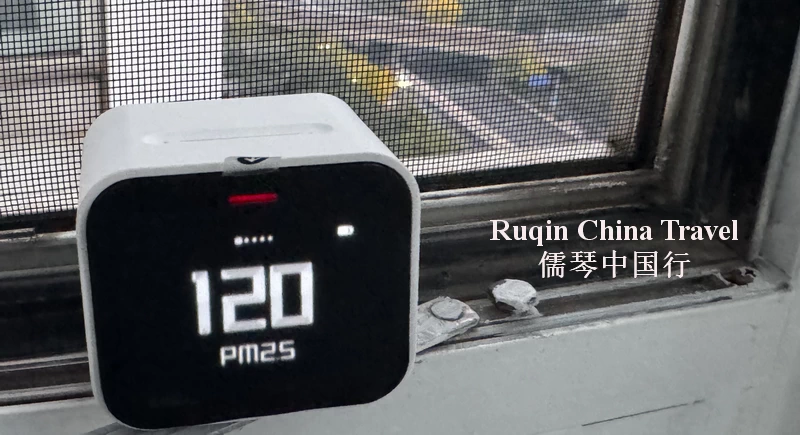
Photo 1: My air quality monitor showing PM2.5 at 120 µg/m³
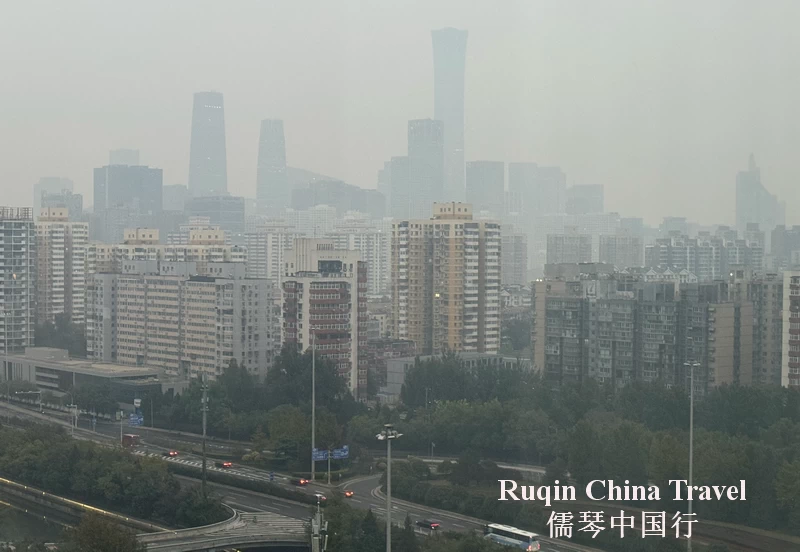
Photo 2: A hazy Beijing cityscape photographed from my apartment on October 24, 2026
I then closed the window and checked the air inside my apartment.
The PM2.5 reading was just 16 µg/m³, much lower than the reading beside the open window.
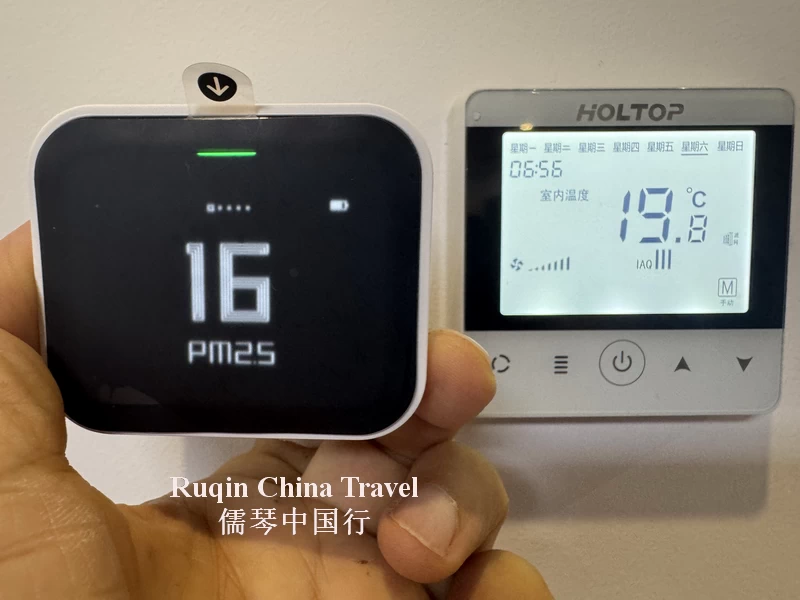
Photo 3: My indoor air quality monitor showing PM2.5 at 16 µg/m³
My fresh-air system appeared to be helping keep indoor particle levels down.
Of course, these were readings from a household monitor, not an official citywide monitoring station. The outdoor measurement was also taken beside an open window rather than at a standard outdoor monitoring site.
Still, the difference was striking.
It reminded me why I always pay attention to air quality during Beijing’s colder months.
For international travelers, understanding these conditions can make a real difference to a sightseeing day.
2. Understanding Beijing’s AQI, PM2.5 and Air Pollution Levels
Before exploring Beijing, it’s useful to understand the air quality numbers shown on Chinese weather apps and official monitoring websites.
Two important measurements are AQI and PM2.5. They are closely related, but they are not the same.
What Is AQI?
AQI stands for Air Quality Index. It summarizes overall air pollution conditions using six major pollutants, including PM2.5, PM10, ozone, nitrogen dioxide, sulfur dioxide and carbon monoxide.
China’s official AQI is determined by the pollutant with the highest individual air quality index.
During Beijing’s winter smog episodes, PM2.5 is often the main pollutant. In that case, the overall AQI is determined by PM2.5.
However, at other times, PM10 or ozone may be the main pollutant instead.
What Is PM2.5?
PM2.5 refers to fine airborne particles measuring 2.5 micrometres or less in diameter.
Their concentration is measured in micrograms per cubic metre (µg/m³).
Unlike AQI, which is an index without units, PM2.5 concentration tells you how much fine particulate matter is present in the air.
For example, an AQI of 118 and a PM2.5 concentration of 118 µg/m³ are two different measurements.
Which Number Should Travelers Check?
I recommend checking both.
AQI gives you a quick overview of Beijing’s air quality, while PM2.5 concentration helps you understand your exposure to fine particles.
Also, check which pollutant is listed as the primary pollutant (首要污染物).
During winter smog, this is often PM2.5. During spring dust events, PM10 may become more important.
For international travelers, understanding these differences makes it easier to interpret Beijing’s air quality reports and decide whether to adjust outdoor sightseeing plans.
PM2.5 vs. PM10: What’s the Difference?
When checking Beijing’s air quality, you may see both PM2.5 and PM10 readings.
PM2.5 refers to fine particles measuring 2.5 micrometres or less in diameter. These tiny particles can travel deep into the lungs and are a major concern during Beijing’s winter smog episodes.
PM10 includes larger inhalable particles measuring up to 10 micrometres, including PM2.5. Dust from roads, construction sites and spring sandstorms can cause PM10 levels to rise.
Both can affect your health, but PM2.5 deserves particular attention because its smaller particles can penetrate deeper into the respiratory system.
Ruqin’s Practical Tip: During Beijing’s winter smog season, pay close attention to PM2.5 readings. During spring sandstorms, check both PM10 and PM2.5. If either is elevated, reduce outdoor activities and follow local air quality warnings.
China uses its own AQI reporting system. Its categories are not identical to those used in every other country.
Here is a simplified guide to China’s AQI categories.
| China AQI | Air quality category |
|---|---|
| 0–50 | Excellent |
| 51–100 | Good |
| 101–150 | Lightly polluted |
| 151–200 | Moderately polluted |
| 201–300 | Heavily polluted |
| Above 300 | Severely polluted |
These are AQI values, not direct PM2.5 concentrations.
For example, my monitor’s reading of 120 µg/m³ was a PM2.5 concentration. It was not an AQI of 120.
The two numbers should not be confused.
Also, an indoor PM2.5 reading of 16 µg/m³ is much better than 120 µg/m³, but it does not necessarily mean the air meets every health-based guideline.
For practical travel planning, I suggest checking both the official AQI and the PM2.5 concentration.
Useful sources include:
- Beijing’s official environmental monitoring information.
- China’s national air quality monitoring platform.
- Weather and air quality apps that identify their data sources.
If you’re using an international app, check which AQI standard it follows before comparing its numbers with those from a Chinese app.
PM2.5 Levels: What’s Healthy and What’s Harmful?
When checking Beijing’s air quality, you may see a PM2.5 reading on your phone or a portable air monitor.
But what does that number actually mean?
PM2.5 is measured in micrograms per cubic metre (µg/m³). The higher the concentration, the more fine particles are present in the air.
For international travelers, the US Environmental Protection Agency (EPA) provides a useful six-level classification for PM2.5 pollution.
The following table uses the EPA’s updated PM2.5 breakpoints introduced in 2024.
| PM2.5 (µg/m³) | US EPA Category | Health Guidance |
|---|---|---|
| 0–9.0 | Good | Air quality is generally satisfactory. |
| 9.1–35.4 | Moderate | Acceptable for most people, although unusually sensitive individuals may be affected. |
| 35.5–55.4 | Unhealthy for Sensitive Groups | Children, older adults and people with heart or lung conditions should reduce prolonged outdoor exertion. |
| 55.5–125.4 | Unhealthy | Everyone may experience health effects. Reduce prolonged outdoor activities. |
| 125.5–225.4 | Very Unhealthy | Health warnings apply to everyone. Avoid prolonged outdoor exertion. |
| 225.5 and above | Hazardous | Serious health warning. Avoid outdoor physical activities and remain in cleaner indoor air when possible. |
Important: These categories are based on the EPA’s 24-hour PM2.5 concentration breakpoints. A momentary reading from a portable monitor cannot be treated as a formal 24-hour air quality classification.
What Does the World Health Organization Recommend?
The World Health Organization (WHO) uses a more health-protective guideline.
Its recommended PM2.5 levels are:
- 24-hour average: 15 µg/m³
- Annual average: 5 µg/m³
The WHO also provides interim targets for cities working toward cleaner air.
These are not separate categories of safe and dangerous air. They are benchmarks designed to help reduce health risks over time.
My PM2.5 Readings in Beijing on October 24
Let me return to my own experience this morning.
When I opened a window, my air monitor quickly showed a PM2.5 concentration of 120 µg/m³.
That concentration falls within the US EPA’s Unhealthy range for 24-hour PM2.5 levels.
However, my reading was only a short measurement. It does not establish that Beijing’s 24-hour average was in that category.
I then checked the air inside my apartment. The reading was 16 µg/m³.
That was a considerable improvement, although it was still slightly above the WHO’s 24-hour guideline of 15 µg/m³.
Again, a short indoor measurement cannot be directly compared with a full-day average.
The difference between the two readings nevertheless showed why I prefer to keep my windows closed and use filtered ventilation when outdoor particle levels are high.
Ruqin’s Practical Tip: If you’re visiting Beijing during haze season, check both the official AQI and the PM2.5 concentration. Don’t confuse the two numbers. When pollution is elevated, shorten outdoor sightseeing, avoid strenuous exercise and consider moving indoor attractions to the top of your itinerary.
3. How to Check Beijing’s Air Quality Before Sightseeing
Before heading out to explore Beijing, I recommend checking the air quality on your phone, especially during the colder months from late October to March.
It takes only a minute or two, but it can help you decide whether to visit the Great Wall, explore Beijing’s hutongs, or spend more time indoors.
1) Check Official Air Quality Information
For reliable information, visit the Beijing Municipal Ecological and Environmental Monitoring Center (北京市生态环境监测中心).
The website provides air quality readings from monitoring stations across Beijing, including AQI, PM2.5 and PM10 levels.
You can also check the China National Environmental Monitoring Centre for air quality information across China.
Both websites are mainly in Chinese. Your browser’s translation function may help.
2) Use Your Phone’s Weather App
Many weather apps display Beijing’s current air quality and pollution forecasts.
Pay attention to two numbers:
- AQI (Air Quality Index): A general measure of air pollution conditions. China and the United States use different AQI standards, so their readings may differ.
- PM2.5 (µg/m³): The concentration of fine particles in the air. Higher levels generally mean greater health risks.
Remember that AQI and PM2.5 concentration are not the same measurement.
Also, check whether the readings are current estimates, hourly averages or daily averages.
3) Look at the Hourly Air Quality Forecast
Beijing’s air quality can change considerably during the day.
A smoggy morning may be followed by clearer skies if stronger winds help disperse pollutants.
However, pollution can also remain high throughout the day.
Check the hourly forecast before leaving your hotel. Don’t assume that midday always has better air quality.
If an official heavy-pollution warning is issued, follow local health advice and consider changing your outdoor plans.
4) Check Conditions at the Great Wall
Air quality can vary across Beijing.
Conditions in central Beijing may differ from those at Mutianyu Great Wall (慕田峪长城) or Badaling Great Wall (八达岭长城).
Before setting out, check the nearest available monitoring station and local forecast.
If pollution is heavy, consider postponing your Great Wall visit. Poor visibility can also affect the mountain views and your photographs.
5) Adjust Your Sightseeing Plans
When air quality is good, enjoy your planned outdoor activities.
When pollution is elevated, shorten outdoor walks and avoid strenuous exercise. A properly fitted N95 or KN95 respirator can help reduce exposure to fine particles.
During heavy pollution, consider visiting indoor attractions such as the National Museum of China (中国国家博物馆) or Capital Museum (首都博物馆), subject to opening hours and reservations.
Ruqin’s Practical Tip
I suggest checking Beijing’s air quality twice a day: once before breakfast and again before afternoon sightseeing.
Keep your itinerary flexible. If pollution is high today but expected to improve tomorrow, visit a museum first and save the Great Wall for a clearer day.
A quick air quality check can help you enjoy Beijing more comfortably and safely.
4. When Is Beijing’s Smog Season?
Beijing’s smog season generally runs from late October to March, with December and January traditionally among the months most likely to experience winter pollution episodes.
However, this does not mean Beijing is covered in smog throughout the winter.
Many winter days are sunny and clear, especially after strong northerly winds have swept through the city.
Here is a general seasonal guide.
Late October to November: Haze Becomes More Likely
As temperatures fall, Beijing begins moving into its colder season.
The official winter heating period usually starts around mid-November. Energy demand increases, and weather conditions sometimes make it harder for pollutants to disperse.
On calm days, haze can build up over the city.
However, autumn also brings clear skies and pleasant sightseeing conditions. Don’t assume that every November day will be polluted.
December to January: Traditionally the Highest-Risk Period
December and January have historically been important months for winter smog in Beijing.
Cold temperatures, weak winds and temperature inversions can allow fine particles to accumulate near the ground.
During a temperature inversion, a layer of warmer air sits above colder air near the surface. This limits vertical air movement and makes pollution harder to disperse.
Some pollution episodes may last for several days.
Fortunately, Beijing’s air quality has improved substantially following years of emissions controls and cleaner energy policies.
Severe smog is much less common than it was a decade ago.
February to March: Conditions Begin to Change
Haze can still occur in February and early March, particularly during calm weather.
As temperatures rise and the winter heating season comes to an end, conditions generally become more favorable for pollutant dispersion.
However, spring brings another air quality concern: dust and sandstorms.
These are different from ordinary urban haze. Dust events often involve larger particles, including PM10, transported by strong winds from dry regions.
For more information, read my separate guide: Beijing Sandstorm Season: When It Happens & Travel Tips.
What About Summer?
Summer generally has fewer of the winter-style haze episodes associated with stagnant, cold weather.
Rainfall can help remove airborne particles, while stronger atmospheric mixing often improves dispersion.
However, summer is not automatically pollution-free. Hot, sunny conditions can sometimes produce elevated ground-level ozone.
The main lesson is simple: check the air quality on the day of your visit, regardless of the season.
5. What Causes Air Pollution in Beijing?
Beijing’s smog is usually caused by a combination of air pollution and unfavorable weather conditions.
There is rarely just one cause.
Vehicle emissions: Traffic contributes nitrogen oxides and other pollutants that can help form fine particles in the atmosphere.
Industrial and regional pollution: Emissions from industrial activities, energy production and surrounding regions can affect Beijing’s air quality.
Winter heating: Heating-related energy demand has historically contributed to winter pollution. Cleaner heating systems have reduced this problem, but regional emissions remain relevant.
Calm weather and temperature inversions: When winds are weak and the atmosphere is stable, pollutants can remain trapped near the ground.
Humidity: Moisture can cause some airborne particles to absorb water and grow, making the atmosphere appear hazier.
Beijing’s geography also plays a role. Mountains lie to the north and west, and certain wind conditions can make pollution dispersion more difficult.
Strong northerly winds, on the other hand, often bring clearer air.
One important point: not every grey or misty morning is caused by pollution.
Fog, humidity, haze and smog can look similar. The best way to understand the situation is to check the official air quality readings rather than relying on visibility alone.
Beijing Smog vs. Sandstorms: What’s the Difference?
Beijing experiences both winter smog and spring sandstorms, but they are not the same.
Smog is associated with air pollution from vehicles, industrial activities, heating-related emissions and chemical reactions in the atmosphere. Fine particles known as PM2.5 are an important concern, particularly during calm winter weather.
Sandstorms, on the other hand, usually occur in spring. Strong winds carry dust and sand from dry regions into Beijing. These events often cause sharp increases in PM10, although PM2.5 can also rise.
Both can reduce visibility and affect your health, but their causes and seasonal patterns differ.
For more information about spring dust events, read my separate guide: Beijing Sandstorm Season: When It Happens & Travel Tips.
6. Practical Tips for Traveling During Beijing’s Smog Season
You can still enjoy Beijing during the colder months. The important thing is to adjust your plans when air pollution becomes significant.
Check the Air Quality Before Leaving Your Hotel
I suggest checking the air quality every morning, just as you would check the temperature and rain forecast.
Look at the current AQI, PM2.5 level and forecast for the next several hours.
Also pay attention to official heavy-pollution alerts.
Beijing may issue yellow, orange or red warnings depending on the expected severity and duration of pollution.
These warning colors are different from the color categories shown on some portable air monitors.
When a serious warning is in effect, consider postponing unnecessary outdoor sightseeing.
Choose Your Sightseeing Time Carefully
Some travelers assume that midday always has cleaner air than early morning or evening.
This is not necessarily true.
Air pollution changes with wind, temperature, atmospheric conditions and local emissions.
On some days, conditions improve around midday. On others, pollution remains high throughout the afternoon.
Rather than following a fixed timetable, check the hourly forecast.
If air quality is poor, shorten your outdoor activities and move longer sightseeing plans to a clearer day.
Wear a Proper Particulate Respirator
If you must go outdoors when PM2.5 levels are high, a well-fitting N95 or KN95 respirator can help reduce your exposure to fine particles.
Ordinary surgical masks are not a reliable substitute for a properly fitted particulate respirator.
Make sure the mask covers your nose and mouth, with minimal gaps around the edges.
A good seal is particularly important.
Keep in mind that these respirators filter particles, not gases such as ozone or carbon monoxide.
If you have a heart or lung condition, don’t assume that wearing a mask makes prolonged outdoor activity safe.
Avoid Outdoor Exercise on Polluted Days
Beijing has many wonderful places for walking, jogging and cycling.
However, when PM2.5 pollution is elevated, strenuous outdoor exercise can increase the amount of polluted air you breathe.
I normally enjoy walking outdoors myself, but I prefer to stay inside when the pollution is significant.
On heavily polluted days, skip jogging, cycling and long outdoor hikes.
Children, older travelers, pregnant visitors and people with heart or respiratory conditions should take particular care.
If you feel chest tightness, unusual shortness of breath or other concerning symptoms, stop the activity and seek medical advice.
Reduce Exposure While Traveling Around Beijing
On polluted days, the subway can be a practical alternative to long walks or waiting beside busy roads.
However, underground stations and trains do not necessarily have cleaner air at all times.
If you’re traveling by taxi or private car, keep the windows closed and consider using the air conditioner’s recirculation setting during periods of high outdoor pollution.
For a long journey, remember that recirculation alone does not remove fine particles already inside the vehicle. Cabin filtration also matters.
Try to avoid spending unnecessary time beside congested roads.
7. How to Keep Your Hotel Room Air Cleaner
This is something I pay particular attention to at home.
When outdoor PM2.5 levels are high, keeping the windows closed can help reduce the amount of pollution entering the room.
If your hotel has a portable air purifier with a HEPA filter, use it according to the manufacturer’s instructions.
A properly maintained mechanical ventilation system with effective particle filtration can also help.
However, not every hotel ventilation system filters PM2.5 effectively.
If you’re sensitive to air pollution, consider asking the hotel about its filtration or air purification facilities before booking.
Avoid opening windows simply because it is midday. Instead, wait until outdoor air quality has improved.
When ventilation is necessary, balance the need for fresh air with the outdoor pollution level. Filtration and adequate ventilation are both important for indoor air quality.
Also avoid smoking indoors, burning incense or using candles, as these can increase indoor particle levels.
8. What to Do After Returning to Your Hotel
After spending time outdoors on a polluted day, a few simple habits can help you feel more comfortable.
Wash your hands and face, especially if your skin feels dusty or irritated.
If your outer clothing is visibly dusty, remove it before settling into your room.
For nasal dryness, a saline nasal spray may provide relief. If you use a nasal rinse, always follow safe-water instructions and use sterile, distilled or appropriately boiled and cooled water.
There is no need to perform repeated nasal rinses simply because you have been outdoors.
Drink enough water to stay comfortable and hydrated.
Fresh fruit, vegetables and balanced meals support general health, but no particular food can remove inhaled PM2.5 particles from your lungs.
Pears, lily bulbs and tremella soup are popular traditional foods in China, especially during dry weather.
You may enjoy them, but they should not be considered a treatment for air pollution exposure.
9. Should You Visit the Great Wall on a smoggy Day?
This is one of the most practical questions for international travelers.
The Great Wall is often the highlight of a Beijing trip. However, it is also an outdoor attraction that involves walking and climbing.
If the air quality is poor, I recommend checking the conditions at your specific Great Wall destination before setting out.
Mutianyu Great Wall (慕田峪长城) and Badaling Great Wall (八达岭长城) are outside central Beijing, and their air quality may differ from conditions downtown.
Don’t assume that the Great Wall will always have cleaner air.
If the pollution is heavy, consider postponing the visit.
A cable car may reduce the amount of climbing required at some Great Wall sections, but it does not eliminate exposure to polluted outdoor air.
Visibility is another consideration.
Even if you’re comfortable walking, heavy haze may obscure the mountain scenery and reduce the quality of your photographs.
If your itinerary is flexible, save the Great Wall for a clearer day.
10. Best Indoor Activities in Beijing During Hazy Weather
If smog affects your sightseeing plans, Beijing still has plenty to offer.
Here are several indoor alternatives worth considering.
National Museum of China (中国国家博物馆)
Located beside Tiananmen Square, this large museum is an excellent place to learn about Chinese history and culture.
Advance reservations and identity-document requirements may apply.
Capital Museum (首都博物馆)
A good choice for visitors interested in Beijing’s history, traditional neighborhoods and cultural heritage.
Check current exhibition arrangements and opening days before visiting.
National Art Museum of China (中国美术馆)
A convenient option for travelers interested in Chinese painting, calligraphy and modern art.
Beijing’s shopping malls and cultural centers
Large indoor shopping centers around Wangfujing (王府井), Guomao (国贸) and other commercial districts offer restaurants, cafés and shops.
You can also enjoy a Chinese tea experience or an indoor cultural performance.
One reminder: indoor venues are not automatically pollution-free. Good ventilation and effective filtration still matter.
Also, many museums close on Mondays, so check their schedules before changing your itinerary.
11. Is Beijing’s Air Pollution a Serious Concern for Travelers?
For most travelers, occasional haze does not mean they need to avoid Beijing entirely.
The city has made substantial progress in reducing air pollution, and many days between October and March offer excellent sightseeing conditions.
However, short-term exposure to high PM2.5 concentrations can affect health, especially for people with existing heart or lung conditions.
The sensible approach is to stay informed rather than worry unnecessarily.
Check the daily air quality, carry a suitable respirator, and keep some flexibility in your itinerary.
If you have asthma, chronic lung disease or cardiovascular problems, discuss your travel plans with your healthcare professional before departure.
Bring any prescribed medication and know how to obtain medical assistance if needed.
12. Ruqin’s Practical Tips
Having lived in Beijing for many years, I’ve learned that winter weather can change quickly.
One morning may be grey and hazy. The following day, a strong northerly wind may bring clear blue skies.
Here are my personal suggestions.
First, check the air quality every morning. Don’t rely on how the sky looks from your hotel window.
Second, keep your itinerary flexible. If you’re staying in Beijing for four or five days, try to visit the Great Wall and other outdoor attractions on clearer days.
Third, bring a few N95 or KN95 respirators. They take up very little space in your luggage and can be useful during unexpected pollution episodes.
Fourth, pay attention to indoor air quality. A hotel room with effective air filtration can make a difference when outdoor pollution is high.
Finally, don’t let the possibility of haze discourage you from visiting Beijing.
Beijing’s winter has its own appeal, from the quiet courtyards of the Forbidden City to the snow-covered Great Wall.
With a little preparation and a flexible schedule, you can still enjoy a rewarding visit.
My experience this morning, October 24, was a useful reminder: outdoor PM2.5 reached 120 µg/m³ beside my window, while the indoor reading was only 16 µg/m³.
For me, the lesson is simple.
Check the air, understand the numbers, and adjust your plans when necessary.
That’s a practical way to travel Beijing with confidence.
You Might Also Like
How to See a Doctor in Beijing: A Foreigner’s Guide
Buying Medicine in Beijing: A Pharmacy Guide for Travelers
Beijing Sandstorm Season: When It Happens & Travel Tips
Beijing in November: Wear, Weather, What to See & Travel Tips
Beijing in December: Weather, Wear, Events and Travel Tips
Beijing in January : Wear, Weather, What to See & Travel Tips
Beijing in March: Wear, Weather, What to See & Travel Tips
Beijing in February: What to Wear, Weather and What to See