
Written and updated by Ruqin
Last updated: June 02, 2026
One thing many travelers are not prepared for before arriving in China is how often restaurants no longer hand you a paper menu.
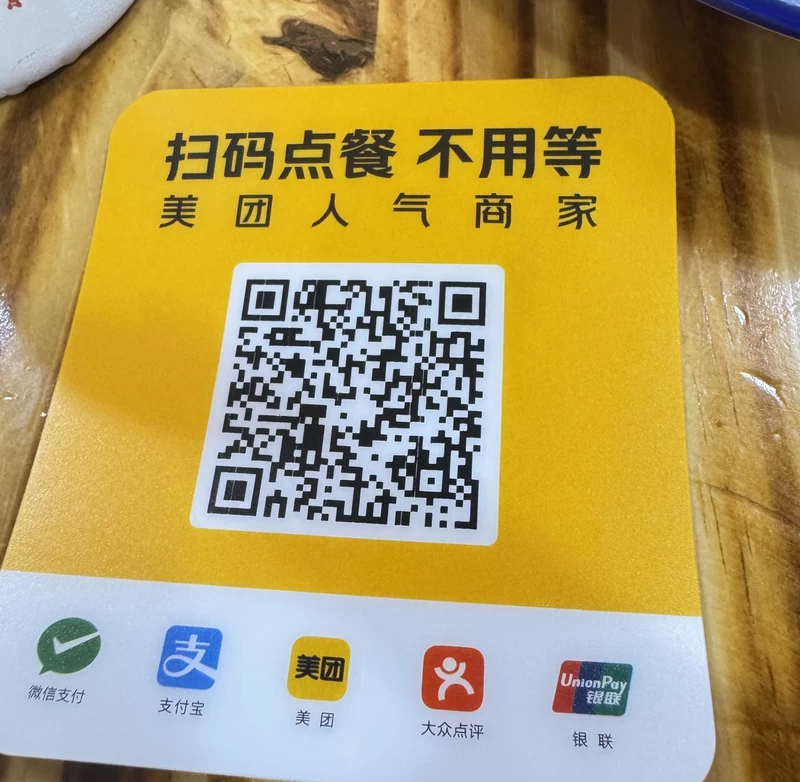
You sit down at the table, and instead of a printed menu, the staff points at a QR code stuck to the table or clipped under the teapot. You scan it—and suddenly the ordering page opens entirely in Chinese.
If it’s your first day in China, this can feel unexpectedly stressful.
The menu may open inside WeChat or Alipay. Google Translate may produce confusing dish names. Sometimes the page asks for a Chinese phone number. Sometimes it opens but won’t load at all. And meanwhile, you’re hungry and trying to figure out whether you’re ordering dumplings or chicken feet.
If this happens to you, don’t worry. It happens to many travelers, and even long-term foreigners in China still occasionally get stuck with QR menus.
The good news is that once you understand the system, it becomes much easier.
This guide walks you through how QR code ordering works in China, what to do if the menu is only in Chinese, and what to do if nothing works.
1. Why Do Restaurants in China Use QR Code Menus?
QR code menus became widespread in China over the past few years and are now standard in many restaurants, cafés, tea shops, and fast-food chains.
For restaurants, the system is efficient. Customers can browse, order, customize dishes, and sometimes pay directly from the phone without waiting for staff. Orders go straight to the kitchen, and fewer servers are needed on the floor.
For locals, it feels fast and normal.
For visitors, it can feel like suddenly being asked to enter an entire digital ecosystem before ordering dinner.
That’s because the QR menu is often connected to:
- WeChat mini-programs
- Alipay mini-programs
- local ordering systems
- digital payment
- discount coupons
- loyalty points
- mobile verification
Once you’re set up inside that system, it’s convenient.
If you’ve just arrived in China, it can feel like every door requires a different key.
2. What Usually Happens When You Scan the QR Code
In most restaurants, the process looks something like this:
You sit down.
The server points to the QR code on the table.
You scan it.
Then one of several things happens:
- the menu opens directly
- the menu opens inside WeChat
- it redirects to Alipay
- it asks you to log in
- it asks for a Chinese phone number
- or the page opens entirely in Chinese characters
Sometimes there are pictures.
Sometimes there are not.
Sometimes the “+” button adds the dish to your basket.
Sometimes pressing “+” immediately submits the order.
This inconsistency is part of what makes QR ordering in China confusing for first-time travelers.
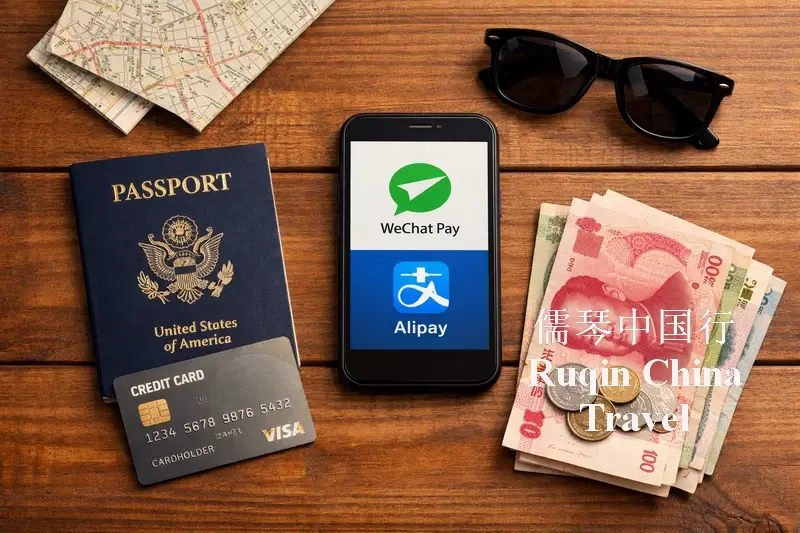
3. Best Way to Order: Use WeChat or Alipay to Scan
If possible, the easiest way is to scan the table QR code using WeChat or Alipay instead of your regular phone camera browser.
This matters because many Chinese restaurant QR systems are built specifically for WeChat mini-programs or Alipay mini-programs. If you scan with Chrome, Safari, or another non-Chinese browser, the page sometimes doesn’t open correctly.
My usual recommendation:
Option 1 — Open Alipay and tap Scan
Often the cleanest option.
Option 2 — Open WeChat and use Scan
Also very reliable for restaurant ordering.
Once inside, many menus include photos, categories, and clickable buttons that are easier to navigate than a browser translation.
4. If the Menu is Only in Chinese: What Actually Helps
This is where most travelers get stuck.
The simplest solution is:
Take a screenshot.
Then use your phone’s translation tool or Google Lens to translate the image.
This often works better than translating the live page itself.
Many travelers end up doing exactly this:
- open the menu
- screenshot the page
- translate the screenshot
- go back and order
It’s not elegant—but it works surprisingly well.
Translation can still be messy, especially with dish names. Chinese food names often translate very literally or strangely.
That’s normal.
The goal isn’t perfect translation. The goal is usually just understanding:
- chicken or pork?
- spicy or not?
- noodles or rice?
- hot dish or cold dish?
Once you know those basics, ordering gets much easier.
5. Use the Pictures—Seriously
This sounds obvious, but it’s one of the most practical strategies in China.
Many QR menus include dish photos.
And honestly, many locals order this way too.
If the translation makes no sense, start with the image.
Look at:
- what protein it seems to contain
- portion size
- whether it’s soup or stir-fried
- whether it looks spicy
- whether it’s a shared dish or individual portion
Even when the text translation is terrible, the photo usually gives you enough information to decide.
6. Watch What Other Tables Ordered
This works surprisingly well in China.
If another table has a dish that looks great, you can simply point to it and ask the staff:
Zhège shì shénme? (这个是什么?)
“What is this?”
Or simply point and say:
Wǒ yào zhège (我要这个)
“I’d like this one.”
Restaurant staff are very used to this.
And many travelers end up discovering excellent dishes this way—sometimes better than anything they would have picked from the menu.
7. If the QR Menu Doesn’t Work, Ask for Help
This is the most important thing to remember:
you do not have to solve the QR code yourself.
If the menu isn’t loading, asks for a Chinese number, payment won’t go through, or you’re simply stuck—
ask the staff.
This is completely normal.
Many locals do it too.
You can say:
我不会用二维码点餐
(Wǒ bú huì yòng èrwéimǎ diǎncān)
“I don’t know how to order with the QR code.”
Or even simpler:
菜单,可以吗?
(Càidān, kěyǐ ma?)
“Menu, please?”
In many restaurants staff can:
- bring a paper menu
- take your order manually
- order for you from their own device
- or recommend popular dishes directly
Many places still keep printed menus behind the counter for older customers or visitors.
8. A Quick Tip About Sharing Dishes
One easy mistake many travelers make when using QR menus in China:
ordering too much.
In many Chinese restaurants, dishes are designed to be shared across the table rather than ordered individually.
So if you’re traveling solo and keep pressing “+1” on several dishes, you may accidentally end up with enough food for four people.
This happens more often than people admit.
If eating alone, it helps to order slowly—one or two dishes first, then add more later if needed.
9. Useful Chinese Phrases to Save on Your Phone
A few phrases make ordering much easier.
不要辣
Bù yào là
No spicy
微辣
Wēi là
Mild spicy
(Though in some parts of China, “mild spicy” can still be very spicy.)
不要香菜
Bù yào xiāngcài
No cilantro
我对花生过敏
Wǒ duì huāshēng guòmǐn
I’m allergic to peanuts
我不会用二维码点餐
Wǒ bú huì yòng èrwéimǎ diǎncān
I don’t know how to order with the QR code menu
Saving these in your phone before your trip helps more than most people expect.
QR code menus are now part of daily life in China.
At first they can feel frustrating—especially when you’re jet-lagged, hungry, and trying to navigate a screen full of Chinese text.
But once you learn the rhythm of it, they become much less intimidating.
And remember:
if the app fails…
if the translation is nonsense…
if the payment won’t go through…
you can always wave to the staff and ask for help.
That’s still allowed in China.
And often, it’s the easiest solution of all.
About the Author
Ruqin is the founder of Ruqintravel.com and has spent more than four decades working in China’s travel industry. Drawing on hands-on experience in cities like Beijing and Hangzhou, he personally researches and updates each guide to help international travelers navigate China with confidence.
Further Reading
Solo Travel in China: Best Places, Hostels & Practical Tips
Popular Chinese Dish Names Explained in English: Meanings & Ingredients
10 Common Mistakes to Avoid on Your First Trip to China
Useful and Emergency Numbers in China – A Foreigner’s Guide
Arriving at Beijing Airport: Arrival Card and Visa-Free Transit Guide
How to Spot Fake Chinese Money: Simple Tips for Tourists
China Customs Regulations – A Foreigner’s Guide
China Visa-Free Travel Policies: Your Guide to Visiting China