
Words by Ruqin · September 17, 2026
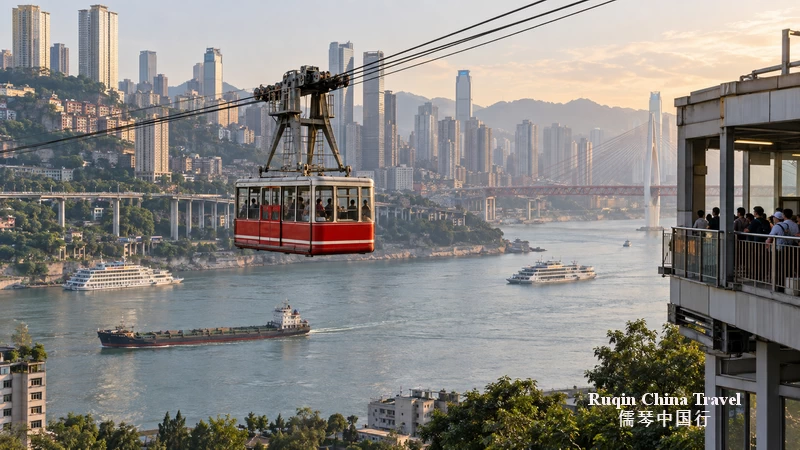
The Yangtze River Cableway is one of Chongqing’s most recognizable experiences. Its cabins cross between Yuzhong District and Nan’an District, giving passengers a short view of the river, bridges, high-rise buildings, and steep urban slopes.
The ride itself takes only a few minutes. The complete visit can take much longer because of ticketing, security, walking, and queues.
For most travelers, the best plan is to buy a one-way ticket, start from the south terminal near Shangxinjie, and continue into central Yuzhong after crossing. Treat the cableway as a sightseeing experience rather than essential public transport.
Quick Facts About the Yangtze River Cableway
| Item | Practical information |
|---|---|
| Chinese name | 长江索道 |
| Route | Yuzhong District to Nan’an District |
| North terminal | Xinhua Road, near Xiaoshizi |
| South terminal | Near Shangxinjie and Longmenhao |
| Nearest metro lines | Lines 1 and 6 at Xiaoshizi; Line 6 at Shangxinjie |
| Approximate ride time | About five minutes |
| Standard published fare | ¥30 one way; ¥50 return |
| Best ticket for most visitors | One way |
| Time to allow | 45–90 minutes; longer during busy periods |
| Main concern | Queues can be much longer than the ride |
Prices, operating hours, reservation procedures, and temporary closures can change. Check the official cableway account on the day of your visit.
The Two Cableway Terminals
The cableway has two terminals. Choosing the right starting point can save time and create a more logical sightseeing route.
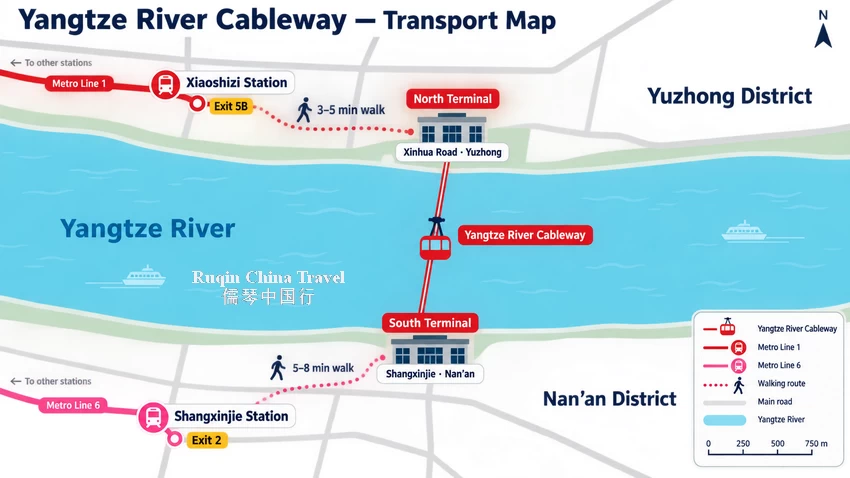
Chongqing Yangtze River Cabeway Transport Sketch Map
North Terminal: Xinhua Road in Yuzhong
The northern terminal is at Xinhua Road in central Yuzhong District. It is commonly called the north station or Xinhua Road station.
Xiaoshizi Station on Metro Lines 1 and 6 is the most useful metro connection. The terminal is also reasonably convenient for Jiefangbei, Hongya Cave, Huguang Guild Hall, and Chaotianmen.
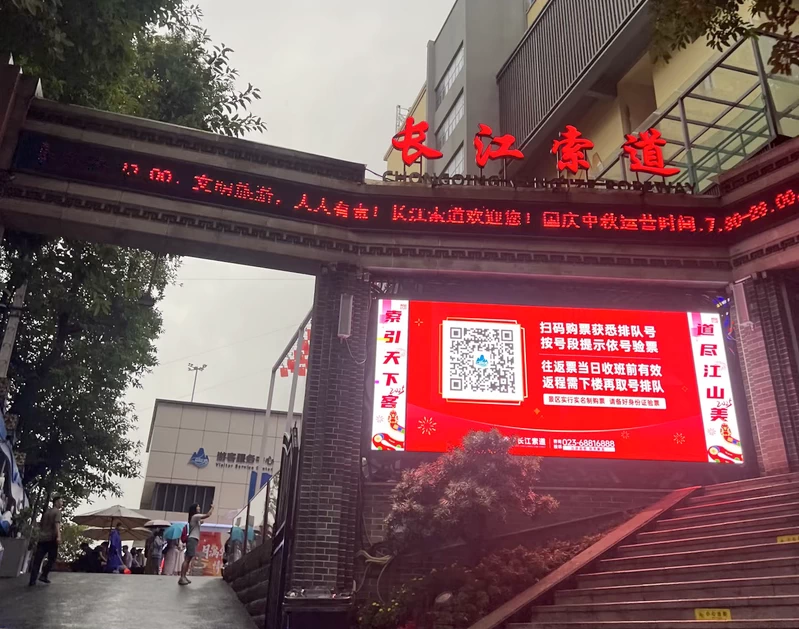
North Terminal Entrance to Chongqing Yangtze River Cableway
Take Metro Line 1 or 6 to Xiaoshizi Station. Leave through Exit 5B, then walk for about three to five minutes to the Yangtze River Cableway’s north termin
This is the more obvious terminal for visitors staying in central Yuzhong. As a result, it can attract longer queues, especially in the afternoon, at sunset, and during public holidays.
Do not confuse the cableway’s “north station” with Chongqing North Railway Station. They are entirely different places.
South Terminal: Shangxinjie in Nan’an
The south terminal is near Shangxinjie in Nan’an District. Metro Line 6 serves Shangxinjie Station.
To reach the Yangtze River Cableway’s south terminal, take Metro Line 6 or the Loop Line to Shangxinjie Station. Leave through Exit 2, then walk for about five to eight minutes to the terminal.
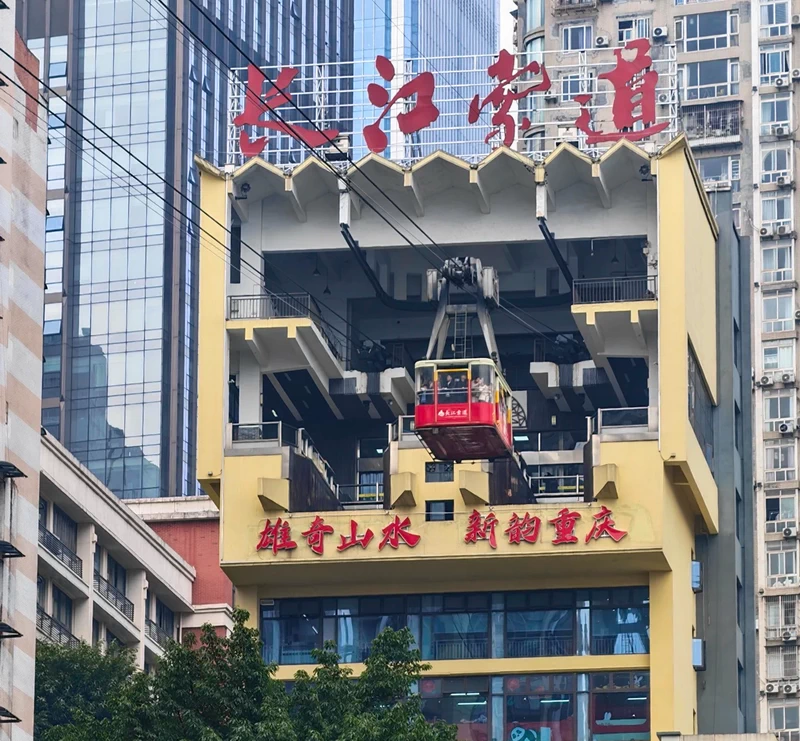
Chongqing Yangtze River Cabelway South Terminal
This terminal fits naturally with Longmenhao Old Street, Xiahaoli Old Street, and parts of Nanbin Road. These areas have stairs and slopes, but they also offer good views back toward Yuzhong.
Travelers often report that the south terminal feels less congested than the Yuzhong side. This is not guaranteed, particularly on weekends and holidays, but it makes the south-to-north direction worth considering.
Which Direction Is Better?
For most first-time visitors, I recommend riding from south to north.
Begin around Longmenhao or Xiahaoli, walk to the south terminal, and take the cableway across to Yuzhong. After arriving at Xinhua Road, continue to Jiefangbei, Huguang Guild Hall, Chaotianmen, or Hongya Cave.
This direction has three advantages:
- It connects two useful sightseeing areas.
- It avoids returning immediately to the same terminal.
- It finishes in central Yuzhong, where transport, restaurants, and evening activities are easy to find.
However, travelers staying near Jiefangbei may prefer the opposite direction. They can start at Xinhua Road, cross the river, and explore Longmenhao, Xiahaoli, or Nanbin Road afterward.
The best direction depends on your wider route, not just the cableway queue.
Buy a One-Way or Return Ticket?
A one-way ticket is enough for most visitors.
The outward and return journeys follow the same short route. Unless you particularly enjoy cableways, the second crossing adds little. You may spend more time waiting than riding.
A one-way journey also makes better use of Chongqing’s geography. Explore one riverbank, cross by cableway, and continue sightseeing on the other side.
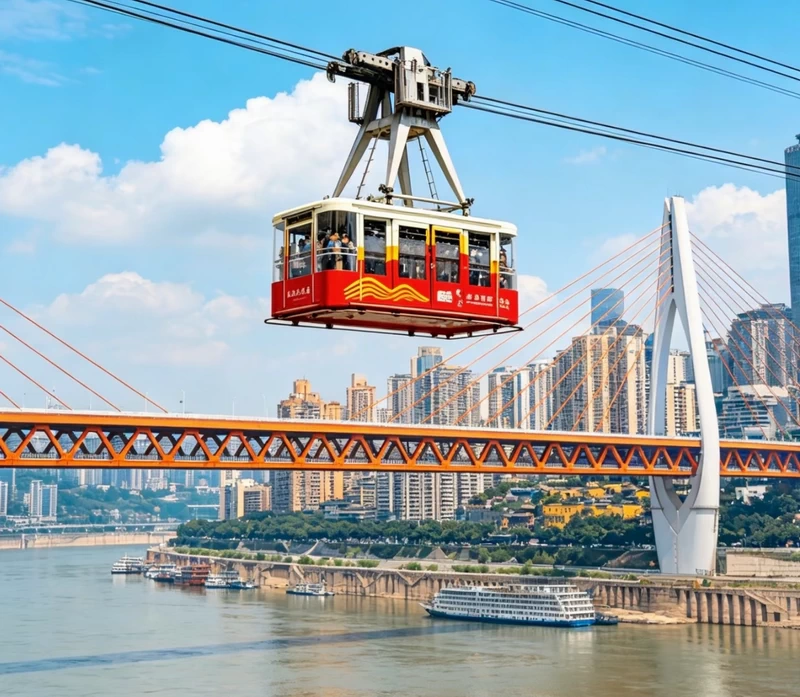
The Chongqing Yangtze River Cableway crossing the river
A return ticket can make sense if:
- You have limited mobility and want to avoid a longer onward route.
- Your hotel is close to the terminal where you started.
- You are traveling with children who particularly want a second ride.
- You visit during a quiet period with little waiting.
- You do not plan to explore the opposite riverbank.
Before buying a return ticket, confirm how the return queue works. Do not assume you can remain inside the cabin or immediately board the return service.
How to Buy Tickets
Published ticket information lists ¥30 for a one-way journey and ¥50 for a return journey. Treat these as reference prices and verify them before publication or travel.
Tickets are normally available through:
- The official Yangtze River Cableway WeChat account
- Ticket windows at the terminals
- Self-service ticket machines
- Authorized online booking channels
The official operator has previously identified Ctrip and Tongcheng as authorized distribution platforms. Other travel websites may sell packages, guided access, or third-party tickets at higher prices.
International visitors should be careful when buying through unfamiliar vendors. A more expensive product may include a guide, priority channel, transport, or another attraction rather than a standard cableway ticket.
Buying With a Foreign Passport
Online reservation systems in China sometimes work more smoothly with a Chinese identity card than a foreign passport. If a form does not accept your passport number, do not enter false information.
Try an authorized platform that supports international documents or buy at the terminal. Carry your physical passport because staff may need it for ticketing or identity checks.
Screenshots of a passport are not always accepted. Keep the original document with you unless current official guidance says otherwise.
A Few Practical Points to Remember
- Check the terminal before buying: The north terminal is in Yuzhong District, near Jiefangbei and Hongya Cave. The south terminal is in Nan’an District, near Shangxinjie and Longmenhao. Make sure you select the correct terminal when purchasing your ticket.
- Current operating hours: The cableway currently operates from 8:00 a.m. to 10:00 p.m., with last admission at 9:00 p.m. Hours may change during maintenance, bad weather, or public holidays, so check the official notice before setting out.
- Children’s policy: Children under 1.3 metres can ride free when accompanied by a ticket-holding adult. Each adult may accompany only one child under this policy.
- Choosing a quieter time: Weekdays between 10:00 a.m. and noon or 4:00 p.m. and 6:00 p.m. are generally less busy. For night views, consider visiting after 8:00 p.m., but evening queues can still be long.
Understanding the Queue System
Buying a ticket does not always mean you can enter immediately. During busy periods, visitors may receive a queue number or an estimated boarding window.
Follow the instructions attached to your ticket. If you booked through a third-party platform, check whether you must exchange the voucher, scan a code at a machine, or collect a queue number.
The process may involve several separate stages:
- Buying or validating the ticket
- Receiving a queue number
- Waiting for the number to be called
- Completing the security check
- Joining the boarding line
- Entering the cabin when directed
The system may change according to crowd levels. Ask staff if the instructions are unclear.
Do not arrive five minutes before another timed reservation. A short cableway ride can easily occupy an hour or more from arrival to exit.
When Is the Best Time to Ride?
Morning: Best for a Simpler Visit
Morning is usually the most practical choice. Crowds may be lighter, temperatures are more comfortable in summer, and you have more flexibility if the cableway is temporarily delayed.
The light may be less dramatic than at sunset, but the experience is easier to fit into a sightseeing day.
Late Afternoon: Better Light, More People
Late afternoon can provide softer views across the river and city. However, many visitors have the same idea.
If you want to ride near sunset, allow a generous buffer. Your actual crossing may happen earlier or later than expected.
Evening: City Lights, Longest Waits
The illuminated skyline attracts evening visitors. The view can be interesting, but the cabin is enclosed, the crossing is brief, and other passengers may limit your position near a window.
Do not assume an evening ride will produce clear photographs. Window reflections, movement, haze, and a crowded cabin can all affect the result.
If your main goal is the night skyline, a riverside viewpoint may give you more time and space.
What the Ride Is Actually Like
The cableway is not a private scenic gondola. Cabins can carry many standing passengers, particularly during busy periods.
You may not get a window position. Once the cabin starts moving, the crossing passes quickly. Have your camera ready, but avoid pushing toward the glass.
In warm weather, the cabin may feel hot. In rain or haze, visibility may be limited. Strong wind, maintenance, or operational controls can interrupt service.
The experience is still worthwhile if you enjoy urban transport and Chongqing’s unusual geography. It is less rewarding if you expect a long aerial tour or an unobstructed photography session.
A Practical Half-Day Route
The cableway works best as part of a larger route.
Option 1: South Bank to Central Yuzhong
Morning
Take Metro Line 6 to Shangxinjie. Explore Longmenhao Old Street and Xiahaoli Old Street.
These areas contain slopes, stairways, restored buildings, cafés, and viewpoints toward Yuzhong. Allow more time than the map suggests.
Midday or early afternoon
Walk to the south terminal and take a one-way cableway ride to Xinhua Road.
After leaving the north terminal, continue toward Jiefangbei or Huguang Guild Hall. Stop for lunch before adding another major attraction.
Evening
Visit Hongya Cave or Chaotianmen, but avoid trying to fit both into a tightly timed schedule. Central Chongqing becomes busier after dark, and short walks can take longer than expected.
Option 2: Jiefangbei to the South Bank
Start around Jiefangbei and walk or take the metro toward Xiaoshizi. Ride from Xinhua Road to the south terminal.
Continue through Longmenhao and Xiahaoli before finishing on Nanbin Road. Take Metro Line 6 or a taxi back to your hotel.
This version works well if you want to see the Yuzhong skyline from across the river in the late afternoon or evening.
Is the Cableway Suitable for Seniors and Families?
The ride itself is short, but the complete outing may involve standing, queues, security checks, escalators, and crowded boarding areas.
Older travelers should avoid the busiest evening periods. Ask staff about lift access and the least demanding route through the terminal.
Families should keep children close while queuing and boarding. Strollers may be awkward inside a crowded cabin, so confirm current rules before joining the line.
Travelers with limited mobility should not automatically combine the cableway with a long walk through Longmenhao or Xiahaoli. The old streets include slopes and stairs. A taxi between the terminal and the next destination may be more realistic.
What to Do If the Cableway Is Closed
Maintenance closures are normal for cableway operations. Weather and safety checks can also interrupt service.
If the cableway is closed, use Metro Line 6 between Xiaoshizi and Shangxinjie. It crosses beneath the river and is usually the simplest alternative.
A taxi or DiDi can also cross by bridge, although traffic may be slow. The metro is generally more predictable during busy sightseeing hours.
You can still view the cableway from the riverbanks or nearby streets. A closure does not require abandoning the entire area.
Ruqin’s Practical Advice
Ride the Yangtze River Cableway for its urban character, not because it is the fastest way across the river. The experience is brief, crowded at popular times, and heavily affected by queues.
For a balanced first visit, explore Longmenhao or Xiahaoli first, then take a one-way ride from south to north. Visit in the morning or early afternoon if you value time and comfort. Choose sunset only if you can accept a longer, less predictable wait.
Above all, check the official operating notice on the same day. In Chongqing, a flexible route is more useful than a perfectly timed plan.
More Chongqing Travel Guides
Chongqing Travel Guide: Map, Top Attractions, City Walks and Tips
Where to Stay in Chongqing: Best Areas for First-Time Visitors
Getting Around Chongqing: Metro, Taxis and Walking in a Vertical City
How to Visit Jiefangbei in Chongqing: Shopping, Food & Night Guide
How to Visit Hongya Cave in Chongqing: Night Views & Food Guide
How to Book Chongqing Attraction Tickets: All You Need to Know
The Best Chongqing Tour Itinerary