
Written and updated by Ruqin
Last updated: March 7, 2026
Standing beside the Great Wall of China is one of those moments travelers dream about for years. Yet many wheelchair travelers ask me the same question before arriving in Beijing: Is the Great Wall actually accessible?
The good news is that parts of it are. In this Great Wall Wheelchair Accessible Travel Guide, I’ll share the sections near Beijing that are most manageable — especially the Badaling Great Wall — along with practical tips to help wheelchair users experience this remarkable landmark with greater ease and confidence.
1. Badaling Great Wall: Accessibility at Its Best

Among all the sections of the Great Wall of China near Beijing, the Badaling Great Wall is by far the most manageable for wheelchair travelers. I usually recommend this section first because it has received the most thoughtful accessibility upgrades over the years.
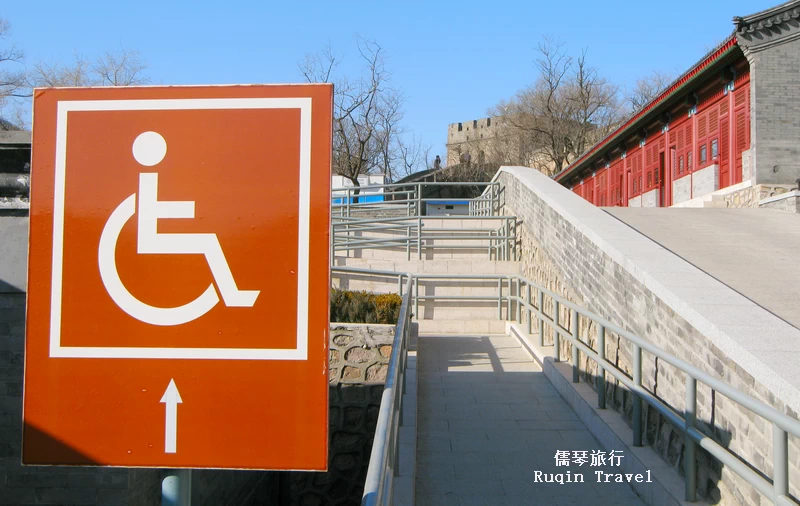
Near the main visitor entrance, a specially designed accessible pathway allows wheelchair users to reach part of the wall area without climbing the steep staircases that the Great Wall is famous for. The path is gently sloped and leads toward several viewing areas near the first watchtowers, offering beautiful views of the surrounding mountains.
You’ll also find accessible restrooms near the visitor center, and wheelchairs may be available for temporary use at the entrance area. Compared with other sections of the Great Wall, Badaling simply offers the smoothest overall experience.
Another advantage here is flexibility. Some visitors prefer taking the cable car to reach higher viewpoints, while others find the ramped path more comfortable and less crowded.
For a deeper breakdown of routes and accessibility details, see my full guide: Badaling Great Wall Accessible Guide: Wheelchair-Friendly Routes.
Practical Information
Transportation
From Beijing, many travelers take Bus 877 from Deshengmen or the High-speed trains from Qinghe Railway Station to Badaling.
Best Visiting Time
Morning visits on weekdays are usually much quieter and easier for wheelchair users to navigate.
2. Mutianyu Great Wall: A Challenge Worth Taking
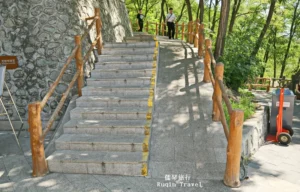
If you ask many international travelers which section of the Great Wall of China they enjoyed most, quite a few will say Mutianyu Great Wall. The scenery here is beautiful — forested mountains, winding wall lines, and usually fewer crowds than Badaling.
From an accessibility perspective, Mutianyu is possible, but it requires a bit more effort and usually a companion to assist. Most wheelchair travelers start with the cable car, which brings visitors up the mountain close to the 14th watchtower. The ride itself is quite memorable, offering sweeping views of the wall stretching across the hills.
Once at the top, there are ramps near the arrival area, but the Great Wall here still has uneven stone surfaces. Exploring even a short section often involves navigating historic stone pathways, so a manual wheelchair and a helping hand make the experience much easier.
The approach to the cable car station also requires some patience. From the parking area, visitors typically travel several hundred meters along stone pathways before reaching the cable car entrance.
That said, Mutianyu rewards the effort. The quieter atmosphere and dramatic mountain scenery give you a more peaceful sense of the Great Wall’s scale and beauty.
For more detailed accessibility advice, see my full guide: Mutianyu Great Wall in a Wheelchair: Accessible Paths & Tips.
3. Preparations and Tips for a Smooth Visit
Visiting the Great Wall of China in a wheelchair is absolutely possible, but a little preparation can make the experience much more comfortable. From my experience helping travelers plan their visits, the key is choosing the right section and allowing extra time for the journey.
First, consider hiring a knowledgeable local guide. A guide can help you find the most accessible entrances, arrange transportation, and explain the history of the wall while making sure the route works for your mobility needs.
Weather is another important factor. The Great Wall sits in the mountains north of Beijing, where conditions can change quickly. Summer can be hot and sunny, while spring and autumn may bring strong winds. Checking the forecast and dressing appropriately makes the visit much easier.
Transportation also deserves some planning. Many travelers arrange a private car from Beijing so they can travel at their own pace and stop closer to the entrance areas.
A few small choices can also improve the experience:
- Visit on weekday mornings when crowds are lighter.
- Travel with a companion who can assist on uneven paths.
- Inform staff at the entrance if you need accessibility assistance.
With thoughtful planning, the Great Wall becomes far more manageable — and the reward of seeing it up close is truly unforgettable.
The Great Wall of China, with its awe-inspiring structure and historical significance, is a must-visit destination. For wheelchair users, both Badaling and Mutianyu sections provide a chance to experience this wonder, each with its unique features and level of accessibility.
With proper planning and assistance, your visit to the Great Wall can be a memorable and enjoyable journey into China’s ancient history.
About the Author
Ruqin is the founder of Ruqintravel.com and has spent more than four decades working in China’s travel industry. Drawing on hands-on experience in cities like Beijing and Hangzhou, he personally researches and updates each guide to help international travelers navigate China with confidence
Further Reading
Badaling Great Wall Accessible Guide: Wheelchair-Friendly Routes
Mutianyu Great Wall in a Wheelchair: Accessible Paths & Tips
Forbidden City Wheelchair Accessible: Paths & Toilets
Summer Palace Wheelchair Accessible: Paths & Toilets
Temple of Heaven in a Wheelchair: Accessible Paths & Toilets
Jingshan Park in a Wheelchair: Accessible Paths & Toilets
Beihai Park in a Wheelchair: Accessible Paths & Toilets in Beijing