
Written and updated by Ruqin
Last updated: January 2, 2026
Tucked into the northern edge of Shanxi Province, the Datong Great Wall hides a forgotten chapter of Ming dynasty military history. One of the most significant outposts was Zhenbianbu Fortress (镇边堡), also known as Zhengbianbu (正边堡)—a name that literally means “Fortress for Defending the Border.”
Back in the Ming Dynasty, between 1488 and 1505, the imperial court built nine major military towns along the Great Wall. Datong Town was one of the most strategic, overseeing 72 fortified sites. Among them were 20 walled cities and 52 fortresses. Zhenbianbu was part of the legendary “Five Border Fortresses,” each spaced 25 li (about 12.5 kilometers) apart. The others were Zhenchuanbu (镇川堡), Hongcibu (宏赐堡), Zhenlubu (镇鲁堡), and Zhenhebu (镇河堡).
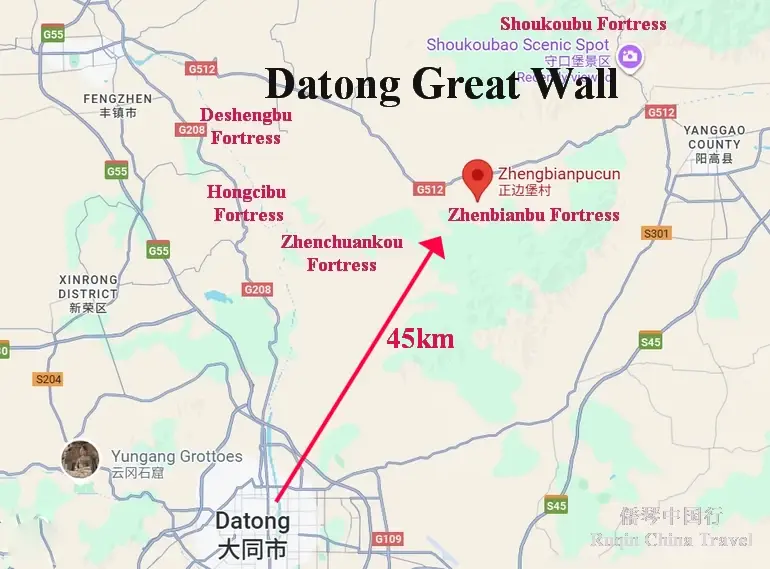
Location Map: Zhenbianbu Fortress (Zhenbianbaocun)
Construction of Zhenbianbu began in 1539 under the Jiajing Emperor. Later, in 1583, it was reinforced with bricks, though most of the walls remained made of rammed earth. Today, some parts of the fortress still stand over 5 meters tall, silent but powerful reminders of a time when borders were patrolled on horseback.
You might see it spelled either Zhenbianbu or Zhenbianbao, due to two pronunciations of the final character “堡.” But “Zhenbianbu” is the more commonly accepted version. Either way, what remains here isn’t just ancient architecture—it’s the enduring spirit of a land that once stood on the very edge of empire.
Walking the Walls of Zhenbianbu Fortress
As I stepped onto the dry earth outside Zhenbianbu Fortress, I could almost hear the echo of hooves and the clang of swords. This fortress, once a strategic hub along the Datong Great Wall, still stands with surprising dignity, despite the weight of centuries.
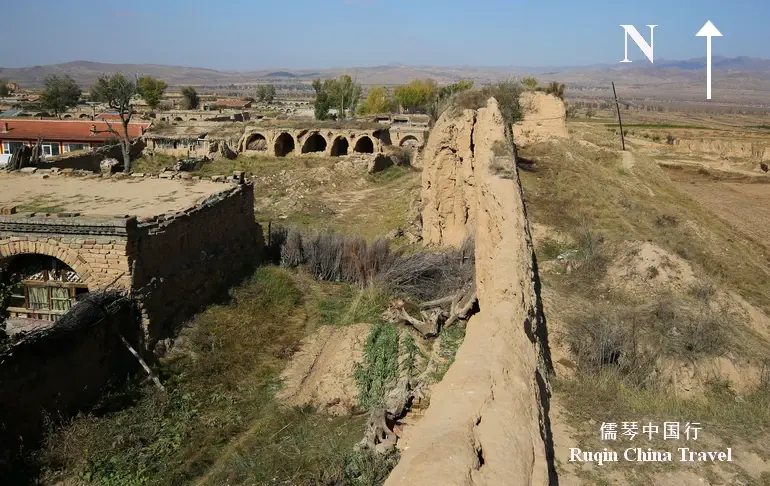
The east side of the rammed earth wall at the Zhenbianbu Fortress
The fortress layout is rectangular—312 meters from north to south, and 215 meters from east to west. The total perimeter stretches just over one kilometer. Its original walls towered 5 meters high, built from layered rammed earth with stone reinforcements. Today, the north wall remains the best preserved, while parts of the east, south, and west walls have collapsed or vanished completely.

Outside the East Gate of the Zhenbianbu Fortress
The fortress has two symmetrical gates facing east and west. The west gate served as the main entrance, and above it, the bold characters “Zhenbianbu Fortress” are still faintly visible. The east gate, meanwhile, is poetically named “Huaiyuan,” (怀远) meaning “cherishing the distant.”
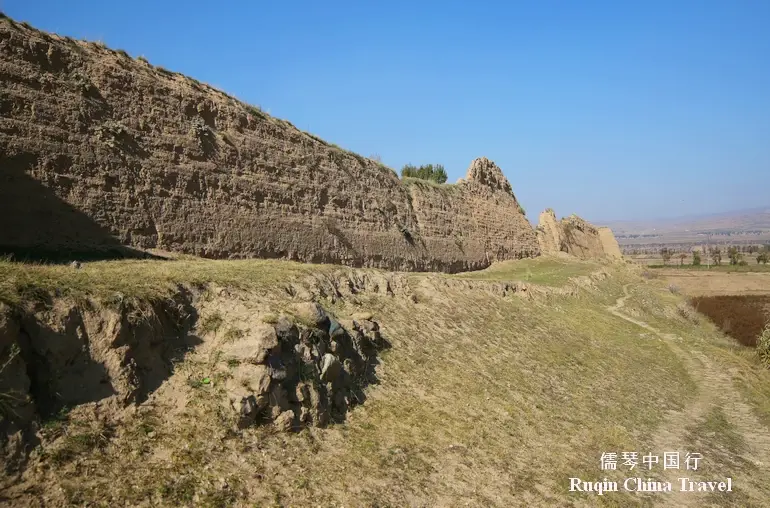
Outside the East Wall of the Zhenbianbao Fortress
Zhenbianbu wasn’t just a lonely outpost—it was the core of a five-fortress defensive system. It once guarded 21 li (roughly 10 kilometers) of frontier land and worked closely with Zhenchuanbu Fortress and Deshengbu Fortress to form a protective military screen north of Datong. This section of the Datong Great Wall is especially unique—scholars consider it one of the better-preserved examples of elevated Ming-era military architecture in China.
Today, Zhenbianbu is officially a provincial-level protected heritage site, and its remains—though weathered—still speak of strength, silence, and the stories that shaped this windswept frontier.
Zhenbianbu Village : Living Beside the Great Wall
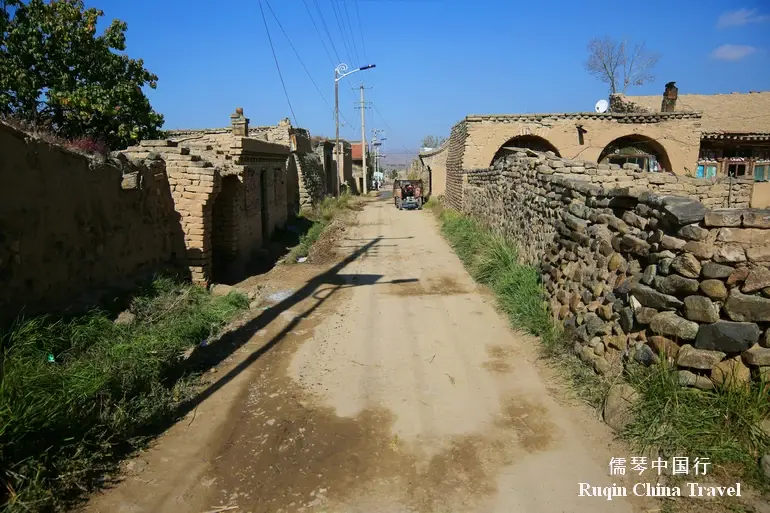
When I arrived at Zhenbianbu Fortress, I wasn’t just visiting a historic ruin—I had also entered Zhenbianbu Village (镇边堡村), also known as Zhengbianbao Village ( Zhengbianbaocun) the small, peaceful community that still lives in its shadow. The two are inseparable. In fact, the fortress sits right inside the same-named village, and the villagers are the unofficial guardians of this ancient place.

A kind local farmer pointed us toward Zhenbianbu Fortress. He was out plowing the fields in his rumbling old truck.
Zhenbianbao Village belongs to Yanggao County (阳高县), nestled in northern Shanxi Province. To the north, it borders Inner Mongolia. Just beyond the fields lies the Datong Great Wall, where the land opens up to windswept plateaus and distant hills. It’s no wonder this area was once a critical frontier post.
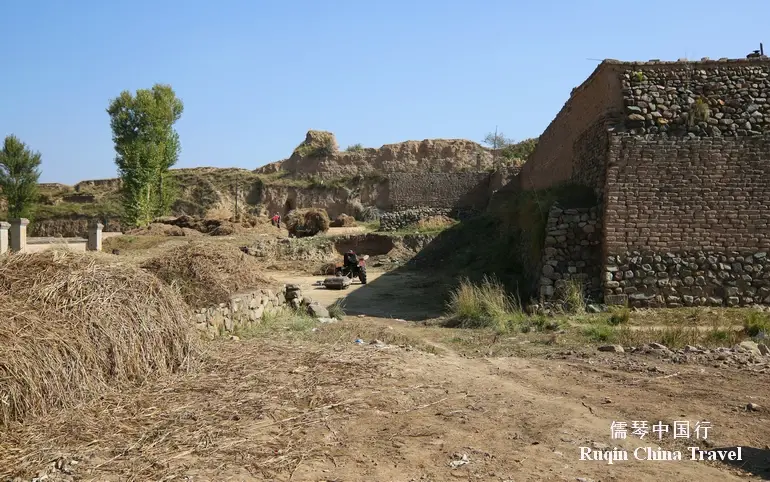
Strolling through the village inside the old fortress walls
The village covers around 15 square kilometers and is home to just over a thousand residents. The nearby Cailiang Mountains (采凉山) provide fertile land, wild herbs, and a surprising variety of plant and animal life. When I visited, villagers were out in the sun, threshing freshly harvested millet and sorghum—a seasonal rhythm that’s continued for generations.
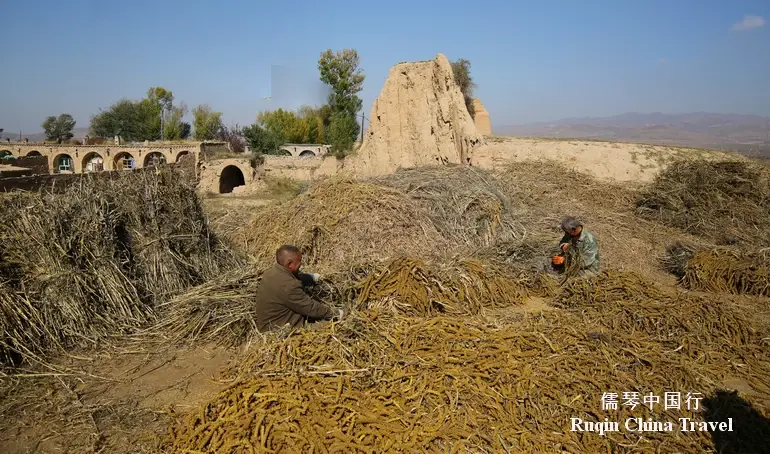
villagers were out in the sun, threshing freshly harvested millet and sorghum
Today, Zhenbianbu Village is slowly transforming. Thanks to the new Great Wall No. 1 Tourist Highway, it’s easier to reach than ever. The local government has developed a tourist area combining Zhenbianbao Fortress, sections of the Ming Great Wall, and a charming “Ming and Qing Street” lined with traditional buildings.
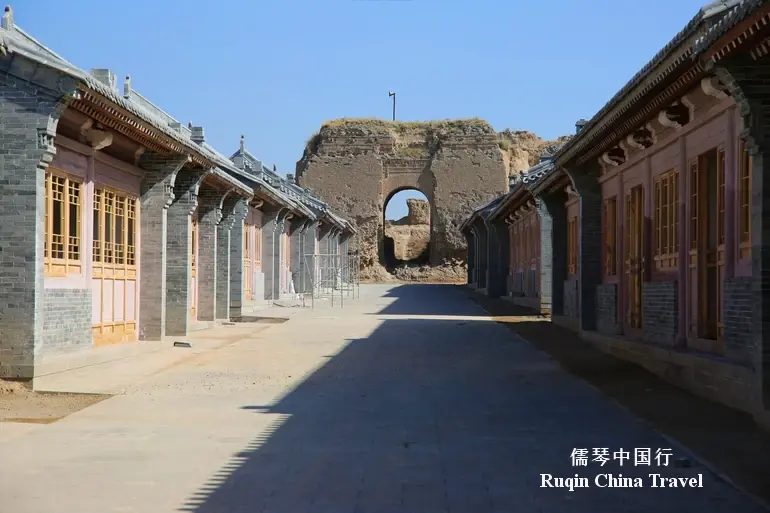
A charming “Ming and Qing Street” lined with traditional buildings (Good or Bad?)
This area, officially rated a national 3A scenic site in 2022, is designed for slow, immersive travel. You can hike along the ancient wall, rest in local homestays, taste millet-based dishes, or simply listen to the wind whisper through ancient elm trees.
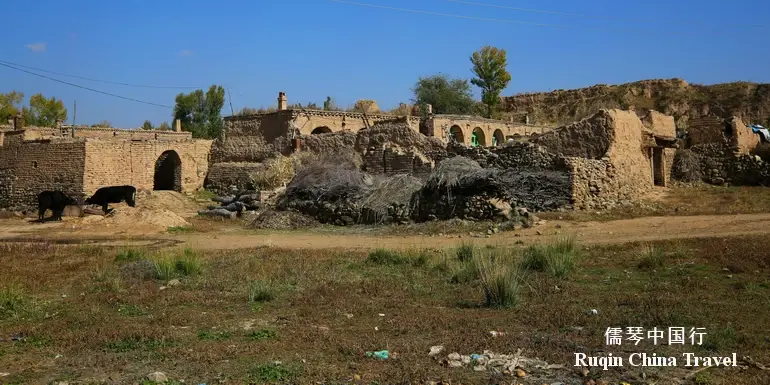
Wandering through Zhenbianbu Village
Wandering through Zhenbianbu Village, I found traces of the Ming Dynasty everywhere—crumbling fortress walls, weathered gate towers, ancient stone steles, and even old stone cannons quietly guarding history.
Zhenbianbu Village may be small, but it offers something powerful—a rare moment of quiet at the edge of history.
How to Get to Zhenbianbu Fortress from Datong
Reaching Zhenbianbu Fortress from Datong is an adventure in itself—and there are a few ways to make the journey.
First, if you’re driving, the route is fairly straightforward. From Datong city center, head north on the Great Wall No.01 Tourist Road. The trip takes roughly 1 hour by car (about 45km ), depending on traffic. This is by far the most flexible option, especially if you’re traveling with friends or carrying luggage. Plus, it gives you the freedom to stop along the way and enjoy the changing landscape as you leave the city behind.
Meanwhile, Datong has introduced tourist shuttle routes connecting major Great Wall heritage spots, including Tianzhen’s Li’erkou section (天镇县李二口长城), Shoukou Fortress (守口堡), and Zhenbianbu Village. However, these shuttle buses are often seasonal. So before setting out, it’s best to check the Datong Smart Tourism Platform or ask at the Datong Tourist Information Center for the latest schedule and ticket info.
If you’re going by public transport, it’s possible—but a bit more complex. First, take a long-distance bus or train to Tianzhen or Yanggao County (天镇县或阳高县). From there, you’ll need to transfer to a local minibus, taxi, or even walk part of the way. Buses in this region may not run frequently, so plan ahead and allow time for connections.
Finally, for the adventurous, cycling and private hire options are also available. Some travelers choose to explore the region via the Great Wall No. 1 Tourist Road, which connects several nearby fortress towns. This route offers unforgettable views, but you’ll need to map it out carefully and consider pairing it with a car rental or driver for added ease.
Whichever way you choose, arriving at Zhenbianbu Fortress feels like stepping into the pages of northern China’s borderland history.
As the sun dipped behind the hills, I took one last look at Zhenbianbu Fortress, its ancient walls glowing softly in the golden light. Standing here, it’s easy to forget the rush of modern life and feel connected to centuries of borderland history.
Inside the Zhenbianbu Village, life moves slowly—millet fields rustle in the wind, and elders share stories of the past. This quiet corner of the Datong Great Wall invites travelers to pause, explore, and truly feel time.
About the Author
Ruqin is the founder of Ruqintravel.com and has spent more than four decades working in China’s travel industry. Drawing on hands-on experience in cities like Beijing and Hangzhou, he personally researches and updates each guide to help international travelers navigate China with confidence.
Further Reading
Zhenchuankou Great Wall at Datong: Photos, Map & Local Tips
Deshengbu Fortress at Datong Great Wall: Map, Photos and Tips
Datong Travel Guide: Map, Walking Routes, Highlights and Tips
Beijing to Datong High-Speed Train Day Trip: A DIY Guide
How to Get from Beijing to Datong – Your Complete Guide
Datong to Xi’an High‑Speed Train: Tickets, Tips & What to Expect
How to Book Datong Attraction Tickets: All You Need to Know
The Best Datong Tour Itinerary – Ruqin China Travel
Beijing Datong 2-Day Tour