
Written and updated by Ruqin
Last updated: January 25, 2026
Welcome to Beijing, a city where ancient alleyways meet glass skyscrapers. Taxis are one of the easiest ways to explore it all. However, like any big city, Beijing has its share of surprises, including the occasional Beijing taxi scam that can catch first-time visitors off guard.
Don’t worry. In this guide, I’ll walk you through what to watch for, what I’ve learned on the road, and how to ride with confidence. Then, you can focus on enjoying the city, not stressing over the journey.
Beijing Taxi Scams: Quick Survival Guide
First, remember the basics. Always choose a licensed taxi with a roof light, meter, and receipt printer. Next, insist the driver uses the meter. Meanwhile, check your route on a map app. In addition, use a translation app to avoid confusion. Finally, avoid rush hours and never take unmarked cars near attractions. Stay alert for any beijing taxi scam, especially when paying cash—fake notes do exist.
However, avoid these mistakes. Don’t ride taxis without meters. Don’t believe “cheap flat-rate” offers. Next, skip side trips to unknown shops. Meanwhile, carry small bills. Watch for detours that lead to an overcharged taxi. Finally, always check change—some fake taxi Beijing drivers hand back the wrong bills.
Common Beijing Taxi Scams (and How to Ride with Confidence)
1) Fake Taxi Beijing: How Unlicensed Cars Target Tourists
First, let me be honest. This is the beijing taxi scam I see most often. It usually happens at airports, train stations, or famous sights. Someone approaches you casually. Meanwhile, they promise a “cheaper” or “faster” ride. However, the car is private. Later, the price suddenly jumps. That’s how a fake taxi Beijing situation begins.
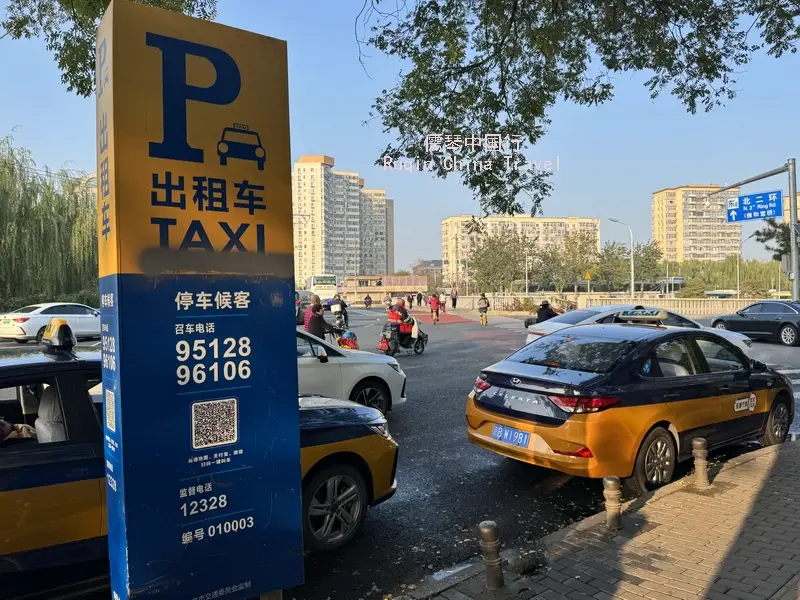
So here’s what I do every time. I only choose official taxis. Next, I check for the roof light that clearly says “Taxi.” Then, I look for the meter in front. In addition, real taxis display a driver ID card. Company names like Shouqi or Beiqi also help. These signs protect you from an overcharged taxi later.
One small local tip helps a lot. Most licensed Beijing taxis have plates starting with “京B.” Remember that detail. Finally, if someone rushes you or whispers prices, I walk away. Another real taxi always arrives.
2) Fake Banknotes and Cash Swaps
Next, let me share a quieter Beijing Taxi Scam. It doesn’t happen often. However, it does catch tired travelers. The driver gives you change. Meanwhile, one bill looks wrong. Or worse, the driver claims your cash is “damaged” or “invalid.” Then they try to swap it. This is a classic Beijing Taxi Trap, especially with 100-RMB notes.
Here’s how I protect myself. First, I use Alipay or WeChat Pay whenever possible. It removes all doubt. Next, I carry small bills if I must pay cash. In addition, when I hand over a 100-RMB note, I check it together with the driver. I feel Chairman Mao’s collar for texture. I also check the security strip.
Finally, I slow everything down. When I receive change, I count it on the spot. Meanwhile, I inspect larger bills before pocketing them. If a driver keeps arguing, I stop. Then, I switch to mobile payment—or simply take another taxi.
3) Taxi Meter Tricks in Beijing: When the Price Jumps Too Fast
Next, let’s talk about the meter. This Beijing Taxi Scam is rare, but it still happens. Sometimes the meter jumps too fast. Meanwhile, a driver may say the meter is “broken.” Then they quote a high flat price. However, that’s your signal to pause.
Here’s what I always do. First, before the taxi moves, I check the meter. It must start at zero. Next, I clearly say, “Please use the meter.” Most drivers understand. In addition, I watch the screen during the ride. If the driver refuses or hesitates, I don’t argue. Instead, I get out calmly. Then, I take another taxi.
4) Detours That Turn Short Rides into Long Ones
Next, let me talk about detours. This Beijing Taxi Trap often appears when drivers sense you’re unfamiliar with the city. First, everything feels normal. Meanwhile, the route starts to stretch. The meter keeps running. However, you notice familiar landmarks fading away. Suddenly, your short ride feels like a tour.
Here’s how I handle it. Before I leave, I check the route on my phone. Next, I open the map and let the navigation speak out loud. In addition, I smile and say, “I know the general route. Can we follow the navigation?” Most drivers adjust immediately. If not, I stay calm. Meanwhile, I watch the map. Confidence usually shortens the ride.
5) Language Barriers on the Road
Next, let’s talk about language. Many Beijing taxi drivers speak limited English. First, this feels harmless. Meanwhile, a small pronunciation slip can change everything. However, one wrong sound may send you to the wrong place.
Here’s what works for me. Before I ride, I save the destination in Chinese. Next, I show a hotel card or the Chinese place name. In addition, I open my map app and point to the location. Then, I use a translation app. I say, “Please go here.” I also add, “Please use the meter.” Finally, I smile and say thank you. Simple words go far.
6) Shopping Stop Scams: Tea Houses and Tourist Traps by Taxi
Next, let me share another Beijing Taxi Scam I’ve seen. Sometimes a driver gets unusually friendly. Meanwhile, they suggest a tea house or souvenir shop. They mention a “special deal today.” However, once inside, prices jump fast. The pressure feels real.
Here’s how I handle it. First, I smile and stay polite. Next, I say, “No, thank you.” I repeat it calmly. In addition, I ask to continue to my original destination. I never argue. Meanwhile, I remind myself that real Beijing gifts exist everywhere. You’ll find them in proper shops and supermarkets. Finally, confidence ends the conversation.
7) Cash Payment Scams in Beijing Taxis
Next, let’s talk about cash. This Beijing Taxi Scam feels small, but it adds up. First, you pay with a larger bill. Meanwhile, the driver sighs and says they have no change. However, the silence pushes you to accept the loss.
Here’s what I do instead. First, I carry small bills, like 10 or 20 RMB. Next, I use Alipay or WeChat Pay whenever possible. In addition, many Beijing taxis now accept QR payments. It’s quick and stress-free. Meanwhile, I never rush. Finally, paying smart keeps the ride fair and friendly.
8) Rush Hour: When Taxis Disappear
Next, let’s talk about rush hour. In Beijing, this can feel like a wall. First comes the morning rush, from 7:30 to 9:00. Then comes the evening rush, from 5:00 to 7:00. Meanwhile, taxis vanish fast. Traffic slows. Tempers rise. However, it’s normal city life here.
Here’s how I work around it. First, I travel earlier or later when I can. Next, I open a ride-hailing app like Didi, which has an English version. In addition, when I visit attractions, I book my ride before closing time. Meanwhile, others wait in line. Finally, planning ahead saves energy—and patience.
How to Avoid Beijing Taxi Scams in Three Simple Steps
First, before I get in. I pause for a second. I check the window for the official operating sticker. Next, I glance at the roof light. Meanwhile, I ignore drivers who approach me first. Real taxis wait. Fake ones chase.
Then, during the ride. I watch the meter start and tick normally. Meanwhile, I quietly open my map app. I don’t announce it. In addition, if I pay cash, I remember my large bills. Staying aware keeps things smooth.
Finally, when I get out. I ask for a receipt. It shows the plate number and trip details. Next, I count my change calmly. Then, I step away. If I forget something, that receipt becomes my safety net.
Beijing Taxi Scams FAQ
Q: How much does a taxi usually cost in Beijing?
A: The base fare is 13 RMB for the first 3 kilometers. After that, it’s 2.3 RMB per kilometer. Meanwhile, late at night (11:00 PM–5:00 AM), prices increase by about 20%. A taxi from the airport to downtown usually costs 80–120 RMB, depending on traffic.
Q: Can I pay by card or mobile payment?
A: Yes. Most taxis accept Alipay and WeChat Pay. Some also take credit cards. However, I still recommend mobile payment. It’s faster and avoids cash problems.
Q: What if the driver won’t give change or I suspect fake money?
A: First, calmly say you need change. You can show a translation saying, “Please give me change.” If the driver refuses, note the license plate and call 12328 (Beijing transport hotline). Meanwhile, if you suspect fake cash, ask the driver to replace it immediately.
Q: Is there a ride-hailing app for foreigners?
A: Yes. DiDi has an English version. You can choose a taxi or private car and link an international credit card. Amap (Gaode) also offers ride-hailing.
Q: How can I quickly check if RMB cash is real?
A: Remember three steps: touch, look, and hold to light.
- Touch Mao’s collar for texture.
- Look for a clear security line.
- Hold it to the light to see Mao’s watermark.
It helps to feel real bills at a bank first.
Riding Taxis in Beijing with Confidence
Finally, let me share something I love. Most Beijing taxi drivers are friendly and chatty. First, try a simple “Nǐ hǎo.” Then add “Xièxie.” Meanwhile, smiles appear. Stories follow. Even with talk of a Beijing Taxi Scam, kindness often wins. The city feels busy, yet warm.
So go with confidence. Next, pack curiosity. In addition, carry this guide. Meanwhile, move like a local through morning light and night streets. Every ride can lead to a small surprise. Safe travels—and may every road bring joy.
About the Author
Ruqin is the founder of Ruqintravel.com and has spent more than four decades working in China’s travel industry. Drawing on hands-on experience in cities like Beijing and Hangzhou, he personally researches and updates each guide to help international travelers navigate China with confidence.
Further Reading
How to Spot Fake Chinese Money – A Traveler’s Guide
Beijing Taxi: Essential Tips & Guide for First-Time Visitors
How to Use the Beijing Public Transport – A First-Timer’s Guide
How to Use the Beijing Subway: Map, Tickets, Pass & Apps
China Train Station Scams: Fake Helpers, Tricks & Safe Steps