Words & Photos by Ruqin
September 3, 2026
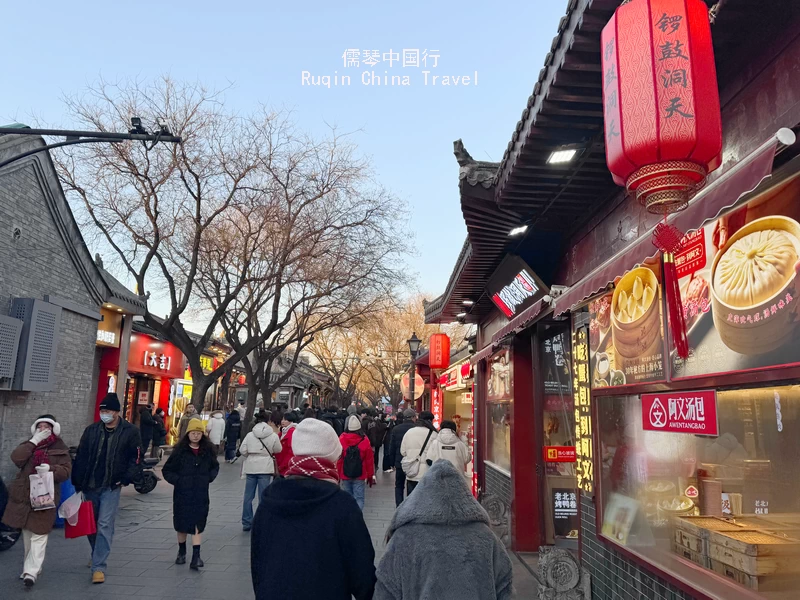
I have walked Xianyukou Street many times, both during the day and at night.
Most people come here for food. The short pedestrian street is lined with old Beijing restaurants, snack shops, and newer places mixed among them. At busy times, there is a steady flow of visitors walking between the restaurants and Qianmen Street.
Xianyukou is easy to find. It branches east from Qianmen Street, almost directly opposite Dashilan Street.
On a recent walk, however, something other than food caught my attention.
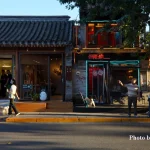
At No. 68–70 Xianyukou Street stands an old building with a large sign: Tianleyuan Theatre (also known as Tianle Theatre) — 天乐园大戏楼.
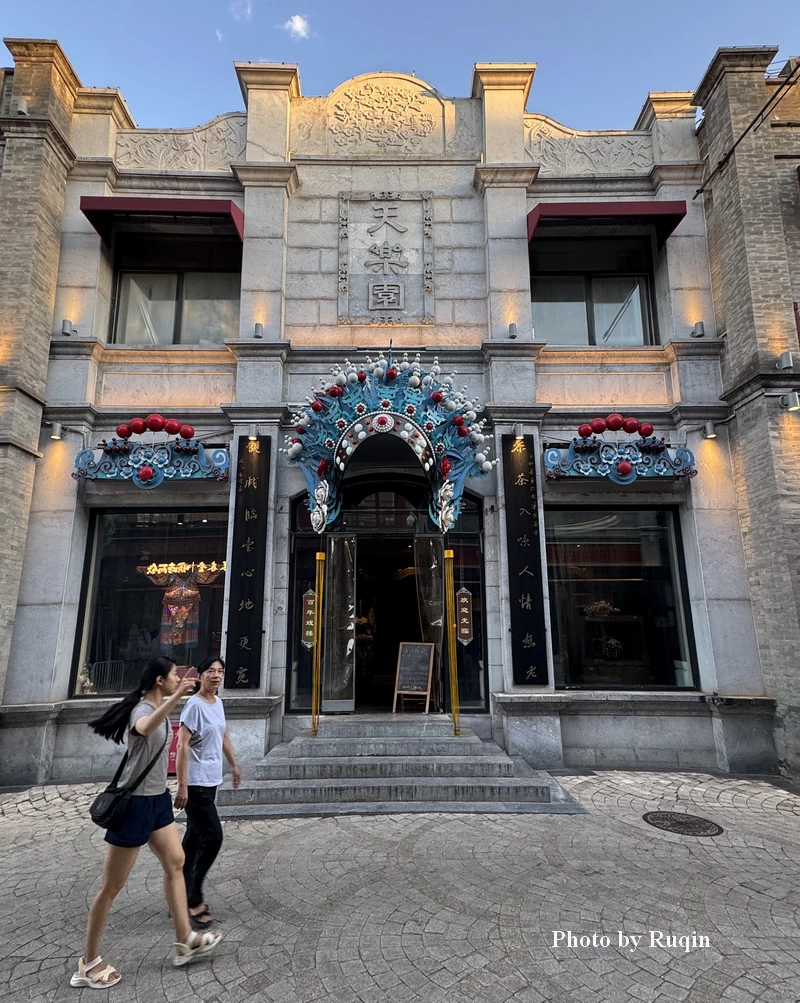
Exterior of Tianleyuan Theatre at No. 68 Xianyukou Street
I had passed through this area before, but this time I stopped and looked more closely.
The history of the place goes back to 1785. It was once known as 天乐茶园, a teahouse and entertainment venue where people came to hear storytelling, singing and watch different kinds of performances.
Later, Tianleyuan became closely associated with Peking Opera. Famous performers including Mei Lanfang and Cheng Yanqiu appeared here during their early careers.
Today, the old theatre has taken on another life. It is now a Peking Opera cultural experience centre, with performances, exhibitions, costumes and other activities inside.
That was something I had not expected to find in the middle of a busy food street.
Walking In Through No. 70
Tianleyuan has entrances at both No. 68 and No. 70 Xianyukou Street.
I walked in through No. 70.
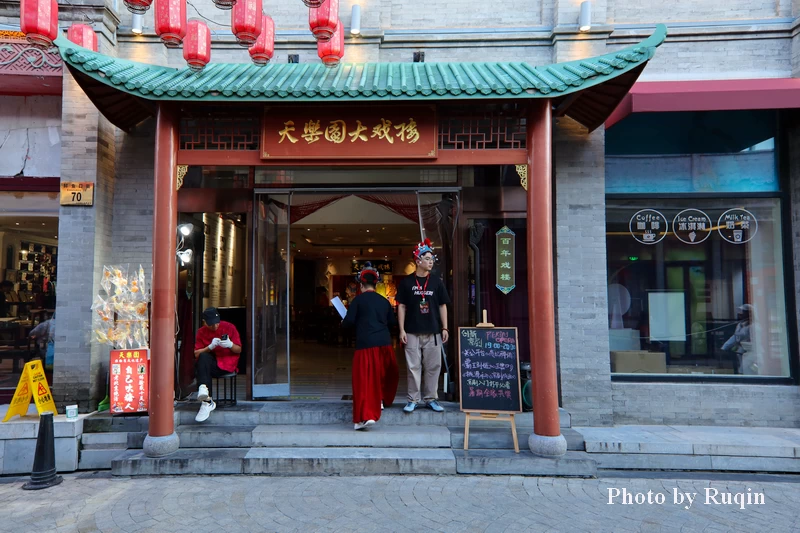
Entrance to Tianleyuan Theatre at No. 70 Xianyukou Street
Just inside, a young member of staff was giving a talk to a small group of visitors.
He was explaining 生、旦、净、丑 — sheng, dan, jing and chou, the four main role types traditionally used in Peking Opera.
I stopped and listened.
He spoke in a lively way, pointing out the differences between the characters and their appearance on stage. The visitors around him were listening closely.
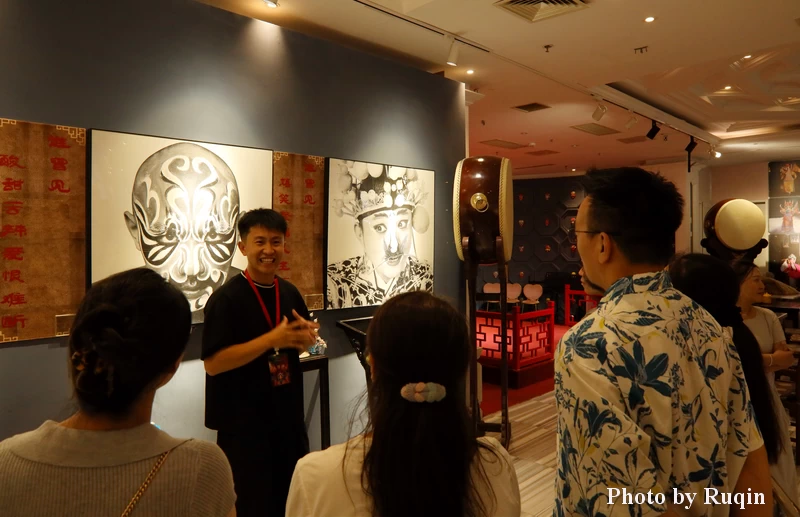
A young staff member explaining Peking Opera roles
The building has three floors. I did not have enough time to explore the upper floors on this visit, so I stayed mainly on the ground floor.
Even there, there was plenty to look at.
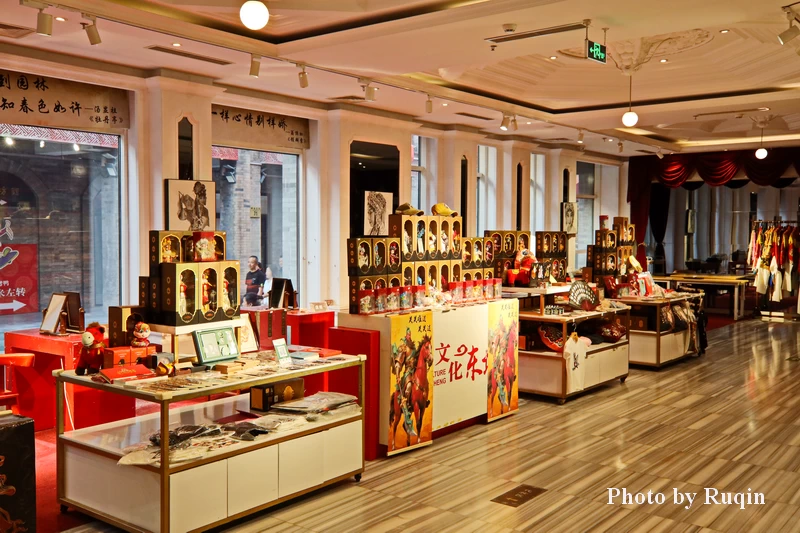
Cultural products and souvenirs based on opera characters and designs
Embroidered opera costumes were displayed close enough to see the details of the stitching. There were elaborate headdresses, old theatre programmes, photographs and other objects connected with Peking Opera.
There were also cultural products and souvenirs based on opera characters and designs.
It felt somewhere between a small museum and a working theatre.
A Look Inside the Theatre
After the talk finished, I went over to the young staff member and asked about the performances.
Tickets, he told me, start from around RMB 280 per person, with different prices depending on the seat.
Then he took me into the main auditorium.
This was another surprise.
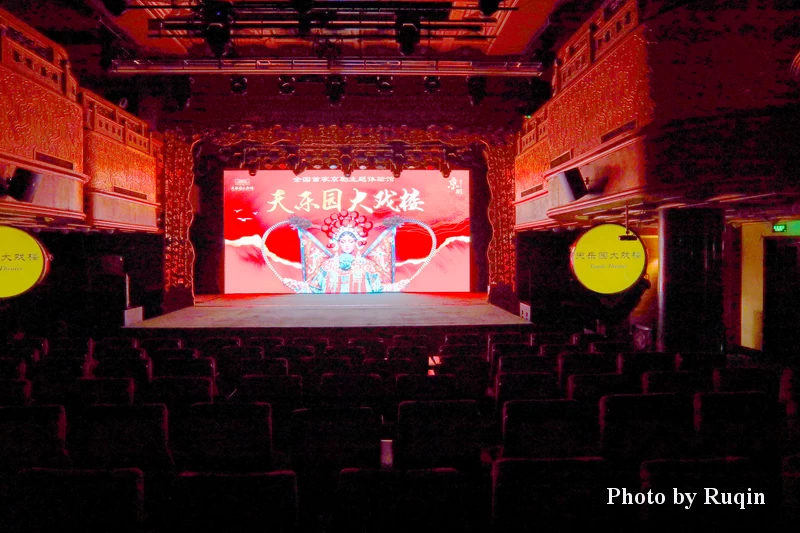
Inside the main theatre at Tianleyuan
The theatre is not particularly large. There are about 200 seats, which makes it feel much more intimate than one of Beijing’s large performance halls.
I asked him what happens when international visitors come to see the show.
He told me that English subtitles are provided, and visitors can take photographs during performances as long as they do not use flash.
I stood there for a moment looking at the stage and rows of seats.
Unfortunately, I had not planned to see a performance that day. I had come to Xianyukou simply to walk around again, and I had not expected to find such a complete little theatre behind the street frontage.
Next time, I would leave more time.
Buying Tickets at No. 68
Before leaving, I walked over towards the No. 68 entrance.
At the ticket counter, several visitors were asking about tickets for the evening performance.
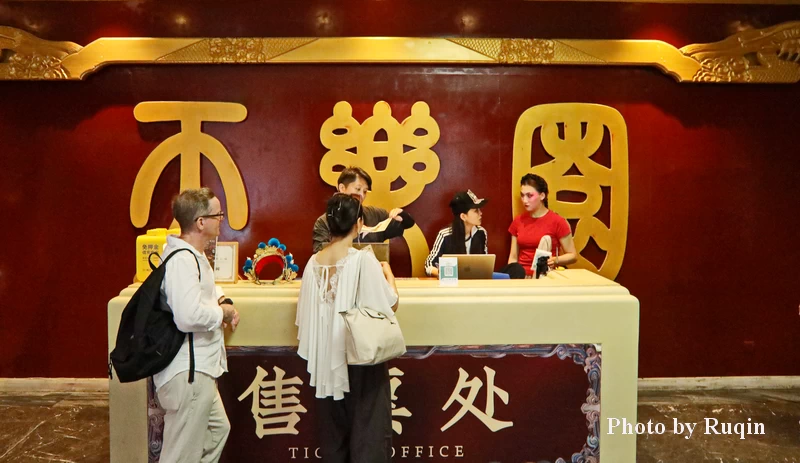
isitors buying tickets at the Tianleyuan counter
I asked about the performance schedule as well.
The staff member explained that performances are more regular during the busy travel season. In quieter periods, there may be fewer shows, so it is worth checking the current schedule rather than assuming there will be a performance every evening.
Tianleyuan is generally open from 09:30 to 21:30, although opening hours and performance times can change with the season.
Performance tickets start at around RMB 280. Costume experiences, opera-style photography and other activities are charged separately.
For current performances and ticket information, check the official Tianleyuan Theatre website before visiting.
Something I Had Walked Past Before
When I stepped back onto Xianyukou Street, the scene outside was much as before.
People were looking at restaurant signs, deciding what to eat, taking photos, and moving between Xianyukou and Qianmen Street.
And just beside all of that sits Tianleyuan.
Its history stretches back more than two centuries, and it was once one of Beijing’s well-known old theatres. Today, you can still walk through the doors, see Peking Opera costumes, learn something about the characters, and sit down for a performance in the same place.
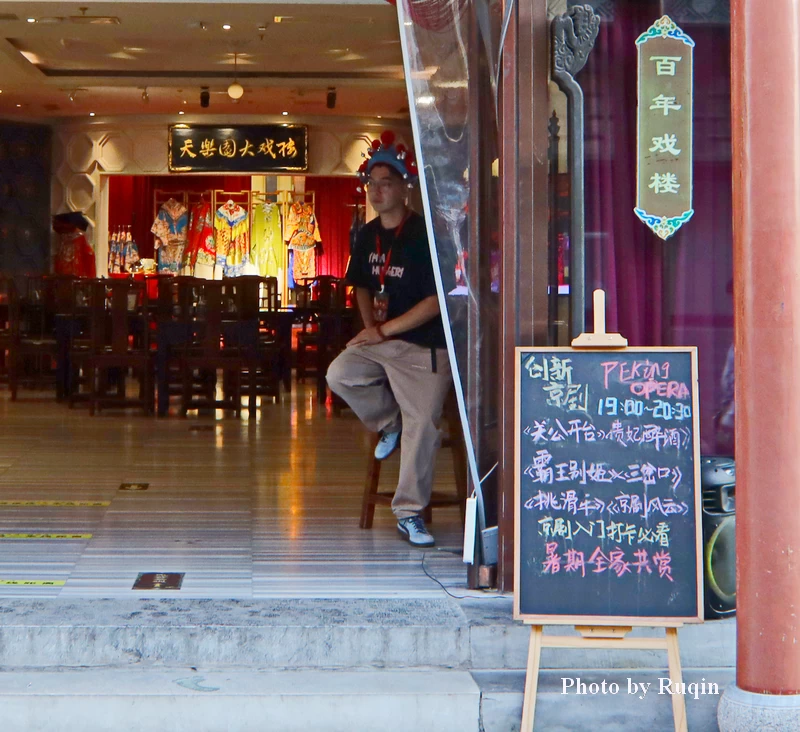
The handwritten Peking Opera performance schedule at the entrance to Tianleyuan Theatre
That is what stayed with me from this visit.
I had come back to Xianyukou thinking mostly about the food street. Instead, I found myself standing inside an old Peking Opera theatre.
If you walk Xianyukou next time, look beyond the restaurants for No. 68–70.
It is easy to pass by.
Keep Exploring Beijing
Xianyukou Street, Beijing: What to Eat, Shop & See Before You Go
Qianmen Street Beijing: Map, Food, Shopping & Local Tips
Where to Stay on Qianmen Street in Beijing
Where to Have Coffee or a Drink on Beijing’s Qianmen Street
Where Is the Toilet on Qianmen Street? A Beijing Field Report
Yangmeizhu Xiejie Street Beijing: Map, Walking Route & Travel Tips
Beijing Dashilan Street: Map, Food, Shopping, Hotels & Travel Tips
Beijing Fun (Beijingfang) Guide: Top Things to Do, Map & Tips
Caochang Hutong in Beijing: Maps, Routes, Top Sights & Tips