
Tour Summary
Beijing is not only imperial roofs and stone courtyards. Over the past two decades, the city has reshaped parts of its skyline with bold, experimental architecture.
This route is designed for travelers who want to understand modern Beijing — from the Olympic Park legacy to the dramatic forms of the CBD, ending at the National Centre for the Performing Arts beside Tiananmen Square.
It’s a day about design, ambition, and contrast.
Route: Olympic Park (Bird’s Nest & Water Cube) → China World Mall (Lunch) → Beijing CBD Skyline → National Centre for the Performing Arts
Duration: 7–8 hours
Best For: Architecture lovers, return visitors, business travelers
Travel Style: Urban exploration + light walking
Pace: Easy to Balanced (minimal long walks, mostly open plazas)
Tour Itinerary
The day begins in the north at the Olympic Park — open space, large scale, optimistic design from the 2008 Games.
Midday shifts to the CBD, where Beijing’s economic growth is most visible. The glass towers and angular silhouettes contrast sharply with the morning’s Olympic forms.
The day closes near Tiananmen Square at the National Centre for the Performing Arts — a modern building placed deliberately beside historical power.
- Olympic Park is in northern Beijing.
- China World Mall and the CBD are centrally located in the east.
- The National Centre for the Performing Arts is near Tiananmen Square.
- A private vehicle keeps transfers efficient between districts.
- Walking distances at each stop are manageable but involve open plazas.
Morning
Olympic Park – Bird’s Nest & Water Cube
Arrive around 8:30 AM at Beijing Olympic Park.
Here you’ll see:
- Beijing National Stadium (Bird’s Nest)
- Beijing National Aquatics Center (Water Cube)
The Bird’s Nest became a global symbol during the 2008 Olympics, with its woven steel exterior representing both structure and openness.
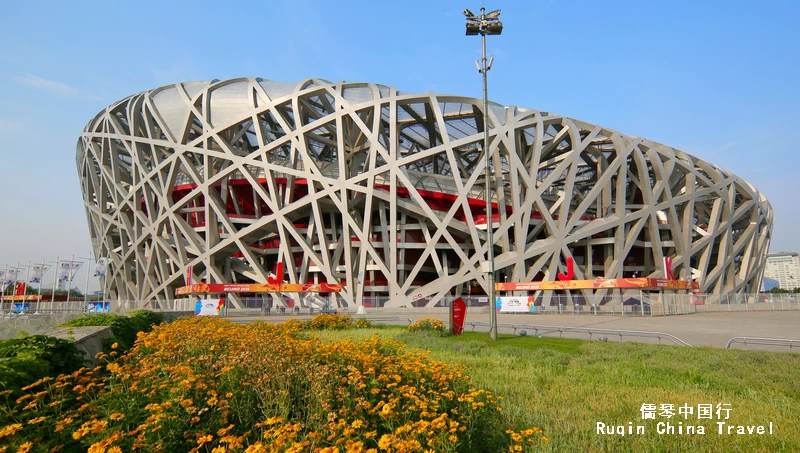
The Bird’s Nest (National Stadium)
The Water Cube’s bubble-like facade uses innovative materials that glow softly at night.
You may choose to:
- Walk the exterior plazas for photographs
- Enter one venue (optional, depending on event schedule)
Allow about 1.5–2 hours here.
Why start here: Morning light works well for photography, and the open space feels calm before crowds build.
Midday
China World Mall & CBD Skyline
Around 12:00 PM, head to China World Mall in the CBD.
Lunch can be arranged at
Blue Frog, a casual Western-style restaurant popular with both locals and expatriates.
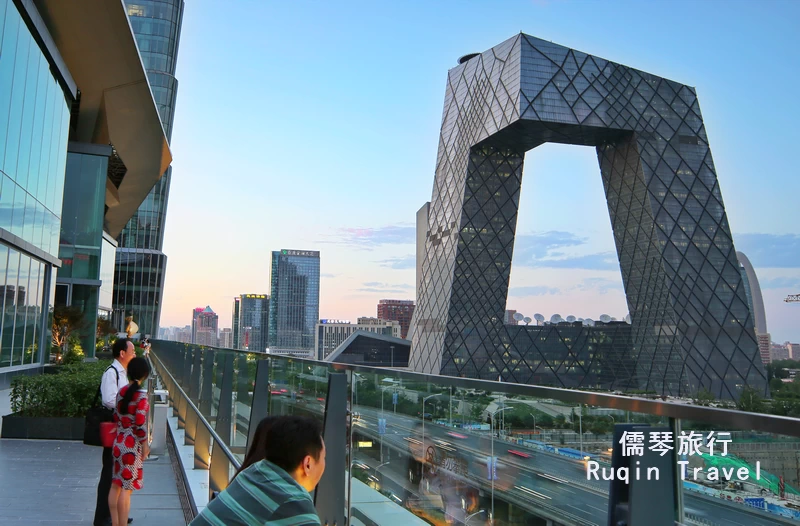
The CCTV Tower viewed from Blue Frog
From this area, you can view:
- CCTV Headquarters, known for its striking angular loop
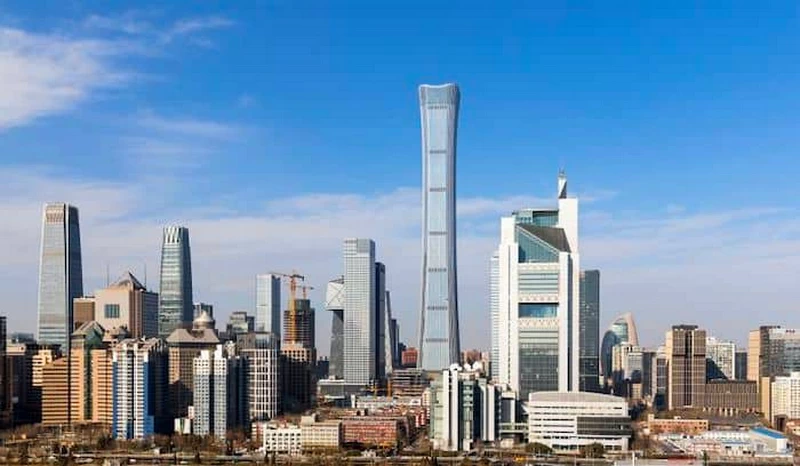
- CITIC Tower, often called China Zun, currently Beijing’s tallest building
The contrast between these towers shows how experimental Beijing’s modern architecture has become.
Lunch here also provides a comfortable break before the afternoon visit.
Afternoon
National Centre for the Performing Arts
Arrive around 2:00 PM at the
National Centre for the Performing Arts.
Often nicknamed the “Giant Egg,” this titanium-and-glass dome sits beside Tiananmen Square, surrounded by a shallow reflecting pool.
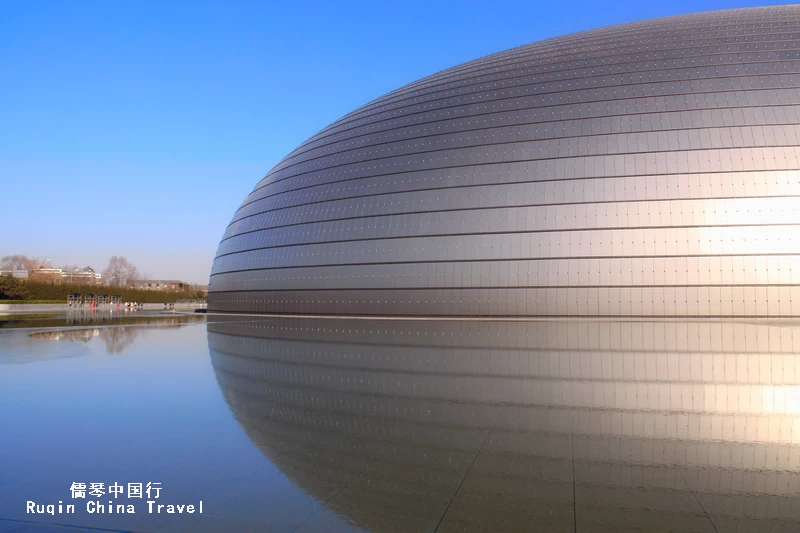
The building houses:
- Opera halls
- Concert halls
- Theatre spaces
Even if you don’t attend a performance, the interior corridors and public spaces are architecturally impressive.
Allow 1–1.5 hours for exploration and photos.
Why end here: It bridges modern design with Beijing’s political and cultural heart.
Around 4:00–4:30 PM
Return to your hotel.
This route leaves your evening free for dinner or a performance if desired.
Practical Notes from Me
- Open plazas can feel hot in summer — bring sun protection.
- Some venues may close for private events; flexibility is helpful.
- If you prefer a rooftop skyline view instead of mall dining, that can be arranged.
- Evening versions of this route are also possible, when buildings are illuminated.
Modern Beijing doesn’t replace the old city — it layers itself on top of it. When you see both sides, the city begins to feel more complete.
Further Reading
Modern Architecture in Beijing: Beijing’s Contemporary Landmarks
Beijing Bird’s Nest Stadium & Water Cube: All You Need to Know
10 Most Iconic Landmarks in Beijing – the city’s historical, cultural, and architectural diversity
Still Have Questions About Your China Trip?
If you still have questions after reading this tour arrangement, please feel free to send me a message.
I’m always happy to help with your itinerary—or with anything else that feels unclear. Sometimes a quick question can make the planning process much easier.
Just use the short form below and tell me a little about your trip.
There’s no charge for a simple question—just friendly, practical advice based on real travel experience in China.
If I’m traveling, my reply may take a little longer, but I’ll get back to you as soon as I can. Thank you for your patience.
We respect your privacy. Your details will never be shared or used for marketing.