
Written by Ruqin
August 06, 2026
When foreign visitors travel in China, they often ask me one question: “What exactly is feng shui?”
I usually hear this question when we visit places like the Forbidden City, ancient villages, or traditional gardens. Many travelers have heard about feng shui before, but they often know it only as a mysterious idea about luck and fortune.
However, feng shui is much more than that. During my years guiding international travelers in China, I have found that the best way to understand feng shui is not through complicated theories. It is through travel.
Walk through an old village. Stand on a mountain overlooking a city. Follow the path of a river. Then you will begin to understand how Chinese people have viewed the relationship between humans and nature for thousands of years.
What Is Chinese Feng Shui?
The word “feng shui” literally means “wind and water.”
In traditional Chinese thinking, a good living environment should have a balance between natural elements. Mountains, rivers, sunlight, wind direction, and the surrounding landscape all influence how people choose places to live.
For many centuries, Chinese people used these ideas when building villages, temples, gardens, and cities.
However, feng shui is often misunderstood outside China. Some people see it only as superstition. Others think it is similar to fortune-telling.
In reality, traditional feng shui also contains practical knowledge about geography, climate, and human settlement. It reflects how ancient Chinese communities learned to live with their surroundings.
A village with mountains behind it can reduce strong winds. A river nearby can provide water resources. A south-facing house can receive more sunlight. These choices were important for daily life.
Today, when we travel through China, we can still see these ideas in many historical places.
Discover Feng Shui in China’s Ancient Villages
One of the best ways to experience Chinese feng shui is visiting traditional villages.
I still remember taking a British photographer to Hongcun Village in Anhui Province. Before the trip, he had already read about Chinese villages and knew that Hongcun was famous for its traditional layout.
However, when he arrived, he stopped asking questions. He simply walked around with his camera.
Standing near the village lake, he looked at the mountains surrounding the village, the old houses reflected in the water, and the narrow lanes connecting different neighborhoods. Later, he told me, “Now I understand. People did not choose this place randomly. They chose a place where people could live comfortably with nature.”
That is often the moment when foreign travelers begin to understand feng shui.
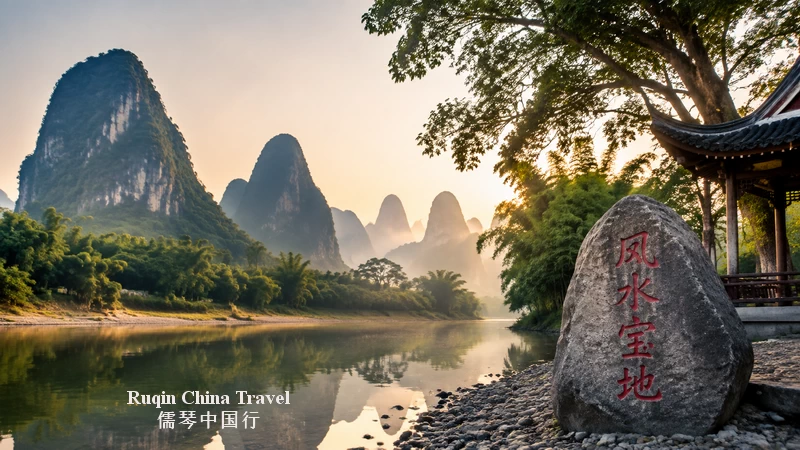
The traditional idea of “mountains behind and water in front” appears in many Chinese villages. Mountains provide protection, while water supports agriculture and transportation.
From a hillside, you can often see the whole picture. The village sits naturally between mountains and rivers. The buildings follow the landscape instead of fighting against it.
For Chinese people, this represents harmony between humans and nature.
How Feng Shui Appears in China’s Landscape
When you travel in China, you do not need to search for feng shui signs. You can discover it by observing the landscape.
For example, many ancient towns were built in locations with:
- Mountains behind the town
- Rivers or lakes nearby
- Open views toward the front
- Natural protection from strong winds
These choices helped people survive and develop.
A good example is Langzhong Ancient City. The Jialing River surrounds the city in a curved shape, while mountains stand nearby. When you look down from a hill, you can see why ancient people considered this a special place.
The city follows the landscape. The landscape supports the city.
For many visitors, this experience explains feng shui better than any textbook.
Understanding Feng Shui During Outdoor Travel
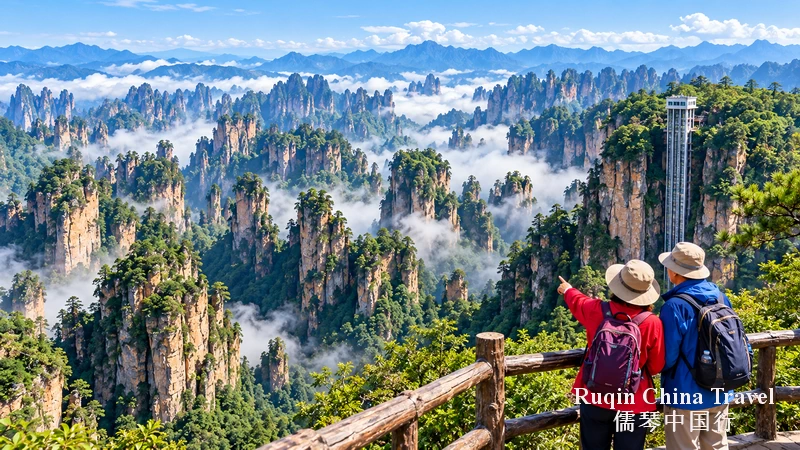
Feng shui is not only found in villages and historic cities. You can also notice similar ideas when exploring China’s mountains and countryside.
I once traveled with a group of European hikers in southern China. They were experienced outdoor travelers. They carried GPS devices and carefully checked maps and weather conditions.
Before setting up camp, I usually spent a little extra time observing the surroundings. I looked at the mountain slope, the direction of the wind, the water nearby, and the condition of the ground.
They were curious why I did this.
Actually, the reason was simple. Traditional Chinese ideas about choosing a good location often match basic outdoor knowledge.
A safer campsite usually needs:
- Some protection from strong winds
- Stable ground
- A clear view of the surroundings
- Safe access to water
- Distance from possible flooding areas
The old idea of “having support behind you and open space ahead” also makes practical sense outdoors.
Later, one of the hikers told me, “I used to think feng shui was only a Chinese superstition. Now I think it is an ancient way of reading the landscape.”
I thought this was a very good description.
Feng Shui in Chinese Cities and Architecture
You can also discover feng shui in modern Chinese cities.
Many foreign visitors notice traditional ideas when they explore Beijing, Hong Kong, or other major cities.
For example, in traditional Chinese architecture, buildings often pay attention to direction, balance, and the relationship between structures and nature.
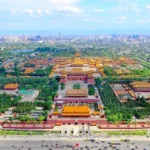
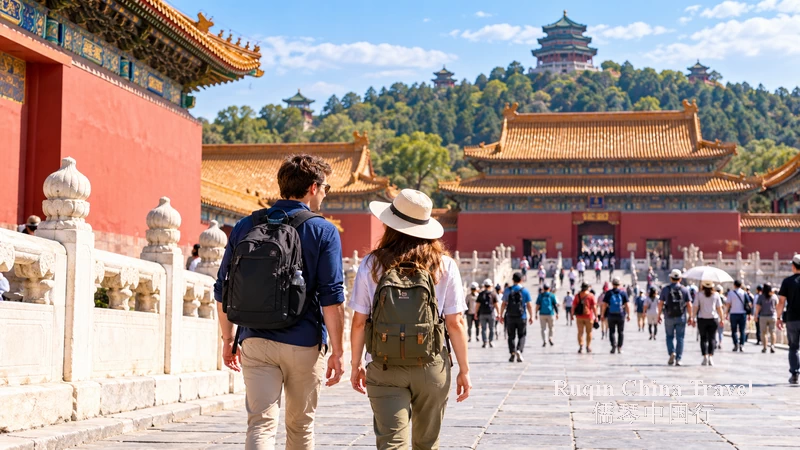
The Forbidden City is a good example. Its central axis, large courtyards, and carefully arranged buildings reflect traditional Chinese ideas about order and harmony.
Meanwhile, some modern buildings also show the influence of feng shui concepts.
In Hong Kong, many visitors are surprised when they learn about buildings designed with openings in their structures. Some traditional explanations connect these spaces with allowing “dragon energy” to pass through.
Whether visitors believe these ideas or not, they reveal something important.
Chinese people have long viewed architecture as more than simple construction. Buildings are connected with the surrounding environment.
Why Foreign Travelers Should Learn About Feng Shui
For foreign visitors, learning about feng shui can make a China trip more meaningful.
You do not need to believe every traditional explanation. Instead, you can use feng shui as a cultural window.
It helps you understand why many Chinese villages look different from European villages. It explains why mountains, rivers, and directions appear so often in Chinese paintings and gardens.
It also helps you appreciate the Chinese idea of harmony between humans and nature.
When you visit a traditional garden, do not only look at the flowers and buildings. Notice the arrangement of rocks, water, pathways, and viewpoints.
When you visit an ancient town, do not only take photos of old houses. Look at why the town was built there.
The landscape itself tells a story.
My Travel Tip: Experience Feng Shui, Don’t Just Read About It
If a foreign friend asks me, “What is feng shui?” I usually do not start with a definition.
Instead, I take them somewhere.
We climb a small hill overlooking an ancient town. We walk beside a river. We visit an old village early in the morning when the streets are quiet.
Then I ask them to look around.
Where are the mountains? Where does the water flow? Why did people build their homes here?
Usually, they find their own answers.
Chinese feng shui is not only about buildings or ancient beliefs. It is about how Chinese people observe the land and search for a comfortable way to live with nature.
So, when you travel through China, try looking beyond famous sights. The mountains, rivers, villages, and cities all carry cultural memories.
Sometimes, the best way to understand China is simply to slow down and learn how to read the landscape.
Ruqin is the founder of Ruqintravel.com and has spent more than four decades working in China’s travel industry. Drawing on hands-on experience in cities like Beijing and Hangzhou, he personally researches and updates each guide to help international travelers navigate China with confidence.
Further Reading
Feng Shui – A Foreigner’s Guide – Ruqin China Travel
Chinese Zodiac Signs: Understanding the Meaning Behind the 12 Animals
Traditional Chinese Festivals: Understanding China Through Its Celebrations
Traditional Chinese Clothing: Understanding the Beauty Behind the Fabrics
Chinese Red Envelope Tradition: A Cultural Guide for Foreigners